The ongoing conflict involving Iran is creating uncertainty for China, even though Beijing has not yet felt the direct impact of the war.
China currently has enough oil reserves to cover its needs for several months. If supplies tighten later, it may rely more on imports from Russia. However, Chinese leaders are already assessing the long-term consequences of instability in the Middle East.
Economic concerns grow in Beijing
This week, thousands of Communist Party delegates gathered in Beijing to discuss plans for the world’s second-largest economy. China faces several challenges, including weak consumer spending, a long property crisis and rising local government debt.
The government recently lowered its annual economic growth target to the lowest level since 1991. At the same time, Beijing continues to invest heavily in high-tech industries and renewable energy.
China had hoped strong exports would support its economy. However, it has already spent the past year dealing with a trade dispute with the United States. Now, tensions in the Middle East could create another major challenge.
Key trade routes and energy supplies at risk
The Middle East remains critical for China’s energy imports and shipping routes. Analysts warn that the situation could worsen if the conflict disrupts traffic through the Strait of Hormuz, one of the world’s most important oil routes.
Philip Shetler-Jones from the Royal United Services Institute said prolonged instability in the region could also affect other areas important to China.
African economies, for example, receive significant investment from Gulf countries. If that funding slows because of regional conflict, it could create wider instability that affects China’s global economic interests.
China questions the strategy behind the war
Experts say China is also trying to understand the long-term strategy behind the conflict.
Professor Kerry Brown, director of the China Lau Institute at King’s College London, said many observers are asking the same question: what is the overall plan for the war?
China prefers to avoid direct involvement in international conflicts. Instead, it typically focuses on protecting trade routes, energy supplies and long-term economic partnerships.
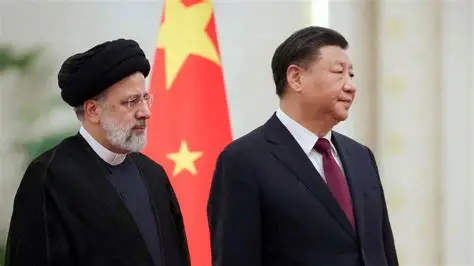
China-Iran ties based on interests
Although China and Iran have developed close economic ties, analysts say their relationship is largely pragmatic rather than ideological.
The two countries signed a 25-year strategic partnership in 2021, with China promising large investments in Iran in exchange for stable oil supplies. However, experts say only part of the promised funding has materialized.
In 2025, China imported about 1.38 million barrels of Iranian oil per day, which made up roughly 12% of its total crude imports.
Some analysts believe shipments were sometimes relabeled as Malaysian oil to avoid sanctions.
Reports have also suggested cooperation between the two countries in technology and defense sectors, though China has denied selling advanced weapons to Iran.
Beijing prefers distance from conflict
Despite economic ties, China rarely treats partnerships as formal alliances like those seen in Western military agreements. Beijing avoids mutual defense commitments and generally stays away from direct involvement in wars.
For now, China is closely watching the conflict while trying to protect its economic interests. But if instability spreads across the Middle East, the impact could reach far beyond the region.