Military Cargo Plane Carrying Banknotes: Why Bolivia’s Tragic 2026 Crash Still Raises Questions
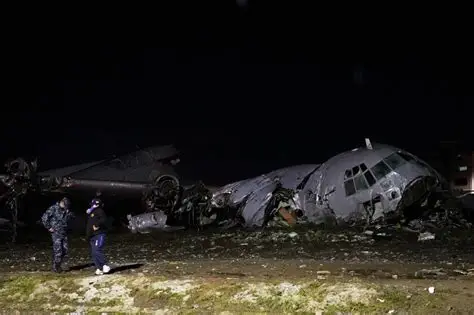
Military cargo plane carrying banknotes is a phrase that sounds almost unreal, but in Bolivia it became the centre of one of the country’s most shocking aviation disasters of 2026. A Bolivian Air Force C-130 Hercules left Santa Cruz with tons of cash intended for the Central Bank of Bolivia. It reached El Alto, one of the world’s highest major airport cities, then skidded off the runway and tore into vehicles on a busy road.
The crash happened on February 27, 2026, as the aircraft landed at El Alto International Airport near La Paz. Early reports said at least 15 people had died. That number later rose. AP reported that police put the death toll at 22 the next day, including four children. El País later reported that the number had risen to 24, with about 30 people injured.
The military cargo plane carrying banknotes did not only create a crash scene. It created a security crisis, a public-order emergency and a national debate about why so much cash was being moved by air during severe weather. Banknotes scattered across the crash site. Crowds rushed toward the wreckage. Police and soldiers formed security lines. Tear gas was used. Some people were later detained after authorities accused them of collecting money from the scene.
For Bolivia, the tragedy raised three linked questions: what caused the aircraft to leave the runway, why the cash operation was handled the way it was, and whether officials did enough to protect people on the ground. The military cargo plane carrying banknotes has become more than a transport accident. It is now a case about aviation safety, state logistics, public trust and accountability.
What happened in El Alto
The Bolivian Air Force aircraft was a Hercules C-130, a military transport plane widely used around the world for cargo, troops and relief operations. According to AP, the aircraft was carrying 18 tons of new banknotes from Santa Cruz when it landed and veered off the runway at El Alto. Reuters said the banknotes were being transported to replace older notes, while El País later reported that the shipment was worth about 50 million bolivianos.
The military cargo plane carrying banknotes damaged multiple vehicles after leaving the airport area. AP cited fire officials saying at least 15 vehicles were damaged. Reuters reported that the aircraft came close to hitting nearby residential buildings but avoided an even larger disaster after the pilots made a quick turn.
That detail matters. A crash that killed 24 people could have been far deadlier if the aircraft had entered a denser residential area. El Alto is a crowded and fast-growing city, and the airport sits close to busy urban routes. A runway excursion in such a setting can become a mass-casualty event within seconds.
The first hours after the accident were chaotic. Videos and photos showed wreckage, damaged vehicles, scattered banknotes and emergency crews trying to secure the area. Families searched for relatives. Rescue teams worked through debris. Police tried to keep crowds away from the aircraft and the money.
The confirmed death toll changed
One of the most important updates is the death toll. The original article said at least 15 people had died. That was based on the earliest reporting. Later confirmed figures were higher.
AP reported on February 28 that the death toll had risen to 22. Police commander Mirko Sokol said the dead included 12 men, six women and four children. AP also reported that 29 people were injured, many of them passengers in public transport vehicles hit by the aircraft.
El País later reported on March 3 that the crash had left 24 people dead and around 30 injured. That is the strongest updated figure for this rewrite. The military cargo plane carrying banknotes should therefore be described as a crash that killed 24 people, not simply “at least 15.”
The dead were not only people aboard the aircraft. Many victims were on the road where the plane crashed after leaving the runway. That makes the tragedy different from a standard aviation accident involving only passengers and crew. It was also a ground disaster.
| Early detail | Updated reporting |
|---|---|
| Initial death toll | At least 15 dead |
| AP update | 22 dead and 29 injured |
| El País later update | 24 dead and about 30 injured |
| Aircraft | Bolivian Air Force C-130 Hercules |
| Cargo | Tons of banknotes for the Central Bank of Bolivia |
| Location | El Alto, near La Paz |
| Main unresolved issue | Final cause remains under investigation |
Why the banknotes became part of the tragedy
The military cargo plane carrying banknotes became a global story partly because of what happened after impact. The cash did not remain sealed inside secure containers. Bundles and boxes of banknotes were scattered around the wreckage.
Reuters reported that about 3,000 people arrived at the scene soon after the crash, and officials said some tried to collect the notes. Security forces used tear gas and arrested dozens of people accused of vandalism. El País reported that a judge later sent 19 people into preventive detention after authorities accused them of collecting money from the crash site. Other detainees received house arrest or were released.
The Central Bank of Bolivia warned that the banknotes had no legal value if they had not been authorised for circulation. Officials said possessing or using the notes could be treated as a crime. Authorities also burned recovered banknotes at the scene to prevent them from entering circulation.
That decision caused anger. Reuters reported that some residents protested as officials burned the money. In a poor city where many families struggle economically, watching piles of cash burn after a deadly crash created a powerful image of inequality, confusion and mistrust.
The military cargo plane carrying banknotes therefore became a political symbol. For the authorities, the money had to be secured or destroyed. For some residents, the burning looked like the state destroying wealth while ordinary people suffered. Both reactions help explain why the crash scene turned into more than a rescue operation.
Were the banknotes legal tender?
The legal status of the money was confusing in the first days after the crash. Authorities said the notes lacked the required authorisation for public circulation. El País reported that the Central Bank initially invalidated all Series B notes during the weekend, then later identified the specific serial numbers linked to the aircraft shipment.
That created problems for ordinary transactions. Some people reported that shops and transport operators refused to accept certain notes because they feared taking invalid money. The bank later used a verification system so people could check whether their notes remained valid.
This confusion matters because the military cargo plane carrying banknotes did not only spill money onto a road. It disrupted confidence in cash itself. In any economy, currency works because people trust that a note has legal value. When that trust is suddenly unclear, commerce slows down. Shops hesitate. Customers argue. Banks face crowds seeking confirmation.
For readers following how money, confidence and state institutions interact, The News Ink’s economy coverage gives wider context on why financial confidence matters during national crises.
What may have caused the crash?
The final cause of the crash has not been conclusively established in public reporting, so the article should avoid making a firm claim. However, severe weather and runway conditions have been repeatedly mentioned.
Al Jazeera reported that the aircraft was attempting to land in bad weather. El País later reported that the pilot told investigators the runway had frozen after heavy hail, describing it as being like an ice rink. According to that report, the pilot said braking systems did not respond properly because of the icy surface.
That does not settle the investigation. A runway excursion can involve several factors: weather, runway contamination, braking performance, aircraft speed, landing distance, pilot decision-making, maintenance, airport operations and emergency response. Investigators must examine all of them.
The military cargo plane carrying banknotes was operating in a difficult environment. El Alto International Airport is known for its high altitude. High-altitude airports require special operational care because aircraft performance, braking and landing calculations can be affected by thinner air, weather changes and runway conditions. That does not mean altitude caused the crash. It means the operating environment was demanding even before the storm.
For aviation readers, this story belongs beside other accident and safety coverage such as The News Ink’s report on a pilot air show crash, where weather, aircraft handling and event safety also became central questions.
The airport disruption
The crash forced airport operations to stop temporarily. Flights to and from El Alto were suspended while emergency teams responded and authorities secured the area. AP reported that flights were suspended after the accident. Local airport operator information cited in Spanish-language reporting said operations were halted that night and later resumed under safety protocols.
Airport disruption was inevitable. A military cargo plane carrying banknotes had left the runway, damaged vehicles, scattered cash and created a security emergency near airport infrastructure. Investigators needed access to the aircraft. Rescue workers needed room. Police needed to hold back crowds. Flight operations could not continue normally while the site remained uncontrolled.
The disruption also affected passengers who had nothing to do with the cash shipment. Delays, cancellations and uncertainty can spread quickly after airport emergencies. The News Ink’s smart travel guide is useful for readers because incidents like this show why travellers should monitor airline updates and airport notices during major disruptions.
Why the crash hit El Alto so hard
El Alto is not just a backdrop. Reuters described it as one of Bolivia’s poorest and fastest-growing major cities. It grew as people migrated toward La Paz for work, building communities on the high plateau above the capital. The city is crowded, politically active and economically vulnerable.
That context helps explain the anger after the military cargo plane carrying banknotes crashed. A deadly accident would have been traumatic anywhere. But in a city where many families face daily financial pressure, the sight of banknotes lying on the ground and then being burned by authorities carried extra emotional force.
The people who rushed toward the money endangered themselves and complicated rescue work. That should be stated clearly. But the social reaction also revealed something deeper: public trust was already fragile. When people are desperate, official warnings may not be enough to stop them from taking risks.
The military cargo plane carrying banknotes therefore exposed a social wound as well as an aviation failure. The tragedy unfolded in a city where economic hardship, state distrust and sudden disaster collided in public view.
Questions over cash transport
Another issue is why such a large cash shipment was being moved by military aircraft. There can be legitimate reasons. Governments often use military or state aircraft to move high-value cargo, especially when security is critical, distances are long or logistics are difficult.
But after the crash, the public is entitled to ask whether the transport plan was safe enough. Why was the shipment moved during bad weather? Were landing conditions properly assessed? Were there alternative routes or delays available? Was the cash secured inside containers designed to survive an accident? Did airport authorities have adequate emergency plans for a runway excursion involving high-value cargo?
Those questions do not mean anyone should be blamed before the investigation is complete. They mean the military cargo plane carrying banknotes requires a transparent review. The public needs more than statements of sorrow. It needs evidence that lessons will be learned.
Cash transport is not ordinary cargo. It attracts crowds, criminals and misinformation. When a plane carrying money crashes in a populated area, the rescue operation immediately becomes a security operation. That should be part of future planning.
The attacks on rescue teams and journalists
The aftermath also raised concerns about attacks on people trying to report on or respond to the crash. The original account said journalists were targeted and that media crews were attacked with stones. Reuters reported that crowds arrived aggressively, wielding sticks and stones, and El País said stones hit ambulances while emergency teams were trying to help the injured and recover bodies.
Any attack on rescuers, medical crews or journalists is serious. In a disaster, accurate information and emergency access save lives. If crowds block responders or attack vehicles, the death toll can rise. If journalists are threatened, misinformation fills the gap.
The military cargo plane carrying banknotes produced a difficult scene, but grief and anger do not justify violence against responders. The same principle applies to authorities: crowd control must protect rescue work while avoiding unnecessary harm. Tear gas near a crash site can create health risks, especially for injured people and families nearby, so it should be used only when officials believe security has broken down.
The investigations now matter most
The most important next step is the investigation. Reuters reported that President Rodrigo Paz described the crash as a day of great sorrow for El Alto and the nation and said the accident was being investigated. Reuters also said authorities were still searching for the aircraft’s black box at that stage. El País later reported parallel investigations by ordinary justice authorities and the Armed Forces board.
A credible investigation into the military cargo plane carrying banknotes should answer several questions:
- What was the aircraft’s speed and configuration at landing?
- What were the runway conditions at the exact moment of touchdown?
- Were there warnings about hail, standing water, ice or braking action?
- Did the crew receive accurate weather and runway information?
- Did mechanical or braking issues contribute to the runway excursion?
- Was the cash cargo properly secured?
- Did airport emergency procedures work as planned?
- Why were so many people able to reach the crash area so quickly?
- How were the banknotes identified, recovered, destroyed or invalidated?
The answers matter because another crash must be prevented. If weather, aircraft condition, airport procedures or cargo-security planning failed, authorities need to say so clearly and fix the weakness.
A disaster of aviation, money and trust
The military cargo plane carrying banknotes left Bolivia with more than grief. It left the country with a trust problem.
Families of the dead want accountability. Injured people need support. Residents want to know why their city became the crash site. Pilots and airport workers need clear safety lessons. The Central Bank needs to restore confidence in the affected banknotes. Police and prosecutors need to handle accused looters without turning poverty into a spectacle.
The crash also created a difficult moral image: bodies and banknotes in the same wreckage field. That image is why the story travelled internationally. But the human story must stay first. The money was dramatic. The deaths were devastating.
That is the editorial balance this article should keep. The military cargo plane carrying banknotes is the headline, but the victims are the centre of the story.
The careful takeaway
The military cargo plane carrying banknotes that crashed in El Alto killed 24 people, injured dozens and forced Bolivia to confront hard questions about aviation safety, emergency response and cash-security planning. What began as a runway accident quickly became a national crisis because money scattered across the crash site and crowds rushed toward it while rescue work was still underway.
The cause should not be declared before investigators finish their work. Severe weather, hail and possible runway icing have been reported, but the final explanation must come from evidence. What is already clear is that the crash exposed serious risks around high-value state cargo, crowded airport surroundings and public communication during disaster response.
Bolivia now needs transparent answers, support for victims’ families and clear reforms so a military cargo plane carrying banknotes never again becomes the symbol of a preventable tragedy.
For more global news, investigations and public-interest reporting, follow The News Ink on Medium.