Video Analysis Suggests US Tomahawk Missile Hit Base Near Iranian School
A Tomahawk missile seen in new video analysis has intensified questions about a deadly strike near Shajareh Tayyebeh Primary School in Minab, southern Iran, where Iranian officials say scores of children were killed during the opening day of the conflict involving the United States, Israel and Iran.
The footage, first circulated by Iran’s semi-official Mehr News Agency and later examined by open-source investigators, appears to show a cruise missile seconds before impact near an Islamic Revolutionary Guard Corps-linked compound close to the school. Bellingcat geolocated the footage and said the strike shown in the video hit buildings inside the IRGC compound, including a clinic. AP later reported that the footage raised the likelihood that a US Tomahawk missile struck near the school.
The evidence does not answer every question. It does not, by itself, prove intent. It does not fully explain how the school was hit, how many separate strikes landed, or whether outdated targeting data, weapons failure, intelligence error or proximity to a military site caused the disaster. But it does challenge earlier claims that Iran may have been responsible and adds weight to assessments that US forces were likely involved.
The Pentagon has not released a final public report. That silence has become part of the story. Months after the strike, lawmakers, rights groups and families are still demanding answers about one of the deadliest alleged civilian-casualty events of the war.
What the Tomahawk Missile Video Appears to Show
The video at the centre of the investigation appears to capture a missile in the final seconds of flight before striking a site near the school. Analysts compared the missile’s shape, low-altitude flight and terminal behaviour with known features of a Tomahawk missile, a long-range US cruise missile usually launched from warships or submarines.
Bellingcat’s investigation said the team used visual clues, prior footage and post-strike satellite imagery to identify the impacted buildings. The group concluded that one video showed an IRGC clinic and two other buildings inside the compound being hit.
That matters because the school was located close to the military-linked site. AP reported that the new footage was consistent with satellite imagery and that a Bellingcat researcher identified the weapon as a Tomahawk missile, a weapon type used by the United States in the conflict. The report also noted that US Central Command had acknowledged Tomahawk launches during the campaign.
The footage does not show the full chain of strikes. It shows one crucial moment: a Tomahawk missile hitting near a civilian school that had already become the centre of a major casualty controversy.
Why the Weapon Identification Matters
Weapon identification is central because neither Iran nor Israel is known to operate Tomahawk missiles in this conflict. The Tomahawk missile is closely associated with the US military and has been part of American long-range strike capability for decades.
A Tomahawk missile can be launched from ships or submarines and guided toward fixed targets over long distances. It is designed for precision strikes against military infrastructure, command sites, air defences and other high-value targets. That precision is exactly why its suspected use near a school raises difficult questions.
If a Tomahawk missile struck a military-linked clinic or building close to Shajareh Tayyebeh Primary School, investigators must still ask whether the school was properly identified, whether the nearby civilian presence was known, and whether the expected military advantage justified the risk.
This is not only a technical question about missile type. It is a legal and moral question about targeting. Precision weapons do not automatically make strikes lawful. A strike can use advanced guidance and still be unlawful if planners fail to distinguish civilian sites, use outdated intelligence or ignore foreseeable civilian harm.
The News Ink’s earlier report on children reported dead after a strike on an Iranian school covered the initial horror of the incident. The new Tomahawk missile analysis gives that tragedy a sharper accountability focus.
The Location: A School Beside a Military-Linked Compound
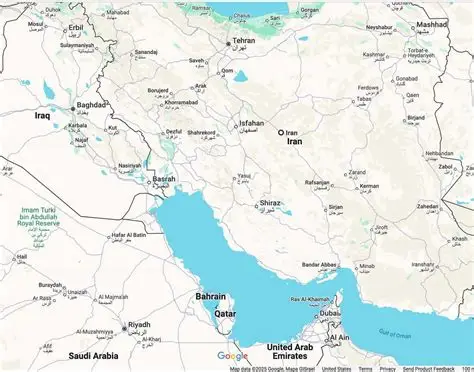
The Shajareh Tayyebeh Primary School was in Minab, in Hormozgan province, near an IRGC-linked military compound. That proximity is important, but it does not settle responsibility.
Under international humanitarian law, armed forces must distinguish between military objectives and civilian objects. A military base can be a lawful target. A school full of children cannot be targeted. When the two are close together, the attacking force must take feasible precautions to avoid or minimise civilian harm.
AP’s later reconstruction said the strike targeted a building within a compound that also housed a Revolutionary Guard base, but the attack killed at least 157 people, including 123 children. Iranian official counts have varied, with reports giving figures around 156 to 168 dead and some lawmakers later referring to more than 175 children and teachers.
Those variations should be reported carefully. In war, casualty counts can change, and independent access to the site has been restricted. But even the lowest credible figures point to a mass-casualty event.
The key issue is not only where the military site stood. It is whether US planners knew, or should have known, that a functioning school was nearby or inside the strike-risk area.
Smoke Before the Missile
One important detail in the footage is the presence of smoke before the Tomahawk missile enters the frame. That suggests the area had already been struck before the filmed impact. Bellingcat’s later analysis also described multiple strikes and used satellite imagery to identify damaged buildings.
This matters because multiple impacts can change the legal and factual analysis. If one strike hit near or at the school, and later strikes hit nearby military-linked buildings, investigators need to reconstruct the exact sequence. Did the school suffer damage first? Did subsequent strikes hit responders or nearby facilities? Were the strikes part of one planned attack package? Were updated civilian-harm assessments made after the first impact?
Reports have described the incident as involving more than one strike in the area. AP and other outlets have cited evidence suggesting multiple impacts around the school and compound. That makes a simple explanation difficult.
The video of a Tomahawk missile is therefore one piece of a larger puzzle. It confirms that a US-linked weapon appears to have struck in the immediate area, but investigators must still determine the full sequence of events.
US Responsibility: What Is Known and What Is Not
The strongest public reporting now points toward likely US responsibility, but the US government has not issued a full public acknowledgment in the form demanded by critics and lawmakers.
Reuters reported that more than two dozen Democratic senators, including Kirsten Gillibrand and Jack Reed, demanded that the Pentagon release an unclassified version of its investigation into the Minab school strike. Reuters also reported that initial internal US military assessments indicated likely US responsibility, linked to outdated intelligence and the school’s proximity to an IRGC compound.
AP’s reconstruction similarly reported that the Pentagon knew it had struck in the area but failed to recognise the facility as a school because of intelligence and safeguards problems. It said no final public report had been released months later.
This is why language matters. It is accurate to say video analysis, open-source evidence and internal assessments reported by major outlets point toward likely US responsibility. It is less precise to say the US has fully admitted responsibility, because it has not done so in a public final report.
The distinction is important for credibility. The evidence is serious. The official accountability process remains incomplete.
Trump’s Earlier Claim and the Problem With It
President Donald Trump previously suggested Iran may have been responsible for the school strike and claimed Iran’s weapons lacked accuracy. He also expressed scepticism about US culpability. That claim has faced strong pushback because the weapon seen in the video appears to match a Tomahawk missile, and Tomahawks are not known Iranian weapons.
AP reported that Trump claimed Iran possessed Tomahawk missiles, but the claim lacked supporting evidence. Open-source investigators and weapons experts have instead pointed toward US use of Tomahawks during the same phase of the conflict.
This is one reason the video analysis has become so important. A Tomahawk missile identification directly challenges narratives blaming Iran for the strike. It does not automatically answer every targeting question, but it narrows the range of plausible explanations.
In a war where each side uses propaganda, weapon identification can cut through political claims. A missile’s shape, flight pattern and impact location become evidence.
The News Ink’s report on cyber warfare in the Iran conflict explains how information battles have become part of the wider war. The Tomahawk missile footage sits inside that information fight, but it also gives investigators something concrete to test.
Israel’s Denial
Israel has denied involvement in the strike. AP reported that Israel said its operations were concentrated far from the Minab site, while other reporting said Israeli officials denied operating in the area at the time.
That denial does not prove US responsibility alone, but it strengthens the question. If the weapon resembles a Tomahawk missile, and Israel was not operating there, then US involvement becomes more likely.
The United States and Israel had both carried out strikes against Iran during the conflict, but their operational patterns and weapons differed. Open-source analysis has treated geography, weapons type and known strike areas as important clues.
The evidence therefore points away from a generic “US-Israel strike” label and toward a more specific question: did US forces strike the target near the school, and if so, why was the school not protected from the attack?
That question remains unanswered publicly.
The Pentagon Investigation
The Pentagon investigation has become a test of transparency. Reuters reported that lawmakers demanded an unclassified version of the findings and a plan to prevent such an incident from happening again. Pentagon officials said the probe was still ongoing, while Admiral Brad Cooper, head of US Central Command, described the situation as complex because the school was near a missile base.
Complexity is not a reason to avoid accountability. In fact, complexity is exactly why a public explanation matters. If a school was close to an IRGC target, the public needs to know what target was selected, what intelligence was used, what civilian-harm checks were performed, and why the final strike went ahead.
A final report would also need to address whether no-strike lists were updated, whether the school’s status was known, whether commanders received warnings about outdated intelligence, and whether strike planners reassessed the area after earlier impacts.
The News Ink’s analysis of depleting weapons stockpiles in the Iran war shows how military pressure can shape battlefield decisions. But pressure does not erase civilian-protection duties.
The Human Cost Behind the Evidence
Video analysis can feel technical: missile shapes, geolocation, satellite imagery, impact points and terminal flight. But the human cost is what makes the evidence urgent.
Iranian officials say the strike killed scores of children. AP’s reconstruction put the death toll at at least 157, including 123 children. Reuters reported lawmakers describing the event as potentially the deadliest US civilian casualty event since 1991. Amnesty International called for accountability, saying those responsible for the strike must be held to account.
The exact count may be disputed or updated, but the scale is not. A school was devastated. Families buried children. Survivors and parents were left with questions about why a military strike was launched so close to classrooms.
The News Ink’s coverage of life in Tehran under fire has shown how civilians experience the war far away from official strategy. Minab is the clearest example of that reality: military targets may be selected on maps, but civilians live beside them.
Why Amnesty Called for Accountability
Amnesty International described the strike as deadly and unlawful, arguing that US authorities could and should have known the building was a school. The group said schools must be places of safety and learning, not sites of mass killing.
That language is strong, and it should be attributed. Human rights groups make legal assessments based on available evidence, but a formal legal process may still determine responsibility and potential violations. Still, Amnesty’s statement matters because it frames the incident through international humanitarian law rather than only military error.
The core legal principles are distinction, proportionality and precaution.
Distinction requires parties to separate civilians and civilian objects from military targets.
Proportionality prohibits attacks expected to cause civilian harm excessive in relation to the concrete military advantage.
Precaution requires feasible steps to verify targets and minimise civilian casualties.
A Tomahawk missile strike near a school raises all three questions.
The IRGC Compound Does Not Remove Civilian Protection
Iran may also face scrutiny over the placement of military facilities near civilian areas. Human Rights Watch and other legal experts have often argued in similar conflicts that placing military assets near civilians can increase civilian risk and may itself violate the laws of war.
But that does not absolve the attacker. Even if a military base is unlawfully close to a school, the attacking force still must take precautions. Civilian protection obligations do not disappear because the enemy behaves irresponsibly.
This is where the Minab strike becomes legally complicated. If the IRGC compound contained valid military targets, the United States may argue the strike had a legitimate military purpose. But legitimacy of a target is only one part of legality. The attacker still must assess civilian presence, expected harm and available alternatives.
The Tomahawk missile evidence therefore does not only raise the question of who fired. It raises the question of whether the strike should have been authorised at all.
A Timeline of the Minab Evidence
| Date or stage | What happened |
|---|---|
| February 28, 2026 | The strike hit near Shajareh Tayyebeh Primary School in Minab on the opening day of the war |
| Early reports | Iranian officials blamed the US and Israel and reported large child casualties |
| Initial US response | Trump suggested Iran may have been responsible and questioned US culpability |
| Open-source review | Videos and satellite imagery showed multiple strikes near the school and IRGC-linked compound |
| Bellingcat analysis | Investigators geolocated videos and identified strikes on IRGC compound buildings |
| AP reporting | AP said new footage raised the likelihood that a US Tomahawk missile struck near the school |
| Pentagon probe | US officials said an investigation was ongoing, but no final public report had been released |
| July pressure | US senators demanded the Pentagon release an unclassified version of the findings |
This timeline shows why the story keeps evolving. The initial shock has become an accountability battle, with video evidence now central to the pressure on Washington.
What Is a Tomahawk Missile?
A Tomahawk missile is a long-range cruise missile used by the US military for precision strikes. It can be launched from naval vessels or submarines and flies at low altitude toward a programmed target.
Tomahawks have been used in US military operations for decades, including strikes against air defences, command sites, weapons facilities and other fixed targets. Their range and accuracy make them useful when the United States wants to hit a target without sending aircraft directly over heavily defended airspace.
But the Minab case shows the limits of the word “precision.” A Tomahawk missile may be precise in mechanical guidance terms, but precision also depends on the intelligence behind the coordinates. If the coordinates are wrong, outdated or incomplete, a precise weapon can precisely hit the wrong place.
That is the central accountability question. Did the missile hit the intended target? Was the intended target properly identified? Was the school on a no-strike list? Were civilians visible or known? Did commanders understand the risk?
A Tomahawk missile is only as lawful as the target decision behind it.
Why Video Verification Matters in Modern War
The Minab case also shows how open-source investigation has changed war reporting. In earlier conflicts, governments controlled much of the evidence. Today, phone footage, satellite imagery, social media posts, shadows, building shapes and missile fragments can be used by investigators across the world.
Bellingcat’s analysis relied on geolocation, visual comparison and satellite imagery. AP then reviewed the broader evidence and reported that it raised the likelihood of US responsibility. This does not replace official investigations, but it pressures governments to explain themselves.
Open-source work is especially important when journalists and independent investigators cannot safely access the site. Iran has restricted independent investigation, and war conditions make on-the-ground verification difficult. In that environment, video analysis may be one of the few ways to reconstruct what happened.
Still, open-source evidence must be used carefully. A video can be authentic and still incomplete. A missile can be identified without proving the full target-selection process. A location can be geolocated without revealing who approved the strike.
Good reporting must combine the video with satellite imagery, expert analysis, official statements, casualty records and legal review.
The Political Pressure in Washington
The Minab strike has become a political issue in Washington because the Pentagon has not released a final public explanation. Reuters reported that senators demanded the findings within a week and called for an unclassified version of the investigation.
This pressure matters because civilian casualty investigations often disappear into classified processes. Families and the public may never see the evidence. Officials may cite operational security, ongoing conflict or intelligence sensitivity. Critics then accuse the government of burying mistakes.
In this case, the death toll and the presence of children make secrecy harder to defend. If the United States was responsible, lawmakers argue that the public deserves an explanation of what went wrong and what will change.
The issue is not only blame. It is prevention. A serious report could identify failures in intelligence updates, target validation, civilian-harm mitigation or command approval. Without that, the same mistakes can happen again.
The News Ink’s report on UK embassy staff leaving Tehran shows how the conflict has raised diplomatic risk. The Minab case adds another layer: accountability risk.
Iran’s Use of the Strike
Iran has used the strike politically, portraying the victims as martyrs and blaming the United States and Israel. That does not mean the casualties are not real. It means the tragedy is also being folded into state messaging.
This creates a difficult reporting environment. Iranian authorities have incentives to emphasise US wrongdoing and restrict independent access. US officials have incentives to minimise or delay responsibility. Israel has denied involvement. Families are caught between propaganda and grief.
The job of independent reporting is to separate evidence from messaging. The Tomahawk missile footage is important because it can be tested. So can satellite imagery, casualty records, strike logs and witness accounts.
The News Ink’s coverage of mixed emotions in Iran shows how Iranian public reaction to the war is not simple. Citizens can be angry at foreign strikes and still distrust their own government. Minab sits inside that complexity.
What Must Be Answered
Several questions remain unanswered.
Who approved the strike package near the school?
What was the exact intended target?
Was the school identified in US databases?
Were the coordinates outdated?
Did any intelligence analysts warn that the site had changed use?
Were no-strike lists updated before Operation Epic Fury?
How many strikes landed in the area, and in what order?
Was a medical clinic inside the IRGC compound struck after injured people were taken there?
Did commanders conduct a proportionality assessment?
Why has the final Pentagon report not been released publicly?
These questions are not anti-military talking points. They are basic accountability questions after a mass-casualty event involving children.
Why This Article Should Stay Carefully Worded
Because the evidence is serious but the public official record remains incomplete, the article should avoid two mistakes.
The first mistake is understating the evidence. Multiple credible reports now point toward likely US responsibility. A Tomahawk missile identification, geolocated footage and internal assessments reported by major outlets cannot be dismissed as rumours.
The second mistake is overstating what is proven. The public still lacks a final Pentagon report, full strike logs, released intelligence files and independent on-site access. Intent has not been proven. The exact sequence of strikes remains disputed.
The strongest current framing is this: video analysis suggests a US Tomahawk missile struck an IRGC-linked site near the Minab school, and wider evidence has increased pressure on the Pentagon to explain whether US targeting failures caused mass civilian casualties.
That is accurate, serious and defensible.
The Bottom Line
Video analysis of the Minab strike suggests a US Tomahawk missile hit an IRGC-linked compound near Shajareh Tayyebeh Primary School, where Iranian officials say scores of children were killed. Bellingcat geolocated footage showing strikes on buildings inside the military-linked compound, while AP reported that the evidence raised the likelihood of a US Tomahawk missile strike near the school.
The footage does not answer every question. It does not prove the school was intentionally targeted. It does not fully establish the sequence of multiple strikes. It does not replace a final Pentagon investigation. But it does make earlier attempts to blame Iran much harder to sustain, because the weapon appears to match a US Tomahawk missile, not an Iranian system.
The most urgent issue now is transparency. The Pentagon must release enough of its investigation for the public, lawmakers and victims’ families to understand what happened. If outdated intelligence, faulty target data or inadequate civilian-harm precautions contributed to the deaths of children, those failures must be named and fixed.
A Tomahawk missile is designed for precision. Minab shows that precision weapons can still produce catastrophic civilian harm when the information behind them is wrong or when civilian risk is not properly controlled.
For the families, this is not only a debate over missiles and maps. It is a demand for truth about why a school day became a mass-casualty event.
For more Iran conflict and world news coverage, readers can follow The News Ink on X.