


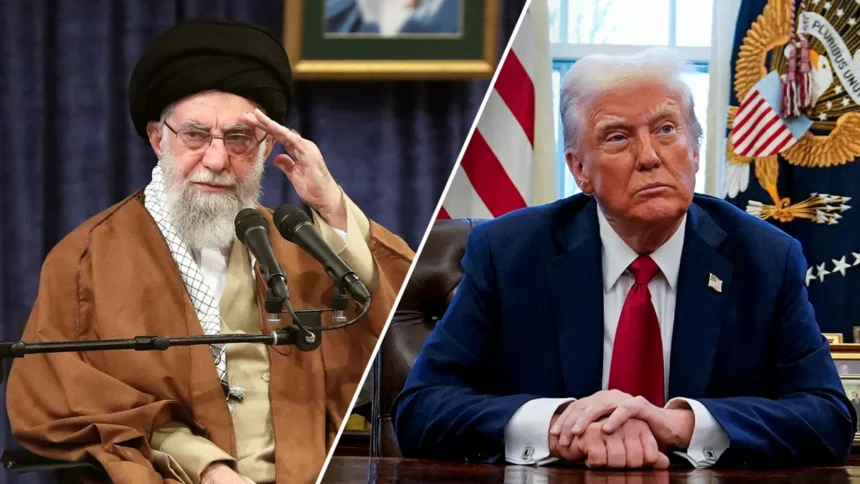
The US Iran deal talks 2026 moved into a delicate and contested phase on Monday as Tehran confirmed that significant progress had been made across key areas of negotiation — while firmly pushing back against suggestions that a formal agreement was imminent. Iran’s foreign ministry spokesman Esmail Baqai delivered the calibrated assessment from Tehran, acknowledging substantive progress while refusing to validate the optimism that US Secretary of State Marco Rubio had projected just hours earlier.
“It is correct to say that we have reached a conclusion on a large portion of the issues under discussion,” Baqai said. “But to say that this means the signing of an agreement is imminent — no-one can make such a claim.”
The exchange of statements from Washington and Tehran on Monday captures the essential dynamic of the current US Iran deal talks 2026 — genuine movement toward an agreement, complicated by internal political pressures on both sides, a communications challenge created by the uncertain whereabouts of Iran’s Supreme Leader, and a set of unresolved issues that both parties acknowledge remain deeply difficult.
US Iran Deal Talks 2026: What the Proposed Memorandum Contains
The US Iran deal talks 2026 centre on a memorandum of understanding whose reported contents reflect both the ambition and the limitations of what the two sides have been able to agree thus far. The memorandum is explicitly not a final settlement — it is a framework that leaves the most difficult issues to be negotiated in subsequent rounds.
The reported core elements of the memorandum include a 60-day ceasefire extension, a commitment to reopen the Strait of Hormuz — the critical waterway through which approximately 20% of the world’s oil and liquefied natural gas passes — and a plan for further negotiations specifically focused on Iran’s nuclear programme.
Several of the most consequential and contested issues remain explicitly deferred to later negotiation. These include the scope and timing of any Iranian sanctions relief, the release of frozen Iranian funds, and Washington’s demands for Iran to curtail its nuclear ambitions — demands that Tehran has historically resisted with great intensity.
What the proposed memorandum reportedly includes:
- A 60-day ceasefire extension — buying time for further diplomacy
- Commitment to reopen the Strait of Hormuz to international shipping
- A framework and plan for further negotiations on Iran’s nuclear programme
- The memorandum is explicitly interim — not a final or comprehensive settlement
Issues deferred to later negotiation:
- The scope and precise timing of Iranian sanctions relief
- The release of frozen Iranian funds — a long-standing Iranian demand
- Washington’s specific demands for Iran to curb its nuclear ambitions
- Longer-term security arrangements for the region
Rubio offered his own assessment of the Strait of Hormuz element of the deal — the component he appeared most confident about. “So we have, what I think is a pretty solid thing on the table in terms of their ability to open up the Straits,” he said — language that suggested greater confidence about this specific element than about the broader agreement as a whole.
US Iran Deal Talks 2026: The Communications Problem at the Top
Complicating the US Iran deal talks 2026 is a factor that neither side has publicised officially but that US intelligence has reportedly identified as a significant operational obstacle — the uncertain location and limited accessibility of Iran’s Supreme Leader Mojtaba Khamenei.
Khamenei — who assumed the supreme leadership role following the death of his father Ayatollah Ali Khamenei in an Israeli strike on the first day of the current conflict — was himself injured in that same strike. US intelligence reportedly believes he is currently located in an undisclosed location for security reasons, making direct communication with his diplomatic envoys difficult and therefore slowing the pace of talks on the Iranian side.
The implications of this communication challenge are significant. Any deal of the nature being discussed requires ultimate authorisation from the Supreme Leader — a figure whose approval cannot be assumed simply because Iranian negotiators have reached tentative agreement on specific points. If Khamenei cannot be easily reached or briefed, the process of obtaining that authorisation becomes slower and less predictable.
The Khamenei communication challenge:
- Mojtaba Khamenei succeeded his father as Supreme Leader after the elder Khamenei was killed in an Israeli strike
- He was himself injured in the same strike that killed his father
- US intelligence believes he is currently in an undisclosed location for security reasons
- His location makes direct communication with his diplomatic envoys difficult
- This communication difficulty is reportedly slowing the pace of negotiations on the Iranian side
- Any final agreement requires Supreme Leader authorisation — which cannot be obtained without communication
- Rubio acknowledged the delay: “It takes a little while to hear back from Iran”
Rubio’s acknowledgement — “it takes a little while to hear back from Iran” — was a diplomatically careful way of signalling this communication challenge without disclosing its specific nature publicly.
US Iran Deal Talks 2026: Rubio’s Optimism and Trump’s Contradiction
The US Iran deal talks 2026 have been complicated on the American side by a tension between Secretary of State Rubio’s public optimism and signals from President Trump himself that appeared to pull in different directions almost simultaneously.
Rubio — speaking to reporters in New Delhi on Monday — indicated that he had anticipated an announcement the previous evening. “We thought we might have some news last night. Maybe today,” he said, before cautioning reporters: “I wouldn’t read too much into it.”
That sequence — expecting news, not getting it, cautioning against over-interpretation — reflects both the genuine proximity of a potential deal and the fragility of the moment. Rubio’s presence in Delhi rather than at the negotiating table suggests the final elements of any agreement are being worked through at a level below the secretary of state — with Rubio waiting for confirmation rather than actively negotiating.
Trump’s own signals added further complexity. At the weekend, the President suggested the sides were approaching a deal — a statement that appeared to reflect genuine optimism about the progress being made. However, he subsequently told reporters he had instructed negotiators “not to rush into” an agreement — a qualification that raised questions about whether his weekend optimism had been premature or whether the instruction to slow down reflected domestic political pressure from within his own Republican Party.
The Trump-Rubio signals on Monday:
- Trump suggested at the weekend that sides were closing in on a deal
- He subsequently said he had instructed negotiators not to rush into an agreement
- Rubio said he expected news Sunday night — it did not materialise
- Rubio cautioned reporters not to read too much into the delay
- The disconnect between weekend optimism and Monday caution reflects the genuine complexity of the negotiations
- Both Trump and Rubio remain publicly committed to pursuing an agreement
US Iran Deal Talks 2026: Republican Opposition to the Deal
The US Iran deal talks 2026 have exposed a significant fracture within Trump’s Republican Party — with prominent senators publicly criticising the reported terms of the memorandum and warning that any deal perceived as lenient on Iran would represent a strategic mistake.
Senator Ted Cruz was among the most direct in his criticism, describing any deal along the reported lines as “a disastrous mistake.” Roger Wicker, chairman of the Senate Armed Services Committee, went further in his objection — arguing that a 60-day ceasefire would effectively nullify the military achievements of what he called “Operation Epic Fury.” His statement that such a deal would mean “everything accomplished by Operation Epic Fury would be for naught” reflects the view among some Republican hawks that military pressure on Iran should be sustained rather than relieved through diplomatic concession.
Senator Lindsey Graham — typically a close Trump ally whose criticism therefore carries particular weight — raised broader strategic questions about the deal’s implications for Iran’s regional standing. “It makes one wonder why the war started to begin with,” Graham said — a statement that challenges the coherence of pursuing military objectives and then negotiating terms that leave Iran in a position of regional influence.
Republican opposition to the proposed deal:
- Senator Ted Cruz: Called it “a disastrous mistake”
- Senator Roger Wicker (Armed Services Committee chair): Said a 60-day ceasefire would make Operation Epic Fury’s achievements worthless
- Senator Lindsey Graham (close Trump ally): Questioned Iran’s regional position under any deal — “it makes one wonder why the war started to begin with”
- The opposition reflects a hawkish Republican wing that views military pressure as preferable to negotiated compromise
- The split within Trump’s party creates domestic political pressure that may influence the final terms
- Trump’s instruction to negotiators not to rush may partially reflect awareness of this internal Republican resistance
The Republican opposition is not merely rhetorical — it has real implications for any agreement that requires Senate involvement or that creates domestic political costs for Trump in managing his coalition ahead of future electoral considerations.
US Iran Deal Talks 2026: Market Reaction and Global Stakes
The US Iran deal talks 2026 have already produced measurable effects on global financial markets — a reflection of how consequential the Strait of Hormuz situation is for the world economy and how sensitively markets are tracking the progress of negotiations.
On Monday, oil prices fell sharply on hopes that an agreement was approaching — a direct market response to the prospect of the Strait of Hormuz reopening and approximately 20% of the world’s oil and liquefied natural gas supply flowing freely again. Asian stock markets rose simultaneously on the same hopes — a parallel movement that illustrated how broadly the potential resolution of the Hormuz blockade is expected to benefit global economic conditions.
Global market and economic implications:
- Oil prices fell sharply on Monday on hopes of a US-Iran agreement
- Asian stock markets rose simultaneously — reflecting optimism about economic stabilisation
- The Strait of Hormuz carries approximately 20% of the world’s oil and liquefied natural gas
- Iran has been blocking the strait — creating a global energy supply disruption with widespread economic consequences
- Reopening the strait is the single most immediately economically significant element of any deal
- Market sensitivity to each diplomatic development reflects how consequential the blockade has been
- A deal that reopens Hormuz would likely produce significant further oil price reductions and market gains
The scale of the market reaction to merely the hope of an agreement — rather than an actual deal — illustrates the magnitude of the economic disruption that the Strait of Hormuz blockade has created. The energy shock flowing from the closure has affected fuel prices, shipping costs, and economic confidence across multiple continents.
US Iran Deal Talks 2026: What Comes Next
The US Iran deal talks 2026 remain in a genuinely uncertain position as of Monday evening. Progress has been confirmed by both sides. A deal has not been confirmed by either. The gap between those two positions — and what it will take to close it — defines the immediate future of one of the world’s most consequential diplomatic processes.
Key factors shaping what comes next:
- Whether Mojtaba Khamenei can be reached and briefed sufficiently to authorise a final deal
- Whether the deferred issues — sanctions relief, frozen funds, nuclear programme — can be adequately framed for an interim agreement without resolving them
- Whether Republican opposition within the US Senate creates political constraints on Trump’s negotiating flexibility
- Whether Iran’s domestic political pressures — including hardliners who oppose any accommodation with Washington — allow the negotiating team to finalise terms
- Whether the market optimism generated by Monday’s developments creates additional pressure for a quick resolution
- Whether Trump’s instruction to “not rush into” a deal reflects genuine strategic patience or domestic political management
Final Word on US Iran Deal Talks 2026
The US Iran deal talks 2026 sit at one of those extraordinary diplomatic moments where the distance between an agreement and its absence can be measured in days — or in decisions made by leaders in undisclosed locations communicating through difficult channels with envoys navigating the most consequential negotiation of the decade.
Iran says a conclusion has been reached on a large portion of the issues. The US says it has something solid on the Strait of Hormuz. Markets are already pricing in hope. Republican senators are already registering opposition.
What happens next depends on whether the Supreme Leader can be reached, whether the remaining issues can be adequately framed, and whether both sides have the political courage to sign something imperfect rather than wait for something perfect that may never arrive.
The Strait remains closed. The oil price remains elevated. The world watches and waits.
GET UPDATED ON THE NEWS INK CURRENT AFFAIRS.