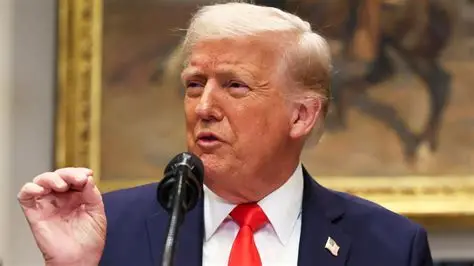
Trump State of the Union Speech: Why His Fiery 2026 Address Showed No Shift in Direction
Trump State of the Union speech in February 2026 was long, theatrical and unmistakably political. President Donald Trump used the House chamber not only to describe the condition of the country, but to tell voters that his second-term agenda was working and that Republicans deserved to keep control of Congress in the midterm elections.
The address took place on February 24, 2026, almost five months before America’s 250th Independence Day celebrations. Trump called the moment a “golden age of America” and said the country had achieved a “turnaround for the ages.” The official transcript archived by The American Presidency Project shows the tone clearly: confident, combative, patriotic and unwilling to concede that public frustration over prices, immigration enforcement and political division required a different approach.
That is the central meaning of the Trump State of the Union speech. It was not a reset. It was not an attempt to soften his style. It was a defense of the same political brand that brought him back to office: economic nationalism, border enforcement, grievance politics, patriotic spectacle and a promise that America was winning again.
Reuters reported that the address lasted one hour and 47 minutes, making it the longest State of the Union on record. Length mattered because it reflected the speech’s unusual mix of policy, campaign messaging, guest introductions, partisan attacks and dramatic ceremony. The Trump State of the Union speech was built to overwhelm the news cycle as much as to outline a governing plan. Trump did not merely speak to Congress. He staged a national broadcast designed for supporters, swing voters and the 2026 midterm battlefield.
A record-length address built for television
The Trump State of the Union speech was officially a constitutional report to Congress, but its structure felt closer to a campaign rally with ceremonial breaks. Trump introduced military figures, praised rescue workers, highlighted victims of crime, celebrated the U.S. men’s Olympic hockey team and repeatedly asked lawmakers to stand or react.
The most emotional moments were carefully chosen. Coast Guard Petty Officer Scott Ruskan, credited with rescuing 165 people during the 2025 Texas floods, received the Legion of Merit during the address. Trump also used the presence of Olympic athletes to reinforce his broader message that America was “winning” again.
Some of the original reporting around the speech needs correction. The address did not simply honor a 100-year-old World War II veteran with the Medal of Honor in the way some summaries suggested. The official transcript refers to a veteran named Buddy, who had earned honors including a Purple Heart and Bronze Star and was approaching his 100th birthday. Reuters separately reported that Army Chief Warrant Officer Eric Slover received a Medal of Honor during the address, while other honorees included Korean War Navy pilot E. Royce Williams and hockey goaltender Connor Hellebuyck.
These details matter because the Trump State of the Union speech relied heavily on symbolic storytelling. The Trump State of the Union speech used guests as evidence for a political narrative rather than as ceremonial decoration. The emotional guests were not side notes. They were part of the argument. Trump wanted viewers to see strength, courage, crime victims, athletes, soldiers and rescued civilians as proof that his version of America was morally and politically clear.
The economy was the center of the pitch
The Trump State of the Union speech put the economy at the center of the night. Trump said inflation was falling, incomes were rising, the border was secure, fuel prices were lower and the stock market had set repeated records since his 2024 election victory. He described the United States as “the hottest country anywhere in the world.”
The speech was designed to answer one of the Republican Party’s biggest problems before the midterms: voters were still anxious about affordability. Reuters noted that Trump spoke against a backdrop of voter frustration over the high cost of living. Its analysis cited Reuters/Ipsos polling showing that 56% of Americans disapproved of his handling of the economy, while 36% approved.
That gap explains why the Trump State of the Union speech spent so much time on household issues. Trump talked about mortgages, health care, drug prices, utility bills, retirement savings, auto loans, tips, overtime and Social Security taxes. He did not want the economic conversation to be only about tariffs or Wall Street. He wanted it to feel personal.
Still, the biggest weakness in the Trump State of the Union speech was the gap between presidential confidence and public experience. If a family is still paying more for groceries, rent or insurance, broad claims about stock market records may not feel persuasive. That is why The News Ink’s wider economy coverage matters: national economic language often sounds very different from household reality.
A new retirement-savings promise with few details
One of the more concrete policy ideas in the Trump State of the Union speech was a retirement-savings proposal. Trump said the government would match up to $1,000 in employee contributions for workers who lack employer-backed retirement plans. Reuters reported that he offered few implementation details, but investors and policy analysts treated the idea as one of the night’s main economic announcements.
The proposal was politically smart. Retirement security is not only a Wall Street topic. It reaches working-class voters, gig workers, service employees and people whose employers do not offer generous benefits. If designed well, such a plan could help workers build savings earlier and reduce future dependence on emergency support.
But the speech left major questions unanswered. Who would qualify? Would the match be refundable? Would it run through existing 401(k)-style accounts, IRAs or a new federal platform? How much would it cost? Would Congress support it? Would workers with unstable incomes be able to benefit?
Those questions make the Trump State of the Union speech more of a political marker than a finished policy blueprint. For readers trying to understand retirement and savings choices, The News Ink’s personal finance section is a useful place to follow how proposals like this could affect ordinary households.
Tariffs remained central after a Supreme Court setback
The Trump State of the Union speech also showed that tariffs remain one of Trump’s defining economic tools. He defended tariffs as a source of revenue and leverage, even after a Supreme Court ruling struck down many of his emergency-powers duties.
Reuters reported that after the Court overturned Trump’s emergency-powers tariffs, he signed an order imposing temporary 10% tariffs for 150 days and said the rate would rise to 15%. In the speech, he suggested most countries and corporations wanted to maintain trade and investment agreements with the United States.
That was a striking choice. A president who had just suffered a major legal defeat on tariffs might have used the State of the Union to reassure markets with a detailed replacement plan. Instead, the Trump State of the Union speech largely reaffirmed the strategy. Investors looking for clarity on trade policy got more confidence than detail.
This is one reason the Trump State of the Union speech signaled no real shift in direction. Trump did not retreat from tariffs. He recast them as part of an economic comeback. Critics argue that tariffs can raise costs for consumers and businesses. Supporters say they protect jobs, pressure trade partners and fund domestic priorities. Trump chose the second argument and left little room for doubt.
Immigration returned as a campaign weapon
The Trump State of the Union speech also returned to immigration as one of Trump’s most reliable political weapons. He described the border as historically secure, blamed Democrats for past crossings and highlighted crimes committed by people in the country illegally.
One of the main new proposals was the “Dalilah Law,” a measure Trump said would bar states from granting commercial driver’s licenses to undocumented immigrants. The proposal was tied to the story of Dalilah Coleman, a young girl injured in a 2024 crash. Trump used her presence in the gallery to connect immigration enforcement with public safety.
He also renewed calls for the SAVE America Act, presenting it as a voting-integrity measure. The official transcript shows Trump demanding voter ID, proof of citizenship and tighter limits on mail ballots. Supporters frame these ideas as election security. Critics argue that non-citizen voting is rare and that stricter proof-of-citizenship rules could make voting harder for eligible Americans.
The Trump State of the Union speech made clear that immigration would remain central to the Republican midterm message. It also showed how Trump prefers to argue the issue: through individual cases, sharp accusations and claims that Democrats cannot be trusted with security.
AI, energy and the next infrastructure fight
A shorter but important part of the Trump State of the Union speech focused on artificial intelligence and energy demand. Trump suggested that his administration would work with AI companies so data centers and advanced computing needs would not drive up consumer electricity bills.
That idea matters because AI is now an infrastructure story as much as a technology story. Large data centers require huge amounts of electricity, land, cooling and grid capacity. If AI growth accelerates without careful planning, local communities could see pressure on power systems, water use and energy prices.
The proposal was not developed in detail during the speech, but it pointed to a real policy challenge. The United States wants to lead in AI while also keeping electricity affordable. That balance will shape industrial policy, climate planning, utility regulation and competition between states seeking technology investment.
For readers following this area, The News Ink’s AI trends in 2026 and cloud computing guide explain why AI growth depends on physical infrastructure, not just software breakthroughs.
Foreign policy took a back seat
Given rising international tensions, the Trump State of the Union speech was notable for how long it delayed major foreign-policy themes. Reuters observed that Trump did not mention Iran until well over an hour into the address, despite questions about whether he would make a detailed case for military action.
When Trump did discuss foreign affairs, he relied heavily on familiar themes: preventing Iran from obtaining nuclear weapons, describing adversaries as threats, praising American military strength and arguing that allies should pay more for defense. Ukraine, Russia, China and Greenland received much less emphasis than some analysts expected.
That imbalance was revealing. Trump wanted the speech to be judged mainly on domestic strength. The State of the Union became a kitchen-table and culture-war address more than a grand strategy speech. That choice may have reflected midterm politics. Foreign policy matters, but voters angry about prices, immigration or crime usually shape congressional elections more directly.
The Trump State of the Union speech therefore suggested that the White House believed its best argument was not a new doctrine abroad. It was a claim of restored order at home.
The partisan tone was unmistakable
The Trump State of the Union speech was fiery not only because of its policy content but because of its attacks on Democrats. Trump accused Democrats of damaging the country, opposing tax relief, weakening border security and refusing to stand for basic principles.
At times, the chamber became visibly tense. The official transcript records Rep. Al Green being escorted from the chamber early in the speech. Later interruptions included calls to “release the Epstein files.” Reuters described the address as political theatre, with Democrats clashing with Trump and the president using spectacle to reinforce narratives he wanted voters to remember.
This matters because State of the Union addresses traditionally try, at least rhetorically, to rise above ordinary politics. Many presidents attack opponents indirectly while presenting national unity as the ideal. Trump took a different approach. He used the occasion to draw a hard line between his supporters and his opponents.
That approach energizes his base, but it also limits persuasion. The Trump State of the Union speech was designed to draw contrast, not consensus. Voters who already dislike Trump’s style are unlikely to be won over by a speech that calls Democrats crazy or frames disagreement as anti-American. The Trump State of the Union speech may have strengthened loyalty among supporters while doing less to soften concerns among skeptics.
What was new and what was familiar
The easiest way to understand the Trump State of the Union speech is to separate new policy signals from familiar themes.
| Area | What Trump emphasized |
|---|---|
| Economy | Lower inflation claims, stock market gains, lower fuel prices and rising incomes |
| Retirement | A proposed government match of up to $1,000 for some workers’ savings |
| Tariffs | Continued support for trade duties despite a Supreme Court setback |
| Immigration | Border security, driver’s license restrictions and penalties for sanctuary policies |
| Elections | Voter ID, proof of citizenship and restrictions on mail ballots |
| AI and energy | Talks with AI companies to limit pressure on consumer electricity bills |
| Political message | Republicans should keep Congress because America is “winning again” |
The table shows why the speech felt both busy and familiar. There were new proposals, but the deeper message did not change. The Trump State of the Union speech was a restatement of Trumpism, not a redesign of it.
Why the speech mattered for the midterms
The midterm stakes were clear. Republicans needed to defend their congressional majorities, and the White House needed to show that Trump could still set the agenda. A State of the Union gives any president a rare prime-time platform, but this one came at a moment when economic approval numbers were weak and Democrats were looking for openings.
Trump used the speech to argue that Republicans had delivered tax relief, border security, investment, lower prices and national pride. Democrats argued that the speech ignored the daily costs and social tensions many Americans still felt.
The Trump State of the Union speech may have worked best as a base-mobilization tool. It gave supporters a long list of claims, images and slogans. It reminded Republican candidates what issues the president wants front and center: tariffs, immigration, crime, voting rules, cultural issues and economic optimism.
Whether it persuaded undecided voters is harder to know. Long speeches can dominate one news cycle without changing public opinion. The more lasting question is whether voters see the economy the way Trump described it, or the way their monthly bills describe it.
The careful takeaway
The Trump State of the Union speech was historic for its length, forceful in its tone and revealing in its priorities. It showed a president convinced that his course is working and unwilling to soften the message before a difficult midterm election.
There were policy ideas worth watching, especially the retirement-savings match, AI energy talks and renewed tariff strategy. But the larger story was continuity. Trump leaned into spectacle. He leaned into immigration. He leaned into tariffs. He leaned into attacks on Democrats. He leaned into the claim that America had entered a new golden age.
That is why the best headline is not simply that Trump delivered a fiery address. The real point is that the Trump State of the Union speech signaled no meaningful shift in direction. For supporters, that was the appeal. For critics, it was the warning.
For more political analysis, fact-checks and public-interest reporting, follow The News Ink on Medium.