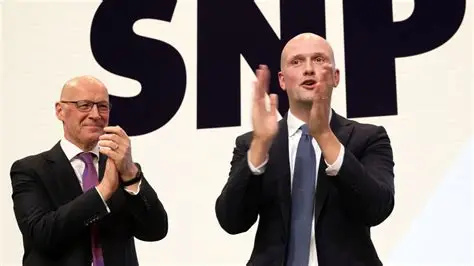
Stephen Flynn Wins Holyrood Seat in Significant SNP Election Boost
Stephen Flynn wins Holyrood seat in one of the most closely watched contests of Scotland’s election cycle, delivering an important victory for the SNP in Aberdeen Deeside and North Kincardine.
The SNP Westminster leader secured the constituency with a narrow but decisive majority over the Conservatives, strengthening his political influence at a key moment for the party.
Flynn’s victory also marks a major turning point in his political career because he will now leave Westminster to take up his role in the Scottish Parliament.
The result has intensified discussion about Flynn’s future within the SNP, with many party supporters viewing him as a possible future leader.
Stephen Flynn Wins Holyrood Seat After High-Profile Campaign
The announcement that Stephen Flynn wins Holyrood seat followed weeks of intense campaigning across north-east Scotland.
Flynn secured:
- 11,788 votes
- A majority of 1,244 votes
- A 3.6% lead over the Conservatives
Conservative candidate Liam Kerr finished second with 10,544 votes, while Reform candidate Duncan Massey placed third with 6,113 votes.
The close result highlighted the increasingly competitive political landscape in Scotland, especially in areas where multiple parties continue fighting for support.
Stephen Flynn Wins Holyrood Seat and Prepares Westminster Exit
Because Stephen Flynn wins Holyrood seat, he must now resign as the MP for Aberdeen South.
Under current parliamentary rules, Flynn has 49 days to formally step down from Westminster before a by-election takes place.
His transition from London politics to Holyrood represents a major shift for both:
- The SNP leadership structure at Westminster
- Scottish parliamentary politics
Flynn has become one of the party’s most recognizable national figures during his time in the UK Parliament.
Stephen Flynn Wins Holyrood Seat After Dual Mandate Debate
The story surrounding how Stephen Flynn wins Holyrood seat became even more politically significant because of earlier controversy regarding dual mandates.
Flynn initially planned to hold seats in both Westminster and Holyrood simultaneously. That proposal triggered criticism within parts of the SNP and wider Scottish politics.
Critics argued that politicians should not represent voters in two parliaments at the same time.
After growing backlash, Flynn reversed his position.
MSPs later voted to ban dual mandates from this election onward, meaning Flynn must now fully transition to Holyrood.
Stephen Flynn Wins Holyrood Seat Amid SNP Election Momentum
The result that Stephen Flynn wins Holyrood seat also reflects broader momentum for the SNP during the Scottish election period.
Alongside Flynn’s victory, the SNP also captured Aberdeen Central.
Former government adviser Jack Middleton secured that constituency with a strong majority over Labour, giving the party another important gain in the north-east.
The results strengthened SNP hopes of remaining Scotland’s dominant political force despite growing competition from other parties.
Stephen Flynn Wins Holyrood Seat With Focus on North Sea Jobs
After confirmation that Stephen Flynn wins Holyrood seat, the politician outlined his priorities for the constituency and Scotland’s future.
Flynn promised to support:
- North Sea oil and gas workers
- Families facing cost-of-living pressures
- Young people seeking opportunities
- Economic growth in north-east Scotland
He also repeated the SNP’s long-standing commitment to Scottish independence.
Flynn argued that Scotland would eventually become an independent nation and benefit economically as a result.
Stephen Flynn Wins Holyrood Seat During Changing Scottish Political Landscape
The election in which Stephen Flynn wins Holyrood seat comes at a time when Scottish politics continues to evolve rapidly.
Several major trends have shaped the campaign, including:
- Debate over Scottish independence
- Rising support for Reform
- Cost-of-living concerns
- Pressure on traditional parties
- Competition between Labour and the SNP
Political analysts believe Flynn’s victory reinforces his position as one of the SNP’s strongest public communicators during a challenging political period.
Stephen Flynn Wins Holyrood Seat and Boosts Leadership Speculation
The fact that Stephen Flynn wins Holyrood seat will likely increase speculation about his long-term leadership ambitions.
Flynn has already built a strong national profile through:
- Westminster debates
- Media appearances
- Party leadership responsibilities
- Campaign messaging
Many within Scottish politics see him as a potential future SNP leader because of his communication style and growing popularity among party supporters.
Although no immediate leadership contest exists, Flynn’s move to Holyrood places him closer to the center of Scottish political power.
Stephen Flynn Wins Holyrood Seat in Tight Electoral Contest
Despite the victory, the narrow margin showed that political competition remains intense in several Scottish constituencies.
The Conservatives maintained significant support in the area, while Reform also attracted attention with more than 6,000 votes.
The result demonstrated how Scottish elections increasingly involve multiple competitive parties rather than traditional two-party contests.
Political fragmentation continues reshaping elections across the UK.
Key Facts as Stephen Flynn Wins Holyrood Seat
Election Result
- Stephen Flynn (SNP): 11,788 votes
- Liam Kerr (Conservative): 10,544 votes
- Duncan Massey (Reform): 6,113 votes
Majority
- 1,244 votes
- 3.6% lead
Next Steps
- Flynn must resign as MP for Aberdeen South
- Westminster by-election expected
- Flynn transitions fully to Holyrood
Stephen Flynn Wins Holyrood Seat and Faces New Expectations
Now that Stephen Flynn wins Holyrood seat, expectations surrounding his performance are likely to increase significantly.
Supporters will expect him to:
- Deliver strong constituency representation
- Defend energy sector jobs
- Challenge political opponents effectively
- Help shape SNP strategy in Holyrood
At the same time, opposition parties will closely monitor how he handles the transition from Westminster politics to the Scottish Parliament.
SNP Continues Focusing on Independence Debate
The election result where Stephen Flynn wins Holyrood seat also keeps the issue of Scottish independence firmly in political discussion.
Flynn reiterated his belief that Scotland would eventually become independent and economically stronger afterward.
The SNP continues presenting independence as central to its long-term political vision, despite ongoing debate over economic challenges and public opinion.
The issue remains one of the defining divisions in Scottish politics.
Final Thoughts on Stephen Flynn Wins Holyrood Seat Result
The result confirming Stephen Flynn wins Holyrood seat marks an important political moment for both the SNP and Scottish politics overall.
Flynn’s move from Westminster to Holyrood strengthens his influence within the party while also setting the stage for a future by-election in Aberdeen South.
His victory highlights the SNP’s continued strength in key Scottish regions, even as political competition becomes increasingly fragmented across the country.
As Holyrood prepares for a new parliamentary session, Flynn’s arrival is expected to bring added attention, energy, and scrutiny to Scotland’s evolving political landscape.