Women’s T20 World Cup: Historic England, Scotland and Ireland Story Now Has Real Results
Women’s T20 World Cup coverage around England, Scotland and Ireland has already moved beyond the original fixture announcement. The draw was important because Scotland and Ireland qualified through the global qualifier in Nepal and joined hosts England in the same group. It promised a rare all-British-and-Irish cricket storyline on home soil, including England against Scotland at Headingley and England against Ireland in Southampton.
Now the Women’s T20 World Cup is underway, the story is clearer. England have converted the favourable home setting into a powerful start and have already reached the semi-finals with one group match still to play. Scotland made their own history by beating Ireland at Old Trafford, their first victory at a Women’s T20 World Cup. Ireland, meanwhile, have found the step up painful but remain part of a bigger picture: the 2026 edition has expanded the global stage and given more teams exposure to elite tournament cricket.
The Women’s T20 World Cup is therefore not only a schedule story. It is a live measure of where women’s cricket stands in England, Scotland and Ireland. England look like serious title contenders. Scotland have shown visible progress. Ireland have discovered how unforgiving a 12-team global event can be.
Why the Women’s T20 World Cup Draw Felt Different
The ICC fixture announcement placed England, Scotland, Ireland, New Zealand, West Indies and Sri Lanka in Group B. Group A contained Australia, India, Pakistan, South Africa, Bangladesh and the Netherlands. That Women’s T20 World Cup structure created one of the most interesting group-stage stories of the tournament because three nearby nations were placed together in a home-hosted event.
The original announcement mattered for several reasons. England were hosts and one of the strongest teams in the competition. Scotland and Ireland had just come through the qualifier in Nepal. New Zealand arrived as defending champions after winning the 2024 title in the United Arab Emirates. West Indies and Sri Lanka added further quality and unpredictability.
The Women’s T20 World Cup had also expanded to 12 teams, the largest field in tournament history. That change gave Scotland, Ireland, Bangladesh and the Netherlands a route into the main event through the global qualifier. It also created a wider range of storylines than a simple contest among the established powers.
For England supporters, the fixtures offered a chance to see the national team across major venues. For Scotland and Ireland, the draw offered opportunity and pressure at the same time. A place in the same group as England guaranteed visibility. It also guaranteed a very difficult competitive test.
How Scotland and Ireland Reached the Main Event
The Women’s T20 World Cup qualifier made the main event a reality for Scotland and Ireland after the global event in Nepal. Bangladesh, Ireland, Scotland and the Netherlands took the four available qualification places, completing the 12-team lineup for the tournament in England and Wales.
Ireland’s qualification extended their record of reaching the competition, while Scotland returned for their second appearance after making their debut two years earlier. That alone made the draw more significant. These were not invited teams placed into a home storyline for convenience. They had earned the right to be there.
The Women’s T20 World Cup qualifier also showed how quickly the women’s game is widening. Nepal hosted the event, the Netherlands secured a debut place, Scotland pushed through from a competitive group and Ireland found enough results to return to the global stage. The Women’s T20 World Cup has often been dominated by a smaller group of elite teams, but the 2026 edition has made the route more visible for emerging and developing sides.
That matters for cricket beyond one tournament. Qualification exposes players to pressure, improves domestic conversations around funding and gives boards stronger reasons to invest in facilities, coaching and professional structures. For more background on formats and the wider cricket landscape, readers can explore The News Ink’s cricket guide.
The Opening Fixtures Changed the Tone Quickly
The Women’s T20 World Cup began with England making a statement against Sri Lanka at Edgbaston, as the ICC match report confirmed. Danni Wyatt-Hodge scored an unbeaten 105, England posted 219 for 1 and Sri Lanka were bowled out for 132. The 87-run win immediately showed that the hosts were not simply carrying expectation; they were capable of turning it into scoreboard pressure.
Ireland and Scotland then opened their campaigns against each other at Old Trafford on 13 June. That match was always likely to be emotional because both sides knew it could be their best opportunity to claim a group-stage win. Scotland seized it. ESPNcricinfo reported that Kathryn Bryce led from the front, Scotland made 161 for 5 and Ireland were dismissed for 121. The 40-run result gave Scotland their first Women’s T20 World Cup win.
England then faced Ireland in Southampton on 16 June. It was not the one-sided contest some expected. Ireland made England work, restricting the chase and forcing a few nervous moments. England eventually won by four wickets after reaching 119 for 6 in 17.3 overs, with Sky Sports reporting Nat Sciver-Brunt’s precautionary retirement on 48. The result kept England perfect, but it also showed Ireland could compete in phases.
By the time England met Scotland at Headingley on 20 June, the match had become more than a historic fixture. Scotland had a win, England had momentum and the regional rivalry had real tournament meaning.
England Against Scotland Delivered a Proper World Cup Moment
The Women’s T20 World Cup meeting between England and Scotland at Headingley was described before the tournament as the first time the two teams would meet at an ICC event on English turf. It deserved the attention because it connected rivalry, geography and the growth of the women’s game in one fixture.
England won by 38 runs, as the ICC’s match coverage recorded, but Scotland were not embarrassed. England made 200 for 5, powered by Sophia Dunkley’s 57 and late hitting from Freya Kemp and Dani Gibson. Scotland replied with 162 for 7, showing ambition in the chase even as England’s bowling attack kept control.
The result mattered to both sides. England maintained their unbeaten start and strengthened their position at the top of Group B. Scotland, despite defeat, produced enough resistance to show why their qualification was meaningful. The match also produced the highest combined total in a Women’s T20 World Cup game, with the two teams scoring 362 runs between them.
That is exactly the kind of fixture the expanded tournament needs. England were expected to win, but Scotland contributed to a high-quality, high-scoring match that gave supporters a reason to believe more investment can narrow the gap over time.
England Have Already Reached the Semi-Finals
The Women’s T20 World Cup picture changed again on 24 June when England beat West Indies by 38 runs at Lord’s. The ICC semi-final race update confirmed that the win made England the first team to qualify for the semi-finals. With four wins from four matches and a strong net run rate, the hosts have backed up their status as one of the favourites.
England’s route so far has been impressive because it has not relied on one type of win. They overwhelmed Sri Lanka with batting power, survived a more awkward chase against Ireland, outscored Scotland in a fast-moving Headingley match and then handled West Indies under heavy pressure at Lord’s. Different players have stepped up, and the squad has managed the absence or injury concerns around key names better than many teams would.
The Women’s T20 World Cup still has knockout pressure ahead, but England have already achieved the first target. They are through. Their remaining group match against New Zealand now becomes an opportunity to sharpen combinations, test plans and protect momentum rather than a must-win survival match.
That said, England will know better than to treat the rest of the group stage casually. Knockout cricket can turn on one over, one dropped catch or one powerplay collapse. The strongest teams use comfortable positions to become cleaner, not looser.
Scotland’s Campaign Shows Progress Despite Elimination Pressure
The Women’s T20 World Cup has been demanding for Scotland, but the campaign still contains real positives. The opening win against Ireland was a Women’s T20 World Cup landmark. It changed the way Scotland’s tournament was perceived and gave players evidence that they can produce results on a world stage.
The defeats have also been instructive. West Indies beat Scotland by 35 runs, England won by 38 runs and New Zealand later kept their semi-final hopes alive with a six-wicket victory over Scotland in Bristol. Those results showed the difference between competing in moments and controlling a full match against more experienced sides.
Scotland’s batters have produced bright passages, and their bowling has created pressure in spells. The issue has been sustaining that quality for 20 overs against deeper lineups. That is a familiar challenge for developing teams in a global tournament. It is not enough to have one strong partnership or one excellent new-ball spell. The best sides keep finding contributors.
The Women’s T20 World Cup has therefore given Scotland both a historic achievement and a clear development map. More domestic opportunity, regular high-level fixtures and continued professional support will decide whether the next campaign turns competitive passages into more wins.
Ireland’s Tough Start Should Not Be Ignored
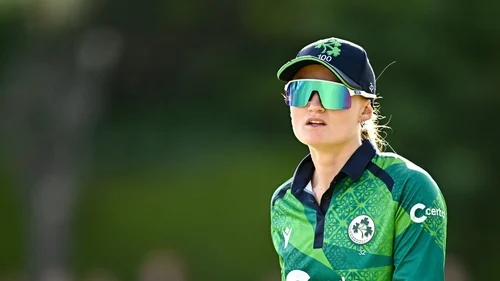
The Women’s T20 World Cup has been harder for Ireland. They lost the opener against Scotland, pushed England without quite threatening a major upset, and then suffered further defeats as the group moved on. The results have left them near the bottom of Group B, and the final group match against West Indies remains a difficult assignment.
There is no need to soften the competitive reality. Ireland have struggled to turn starts into full innings and have lacked the depth to recover when early plans failed. That is visible in a tournament where every side has players capable of changing a match quickly.
At the same time, Ireland’s place in the Women’s T20 World Cup still matters. Global events provide harsh feedback, but that feedback is useful only if it leads to better structures. Ireland need more players exposed to high-quality domestic and overseas cricket before the next Women’s T20 World Cup, stronger pathways and enough fixtures to make tournament pressure feel less unfamiliar.
The danger after a difficult World Cup is to treat the results as proof that participation was the limit of ambition. The better response is to treat them as evidence of where the next investment must go.
The Group B Story So Far
The Women’s T20 World Cup Group B table has already created a clear split. England are through. West Indies and New Zealand remain heavily involved in the race for the other semi-final place. Sri Lanka have had bright moments but need other results to help them. Scotland and Ireland have found the tournament demanding, even though Scotland’s win gave them a major milestone.
| Team | Story so far |
|---|---|
| England | Four wins from four and already qualified for the semi-finals |
| West Indies | Still in the semi-final race after a strong start before losing to England |
| New Zealand | Defending champions still chasing a knockout place after beating Scotland |
| Sri Lanka | Capable of individual brilliance but inconsistent across the group |
| Scotland | Historic first win over Ireland, followed by defeats against stronger sides |
| Ireland | Competitive spells, but still searching for a complete performance |
This table is a snapshot, not the final record. The Women’s T20 World Cup group stage still has matches left, and positions can shift quickly. But the broad pattern is already visible. England have moved like contenders. Scotland have earned respect. Ireland have learned how steep the climb remains.
Why the Venues Matter
The Women’s T20 World Cup is also a venue story. The tournament has taken matches to Edgbaston, Old Trafford, Headingley, Southampton, Bristol, The Oval and Lord’s. That matters because women’s cricket needs visibility in major grounds, not only occasional marquee finals.
England’s fixtures have already used that national footprint. They opened at Edgbaston, faced Ireland at Southampton, met Scotland at Headingley and beat West Indies at Lord’s. The semi-finals are scheduled for The Oval, while the final will be played at Lord’s on 5 July.
Those venues give the tournament weight. A match at Headingley or Lord’s feels different for players and supporters. It signals that the event belongs in serious cricket spaces. It also helps local fans see elite women’s cricket without travelling only to one city.
The News Ink’s guide to major sports tournaments in 2026 explains why staging and venue selection shape how events are remembered. For the Women’s T20 World Cup, the geography is part of the legacy.
What the Expanded Format Has Already Proved
The Women’s T20 World Cup expanded field has already justified itself in one important way: it has created more stories. Scotland’s first win, the Netherlands’ debut, Bangladesh’s qualification route and Ireland’s return all give the tournament a wider identity.
Critics of expansion often worry about one-sided matches. Some uneven results are inevitable, especially when developing sides face elite teams. But a tournament cannot grow if the same small group plays each other forever. Exposure is part of development. Teams learn from being tested. Boards face more pressure to invest when their national side is visible on a global stage.
The key is not expansion alone. It is what happens after expansion. Scotland need more matches against stronger teams. Ireland need sharper pathways. The Netherlands need support after their debut. Bangladesh need their qualifying success to feed into sustained progress. If those things happen, the Women’s T20 World Cup can become more competitive, not just bigger.
The growth of the women’s game will depend on the same principles that shape elite performance across sports: coaching, facilities, recovery, analysis and repeated high-pressure competition. The News Ink’s sports training and technology guide explains why those details matter for modern athletes.
A Historic Draw Has Become a Live Tournament Story
The Women’s T20 World Cup draw originally gave England, Scotland and Ireland a shared stage. That alone made the fixture list newsworthy. Now the results have added substance. England are in the semi-finals. Scotland have a first tournament win. Ireland have endured a tough but important learning experience.
The strongest update is therefore not simply that Scotland and Ireland were set to face England. They have now done so. England beat Ireland by four wickets and Scotland by 38 runs, then secured semi-final qualification by beating West Indies. Scotland’s most memorable moment came against Ireland at Old Trafford. Ireland still need their campaign to produce a stronger finish, but their presence in the tournament remains part of the expanded global picture.
The Women’s T20 World Cup has already delivered what the draw promised: home crowds, regional rivalries, historic fixtures and a clearer view of the gap between contenders and challengers. England are chasing a title. Scotland are chasing growth. Ireland are chasing a response. That is what makes the 2026 Women’s T20 World Cup more than a fixture list.
For more cricket and sports analysis, join The News Ink’s WhatsApp channel.