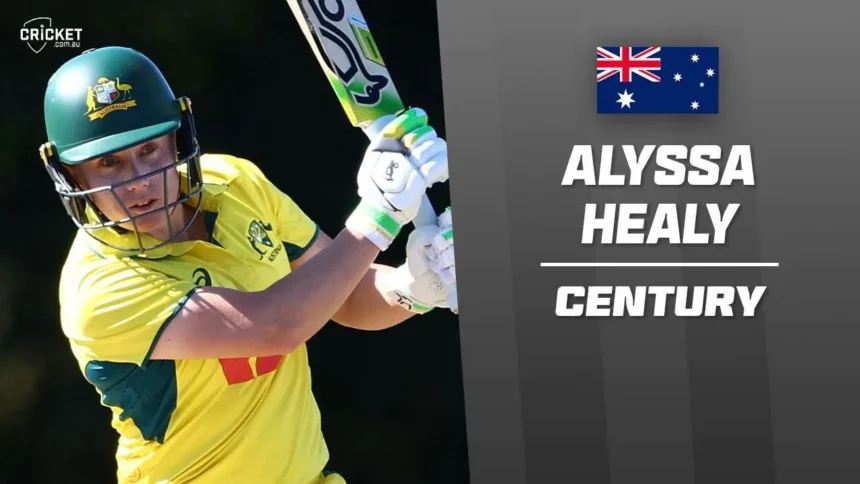
Alyssa Healy ODI: How a Stunning Farewell Triumph Powered Australia Past India
Alyssa Healy ODI farewell began with control, class and a reminder of why Australia trusted her for so long. In the opening one-day international against India at Allan Border Field in Brisbane, Healy scored 50 from 70 balls as Australia chased 215 with six wickets in hand and 70 balls remaining. It was not the most explosive innings of her career, but it was exactly what Australia needed after losing the recent T20I series 2-1.
The full story became even stronger over the next week. Australia won the second ODI in Hobart by five wickets, then crushed India by 185 runs in the third match to complete a 3-0 ODI sweep. Healy signed off from ODI cricket in spectacular fashion, scoring 158 from 98 balls in her final one-day appearance. Australia then won the one-off Test in Perth by 10 wickets, giving Healy a dominant finish to her international career.
That wider context changes the original article. The first ODI was not simply a strong response after a T20I disappointment. It was the start of a farewell surge. The Alyssa Healy ODI story became a final statement from one of women’s cricket’s most influential wicketkeeper-batters and captains.
Editor’s update — June 2026: This article has been rebuilt after the ODI series and Perth Test were completed. It now covers Healy’s opening half-century, Australia’s 3-0 ODI sweep, her farewell 158 in Hobart and the final Test victory.
Alyssa Healy ODI Farewell Began With a Calm Brisbane Fifty
The Alyssa Healy ODI farewell started with a professional chase. India batted first in Brisbane and were bowled out for 214. Smriti Mandhana made 58, Harmanpreet Kaur scored 53 and Kashvee Gautam added a useful 43 from number eight. Australia’s bowlers shared the work, with Ash Gardner taking 3-33 and Megan Schutt returning with 2-42.
Australia’s chase began with enough early movement to keep India interested, but Healy and Beth Mooney settled the match. Healy made 50 from 70 balls, Mooney scored 76, and Annabel Sutherland finished unbeaten on 48. Australia reached 217-4 with 11.4 overs left.
The Guardian’s live report described a controlled six-wicket win at Allan Border Field. For Australia, the result mattered because India had just won the T20I series. For Healy, it was the first step in the final stretch of a career that had already shaped a generation of women’s cricket.
The Alyssa Healy ODI innings was not about fireworks. It was about setting a chase, calming the dressing room and restoring Australia’s authority after a rare home T20I series defeat.
Opening ODI: Quick Match Summary
| Detail | Match information |
|---|---|
| Match | Australia women vs India women, 1st ODI |
| Venue | Allan Border Field, Brisbane |
| Date | February 24, 2026 |
| India total | 214 all out |
| Australia total | 217-4 |
| Result | Australia won by six wickets |
| Healy’s score | 50 off 70 balls |
| Other key Australia batting | Beth Mooney 76, Annabel Sutherland 48 not out |
| Key Australia bowling | Ash Gardner 3-33, Megan Schutt 2-42 |
| India’s main scores | Smriti Mandhana 58, Harmanpreet Kaur 53, Kashvee Gautam 43 |
For readers who want a simple explanation of ODIs, innings, wickets, run chases and batting roles, The News Ink’s cricket guide explains the format clearly.
Why the First ODI Mattered After India’s T20I Win
Australia entered the ODI series under pressure. India had won the T20I leg 2-1, ending Australia’s long home dominance in that format. The defeat did not make Australia a weak side, but it did create a question: how would they respond in the longer white-ball format?
The Alyssa Healy ODI response was immediate. Healy returned to lead the side after missing the T20I series, while Sophie Molineux had captained Australia during that leg. Healy’s presence brought authority, but Australia still needed runs, wickets and control. The first ODI delivered all three.
India had enough batting quality to make 215 awkward if Australia lost early wickets. Mandhana and Harmanpreet gave India a base. Gautam’s late runs ensured Australia still had a chase to manage. But Australia’s experienced players made the target look lighter than it was.
The result linked directly to the earlier T20I story. The News Ink’s article on how India women beat Australia explains why that short-format result was historic. The ODI opener showed Australia’s ability to absorb that setback and reset quickly.
Healy and Mooney Restored Control
The best part of the Brisbane chase was not simply that Australia won. It was how they won.
Healy and Mooney gave the innings shape. Healy’s 50 was measured, while Mooney’s 76 provided fluency and certainty. They did not need to force the result. They built it calmly until India’s bowlers ran out of realistic pressure.
The Alyssa Healy ODI partnership with Mooney reflected years of Australian white-ball strength. Australia have often been at their most dangerous when their senior batters reduce drama. A chase that might look tricky becomes routine because strike rotation, field placement and tempo are handled properly.
Sutherland then completed the match with an unbeaten 48, finishing the chase with authority. That detail mattered too. Australia were not relying only on Healy and Mooney. The middle order also showed depth.
Australia’s Bowling Set Up the Win
The Alyssa Healy ODI headline naturally focused on the captain’s half-century, but Australia’s bowlers made the chase manageable. India’s top order produced two half-centuries, but the innings never became explosive enough to threaten 260 or 280.
Gardner’s 3-33 was central. She broke through and kept India from building late momentum. Schutt’s return also mattered because she provided new-ball experience and control. Alana King added spin pressure, while Australia’s fielders supported the bowlers well enough to prevent India from escaping.
That balance was important across the series. Australia did not only win because Healy made runs. They won because different players controlled different phases: Gardner and King with the ball, Mooney and Voll with the bat, Sutherland as an all-round force and Healy as the farewell figurehead.
The Second ODI Showed Australia’s Future
The second ODI in Hobart shifted attention from Healy’s farewell to Australia’s next generation. India made 251-9, with Pratika Rawal scoring 52 and Harmanpreet Kaur making 54. Australia chased the target in just 36.1 overs, reaching 252-5.
Georgia Voll was the star, scoring 101, while Phoebe Litchfield made 80. Their 148-run partnership showed that Australia’s future batting core was ready to carry responsibility. The ESPNcricinfo match report confirmed that Australia won by five wickets with 83 balls remaining and secured the ODI series with one match still to play.
This made the Alyssa Healy ODI farewell richer. Healy was leaving, but she was not leaving a team in decline. Voll and Litchfield showed that Australia already had players capable of chasing a competitive total with confidence.
That is why the second ODI may be remembered as more than a series-clinching win. It was also a glimpse of the next era. The News Ink’s feature on rising sports stars explains why emerging athletes often become the bridge between a champion’s farewell and a team’s next identity.
The Third ODI Became Healy’s Perfect One-Day Goodbye
If the first ODI gave Healy a calm start, the third gave her a spectacular ending. In Hobart, Australia posted 409-7, their second-highest total in women’s ODIs. Healy made 158 from 98 balls, Beth Mooney scored 106 not out from 84, and Georgia Voll added 62.
The Cricket Australia match report described Healy’s 158 as a record-breaking farewell ODI innings and noted that Australia reached 400 for the first time at home. India were bowled out for 224, with Alana King taking 4-33.
This was the Alyssa Healy ODI moment that turned a good farewell series into a great one. A player can hope to leave with dignity, but few get to leave with dominance. Healy’s innings gave her one of the cleanest exits possible from the format.
The knock also showed why retirement was her choice rather than a forced ending. She was not walking away because she could no longer compete. She was leaving while still capable of shaping a match at the highest level.
ODI Series Summary
| Match | Venue | Result | Defining performance |
| — | — | — |
| 1st ODI | Brisbane | Australia won by six wickets | Healy 50, Mooney 76, Sutherland 48 not out |
| 2nd ODI | Hobart | Australia won by five wickets | Georgia Voll 101, Phoebe Litchfield 80 |
| 3rd ODI | Hobart | Australia won by 185 runs | Healy 158, Mooney 106 not out, King 4-33 |
The Alyssa Healy ODI farewell series therefore had three stages: a calm opening response, a young-player statement and a final captain’s masterclass.
Why Healy’s 158 Was More Than a Sentimental Innings
Farewell games can become emotional but empty. A player waves goodbye, the crowd applauds and the result becomes secondary. Healy’s final ODI was different because her innings decided the match.
Australia did not protect Healy from responsibility. She opened, attacked and set the standard. Her 158 was aggressive enough to crush India’s plans but controlled enough to avoid becoming a careless final flourish. Mooney’s century alongside her made the innings even more complete.
The Alyssa Healy ODI performance also reinforced a point about legacy. Great players are not defined only by career totals. They are remembered for moments that show who they were. Healy’s final ODI showed power, timing, confidence and a willingness to keep attacking even when the emotional storyline could have distracted her.
It was a farewell that felt like a summary of her career.
Australia’s Test Win Completed the Farewell
The tour ended with the one-off pink-ball Test at the WACA in Perth. Australia won by 10 wickets, completing Healy’s final international match with another dominant result.
ESPNcricinfo’s Test scorecard records Australia’s win from March 6-8. India made 198 and 124, while Australia scored 323 in their first innings. Annabel Sutherland made 129, Ellyse Perry scored 76 and Australia completed the small chase without losing a wicket.
Healy’s farewell therefore ended with a Test victory, not only an ODI sweep. That matters because she had announced that the India home series would be her final international assignment. The ICC retirement announcement confirmed that Healy would retire from all forms of cricket after the India home series.
The Alyssa Healy ODI farewell was the emotional centrepiece, but the Perth Test provided the final full stop.
Annabel Sutherland Became the Series’ All-Format Force
Healy owned the farewell narrative, but Sutherland was one of Australia’s most important performers across formats. She finished the opening ODI chase unbeaten on 48, then dominated the Test with a century and wickets.
That kind of multi-format value is rare. In modern women’s cricket, the calendar asks players to move quickly between T20s, ODIs and Tests. Sutherland’s role showed why Australia remain so difficult to beat. They do not simply have one generation of stars. They have players developing behind them who can already take over major responsibilities.
The Alyssa Healy ODI series therefore pointed in two directions. It celebrated the end of a great career and showed the talent that can carry Australia forward.
India’s White-Ball Lessons From the ODI Sweep
India’s tour contained both progress and frustration. Winning the T20I series in Australia was a major result. Losing the ODI series 3-0 and the Test by 10 wickets showed how much work remains across formats.
In the ODIs, India had individual performances. Mandhana and Harmanpreet scored half-centuries in Brisbane. Harmanpreet and Pratika Rawal contributed in Hobart. Sneh Rana and Jemimah Rodrigues resisted in the third match. But India could not build enough pressure for long enough.
The Alyssa Healy ODI sweep exposed three issues for India:
- Batting depth: India produced starts but not enough match-controlling innings.
- Fielding pressure: Australia’s batters were allowed to build momentum too easily in Hobart.
- Bowling control: Once Healy, Mooney, Voll or Litchfield settled, India struggled to slow the scoring rate.
India’s T20I win should still be valued. But Australia’s ODI and Test response showed why consistency across formats remains the highest challenge.
What Healy Leaves Behind
Healy leaves international cricket as one of the defining players of Australia’s golden era. She was a wicketkeeper-batter, opener, captain and senior voice in a team that dominated global women’s cricket.
Reuters reported in January that Healy would retire after the India series following a career that included two ODI World Cup wins and six T20 World Cup triumphs. She scored thousands of international runs, produced major tournament innings and became an important public figure in the growth of women’s cricket.
The Alyssa Healy ODI farewell adds a final image to that legacy: a captain still good enough to score 158 in her last one-day match, smiling at the end of a format she helped shape.
The significance goes beyond one innings. Healy was part of the generation that moved women’s cricket into bigger stadiums, stronger broadcasts and greater global attention.
Why the Series Matters for Women’s Cricket
The Australia-India series mattered because it brought together two of the strongest forces in women’s cricket. India showed their white-ball threat by winning the T20I leg. Australia answered with a dominant ODI and Test response.
That competitive rhythm is good for the sport. Women’s cricket grows when major teams push each other across formats. It creates storylines, rivalries and pressure. It also gives younger players such as Voll, Litchfield, Charani and Gautam chances to appear in meaningful matches.
The News Ink’s article on sports tournaments in 2026 explains why major sporting calendars shape attention and momentum. Series like Australia vs India matter because they help build that momentum between global tournaments.
The Alyssa Healy ODI farewell was the headline, but the series also showed the future of women’s cricket becoming deeper and more competitive.
Why Brisbane Was the Real Starting Point
The third ODI was the most emotional match, but Brisbane was where the shift began. After losing the T20I series, Australia needed to stop India’s momentum. The opening ODI did that.
Healy’s half-century set the tone. Mooney’s runs controlled the chase. Sutherland finished the match calmly. The bowlers prevented India from turning half-centuries into a larger total.
That is why the Alyssa Healy ODI opener deserves attention. Without Brisbane, the series does not become a sweep so cleanly. The first match changed the direction of the tour.
Final Takeaway
The Alyssa Healy ODI story began with a composed 50 in Brisbane and ended with a breathtaking 158 in Hobart. In between, Australia reclaimed control from India, won the ODI series 3-0 and then completed the tour with a 10-wicket Test victory in Perth.
For Healy, it was a farewell that felt almost scripted. She started the ODI leg by guiding Australia through a chase. She ended it by producing one of the great goodbye innings. Then she walked away from international cricket after another Australian win.
India still left the tour with a historic T20I series victory, but Australia owned the ODI and Test legs. That balance makes the story stronger. It was not one-way from the beginning. It became one-way because Australia responded.
The Alyssa Healy ODI farewell was the centre of that response: calm in Brisbane, spectacular in Hobart and unforgettable by the end.
For more cricket and sports coverage, follow The News Ink on Instagram.