Saudi Arabia’s ambitious economic transformation is facing growing pressure as several high-profile mega projects under Vision 2030 encounter delays, budget cuts, and scaling back measures.
For years, Crown Prince Mohammed bin Salman promoted futuristic developments designed to reduce the kingdom’s dependence on oil and position Saudi Arabia as a global center for technology, tourism, and innovation.
Now, however, the Saudi Arabia spending spree that once captured worldwide attention appears to be entering a more cautious phase.
Analysts say financial realities, falling oil revenues, and slower-than-expected foreign investment have forced Saudi leaders to reassess some of their most ambitious plans.
Vision 2030 Promised a New Saudi Arabia
Launched nearly a decade ago, Vision 2030 aimed to completely reshape Saudi Arabia’s economy and global image.
The strategy focused on reducing dependence on oil while investing heavily in tourism, entertainment, technology, infrastructure, and renewable energy.
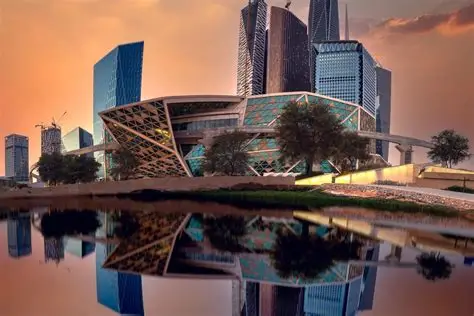
At the center of the plan stood several massive developments funded by Saudi Arabia’s Public Investment Fund (PIF), one of the world’s largest sovereign wealth funds.
The projects included futuristic cities, luxury tourism destinations, artificial intelligence hubs, and environmentally designed urban communities.
Saudi officials hoped these projects would attract international businesses, investors, and millions of tourists.
Saudi Arabia Spending Spree Fueled by Oil Wealth
The kingdom used its enormous oil wealth to launch projects on a historic scale.
Saudi Arabia’s Public Investment Fund reportedly controlled assets approaching $1 trillion, allowing the government to aggressively invest in long-term economic diversification.
During years of high oil prices, Saudi Arabia rapidly expanded spending across construction, sports, entertainment, and technology sectors.
The country also increased investments in global companies, football clubs, tourism campaigns, and infrastructure development.
However, experts say the Saudi Arabia spending spree relied heavily on stable oil revenues and continuous foreign investment support.
Falling Oil Prices Changed the Equation
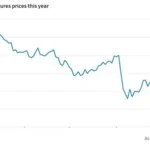
Before tensions in the Middle East recently pushed energy prices higher again, Saudi Arabia faced significant financial pressure due to declining oil revenues.
Oil income remains the backbone of the Saudi economy despite repeated promises to diversify beyond fossil fuels.
As oil prices weakened, Saudi authorities reportedly began reviewing budgets and reassessing expensive long-term projects.
The government now faces the challenge of balancing massive development goals with economic sustainability.
Analysts believe this financial pressure has accelerated a broader shift from aggressive expansion toward more selective investment.
NEOM Faces Major Questions
One of the most talked-about developments under Vision 2030 has been NEOM, a planned futuristic mega-city in northwestern Saudi Arabia.
The project became internationally famous because of its bold designs and extraordinary promises.
NEOM included several futuristic concepts, including floating industrial zones, luxury resorts, artificial intelligence-powered cities, and advanced transportation systems.
The centerpiece of the project was “The Line,” a proposed linear city stretching more than 100 miles across the desert.
Saudi officials claimed the city would redefine urban living by eliminating cars, roads, and carbon emissions.
Lavish promotional videos showcased towering mirrored walls cutting through the desert landscape, creating one of the most visually striking development concepts ever proposed.
The Line Appears to Be Shrinking
Recent reports suggest that The Line may no longer move forward in its originally planned form.
Instead of spanning the full proposed distance, the project is reportedly being scaled back significantly.
Analysts say construction realities, rising costs, and logistical difficulties have made the original concept increasingly difficult to deliver.
Experts estimate that completing the entire project as initially designed would have required trillions of dollars and decades of construction work.
As a result, Saudi officials now appear focused on developing smaller sections first rather than attempting to complete the entire vision immediately.
The shift reflects a broader trend within the Saudi Arabia spending spree as authorities prioritize financial practicality over grand symbolism.
Foreign Investment Has Not Met Expectations
Another major challenge involves foreign investment.
Saudi Arabia hoped international companies and investors would aggressively support Vision 2030 projects.
While some global firms opened regional offices in the kingdom, investment levels reportedly fell short of expectations.
Many investors remain cautious due to concerns about profitability, political risks, project timelines, and transparency.
Some experts also believe the scale and complexity of several projects made private investors hesitant.
Without stronger international investment partnerships, Saudi Arabia must continue funding much of the development internally.
That places additional strain on public finances during periods of oil market uncertainty.
Critics Question Long-Term Sustainability
Critics argue that some Vision 2030 projects focused more on global headlines than realistic economic planning.
Several analysts questioned whether futuristic mega-projects could generate enough long-term economic returns to justify their enormous costs.
Others pointed to challenges involving climate conditions, construction logistics, population demand, and infrastructure requirements.
Still, supporters say the projects successfully transformed Saudi Arabia’s global image and accelerated modernization efforts across the country.
Saudi Arabia has expanded tourism, hosted international sporting events, and increased entertainment opportunities in ways that would have seemed impossible only a decade ago.
Saudi Arabia Still Pushes Forward
Despite the current slowdown, Saudi Arabia continues investing heavily in development and modernization.
Government officials insist Vision 2030 remains active and that adjustments reflect strategic planning rather than failure.
Authorities continue promoting tourism destinations, technology investment, renewable energy projects, and global business partnerships.
The kingdom also remains one of the world’s most influential energy producers, giving it substantial financial power despite market fluctuations.
Analysts say the government is now likely prioritizing projects with stronger economic returns while delaying or redesigning more expensive experimental concepts.
Key Reasons Behind the Saudi Arabia Spending Spree Slowdown
Major Factors Affecting Vision 2030
- Falling oil revenues created budget pressure
- Foreign investment remained below expectations
- Massive construction costs increased financial risks
- Global economic uncertainty affected investor confidence
- Several projects proved difficult to deliver on schedule
Projects Facing Changes
- The Line
- NEOM developments
- Luxury tourism expansions
- Infrastructure megaprojects
- Experimental urban concepts
A Shift From Fantasy to Financial Reality
The Saudi Arabia spending spree once symbolized unlimited ambition and futuristic thinking.
Today, the kingdom appears to be entering a more cautious stage focused on financial discipline and achievable development goals.
Vision 2030 has already reshaped Saudi Arabia socially and economically in many ways. However, the original scale of some projects may now prove impossible to fully achieve within the planned timeframe.
Even so, Saudi Arabia remains committed to modernizing its economy and strengthening its global influence.
Whether Vision 2030 ultimately succeeds may depend less on spectacular architecture and more on sustainable economic transformation that can survive changing oil markets and global uncertainty.
MORE NEWS ON THE NEWS INK LIFESTYLE.