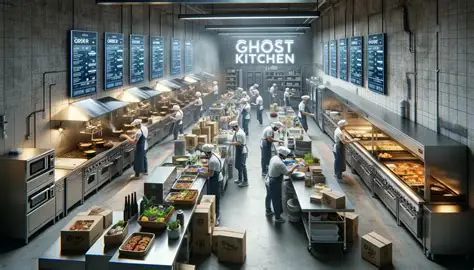
The China ghost kitchens crackdown has entered a new phase as regulators move aggressively against fake restaurants and questionable food delivery practices that have flourished across major online platforms.
Authorities have uncovered tens of thousands of so-called “ghost kitchens” operating through delivery apps, raising concerns about food safety, consumer protection, and unfair competition. The latest measures aim to ensure that restaurants listed online genuinely exist and comply with legal food-service requirements.
The crackdown comes as China’s booming food delivery sector faces growing scrutiny over intense price competition, worker conditions, and business practices that regulators believe have gone too far.
What Are Ghost Kitchens?
The term ghost kitchens refers to restaurant businesses that appear on food delivery platforms but often have no genuine physical storefront or customer-facing location.
In some cases, these operations outsource food preparation to third-party vendors that fulfill orders at lower costs.
This model allows businesses to:
- Reduce operating expenses.
- Offer lower prices.
- Increase profit margins.
- Expand rapidly across delivery platforms.
- Operate multiple virtual restaurant brands from a single location.
While some virtual kitchens operate legally, regulators say many ghost kitchen operators have crossed legal and safety boundaries by using misleading information and fraudulent documentation.
Why China Is Targeting Ghost Kitchens
The China ghost kitchens crackdown was triggered by growing concerns that low prices were being achieved at the expense of food quality and consumer safety.
Officials became particularly concerned after investigations revealed that some businesses listed hundreds of restaurant locations online despite having no actual stores.
Authorities argue that consumers deserve transparency about where their food comes from and whether businesses comply with food safety regulations.
Key concerns include:
- Food preparation standards.
- False business information.
- Forged licenses.
- Consumer deception.
- Lack of accountability.
- Difficulties tracing food safety incidents.
Regulators believe stronger oversight is necessary to restore trust in online food ordering services.
The Investigation That Sparked Action
One consumer complaint helped expose the scale of the problem.
Authorities launched an investigation after a customer in Beijing reported receiving a cake topped with inedible flowers ordered through a food delivery platform.
The investigation allegedly uncovered a cake chain that claimed to operate nearly 380 locations online while having no physical stores.
Officials discovered that customer orders were being transferred through intermediary platforms before being outsourced to third-party vendors.
In many cases, the food was reportedly prepared by whichever supplier offered the lowest bid, raising concerns about quality control and consistency.
The findings revealed a sophisticated network that regulators say operated outside acceptable standards.
Millions of Orders Linked to Questionable Operations
The scale of the issue shocked authorities.
Investigators reportedly identified:
- 3.6 million cake orders processed through order-transfer systems.
- Approximately 67,000 ghost shops operating across major delivery platforms.
- Multiple businesses allegedly using forged documentation.
- Networks connecting delivery apps with outsourced suppliers.
Officials described the arrangement as an illegal supply chain supported by cooperation between various actors in the food delivery ecosystem.
The findings intensified pressure on regulators to intervene.
New Rules Introduced Under the China Ghost Kitchens Crackdown
Beginning this week, authorities have implemented stricter requirements for food delivery platforms and merchants.
New Regulations Include:
1. Verification of Restaurant Licenses
Delivery platforms must verify the validity of restaurant operating licenses before allowing listings.
2. Address Authentication
Businesses must provide accurate physical addresses that match their online profiles.
3. Transparency Requirements
Merchants must clearly indicate whether they operate dine-in facilities or are delivery-only businesses.
4. Ongoing Compliance Monitoring
Platforms are expected to continuously monitor merchant information and remove businesses that fail to meet regulatory standards.
These measures are designed to improve transparency and reduce fraudulent activity.
Food Delivery Apps Face Growing Pressure
The China ghost kitchens crackdown is not focused solely on restaurants.
Regulators are also scrutinizing major food delivery platforms for allegedly allowing questionable businesses to remain active.
Investigators found evidence suggesting that some platforms may have relaxed verification standards to attract more merchants and increase transaction volume.
According to reports, platform representatives acknowledged that strict reviews could drive merchants toward competing services.
This highlights the intense competition within China’s food delivery industry, where market share remains a critical priority.
Authorities now expect platforms to play a more active role in maintaining compliance.
China’s Food Delivery Industry Faces a Turning Point
China operates one of the world’s largest food delivery markets.
Millions of consumers place orders daily through major e-commerce and delivery applications.
The sector has expanded rapidly due to:
- Urban lifestyles.
- Smartphone adoption.
- Digital payments.
- Convenience-driven consumer behavior.
- Aggressive discounting campaigns.
However, this growth has also exposed weaknesses in oversight and regulation.
The government increasingly views consumer protection and food safety as priorities that cannot be sacrificed for rapid expansion.
Price Wars Have Increased Regulatory Concerns
The ghost kitchen issue emerged alongside broader concerns about aggressive competition among delivery platforms.
Over the past year, major companies have engaged in intense price wars designed to attract customers.
Heavy discounting has benefited consumers but has also created pressure throughout the supply chain.
Challenges linked to these price wars include:
- Reduced profit margins.
- Pressure on restaurant operators.
- Tight delivery schedules.
- Increased workloads for delivery riders.
- Potential declines in food quality standards.
Regulators have repeatedly warned against a race to the bottom that prioritizes growth over safety and sustainability.
Major Companies Hit With Heavy Fines
Authorities have already demonstrated their willingness to take action.
In April, regulators imposed approximately 3.6 billion yuan in fines on several major e-commerce and delivery platforms.
The penalties reportedly affected leading companies involved in online commerce and food delivery services.
The fines sent a strong message that authorities are prepared to hold both merchants and platforms accountable.
Industry observers expect enforcement efforts to continue as regulators evaluate compliance with the new requirements.
What the Crackdown Means for Consumers
For customers, the China ghost kitchens crackdown could bring several benefits.
Potential improvements include:
- Greater transparency about food sources.
- Stronger food safety protections.
- More reliable restaurant information.
- Better accountability for businesses.
- Reduced risk of fraudulent operations.
Consumers may also gain more confidence when ordering food online, knowing that businesses must meet stricter verification standards.
Final Thoughts
The China ghost kitchens crackdown represents one of the most significant regulatory actions taken against the country’s food delivery sector in recent years. By targeting fake restaurants, fraudulent listings, and weak platform oversight, authorities aim to improve food safety and increase transparency across a rapidly growing industry.
While stricter rules may create challenges for some businesses, regulators believe the reforms are necessary to protect consumers and restore trust in online food delivery services.
As enforcement expands and compliance checks intensify, the China ghost kitchens crackdown is likely to reshape how restaurants and delivery platforms operate throughout the country.