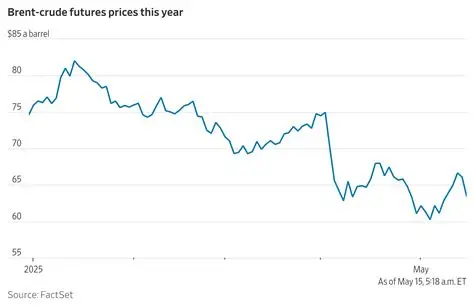
Global oil markets dropped sharply on Monday after fresh signs suggested the United States and Iran could move closer to a peace agreement. Investors reacted positively to reports that negotiations were progressing, raising hopes that tensions in the Middle East may ease soon.
The decline in crude prices also boosted Asian stock markets as traders anticipated a more stable global energy supply and lower transportation costs.
Oil Prices Slide More Than 5%
The biggest market reaction came from the energy sector as oil prices slide continued through early trading hours.
Brent crude, the global benchmark for oil prices, fell 5.5% to $97.90 per barrel. Meanwhile, US-traded West Texas Intermediate crude dropped 5.9% to $90.93 per barrel.
The sharp decline followed comments from senior US officials indicating that negotiations with Iran had made significant progress over the weekend.
Analysts said traders quickly adjusted their expectations after fears of prolonged conflict in the Middle East began to ease.
US Officials Signal Progress in Talks
US Secretary of State Marco Rubio said negotiators currently have a “pretty solid” agreement framework under discussion.
Speaking during a visit to India, Rubio stated that both sides appeared closer to reaching common ground and hinted that a breakthrough could happen soon.
US President Donald Trump also fueled optimism by confirming ongoing discussions involving regional leaders from Saudi Arabia, Qatar, and the United Arab Emirates.
Trump described the negotiations as productive and said an agreement had been “largely negotiated,” although final details still required discussion.
However, he also urged caution, saying both sides needed time to avoid mistakes before announcing a formal deal.
Why Oil Prices Slide During Peace Negotiations
The Middle East remains one of the world’s most important oil-producing regions. Any conflict involving Iran creates concerns about supply disruptions, shipping delays, and higher fuel prices.
The Strait of Hormuz plays a major role in global energy trade. Nearly one-fifth of the world’s oil and liquefied natural gas shipments pass through the narrow waterway.
Since tensions escalated earlier this year, shipping activity in the region has faced serious disruptions. Markets feared that a prolonged conflict could block vital energy exports.
As hopes for peace increased, investors became more confident that oil supplies could stabilize again. That optimism explains why oil prices slide quickly whenever diplomatic progress appears likely.
Asian Stock Markets React Positively
The possibility of a peace agreement also lifted investor sentiment across Asia.
Several regional stock markets recorded gains as falling energy prices eased inflation concerns and improved confidence in global trade conditions.
Lower oil prices typically reduce operating costs for airlines, manufacturers, and transportation companies. Investors often view declining energy prices as positive for economic growth.
Market analysts noted that traders responded quickly to the latest developments because energy markets remain highly sensitive to geopolitical tensions.
Iran Says Discussions Are Moving Forward
Iranian officials also acknowledged signs of progress in negotiations.
Foreign Ministry spokesperson Esmaeil Baqaei said US and Iranian positions had become “closer” during recent discussions.
However, he warned that disagreements still remain on several major issues. Iranian officials also criticized what they described as mixed messages from Washington.
According to reports, Iran plans to finalize a framework agreement first before entering detailed negotiations over the next several weeks.
The proposed framework reportedly contains 14 key points aimed at reducing tensions and establishing future diplomatic talks.
Nuclear Concerns Remain Central
One of the biggest sticking points continues to involve Iran’s nuclear program.
The United States insists that any final agreement must prevent Iran from developing nuclear weapons capabilities.
Trump repeated that position during recent interviews, stating that the US would only accept a deal that guarantees Iran cannot build nuclear weapons.
Rubio also emphasized the importance of reopening the Strait of Hormuz and limiting Iran’s stockpile of highly enriched uranium.
Despite the progress, experts believe negotiations could still face setbacks because both sides remain cautious about making major concessions.
Energy Markets Remain Highly Volatile
Although markets reacted positively, analysts warned that energy prices could remain volatile in the coming weeks.
Oil traders continue monitoring developments closely because any breakdown in negotiations could quickly reverse recent declines.
Geopolitical tensions often create sharp swings in oil prices, especially when supply routes or production facilities appear vulnerable.
Energy analysts also noted that global inflation, shipping costs, and economic recovery remain closely tied to oil market stability.
Key Developments Behind the Market Reaction
Major Reasons Oil Prices Slide
- Growing optimism surrounding a possible US-Iran agreement
- Reduced fears of oil supply disruptions
- Hopes for reopening the Strait of Hormuz
- Improved investor confidence in global trade stability
- Expectations of lower fuel and transportation costs
Important Figures
- Brent crude fell 5.5% to $97.90 per barrel
- US crude dropped 5.9% to $90.93 per barrel
- Nearly 20% of global oil passes through the Strait of Hormuz
Investors Await Official Announcement
Markets now await confirmation on whether negotiators can finalize an agreement in the coming days.
Investors will continue watching statements from Washington and Tehran for signs of further progress or possible setbacks.
If a formal agreement emerges, analysts expect oil prices could stabilize further while global stock markets may continue gaining momentum.
However, uncertainty still surrounds several unresolved issues, especially nuclear restrictions and regional security guarantees.
For now, the latest diplomatic signals have provided temporary relief to markets that have faced months of uncertainty and volatility.
What Happens Next?
Negotiations between the United States and Iran are expected to continue over the next few days. Officials from both countries have indicated that discussions remain active, although neither side has confirmed a final agreement.
Energy traders, investors, and world leaders will closely monitor every update because the outcome could significantly impact global fuel prices, inflation, and economic confidence.
If talks succeed, the agreement may help restore stability to international energy markets and reduce pressure on consumers already facing high living costs worldwide.
MORE NEWS ON THE NEWS INK BUSINESS AND FINANCE.