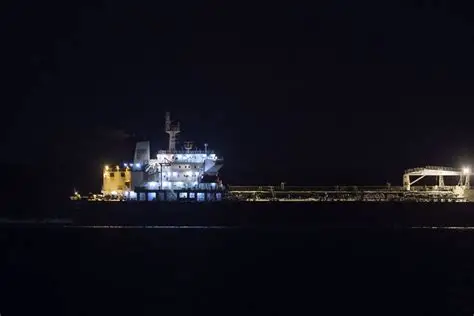
A Russian liquefied natural gas (LNG) tanker sank in the Mediterranean between Libya and Malta following explosions and fire, according to Libyan port officials.
Moscow accused Ukraine of attacking the Arctic Metagaz with “uncrewed sea drones” launched from the Libyan coast. Ukraine’s state security service, the SBU, has not commented on the claim. Libyan authorities said the fire’s cause is unclear.
The Arctic Metagaz carried about 62,000 tonnes of LNG and sank roughly 130 nautical miles (240 km) north of Sirte. Russia reported 30 crew members aboard. Malta’s armed forces rescued all safely in a lifeboat, confirmed by Byron Camilleri.
Unverified night-time footage circulated showing the tanker on fire. Ukrainian blogger and adviser Serhii Sternenko shared images of a “serious hole in the engine room compartment” of the vessel, claiming it was beyond repair. The source has not been independently verified.
Russian President Vladimir Putin described the incident as a “terrorist attack” and claimed it was not the first of its kind. Russia’s transport ministry called it “an act of international terrorism and maritime piracy” and accused the European Union of complicity.
The tanker, part of Russia’s so-called shadow fleet, was en route from Murmansk to Port Said in Egypt. Its cargo was cleared according to international regulations, Russia said. The vessel and others in the shadow fleet have faced Western sanctions.
The SBU declined to comment on the incident. A Ukrainian government-linked account, United24, suggested the drones involved were “Definitely. Maybe” not part of Ukraine’s fleet.
Marine tracking data indicated the tanker last reported its position off southeast Malta the day before the fire. The crew likely deactivated its automatic identification system as the fire developed.
Russia has increased its use of older, often obscurely owned tankers to transport oil and gas while bypassing sanctions that limit revenues crucial for funding its war in Ukraine. Previous Ukrainian naval drone strikes targeted such vessels, mostly in the Black Sea.