Rijksmuseum Confirms Lost Painting as Genuine Rembrandt
A genuine Rembrandt has returned to public view after decades of uncertainty, private ownership and scholarly doubt. The Rijksmuseum in Amsterdam has confirmed that Vision of Zacharias in the Temple, a 1633 biblical painting once removed from Rembrandt’s recognised body of work, was indeed painted by the Dutch master.
The discovery is more than a headline for art lovers. It is a reminder that museum research can still rewrite cultural history. For years, the painting sat outside Rembrandt’s accepted oeuvre, partly because earlier scholars did not have access to the advanced scientific tools now available to conservators and curators. After a two-year investigation, the Rijksmuseum concluded that the materials, technique, signature, wooden panel and artistic quality all support the same answer: this is a genuine Rembrandt.
The painting is now on long-term loan from a private collector and has been placed back in public view at the Rijksmuseum. That gives visitors a rare chance to see a work that disappeared from expert study for more than 60 years after being bought by a private collector in 1961.
For the Rijksmuseum, the confirmation strengthens an already extraordinary Rembrandt collection. For the wider art world, the case shows why attribution is never only a matter of opinion. It can involve pigment analysis, X-ray scanning, dendrochronology, close stylistic comparison and a willingness to revisit old conclusions when better evidence becomes available.
The Rediscovered Genuine Rembrandt at a Glance
| Detail | Information |
|---|---|
| Painting | Vision of Zacharias in the Temple |
| Artist | Rembrandt van Rijn |
| Date | 1633 |
| Medium | Oil on wooden panel |
| Institution | Rijksmuseum, Amsterdam |
| Ownership | Private collection, long-term loan |
| Public display | On view from March 2026 |
| Authentication period | Two-year Rijksmuseum investigation |
| Main subject | Zacharias receiving Gabriel’s message about the birth of John the Baptist |
| Key evidence | Materials, paint layers, signature, dendrochronology, macro-XRF scans and stylistic comparison |
Why the Rijksmuseum Confirmation Matters
A genuine Rembrandt is not discovered every day. Rembrandt van Rijn is one of the most studied artists in European art history, and his known works have been examined, catalogued, challenged and debated for generations. Because of that, adding a painting back into his accepted oeuvre is a major event.
The Rijksmuseum announced that researchers had demonstrated Vision of Zacharias in the Temple was made by Rembrandt after comparing it with works from the same period and applying advanced techniques also used in Operation Night Watch. The museum said materials analysis, stylistic and thematic similarities, compositional changes and overall quality supported the attribution.
That wording matters. The museum did not simply say the painting looked like Rembrandt. It built a case from several kinds of evidence. In art authentication, that combination is often stronger than one spectacular discovery. A signature can be misleading. A style can be copied. A date can be wrong. But when the paint, panel, technique, alterations and visual language all align, the argument becomes much harder to dismiss.
The confirmation also helps correct a historical gap. The painting had once been accepted as Rembrandt but was later excluded from his oeuvre. After it entered private hands in 1961, specialists could no longer study it directly. That absence allowed doubt to remain in place for decades.
Now, a genuine Rembrandt has moved from uncertainty into public knowledge.
The Biblical Scene Behind Vision of Zacharias in the Temple
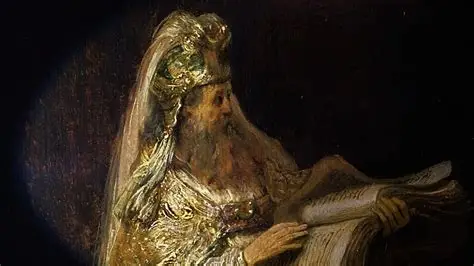
Vision of Zacharias in the Temple depicts a dramatic moment from the Gospel of Luke. Zacharias, a priest, receives a message from the archangel Gabriel that he and his wife Elizabeth will have a son despite their advanced age. That son will become John the Baptist.
Rembrandt chose not to paint Gabriel directly. Instead, the angel’s presence is suggested through light entering from the upper right of the composition. That choice gives the image its spiritual tension. Zacharias is physically present, richly dressed and visibly startled. Gabriel is unseen, but the light makes the divine interruption feel powerful.
This is classic Rembrandt storytelling. Rather than crowding the scene with obvious symbols, he lets gesture, shadow and illumination carry the emotional weight. Zacharias stands with a book open before him, caught between sacred duty and disbelief. The viewer sees not only a biblical event but a human reaction.
That is one reason the genuine Rembrandt attribution feels so significant. The painting does not merely add another object to a catalogue. It adds another example of how the young Rembrandt approached drama, faith and inner response.
The work was painted in 1633, when Rembrandt was in his late twenties and had recently moved from Leiden to Amsterdam. That period was crucial. He was developing as a painter of biblical and historical subjects while also establishing himself in the competitive Amsterdam art market.
Why the Angel Is Shown Through Light
The most striking feature of Vision of Zacharias in the Temple is the absence of Gabriel’s physical form. In many religious paintings, angels are visible figures with wings, robes and gestures. Rembrandt made a different choice. He allowed light to stand in for revelation.
That decision turns the scene inward. The viewer is not distracted by a grand angelic body. Instead, attention falls on Zacharias and his shock. The light becomes a force rather than a character. It enters the space, touches the priest and changes the atmosphere.
This approach is also closely tied to Rembrandt’s broader reputation. His command of light and shadow helped define his visual language. In later works, he would use darkness not as empty background but as emotional space. In this early painting, the same instinct is already visible.
The use of impasto, or thick paint, adds to that effect. According to Reuters, Rijksmuseum conservator Petria Noble highlighted the depiction of light through thick layers of paint as characteristic of Rembrandt’s technique. The texture catches light in the real world while also representing light inside the image.
That double effect is one reason a genuine Rembrandt can feel alive in person. Reproductions show composition and colour, but they often flatten surface, paint thickness and subtle changes in reflection. Seeing the work in a museum allows viewers to understand why material evidence and visual experience matter together.
How the Painting Fell Out of Rembrandt’s Oeuvre
The story of this genuine Rembrandt is also a story of misattribution. The painting was removed from Rembrandt’s accepted body of work in the 20th century. Earlier scholars questioned its authenticity, and it was later associated with Rembrandt’s workshop or with artists such as Jan Lievens or Salomon Koninck.
That kind of uncertainty is common in Old Master studies. Major artists worked alongside pupils, assistants and followers. Their workshops produced paintings that could share subjects, materials, poses and visual ideas. Copies were also made. Over time, damaged surfaces, old varnish, poor photographs and incomplete access can make confident attribution difficult.
The Guardian reported that doubts about the painting were shaped partly by analysis based on photographic reproductions rather than direct examination. That point is important. A painting can look very different in a dark, aged photograph than it does after conservation and technical study.
Once the painting was bought by a private collector in 1961, it largely disappeared from public view. That meant scholars could not easily test old assumptions. The absence of direct access helped keep the painting outside Rembrandt’s recognised oeuvre.
The new Rijksmuseum study changes that history. The painting is no longer a doubtful work in a private home. It is a genuine Rembrandt supported by modern research.
The Two-Year Authentication Process
The Rijksmuseum’s authentication process lasted two years and involved both scientific and art-historical methods. That combination is essential because no single test can prove authorship by itself.
Researchers examined the materials used in the painting and compared them with materials found in Rembrandt works from the same period. They studied the technique and paint-layer structure. They looked for compositional changes, sometimes called pentimenti, which can reveal the artist’s evolving decisions during the painting process.
Macro-XRF scanning played a role by allowing researchers to study chemical elements in the paint without damaging the work. This can reveal hidden changes, pigment distribution and underlayers that are not visible to the naked eye.
The signature was also examined. The Rijksmuseum said research showed the signature is original. That does not mean the signature alone proves everything, but it supports the wider case when the rest of the evidence points in the same direction.
Dendrochronology was another important tool. This method studies tree-ring patterns in wooden panels to help determine whether the wood could have been available at the date shown on the painting. The Rijksmuseum said dendrochronological analysis confirmed that the 1633 date is correct.
Together, these findings built a layered case for a genuine Rembrandt.
What Dendrochronology Adds to the Evidence
Dendrochronology is especially useful for paintings on wooden panels. It cannot say “Rembrandt painted this.” What it can do is answer a narrower but important question: does the wooden support fit the claimed date?
If the panel came from a tree felled after the supposed date of a painting, the date would be impossible. If the wood is consistent with the period, it supports authenticity but does not prove authorship alone.
In this case, dendrochronology confirmed that the panel was compatible with 1633. The Associated Press reported that Rijksmuseum curator Jonathan Bikker said the wood used for the panel came from a tree cut down before the date on the painting.
That matters because Old Master attribution is often about eliminating contradictions. A genuine Rembrandt should have materials, techniques and supports consistent with Rembrandt’s time and practice. If the wood, paint and construction are wrong, the attribution weakens immediately. If they fit, researchers can focus more closely on technique, style and authorship.
For Vision of Zacharias in the Temple, the wood did not solve the mystery by itself. But it removed a major possible objection.
Why Macro-XRF Scans Were Important
Macro-XRF scanning has become one of the most important non-invasive tools in modern painting research. It can map chemical elements across a painting’s surface, allowing researchers to understand pigments, hidden layers and changes in composition.
For a genuine Rembrandt attribution, those hidden changes matter. A copyist usually reproduces a finished image. An original artist often changes the composition while working. These changes can reveal the process of invention.
The Rijksmuseum said macro-XRF scans and visual inspection revealed compositional changes that support the work’s authenticity. In other words, the painting was not simply a flat copy of a known design. It showed signs of creative development.
This is where art science becomes fascinating. The eye sees Zacharias, light and shadow. The scanner sees buried decisions. Together, they allow researchers to reconstruct the making of the painting.
That kind of research also helps museums explain discoveries to the public. A genuine Rembrandt is not confirmed through romance alone. It is confirmed through patient evidence.
This intersection between creativity and technology is becoming more important across culture. The News Ink has explored related questions in its feature on whether AI art can challenge traditional ideas of authorship and creativity. The Rembrandt case shows the opposite side of that debate: how science can protect and clarify human authorship.
What the Painting Reveals About Young Rembrandt
Rembrandt was around 27 when he painted Vision of Zacharias in the Temple. That makes the work especially interesting because it belongs to a formative moment in his career.
The Rijksmuseum connected the painting thematically with other early works including Jeremiah Lamenting the Destruction of Jerusalem and Simeon’s Song of Praise. These works show Rembrandt’s interest in sacred stories, old age, revelation, emotion and dramatic light.
The newly confirmed genuine Rembrandt adds another piece to that development. It shows an artist already experimenting with how to make spiritual experience visible. He did not need a crowded scene or theatrical angel. He needed a startled face, a dark space and a beam of light.
The painting also shows Rembrandt’s fascination with texture. The richly dressed Zacharias gives him an opportunity to explore fabric, metallic shimmer and light striking uneven paint. This is not only storytelling; it is technical display.
The young Rembrandt was building a reputation in Amsterdam, and paintings like this helped demonstrate his ability to handle serious subjects with psychological intensity. The confirmation of this genuine Rembrandt therefore deepens the picture of his early ambitions.
Why Restoring Attribution Can Change Value
When a painting is confirmed as a genuine Rembrandt, its cultural and financial value changes immediately. Curators and museums are usually careful not to put exact numbers on such works, especially when they remain in private ownership. But the difference between “workshop of Rembrandt” and “Rembrandt himself” can be enormous.
Reuters reported that curator Jonathan Bikker said the painting’s insurance policy would definitely increase after the authentication, though he did not specify its value. The Guardian noted that workshop-attributed paintings may be worth far less than works accepted as Rembrandt’s own.
That financial shift often attracts headlines, but the more important value is scholarly. A genuine Rembrandt can reshape exhibition planning, catalogue entries, research papers and public understanding of the artist’s development. It can also help researchers reassess copies, related works and earlier attribution decisions.
The private owner’s decision to place the work on long-term loan is therefore significant. Instead of disappearing again into a private room, the painting can be studied, displayed and discussed.
For readers interested in the way museums shape cultural memory, The News Ink’s article on museum openings looks at how public institutions continue to build new spaces for art, history and heritage.
The Public Return of a Lost Work
There is a simple emotional power in a lost work returning to view. Vision of Zacharias in the Temple was not literally buried underground or hidden in a secret vault, but from a scholarly and public perspective it was absent. Experts could not study it properly. Visitors could not see it. Its status remained unresolved.
Now, the painting has re-entered the museum world as a genuine Rembrandt. That changes how people encounter it. A visitor standing in front of the work is not merely looking at an old biblical scene. They are looking at a painting that survived misattribution, private obscurity and decades of doubt.
Museums often tell stories through labels and galleries, but this painting carries its own story of disappearance and return. That story can make viewers look more carefully. Why was it doubted? What changed? What did earlier scholars miss? What can technology see that the eye cannot?
These questions make the painting valuable beyond its authorship. It becomes a lesson in how knowledge changes.
The News Ink has also explored how artists and images can be misunderstood over time, including in its feature on LS Lowry, whose industrial scenes carried emotional complexity behind their familiar public image.
Why Museums Keep Reopening Old Questions
The confirmation of a genuine Rembrandt highlights a wider truth about museums: collections are not frozen. Research continues. Conservation changes what can be seen. New techniques reveal hidden evidence. Old records are rechecked. Earlier decisions are challenged.
That is especially true for Old Master paintings, where attribution can be complicated by workshops, copies, damaged surfaces and incomplete documentation. A museum may hold or examine a painting for years before enough evidence exists to revise its status.
The Rijksmuseum’s work on Operation Night Watch also shows how major institutions now combine public conservation, scientific imaging and art history. These tools do not remove the need for expert judgement. They give experts better evidence.
This matters for public trust. When museums explain how conclusions are reached, visitors can see that attribution is not guesswork. It is a disciplined process involving uncertainty, testing and comparison.
A genuine Rembrandt becomes more meaningful when people understand how difficult it is to make that claim responsibly.
The Human Story Behind the Discovery
One of the most interesting details in the story is that the owner reportedly approached the museum without knowing the full significance of the painting. AP reported that the anonymous owner initially asked only whether the painting was Dutch. That modest question eventually led to a major authentication.
There is something almost cinematic about that. A painting inherited from a father, bought in 1961, long considered doubtful, suddenly becomes the subject of advanced museum research. The discovery did not begin with a dramatic auction-room announcement. It began with a request for expert advice.
Stories like this fascinate the public because they suggest that art history is not entirely settled. There may still be important works in private homes, family collections or overlooked storage rooms. Most such hopes will not become Rembrandt discoveries. But occasionally, evidence changes everything.
That possibility keeps museum research alive. It also encourages owners, collectors and institutions to seek proper expertise rather than rely on assumptions.
What Visitors Should Look For
Visitors who see Vision of Zacharias in the Temple at the Rijksmuseum should spend time with the light. The angel is absent, but the light is the message. It enters from the upper right and transforms the scene, pulling attention toward Zacharias and the sacred interruption he experiences.
Look also at the priest’s expression. Rembrandt was not only painting costume and setting. He was painting disbelief, surprise and the first moment of spiritual shock.
The surface matters too. Thick paint, highlights and texture help create the impression of richness and illumination. In person, these details may be more visible than in digital reproductions.
A useful viewing checklist includes:
- Notice how Gabriel is implied rather than shown.
- Compare the dark background with the illuminated figure.
- Look for the physical texture of the paint.
- Consider how Zacharias’s body language expresses surprise.
- Think about why Rembrandt chose restraint instead of spectacle.
That kind of slow looking helps explain why a genuine Rembrandt remains powerful nearly four centuries later.
A Discovery That Reconnects Art, Science and Faith
Vision of Zacharias in the Temple is a religious painting, but its modern rediscovery is also a scientific story. The old subject is prophecy. The new evidence comes from scans, wood dating and materials analysis. The result is a rare connection between faith, history, technology and public culture.
That is what makes this genuine Rembrandt compelling. It is not only about a famous name being restored. It is about how a work of art moves through time, how reputation changes, how evidence accumulates and how museums help the public see more than the surface.
The painting also reminds us that old art can still create new news. In an age dominated by fast entertainment, viral images and digital culture, a small 17th-century panel can still command attention because it carries mystery, beauty and proof.
For readers who follow cultural heritage through travel, The News Ink’s historical travel coverage offers more ways to think about museums, sacred places, old cities and the stories that survive through objects.
Why This Genuine Rembrandt Still Feels New
A genuine Rembrandt from 1633 is not new in the ordinary sense. It was painted almost 400 years ago. Yet its return to public confidence feels new because knowledge has changed. The painting has been seen again, tested again and understood differently.
That is the deeper lesson of the Rijksmuseum confirmation. Art history is built from evidence, but evidence depends on access. When a painting disappears from view, uncertainty can harden into accepted opinion. When it returns, old assumptions can be tested.
The result is a richer understanding of Rembrandt’s early Amsterdam years, his biblical storytelling and his developing use of light. It also gives the public a rare chance to experience a work that was absent from view for decades.
The phrase genuine Rembrandt carries weight because Rembrandt’s name is not merely a market label. It represents a standard of emotional depth, painterly intelligence and cultural memory. Vision of Zacharias in the Temple now stands again within that tradition.
The Bottom Line
The Rijksmuseum’s confirmation of Vision of Zacharias in the Temple as a genuine Rembrandt is one of the most important art-attribution stories of 2026. After decades of doubt, the painting has been restored to Rembrandt’s oeuvre through a careful two-year study involving materials analysis, stylistic comparison, signature research, dendrochronology and advanced scanning.
The work matters because it gives viewers another glimpse of the young Rembrandt shortly after his move from Leiden to Amsterdam. It matters because it shows how light, texture and expression could turn a biblical episode into a human drama. It matters because it proves that museum research can still recover lost meaning from old objects.
For the public, the most exciting part is simple: a painting once pushed aside as doubtful can now be seen as a genuine Rembrandt in one of the world’s great museums.
For more art, culture and heritage stories, readers can follow The News Ink on Instagram.