Artificial intelligence is entering children’s playrooms, but experts warn the technology may not be ready for very young users.
Researchers from University of Cambridge say AI-powered toys for children can misunderstand emotions and give confusing responses. Because toddlers are still learning social skills, these interactions could affect how they understand communication and emotional cues.
The team now calls for stricter rules to protect young children who interact with AI toys.
Study Examines How Toddlers Use AI Toys
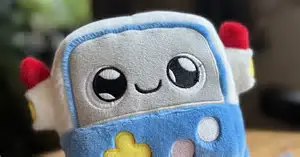
The research focused on children aged three to five who interacted with a soft toy robot named Gabbo.
The toy contains a voice-activated AI chatbot built using technology from OpenAI. Designers created Gabbo to encourage conversation and imaginative play among preschool children.
Parents who joined the study hoped the toy would help their children practice language and communication skills.
However, the results revealed several problems.
Children Struggled to Communicate With the Toy
Many children found it difficult to hold conversations with the AI toy.
Researchers observed that the toy often talked over the children and failed to recognize when they tried to interrupt. It also struggled to tell the difference between adult and child voices.
In some cases, the toy gave responses that sounded strange or emotionally disconnected.
For example, when one five-year-old told the toy “I love you,” the AI replied with a formal message reminding the child to follow interaction guidelines.
Researchers say this type of response can confuse young children who expect warmth and emotional understanding.
AI Sometimes Ignored Emotional Signals
The study also showed that the toy sometimes responded poorly to emotional statements.
In one instance, a three-year-old told the toy they felt sad. Instead of showing empathy, the AI responded by saying it was a happy bot and encouraged the child to continue talking about something fun.
Experts warn that responses like these might send the message that a child’s feelings are not important.
Dr Emily Goodacre, one of the researchers involved in the study, says AI toys can easily misinterpret emotional signals.
She explains that children might not receive comfort from the toy when they need it, especially if no adult is nearby.
Experts Raise Concerns About Psychological Safety
For years, toy safety rules focused mostly on physical risks such as choking hazards.
But researchers say developers must now consider psychological safety as well.
Professor Jenny Gibson explains that toys interacting with children through AI must meet new standards that protect emotional development.
The research team says governments and regulators should act quickly to ensure toys designed for children under five follow clear safety guidelines.
Toy Manufacturer Responds
Gabbo is produced by Curio, a company that has collaborated with musician Grimes.
The company says products designed for children require careful oversight. Curio states that its toys include parental controls, transparency features, and user permissions.
The company also plans to expand research on how children interact with AI toys.
Growing Calls for Regulation
Concerns about AI technology in early childhood settings extend beyond the research community.
Rachel de Souza has also urged regulators to examine how AI tools are used in education and childcare environments.
She warns that many digital tools used with young children do not undergo the same safety checks as other educational resources.
Educators Remain Divided
Some nursery leaders remain cautious about introducing AI into early childhood education.
June O’Sullivan, who manages dozens of early-years nurseries in London, says she has not yet seen convincing evidence that AI improves learning for toddlers.
She believes young children develop best through interaction with real people rather than digital tools.
Similarly, actor and children’s rights advocate Sophie Winkleman argues that human connection should remain central to early childhood learning.
She believes children should develop AI skills later in life, after they have built strong social and emotional foundations.
Parents Advised to Supervise AI Toys
Researchers recommend that parents supervise young children when they interact with AI toys.
They also suggest keeping these devices in shared spaces at home and reviewing privacy policies before allowing children to use them.
As AI technology continues to expand into everyday life, experts say developers and regulators must ensure that tools designed for children support healthy development instead of creating confusion.