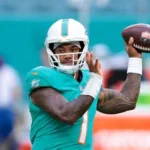
MLS Issues Lifetime Bans to Derrick Jones and Yaw Yeboah Over Betting Violations
Betting violations have led Major League Soccer to issue lifetime bans to Derrick Jones and Yaw Yeboah, turning a league investigation into one of the most serious integrity cases in modern American soccer.
MLS said the two players engaged in extensive gambling on soccer during the 2024 and 2025 seasons, including bets on matches involving their own teams. The most damaging allegation centred on an October 19, 2024 match between Columbus Crew and New York Red Bulls, when both players bet on Jones to receive a yellow card. Jones did receive the booking.
The league also said investigators determined that the players likely shared confidential information with other bettors about their intent to draw yellow cards. MLS stressed that no evidence was identified to suggest the betting activities affected the outcome of any match. That distinction matters, but it does not soften the seriousness of the case.
For MLS, these betting violations were not only about two players breaking rules. They were about the credibility of the competition itself. When players bet on events they can influence, even small in-game actions such as bookings become integrity threats. That is why the league moved from administrative leave to permanent suspensions.
The case also sends a wider message to football: modern betting markets are no longer limited to who wins or loses. They now include corners, cards, fouls, shots and other micro-events. That makes sports integrity harder to protect and player education more urgent.
What MLS Said Happened
Major League Soccer announced on March 9, 2026, that Derrick Jones and Yaw Yeboah had received lifetime suspensions for violating the MLS Gambling Policy. According to the league’s official statement, neither player was under contract with an MLS club at the time of the announcement.
The league said it received suspicious betting alerts through integrity partners, then retained the law firm Patterson Belknap Webb & Tyler LLP to conduct an investigation. Jones and Yeboah were placed on administrative leave while the review continued.
After reviewing the investigation, MLS concluded that the pair had engaged in extensive gambling on soccer during the 2024 and 2025 seasons. The league said those betting violations included wagers on matches involving their own teams. That is one of the clearest red lines in professional sport.
The most serious incident involved a bet that Jones would receive a yellow card during Columbus Crew’s October 19, 2024 match against New York Red Bulls. He did receive the card. MLS also said the players likely shared confidential information with other bettors about their intent to draw yellow cards.
The league found no evidence that match outcomes were affected. Still, the betting violations were severe enough for MLS to impose the harshest penalty available: lifetime bans.
Why Betting Violations Matter More Than Ordinary Rule-Breaking
Football has many disciplinary issues: red cards, dissent, violent conduct, missed drug tests and financial rule breaches. Betting violations are different because they attack trust.
A fan can accept that a player made a bad tackle in the heat of a match. A fan can accept that a referee made a mistake. A fan can accept that a team lost form. What fans cannot accept is uncertainty over whether a player’s actions were influenced by a bet.
That is the poison of gambling misconduct. It makes ordinary moments look suspicious. A yellow card becomes a question. A late foul becomes a theory. A misplaced pass becomes a rumour. Even when no match result is fixed, confidence can be damaged.
This is why MLS acted so strongly. If players are allowed to bet on their own league or on events they can influence, the competition becomes vulnerable. The league does not need proof that a final score was manipulated to punish behaviour that threatens integrity.
The News Ink’s football guide explains how trust, rules and competition structure shape the sport. Betting violations strike at all three.
The Yellow-Card Issue Is the Most Serious Detail
The yellow-card allegation is what moved this case from general gambling misconduct into a much more dangerous category. Betting on a match result is already banned for players. Betting on a personal disciplinary event is even more alarming because a player may be able to influence it directly.
A footballer cannot guarantee a team wins. He cannot fully control whether a goalkeeper saves a shot or whether a teammate scores. But a player can more easily influence whether he commits a foul, delays a restart, argues with a referee or makes a tactical challenge that risks a booking.
That is why yellow-card betting creates a specific integrity risk. It turns a small match event into a gambling market that may be easier to manipulate than the final score.
MLS commissioner Don Garber said the league would continue to enforce its policies, strengthen education efforts and advocate for the elimination of yellow-card wagering in all states to protect competition integrity. That point is important. The league is not only punishing two players. It is also questioning whether betting operators should offer markets that are vulnerable to manipulation.
The News Ink’s analysis of VAR and football looked at how technology can change trust in refereeing. Betting violations create a different trust problem: not whether an official saw the incident correctly, but whether the incident happened for sporting reasons.
Derrick Jones’ Role in the Case
Derrick Jones is a Ghana-born midfielder who built his professional career in the United States. Reuters reported that he played 23 games for Columbus Crew across 2024 and 2025 and was without a club after being released by the Crew in November 2025.
Jones previously played for clubs including Philadelphia Union, Nashville SC, Houston Dynamo, Charlotte FC and Columbus Crew. He also represented the United States at under-20 and under-23 levels earlier in his career.
In this case, Jones was central because the yellow-card wager concerned his own booking. MLS said both players bet on Jones to draw a yellow card during the October 19, 2024 match against New York Red Bulls, and he received it.
That detail makes the betting violations especially serious. A player betting on his own disciplinary action creates a direct conflict between sporting duty and gambling interest. It does not matter whether the final score was affected. The player’s obligation is to compete honestly, not to create a profitable event for himself or others.
For Jones, the lifetime ban effectively ends any future MLS career unless the league creates a path that does not currently exist in the announcement. Even outside MLS, the reputational impact may follow him.
Yaw Yeboah’s Role in the Case
Yaw Yeboah’s career had taken him through several countries before the MLS ban. He represented Ghana, came through Manchester City’s wider development pathway and had spells in Europe before moving to the United States. He later played for Columbus Crew and Los Angeles FC.
Reuters reported that Yeboah was Jones’ teammate at Columbus before joining LAFC in January 2025 after three seasons with the Crew. He later left LAFC by mutual agreement and moved to Chinese Super League side Qingdao Hainiu.
MLS said Yeboah was involved in the extensive gambling activity during the 2024 and 2025 seasons, including while at Columbus and LAFC. The league also linked him to the yellow-card wager involving Jones and said both players likely shared confidential information with other bettors.
That is a serious allegation because confidential team information can be valuable in betting markets. Even details that seem small inside a dressing room can matter to gamblers: who may start, who is carrying an injury, who may be instructed to take tactical fouls, or how a team plans to manage a match.
The league did not say Yeboah influenced a match result. It did say his actions violated the gambling policy severely enough to justify a lifetime suspension.
A Timeline of the MLS Betting Case
| Date | Event |
|---|---|
| October 19, 2024 | Columbus Crew played New York Red Bulls; MLS later said both players bet on Jones to receive a yellow card, which he did |
| 2024 season | Jones and Yeboah were teammates at Columbus Crew |
| January 2025 | Yeboah joined Los Angeles FC after his time with Columbus |
| 2024-2025 | MLS said both players engaged in extensive gambling on soccer |
| October 2025 | The players were placed on administrative leave while potential rule violations were reviewed |
| January 2026 | Yeboah left LAFC by mutual agreement |
| March 9, 2026 | MLS issued lifetime suspensions to Jones and Yeboah |
The timeline shows why the investigation mattered. These betting violations were not treated as a single careless wager. MLS described extensive gambling over two seasons, including bets involving their own teams.
That is why the punishment was permanent rather than short-term.
Why MLS Said Match Outcomes Were Not Affected
MLS made one important clarification: investigators found no evidence that the betting activities affected the outcome of a match. That sentence should be included in any fair article because it prevents exaggeration.
There is a difference between match-fixing and betting misconduct. Match-fixing usually means manipulating the result or major events in a way that changes the competitive outcome. Betting violations can include prohibited wagers, inside information, or betting on events connected to one’s own team without necessarily changing who wins.
In this case, MLS said no evidence suggested match outcomes were affected. But the league still issued lifetime bans because betting violations can damage integrity even without proof of result manipulation.
That distinction is not a technicality. It is the core of the story. The league is saying the final scores may have been clean, but the conduct was still unacceptable because it placed personal gambling interests inside the competition.
The News Ink’s report on 23 players sent off after Cruzeiro vs Atlético Mineiro covered a different kind of discipline crisis. That incident damaged football’s image through violence. This MLS case damages confidence through hidden incentives.
The Growth of Micro-Betting Makes This Harder
Sports betting has changed quickly. Traditional betting focused on outcomes: who wins, who scores, total goals. Modern markets can go much deeper. Bettors may wager on cards, corners, fouls, throw-ins, shots, substitutions or player-specific actions.
These smaller markets are attractive because they create more betting options during a match. They are also risky because some events may be easier for players to influence than final results.
A yellow card is the clearest example. A player can pick up a booking through a late tackle, time-wasting, dissent or tactical fouling. Referees still control the decision, but the player can increase the likelihood. That makes card markets more vulnerable than many fans realise.
This is why Garber’s call to eliminate yellow-card wagering matters. If leagues believe a market is too easy to manipulate, they may pressure regulators and betting companies to remove it.
The issue goes beyond MLS. Football around the world faces the same challenge. Betting technology has become faster and more detailed. Integrity systems must now monitor not only results but also unusual patterns around specific in-game events.
Integrity Monitoring Did Its Job
One of the most important details is that MLS said the case began with suspicious betting alerts through integrity partners. That suggests monitoring systems detected unusual activity before the league launched a deeper investigation.
Modern sports leagues rely on betting-integrity companies to track suspicious markets. These systems look for unusual betting volume, strange odds movement or patterns that do not fit normal market behaviour. When alerts appear, leagues can investigate players, staff, betting accounts, communications and match events.
That does not mean every suspicious alert proves wrongdoing. Betting markets can move for innocent reasons. But alerts are valuable because they give leagues an early warning.
In this case, the monitoring process appears to have led to a formal investigation, administrative leave and ultimately lifetime bans. That is the system working, even if the underlying conduct is damaging.
For MLS, the case is both a scandal and a proof point. It shows the risk exists, but it also shows the league can detect and punish betting violations.
The Felipe Hernández Background
This was not the first gambling-policy case in MLS. In 2021, Sporting Kansas City midfielder Felipe Hernández was suspended for the rest of the year after violating league gambling rules. MLS said at the time that Hernández had engaged in extensive and unlawful sports gambling, including wagers on two MLS matches.
In 2024, MLS later terminated Hernández’s contract after a separate investigation into another alleged violation of gambling policies. The league said he would be eligible to apply for reinstatement in 2026.
That history matters because it shows MLS had already dealt with player gambling before the Jones and Yeboah case. But the 2026 lifetime bans went further because the league described the new betting violations as involving wagers on their own teams, a yellow-card event and likely sharing of confidential information.
The escalation from suspension to contract termination to lifetime bans shows how leagues are becoming less tolerant of gambling risks as sports betting expands across the United States.
Why Players Are Usually Banned From Betting on Their Own Sport
Professional athletes are not ordinary fans. They have access to information, influence and relationships that the public does not. That is why most leagues ban players, coaches, referees and staff from betting on their own sport.
There are several reasons.
First, players may know team news before the public. Second, they may influence match events. Third, they may create suspicion even when they do nothing wrong. Fourth, gambling debts or habits can make players vulnerable to pressure from outsiders. Fifth, public trust depends on the belief that every action on the field is sporting, not financial.
Betting violations are therefore not treated like harmless entertainment. They are treated as integrity threats.
A player may argue that a small bet does not matter. A league cannot accept that logic. Once the line is crossed, it becomes harder to know where to stop. The safest rule is simple: players do not bet on their own league, their own team or events they can influence.
What This Means for MLS
The lifetime bans come at a time when MLS is growing commercially, expanding its profile and trying to build deeper global credibility. The league has invested in star players, media rights, youth development, stadium culture and international attention. Integrity cases threaten that progress because they create doubts about the product.
MLS will likely use this case to strengthen education efforts. Players need clear reminders that betting rules apply even when they are not starting, even when they think a wager is small, and even when the bet does not involve the final result.
The league may also push harder against certain betting markets. Garber’s statement specifically mentioned yellow-card wagering, which suggests MLS sees card markets as a priority risk.
For clubs, the lesson is also clear. Education cannot be a preseason formality. Players need regular training on gambling rules, insider information, betting accounts, social pressure and reporting obligations.
The News Ink’s sports training technology guide focuses on performance, but modern sport also needs integrity education. A player’s career can be ruined off the pitch as quickly as by injury.
What This Means for Columbus Crew and LAFC
Columbus Crew were the common link between the two players. Jones and Yeboah were teammates there in 2024, and the yellow-card incident involved a Crew match against New York Red Bulls. Yeboah later moved to LAFC, while Jones remained connected to Columbus before leaving the club.
MLS did not say either club was accused of wrongdoing. The league’s statement focused on the players and the investigation into their betting activity. That distinction matters because fans should not assume club involvement without evidence.
However, clubs still suffer reputationally when former players are involved in major betting violations. Supporters may revisit matches, bookings and team selections. Media coverage may connect the club’s name repeatedly with the scandal. Opposing fans may use the incident as a taunt.
For Columbus, the best response is likely transparency, cooperation and stronger education. For LAFC, Yeboah had already left before the lifetime ban was announced, but the case still touches his time in the league.
The burden now is on MLS and its clubs to show that the investigation was thorough and that safeguards are improving.
The Difference Between Betting and Match-Fixing
Readers may wonder whether this case is match-fixing. The careful answer is that MLS did not say match outcomes were fixed. It said the players violated gambling rules, bet on soccer including their own teams, bet on Jones receiving a yellow card, and likely shared confidential information with other bettors.
That is serious enough without overstating it.
A yellow-card bet can be a form of spot-fixing if a player intentionally seeks a booking to help a wager. Spot-fixing means manipulating a specific event inside a match rather than the final score. MLS did not use every possible legal label in its public statement, but the facts it described explain why the league treated the case as severe.
The distinction is useful:
- Match-fixing changes or attempts to change the result.
- Spot-fixing targets a specific event.
- Betting violations break rules around wagering, inside information or prohibited markets.
This MLS case sits in the dangerous area where betting violations and possible event manipulation overlap. That is why the lifetime bans were so significant.
Why Fans Should Care
Some fans may think a yellow-card bet is minor compared with fixing a result. That reaction is understandable but wrong. Football depends on trust in small moments. A yellow card can change a match. It can affect pressing, tackling, substitutions, suspensions and betting markets. It can also signal whether a player acted for the team or for a wager.
If fans begin to doubt minor events, the whole viewing experience changes. Every foul becomes suspicious. Every booking creates theories. Every unusual decision becomes a betting question.
This is especially dangerous in a sport where controversial moments already create debate. Referee decisions, VAR calls and tactical fouls are emotional enough without gambling suspicion layered on top.
That is why betting violations are not private mistakes. They affect supporters, teammates, opponents, officials, clubs and the league.
The News Ink’s article on entering football matches without tickets becoming a criminal offence shows how football authorities increasingly treat public trust and safety as legal and sporting priorities. Betting integrity belongs in that same conversation.
What Happens to the Players Now?
MLS lifetime suspensions prevent Derrick Jones and Yaw Yeboah from participating in the league. Since neither player was under contract with an MLS club at the time of the announcement, the immediate practical effect was not removal from an active roster. The longer-term effect is more serious: the league has closed the door on their MLS futures.
Yeboah’s situation is more complicated because he had moved to China’s Qingdao Hainiu after leaving LAFC. MLS does not directly govern every league in the world. However, a lifetime MLS ban can still damage a player’s reputation internationally and may attract attention from other football authorities, clubs or federations.
Jones was reportedly without a club after leaving Columbus. For him, the ban creates both a career barrier and a reputational challenge.
Neither player’s future outside MLS can be predicted from the league announcement alone. What is clear is that the betting violations will follow both names whenever clubs, fans or media review their careers.
What MLS Should Do Next
Punishment alone is not enough. MLS should use the case to strengthen prevention.
The league should make gambling education more frequent and more practical. Players should see examples of prohibited conduct, not just read policy text. They should understand that betting through friends, sharing inside information or wagering on cards can destroy careers.
MLS should also work with betting regulators to restrict vulnerable micro-markets. Garber’s yellow-card wagering comment suggests the league already understands this risk. If a market gives players an easier path to manipulate a specific event, it should be reconsidered.
Clubs should build confidential reporting systems. A player who is approached by a bettor, pressured by a friend or worried about a teammate should know how to report safely.
Finally, MLS should continue publishing clear discipline summaries. Fans do not need every private detail, but they do need enough information to understand that integrity cases are investigated seriously.
The Bottom Line
Betting violations have resulted in lifetime MLS bans for Derrick Jones and Yaw Yeboah, making this one of the league’s most serious gambling cases. MLS said the two players engaged in extensive gambling on soccer during the 2024 and 2025 seasons, including wagers on matches involving their own teams.
The most damaging detail was the October 19, 2024 Columbus Crew match against New York Red Bulls, when both players bet on Jones to receive a yellow card. Jones did receive the booking. MLS also said the players likely shared confidential information with other bettors about their intent to draw yellow cards.
The league found no evidence that the betting activity affected match outcomes, but that does not make the case minor. A player betting on a personal in-game event creates a direct threat to sporting trust. It turns a normal football action into a possible gambling product.
For MLS, the lifetime bans are a warning to every player, coach and staff member: gambling rules are not symbolic. They protect the credibility of the competition.
For football more broadly, the case raises a bigger issue. As betting markets become more detailed, leagues must decide whether some markets, especially yellow-card betting, create risks that sport cannot safely tolerate.
Betting violations do not need to change a final score to damage a league. They only need to make fans wonder whether what they saw was real.
For more football and sports coverage, readers can follow The News Ink on X.