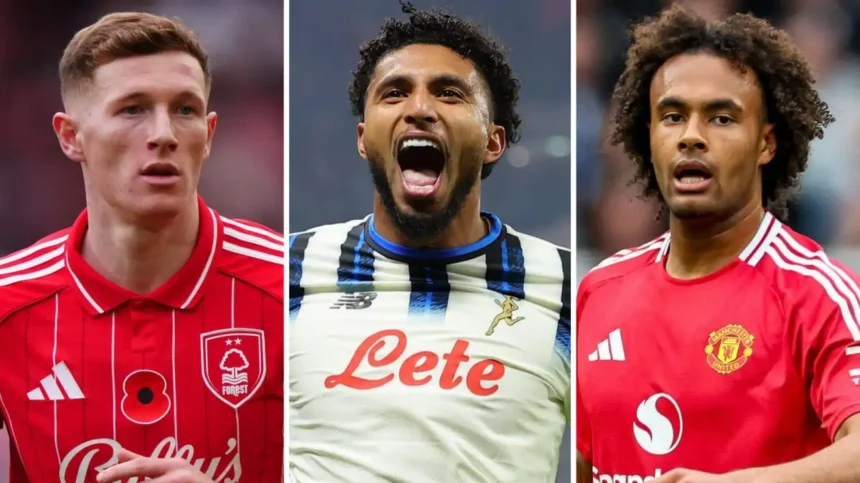
Elliot Anderson Transfer Battle: How Man City Won a Stunning 2026 Race
Elliot Anderson transfer battle has already changed shape. What began as a Manchester City versus Manchester United transfer chase has become a statement signing for City, after the Premier League champions reached an agreement with Nottingham Forest for the 23-year-old England midfielder.
The original story framed Anderson as a summer target for both Manchester clubs. That was accurate for the moment, but the market moved quickly. Manchester City later confirmed that they had reached an agreement with Nottingham Forest, while Sky Sports reported the deal at £116m, making Anderson the most expensive British player in history if all formalities are completed.
That means Elliot Anderson transfer battle is no longer only about who wanted him. It is about why City moved so aggressively, why United missed out, what Forest lose, and how the wider transfer market has shifted around young English midfielders.
Elliot Anderson transfer battle also forces the wider roundup to be updated. Antoine Griezmann is no longer merely linked with Orlando City; Reuters reported that Orlando City signed him from Atletico Madrid on a contract beginning in July 2026. Harry Maguire’s Manchester United future moved on too, with reports saying he signed a new deal. Chelsea’s financial line also needs correction: the club’s official accounts show a £262.4m pre-tax loss, while the £355m figure came from UEFA data about broader financial losses.
For readers who want more background on recruitment, roles and tactics, The News Ink’s football guide is a useful companion to this updated transfer analysis.
Why Elliot Anderson transfer battle moved so quickly
Elliot Anderson transfer battle moved fast because he fits exactly the profile elite clubs now value: Premier League-proven, homegrown, tactically flexible, physically ready and still young enough to improve. Players with that mix rarely stay available for long.
Manchester City’s official statement said the club and Nottingham Forest had reached an agreement for Anderson’s transfer. The statement added that Anderson had completed a medical in Kansas while competing with England at the 2026 FIFA World Cup, with formalities to be finalised when he returned to England.
That timing tells its own story. City were willing to move while Anderson was still involved in a major international tournament. That urgency suggests the club saw a risk in waiting. If Anderson’s World Cup performances improved his reputation further, the price, competition or pressure around the deal could only increase.
Elliot Anderson transfer battle also shows how quickly a gossip line can become a transfer-market fact. In February, it was a reported race between the Manchester clubs. By July, City had moved from interest to agreement.
Why City wanted Anderson more than United
Elliot Anderson transfer battle became a City priority because Anderson offers a rare blend. He is not just a destroyer. He is not only a No. 8. He can help in the build-up, press in midfield, break lines with carries and give Guardiola another homegrown option inside a squad shaped by registration rules.
Manchester City’s midfield has evolved repeatedly under Pep Guardiola. The best City midfielders are not only passers. They must understand pressure, timing, spacing, defensive recovery and positional rotation. Anderson’s appeal lies in his ability to do several jobs rather than one.
At Nottingham Forest, he developed into a player who could carry the ball, compete physically, recover possession and connect midfield with attack. That matters because City often face deep blocks in the Premier League but also need athletic control in transition, especially against elite European sides.
Manchester United’s interest also made sense. Their midfield has needed more control, legs and long-term planning. Anderson would have fitted a club trying to build around younger players while reducing dependence on short-term fixes.
But Elliot Anderson transfer battle exposed United’s modern problem. Wanting the right player is not the same as winning the race. City could offer a clearer recent record of development, Champions League stability, tactical identity and a proven environment for elite midfielders. United, even with Michael Carrick in charge, still had to convince players that the project would be stable enough.
United have since been linked with alternatives, including Bournemouth’s Alex Scott, according to recent reporting. That tells us Anderson was part of a wider midfield search, not the only solution. Still, missing out to City will frustrate supporters because Anderson was exactly the type of domestic talent United have been criticised for not securing early enough.
The News Ink’s sports training and technology guide explains how modern clubs increasingly combine scouting, data and role projection before making major investments.
What Nottingham Forest lose after Elliot Anderson transfer battle
Elliot Anderson transfer battle is financially powerful for Nottingham Forest but sporting painful. A fee reported at £116m would be transformative, especially for a club that has had to manage financial rules carefully. But losing a midfielder of Anderson’s profile leaves a major gap.
Forest are not simply losing a player. They are losing ball progression, aggression, energy and one of the clearest symbols of their ambition. The challenge for Oliver Glasner, who has taken charge at Forest, is to turn the money into a stronger squad rather than one expensive replacement.
That is harder than it sounds. Clubs selling a star for a record fee often face inflated prices immediately. Every selling club knows they have money. Every agent knows the replacement must arrive quickly. If Forest spread the funds smartly, the Elliot Anderson transfer battle could become the moment that finances a new cycle. If they spend badly, it could become another example of a club selling its best player without replacing his influence.
The updated transfer picture after Elliot Anderson transfer battle
| Player | Original angle | Updated status |
|---|---|---|
| Elliot Anderson | Man City and Man United both wanted him | City reached an agreement with Nottingham Forest |
| Curtis Jones | Inter Milan could return for him | Inter interest remains reported, but Liverpool’s valuation appears higher than early bids |
| James Trafford | Aston Villa led a Premier League chase | Newcastle links remain active, with goalkeeper movement still possible |
| Harry Maguire | United might offer a new deal | Reports say Maguire signed a new contract until 2027 with an option |
| Antoine Griezmann | Orlando City had offered a deal | Orlando City signed him from Atletico Madrid for July 2026 |
| Julian Alvarez | Barcelona said no talks had happened | Later reports said Alvarez wanted to leave Atletico, with Barcelona among clubs linked |
| Alisson | Juventus interest emerged | Liverpool have been reported as unwilling to sell |
| Kellen Fisher | Everton and others were interested | Premier League interest remains reported, but no confirmed deal |
| Tino Livramento | City links continued | Newcastle’s wider squad situation keeps the story alive |
| Cole Palmer | Chelsea wanted to keep him despite losses | Chelsea say revenue rose, but financial pressure remains debated |
This table shows why Elliot Anderson transfer battle is the headline, but not the only meaningful transfer-market shift. The summer has already turned several rumours into changed realities.
Curtis Jones and the Inter question after Elliot Anderson transfer battle
Curtis Jones remains one of the more interesting names in the roundup because Liverpool’s midfield situation has shifted and Inter Milan have been repeatedly linked. Reports suggested Inter made offers below Liverpool’s valuation, while Liverpool were reluctant to lose another established senior player.
That is the correct way to frame it: reported interest, not a confirmed agreement. Jones’ contract situation matters because players approaching the final stage of a deal can become more vulnerable to bids. But Liverpool do not have to sell unless the price and squad plan make sense.
The comparison with Elliot Anderson transfer battle is useful. Anderson became expensive because several factors aligned: age, nationality, Premier League performance, international visibility and strong buying-club demand. Jones has pedigree too, but his market is shaped by Liverpool’s valuation, his role under the new manager and whether Inter are prepared to move from opportunistic bids to a serious fee.
For Liverpool, the risk is losing too much identity in one summer. For Jones, the question is whether a move to Italy would offer a clearer role than staying at Anfield.
James Trafford and the goalkeeper market after Elliot Anderson transfer battle
Goalkeeper rumours rarely create the same excitement as attacking deals, but James Trafford’s future could still shape several Premier League squads. Aston Villa, Newcastle, Leeds, Tottenham and West Ham were all mentioned in the original article, while Newcastle links have remained especially visible.
Trafford’s situation reflects a broader trend. Clubs now want goalkeepers who can do more than save shots. They must pass under pressure, defend space, organise a high line and handle aggressive opposition pressing. That makes young English goalkeepers valuable, especially when homegrown rules are considered.
Elliot Anderson transfer battle and Trafford’s market have something in common: both show the premium attached to young domestic players who can fill squad-registration needs while also improving the starting XI. The difference is that City moved decisively on Anderson, while Trafford’s future appears less settled.
Aston Villa may offer European ambition. Newcastle may offer a clearer starting pathway. Tottenham and West Ham may assess cost, wages and availability. The final decision will depend on whether Trafford wants immediate football or a longer route inside a bigger squad.
Maguire, Griezmann and Alvarez: three different types of transfer story
Harry Maguire’s future looked uncertain in the original roundup, but it has since moved toward stability. Goal reported that Manchester United announced a new contract running until 2027, with an option for a further year. That is a notable turnaround for a defender who had lost the captaincy, faced intense criticism and was repeatedly linked with moves away.
Elliot Anderson transfer battle shows United’s need to win future-facing deals. Maguire’s renewal shows another side of squad planning: keeping experienced players who can steady a young team. The best squads usually need both.
The Antoine Griezmann line is even clearer. The original article said Atletico Madrid boss Diego Simeone remained uncertain about the French forward’s future and that Orlando City had been linked. Reuters later reported that Orlando City signed Griezmann from Atletico Madrid on a contract beginning in July 2026. That part of the roundup should no longer be written as speculation.
Julian Alvarez is more complicated. Barcelona sporting director Deco may have said no talks had taken place at the time, but later reporting said Alvarez had told Atletico Madrid he wanted to leave, with Barcelona, Real Madrid and Paris Saint-Germain linked. That does not mean a transfer is guaranteed. Atletico can still resist. Barcelona must manage finances. Arsenal and other clubs may watch the situation. But the story is no longer simply “no talks.”
These three cases show why Elliot Anderson transfer battle works best as an updated transfer analysis rather than a simple gossip list. Some items became confirmed. Some moved toward stability. Some remain uncertain.
Alisson, Kellen Fisher and Livramento
Alisson’s reported Juventus link always needed caution. Liverpool do not often find goalkeepers of his level, and losing a senior dressing-room figure in a summer of change would carry risk. Liverpool-focused reporting has said the club exercised an option to keep Alisson until 2027 and do not intend to sell despite Juventus interest.
Kellen Fisher’s rise at Norwich has put him on the radar of Premier League clubs, with Everton among those linked. Full-backs are increasingly valuable because they are asked to defend wide, invert into midfield, overlap, recover in transition and help build attacks. Fisher sits in the opportunity tier: younger, cheaper, less proven, but potentially high upside.
Tino Livramento has been linked with Manchester City before, and his name remains logical because Guardiola’s side has often evolved through changes in wide defensive roles. Newcastle would not want to lose a young full-back with Livramento’s athleticism and upside, so this remains a reported-interest story rather than a confirmed deal.
That distinction matters. Elliot Anderson transfer battle is now an agreement story. Alisson, Fisher and Livramento remain different types of rumour, and readers should not treat them as equal.
Chelsea’s financial line needs correction after Elliot Anderson transfer battle
The Chelsea paragraph in the original article needs the clearest financial correction. It said Chelsea were confident of keeping Cole Palmer and other key players despite posting a £355m pre-tax loss for 2024/25. That wording is not precise.
Chelsea’s official financial results state that the club recorded a £262.4m loss before tax for the year ending 30 June 2025, compared with a £128.4m profit the year before. The £355m figure came from UEFA data reported by The Guardian as a broader financial loss figure, not the official club pre-tax loss number.
That difference matters. Football finance is already complicated, and using the wrong label can mislead readers. Chelsea remain under pressure because the loss is large, costs are high and financial rules remain a major talking point. But Cole Palmer’s situation should not be reduced to “Chelsea must sell him” unless a reliable report shows that.
Elliot Anderson transfer battle is a football recruitment story. Chelsea’s case is a financial sustainability story. Both belong in the same transfer roundup because money determines what clubs can do, but they need different language.
The News Ink’s Premier League season review 2026 gives more context on how league performance shapes transfer choices.
What Elliot Anderson transfer battle says about the Premier League market
Elliot Anderson transfer battle is a window into the modern Premier League market. Homegrown players with elite potential carry huge premiums. Clubs under financial pressure still need to spend smartly. Big names can move to MLS. European giants continue to monitor Premier League squad players. Goalkeepers and full-backs are increasingly expensive because their tactical responsibilities have grown.
City did not just buy a midfielder. They bought age profile, domestic status, physical readiness, tactical flexibility and future resale protection. United did not just miss a player. They missed a profile they still need.
The market rewards decisiveness, but it punishes panic. City’s deal looks decisive. Forest’s response will determine whether it becomes smart selling. United’s alternatives will show whether missing Anderson was a setback or simply one branch of a wider plan.
FAQ: Elliot Anderson transfer battle
Did Manchester City win the Elliot Anderson transfer battle?
Yes. Manchester City announced that they had reached an agreement with Nottingham Forest for Elliot Anderson, with formalities to be completed after his return from England duty.
How much is the Elliot Anderson deal worth?
Sky Sports reported the agreement at £116m, which would make Anderson the most expensive British player in history if completed on those terms.
Were Manchester United interested in Anderson?
Manchester United were widely linked with Anderson earlier in the window, but City moved ahead and reached an agreement with Nottingham Forest.
Is Antoine Griezmann still only linked with Orlando City?
No. Reuters reported that Orlando City signed Griezmann from Atletico Madrid on a contract beginning in July 2026.
What is the correct Chelsea loss figure?
Chelsea’s official accounts show a £262.4m pre-tax loss for 2024/25. The £355m figure was reported from UEFA data as a broader financial loss, so it should not be labelled as Chelsea’s official pre-tax loss.
The bottom line
Elliot Anderson transfer battle began as a Manchester tug-of-war and ended with City making the decisive move. The agreement with Nottingham Forest shows how highly City rate Anderson and how expensive young, homegrown Premier League midfielders have become.
For United, the lesson is uncomfortable. Interest is not enough. The club now have to prove their recruitment plan can still land elite young players even when City, Liverpool, Arsenal or Chelsea are competing in the same space.
For Forest, the challenge is turning a record sale into a stronger squad. For City, the challenge is turning a record fee into performances that make the price feel logical.
Elliot Anderson transfer battle also shows why transfer gossip must be updated quickly. Some rumours disappear. Some become deals. Some figures need correction. Some “possible moves” are already completed by the time supporters read the next roundup.
This one has already moved from speculation to consequence.
For more football and transfer-window coverage, follow The News Ink on Threads.