Lionel Messi: Alarming 2026 Pitch-Invasion Scare Raises Serious Safety Questions
Lionel Messi was briefly knocked to the ground during Inter Miami’s friendly against Independiente del Valle in Puerto Rico, turning what should have been a routine exhibition win into another warning about football’s growing pitch-invasion problem.
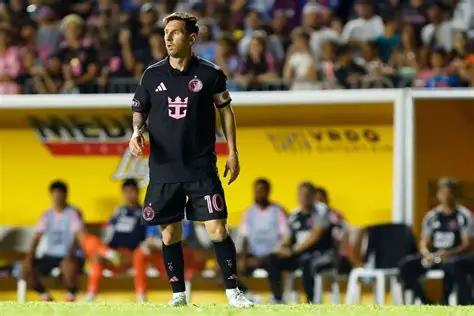
The incident happened late in Inter Miami’s 2-1 victory at Estadio Juan Ramón Loubriel in Bayamón. Lionel Messi had come on at half-time, scored from the penalty spot and looked set to complete a controlled return after an earlier hamstring issue. Then several supporters entered the pitch, and one fan reached him near the centre circle.
According to Reuters, a shirtless pitch invader hugged Messi before a security guard intervened and accidentally brought both the intruder and Messi to the ground. Messi quickly got back up and appeared unharmed, but the scene was unsettling because it showed how easily a high-profile player could be reached during live play.
Lionel Messi has dealt with pitch invaders before. Many supporters who enter the field want a selfie, an autograph or a brief personal moment with one of the most famous athletes in the world. But intent is not the only issue. Once a person breaches the playing area and makes physical contact, the risk becomes real. A harmless fan can still cause injury. A delayed security response can still create danger. A scramble can still bring a player to the turf.
That is why this story matters beyond one friendly. It is not only about Lionel Messi falling over in a viral clip. It is about whether football organisers are doing enough to protect players whose fame can turn ordinary exhibition matches into security tests.
For wider football context, The News Ink’s football guide explains why modern matches are shaped not only by tactics and talent, but also by event management, crowd control and the pressure surrounding elite stars.
What happened to Lionel Messi in Puerto Rico
Lionel Messi entered the match at half-time as Inter Miami continued its 2026 Champions Tour against Ecuadorian champions Independiente del Valle. Miami had already taken the lead through academy product Santiago Morales, who scored in the 16th minute. Independiente del Valle later equalised, before Messi converted a penalty in the 70th minute to secure Inter Miami’s 2-1 win.
The match should have been remembered as a positive return. Inter Miami’s official match recap described a packed stadium, a friendly atmosphere and a victory that closed the club’s preseason tour. But the late pitch invasion changed the mood.
Several fans entered the field during the closing stages. One appeared to get close enough for a selfie. Another rushed in from behind and grabbed Lionel Messi around the waist. As security arrived, the fan, a guard and Messi fell in the scramble. The situation was controlled within seconds, and Messi walked away without obvious injury.
That final detail matters. Lionel Messi appeared physically fine. There was no immediate sign that he had aggravated the hamstring issue that had disrupted his preseason. But player safety should not depend on luck. A player should not need to hope that a fan who reaches him is harmless, or that a security tackle will not injure him by accident.
The key facts from the match
| Detail | What happened |
|---|---|
| Match | Inter Miami vs Independiente del Valle |
| Venue | Estadio Juan Ramón Loubriel, Bayamón, Puerto Rico |
| Result | Inter Miami won 2-1 |
| Miami scorers | Santiago Morales and Lionel Messi |
| Messi’s role | Came on at half-time and scored a 70th-minute penalty |
| Incident | A pitch invader reached Messi late in the match |
| Outcome | Messi was briefly knocked down but appeared unharmed |
| Wider concern | Security breaches involving star players remain a serious risk |
The table shows why the incident cannot be separated from the match context. Lionel Messi was not an unused substitute walking through a ceremonial friendly. He was actively involved, had just returned from injury concerns and was playing in front of a crowd that had come largely to see him.
Why Lionel Messi’s fame creates a security challenge
Lionel Messi is not simply another footballer. His presence changes the risk profile of any event. Stadiums sell tickets because he is on the pitch. Broadcasters promote matches around him. Fans travel long distances to see him for a few seconds. That level of attention is valuable, but it also creates pressure on security planning.
Pitch invaders often frame their actions as admiration. They want a photograph, a hug or a signed shirt. In some cases, players have responded calmly because they understand the emotional pull. Messi has often appeared patient with young fans who get close to him. That composure is admirable, but it should not be mistaken for approval of the situation.
The problem is that security teams cannot know intent in the moment. A fan sprinting onto the pitch may be harmless, reckless, intoxicated, unstable or dangerous. The player cannot evaluate all of that in real time. Teammates cannot know what is happening. Security guards have to react quickly, and quick reactions can be messy.
That is exactly what happened in Puerto Rico. The person who caused Lionel Messi to fall may not have intended harm, but the result was still a physical collision involving one of the world’s most valuable and recognisable players.
The injury context made the scare more serious
The timing was especially sensitive because Lionel Messi had recently dealt with a left hamstring strain. Reuters reported earlier in February that Inter Miami postponed the Puerto Rico friendly from its original date because Messi had suffered the injury during a preseason match against Barcelona SC in Ecuador. His return depended on recovery progress.
That background changed how the incident should be viewed. Messi had only just returned to competitive minutes. Even a minor fall can matter when a player is recovering from a muscle issue, especially at 38, when recovery management becomes more important.
Inter Miami had already started its 2026 MLS season with a 3-0 defeat to LAFC. The Puerto Rico friendly, therefore, was awkwardly placed: technically part of the Champions Tour, but played after the league season had begun. Miami needed match sharpness, commercial momentum and a healthy Messi. A late pitch invasion threatened at least one of those goals.
For more on how athlete preparation and recovery shape elite performance, The News Ink’s sports training technology guide gives useful context on why injury prevention now sits at the centre of modern sport.
Why exhibition matches can be harder to control
A friendly can feel less intense than a league match, but security risk can actually increase when the event is built around one superstar. Supporters may see the night as a once-in-a-lifetime chance rather than a normal fixture. Some may think entering the pitch is worth the punishment if it gives them a photograph with Lionel Messi.
That creates a different kind of pressure for organisers. The game may not carry league points, but the emotional value for fans can be enormous. Puerto Rico was not hosting a weekly Inter Miami home match. It was hosting a rare Messi appearance. That scarcity can increase crowd excitement and reduce the social barrier against reckless behaviour.
A friendly also has a different rhythm. Substitutions are expected. Security teams may be managing entertainment, travel logistics, celebrity access, media obligations and local-event protocols alongside normal stadium control. If any one layer fails, the pitch can become vulnerable.
The Puerto Rico incident showed that even when security reacts quickly, the first breach has already happened. Once a fan reaches the player, the plan has partly failed.
Lionel Messi still influenced the result
The safety incident should not erase the football detail. Lionel Messi came on at half-time and scored the decisive penalty in the 70th minute. Inter Miami’s official recap credited Morales and Messi with the goals in a 2-1 win that closed the club’s tour.
That mattered for Miami because the team had opened the MLS season poorly. LAFC beat Inter Miami 3-0 in the league opener, with ESPN listing David Martínez, Denis Bouanga and Nathan Ordaz as the scorers. A friendly victory did not fix every concern, but it gave Miami a more positive night before the next league test.
Messi’s penalty also reassured fans that he could still affect matches immediately after returning from the hamstring issue. Even in a friendly, a composed penalty under crowd pressure is part of what Miami expect from him.
The bigger issue is that the late chaos almost overshadowed the football. Instead of the main discussion being Morales’ academy goal, Messi’s return or Miami’s tour, the lasting image became security pulling a fan away while Messi was on the ground.
A wider problem for football
Pitch invasions are not new, but the social-media era has changed the incentive. A fan who gets close to Lionel Messi does not only receive a memory. They may receive a viral clip, global attention and online notoriety. That creates a copycat risk.
This is the part football authorities must take seriously. If fans believe they can invade the pitch, briefly reach a star and still be treated as a charming interruption, the deterrent weakens. A selfie culture around elite athletes can make the playing area feel negotiable. It is not.
Football depends on a clear boundary between spectators and players. The crowd can sing, celebrate, criticise and support. The players must be able to work without unexpected physical contact. Once that line is crossed, the match becomes unsafe.
The News Ink’s coverage of World Cup 2026 security fears is relevant because the issue becomes even more urgent before major tournaments. If a friendly in Puerto Rico can produce repeated pitch breaches, organisers of bigger events must ask harder questions.
Security should protect fans too
The debate is usually framed around player safety, but fan safety matters as well. A supporter who runs onto the field can be tackled by security, collide with players, trigger panic or face arrest. The person may think the action is playful, but the response cannot be gentle if guards believe a player is under threat.
In Puerto Rico, the security guard’s intervention brought down the fan and Messi together. That shows the danger of a late reaction. Once the pitch invader is already physically attached to a player, the guard has few clean options. The safer solution is preventing access before contact happens.
That means barriers, steward positioning, rapid response lanes, clear penalties, better coordination with local police and stronger pre-event messaging. It also means event organisers must avoid relying on a player’s calm personality as part of the safety plan.
Lionel Messi’s patience with supporters should never become a substitute for proper security.
What Inter Miami can learn
Inter Miami have built much of their global identity around Messi. That is understandable. Since his arrival, the club has moved from MLS curiosity to international attraction. Every tour stop, friendly and away game carries extra commercial and media attention because of him.
But that attention brings responsibility. Miami must plan matches as global events even when they are friendlies. The club cannot assume local security arrangements are enough simply because the fixture is not in regular MLS competition.
The lesson is not to stop playing tour matches. These games help grow the club, serve fans outside South Florida and build commercial strength. The lesson is to treat every Messi appearance as a high-security event.
The News Ink’s article on Lionel Messi’s World Cup 2026 injury scare shows why fitness and availability remain central to every team connected to him. For Inter Miami, Argentina and MLS, keeping Messi safe is sporting and commercial common sense.
Why the player’s reaction mattered
Lionel Messi’s reaction helped prevent the situation from escalating. He appeared calm, got up quickly and walked away as security handled the supporter. That composure matters because panic can spread quickly when a famous player is knocked down.
A more aggressive reaction could have created a larger confrontation. Teammates might have rushed in. More fans might have moved towards the area. Security could have overreacted. Instead, Messi’s calmness helped the match resume control.
But again, calmness should not reduce the seriousness of the breach. It is possible for a player to handle an incident gracefully and for the incident to remain unacceptable.
This is the balance the article should strike. Lionel Messi was not seriously hurt. The pitch invader does not need to be exaggerated into a confirmed violent attacker. But the breach was still dangerous because it brought uninvited physical contact and caused a fall.
The MLS image question
The incident also affects MLS and Inter Miami’s international image. Messi’s move to the United States helped raise global interest in the league. Every viral moment involving him reflects not only on one club but on the way North American football events are managed.
MLS wants to be seen as a serious global competition, especially in a period shaped by the 2026 World Cup in North America. That means security standards around major stars cannot look casual. Fans around the world will compare these incidents with the way elite players are protected in major European leagues, international tournaments and Champions League fixtures.
The News Ink’s Lamine Yamal World Cup 2026 coverage offers a useful contrast. Young and established stars now carry enormous global attention, and event organisers must plan for celebrity-level pressure, not only football crowds.
For MLS, Messi remains both a gift and a test. He brings attention few players in history could bring. But that attention exposes every weakness in event control.
The match after the scare
After the Puerto Rico friendly, Inter Miami’s focus returned to league competition. The team was scheduled to face Orlando City, a rivalry that has grown in intensity with Messi’s arrival and Miami’s rising profile. ESPN later recorded Miami’s 4-2 win away to Orlando, with Messi scoring twice in the second half.
That matters because the pitch-invasion scare did not derail him immediately. He continued playing and quickly produced in MLS. But the fact that nothing worse happened should not make the incident feel harmless.
Football often learns only after serious injury or tragedy. This incident offered a warning without a lasting physical cost. That is exactly when organisers should act.
How the article should now be framed
The original version focused on Messi being taken down by a pitch invader. That remains true in broad terms, but the more precise framing is that a fan reached him and a security intervention caused a fall involving Messi, the fan and the guard. Reuters described Messi as being knocked down by the security guard while the guard subdued the pitch invader.
That detail is important. It avoids suggesting that the fan performed a deliberate football-style tackle. The fan’s breach created the danger, but the physical fall came during the security response.
A strong article should therefore avoid sensational wording such as “attacked” unless evidence supports it. “Pitch-invasion scare,” “fan grabbed him,” “security intervention brought him down,” and “Messi appeared unharmed” are more accurate and legally safer.
The final lesson from the Lionel Messi pitch-invasion scare
Lionel Messi’s Puerto Rico incident should be remembered as a warning, not a disaster. He scored, Inter Miami won, and he appeared unharmed. The night still ended with a victory rather than an injury report.
But football should not need a worse outcome before tightening standards. The playing field is not a stage for fan interaction. A superstar’s accessibility should be controlled, not tested by whoever can outrun stewards. A selfie is not worth risking a player’s body, a supporter’s safety or an event’s credibility.
Lionel Messi has spent nearly two decades making extraordinary football look calm. That calm followed him even after the pitch invasion in Puerto Rico. But the responsibility now sits with clubs, organisers and stadium security teams.
They must make sure the next fan who wants a moment with Lionel Messi never gets close enough to create another scare.
For more football analysis and sports features from The News Ink, follow The News Ink on X.