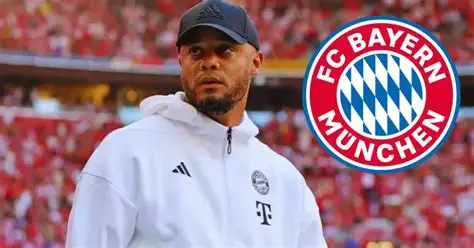
VINCENT KOMPANY is building a new era of success at Bayern Munich, and his approach could offer a glimpse into the future of football after Pep Guardiola.
Kompany enjoyed a legendary playing career at Manchester City, where he captained the team for years and earned iconic status. Now, he is aiming to achieve similar success from the sidelines.
His appointment as Bayern manager in May 2024 surprised many, especially after Burnley’s relegation under his leadership. However, the decision has paid off. Bayern won the Bundesliga last season and are currently leading the table comfortably. They also hold a 2-1 advantage over Real Madrid heading into a crucial Champions League clash.
⚽ A Bold and Modern Playing Style
Kompany has introduced a bold, attacking system at Bayern. His team plays with freedom, takes risks, and involves all 11 players in both attack and defence.
Against Atalanta in the Champions League, Bayern faced a strict man-marking system. Kompany responded by rotating players across the pitch to disrupt defensive structure.
For example, Serge Gnabry dropped deep into defensive areas, pulling markers out of position. This movement created space for teammates and confused the opposition. Bayern dominated the tie, winning 10-2 on aggregate.
This fluid approach impressed many, including Luciano Spalletti, who praised Bayern’s movement and tactical flexibility.
🔄 Movement as the Core Idea
One of the key features of Kompany’s system is constant off-the-ball movement.
In a recent match against Real Madrid, Bayern adjusted their shape during possession. Joshua Kimmich dropped into defence to create a numerical advantage against attackers like Vinícius Júnior and Kylian Mbappé.
Meanwhile, full-backs Josip Stanišić and Konrad Laimer moved into central areas, drawing opposition midfielders inward.
This created space on the wings, allowing players like Michael Olise to receive the ball in dangerous positions and attack with speed.
🔮 A Glimpse of Football’s Future?
As questions continue around Guardiola’s long-term future, Kompany’s connection to Manchester City makes him a potential successor.
More importantly, his tactical ideas suggest where modern football may be heading—towards greater fluidity, positional rotation, and intelligent movement rather than rigid formations.
Kompany is not just following Guardiola’s philosophy; he is evolving it. His Bayern side blends structure with creativity, offering an exciting vision of the game’s next phase.