



Knocker-Uppers and Candle Clocks: How People Woke Up Before Alarm Clocks
Before alarm clocks became cheap, reliable and small enough to sit beside every bed, waking up on time was a daily problem that people solved with imagination. Some hired human alarm clocks. Some listened for church bells. Some trusted roosters, servants, prayer routines, factory whistles, candle clocks or their own body rhythms. Long before smartphones started vibrating under pillows, societies built entire wake-up systems around work, faith, season and sound.
The story of how people woke before alarm clocks is not only a quirky history of old gadgets. It is a history of labour discipline, industrial pressure, sleep habits, religious life and the human need to control time. Every generation has worried about being late. The difference is that earlier generations had fewer buttons to press.
In industrial Britain, the pressure to wake on time became especially intense. Factories, mills and mines did not run on casual mornings. A worker who arrived late could lose wages, disrupt a shift or slow a production line. Personal alarm clocks existed, but many were too expensive or unreliable for ordinary workers. Out of that need came one of history’s most memorable jobs: the knocker-upper.
But knocker-uppers were only one part of the story. Before alarm clocks became normal, people had already spent centuries using fire, bells, animals, household roles and natural cues to manage mornings. The methods were sometimes clever, sometimes communal and sometimes surprisingly accurate.
The Morning Problem Was Older Than the Alarm Clock
The need to wake on time did not begin with modern offices. Farmers had animals to feed. Monks had prayers to attend. Sailors had watches to keep. Servants had fires to light. Market traders had goods to move. Soldiers, bakers, fishermen and labourers all needed to rise before the day fully began.
Before alarm clocks, timekeeping was often shared. A person did not always wake alone in a private bedroom with a device under personal control. The wider community helped organise time. Bells rang across towns. Roosters crowed near farms. Employers set schedules. Religious institutions marked hours. Families woke each other. Servants woke masters. Neighbours listened for the same signals.
That world feels strange now because modern waking is private. A phone alarm belongs to one person. It can be set, snoozed, changed or ignored. Earlier systems were more public. If a bell rang, everyone heard it. If a rooster crowed, the farm heard it. If a knocker-upper tapped a window, the street might hear it too.
Before alarm clocks, waking up was therefore part of a social system. Time was not only measured. It was announced.
Knocker-Uppers: The Human Alarm Clocks of Industrial Britain
The most famous answer to the question of how people woke before alarm clocks is the knocker-upper. In industrial towns across Britain, knocker-uppers were paid to wake workers before early shifts. They walked streets in the dark, tapping windows with long poles, knocking on doors or using pea-shooters to hit upstairs glass.
Historian Arunima Datta’s research in the Journal of Victorian Culture describes knocker-uppers as part of the everyday labour system of Victorian and early twentieth-century industrial towns. They were not comic figures invented by nostalgia. They performed a real service in communities where punctuality had become economically important.
Many clients were factory workers, mill hands or miners who could not afford to be late. Some paid a few pence a week. Some knocker-uppers served dozens of households each morning. In some towns, the job was done by older men and women who could earn extra money by taking early rounds. In other cases, police constables reportedly supplemented income by waking clients during morning patrols.
Before alarm clocks became affordable for the working class, this human service filled a gap. It converted punctuality into a paid neighbourhood trade.
The Sound of a Pole on Glass
A knocker-upper’s work was practical. The goal was not to make a dramatic noise. It was to wake the right person without waking everyone else too violently. A long bamboo pole or stick could reach upper-floor windows. A short baton could knock at doors. A pea-shooter could send dried peas against glass, especially where windows were high or difficult to reach.
The knocker-upper usually had to wait for proof that the client was awake. A movement at the curtain, a call from inside or a light might be enough. If the client went back to sleep, the whole service failed.
Before alarm clocks, reliability depended on trust. The sleeping worker trusted the knocker-upper to appear. The knocker-upper trusted the worker to pay. The employer trusted the worker to arrive. In that small chain, the morning economy of industrial Britain began before sunrise.
This makes the profession more interesting than a novelty. It shows how new work patterns created new jobs. Factories needed punctual workers. Workers needed waking. A service emerged.
The News Ink’s guide to sleep quality looks at modern habits, but knocker-uppers remind us that sleep has always been shaped by work demands.
Who Woke the Knocker-Upper?
The obvious joke is also a serious question: who woke the knocker-upper?
Many knocker-uppers organised their lives around different sleep schedules. Some were night owls or slept during the day. Others may have relied on habit, body rhythm, nearby clocks or other people. The profession only worked because the person doing the waking had adapted to a schedule others could not maintain.
Before alarm clocks, people often developed routines through repetition. A person who rose at the same time every day could train the body to expect waking. That was especially true when combined with light, sound, meal timing and work habits.
Still, the knocker-upper’s job was hard. Cold weather, darkness, rain, fog, poor streets and large client lists made the work demanding. Waking someone at the right window at the right time required memory, route discipline and stamina.
In a world obsessed with productivity apps and sleep trackers, the knocker-upper feels old-fashioned. But the principle is familiar: when time discipline becomes valuable, people build systems to protect it.
Candle Clocks: Fire as a Timekeeper
Long before alarm clocks, people also used flame to measure time. Candle clocks were marked candles that burned at a roughly predictable rate. As the candle melted, markings showed how much time had passed. In some versions, pins or nails were placed into the candle at chosen points. When the wax melted enough, the metal fell onto a dish or tray, making a sound.
This was not as precise as a modern clock, but it could be useful indoors, at night or on cloudy days. Historical accounts connect candle clocks with China and medieval Europe, and later stories often associate them with Alfred the Great. The basic idea was simple: fire burns gradually, and a controlled burn can become a clock.
Before alarm clocks, a candle clock offered something close to a timed alert. A person could place a pin where the candle would reach after several hours. When the pin dropped, the sound might wake them or signal that a period of time had passed.
There were limits. Drafts, wax quality, candle thickness and room conditions could affect burn rate. There was also the obvious fire risk. A candle clock was clever, but it was not a perfect alarm.
Still, it shows the same human instinct behind every later device: turn a predictable process into a reminder.
Incense Clocks and the Scent of Time
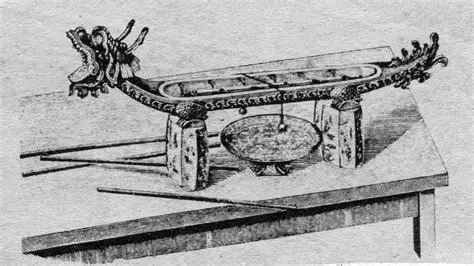
In parts of East Asia, incense clocks offered another answer before alarm clocks. These timekeepers used calibrated incense sticks or powdered incense trails that burned at known rates. Some included small weights, bells or gongs that sounded when the incense burned through a thread. Others marked time through scent, with different fragrances indicating different periods.
The history of incense clocks is strongly associated with China and later with neighbouring cultures including Japan and Korea. They were used in homes, temples and social settings, not only as wake-up tools but as broader timekeeping instruments.
Incense clocks are fascinating because they show that time was not always experienced through numbers. It could be heard, smelled or seen. A clock could be a sensory object, not only a mechanical one.
Before alarm clocks made waking a sharp sound beside the bed, time could arrive slowly through burning incense, church bells, daylight or the gradual noise of a household beginning to move.
That slower experience of time is one reason historical sleep can feel so different from modern sleep. Today, a harsh alarm can cut through rest instantly. Earlier systems often depended on layered signals.
Bells, Churches and Public Time
For many communities, bells were the most important wake-up and timekeeping signals before alarm clocks. Church bells, monastery bells, town bells and later factory bells helped organise the day. They marked prayer, work, curfew, danger, market hours and public events.
In medieval and early modern Europe, bells did not simply tell people the time. They created shared time. A person did not need a personal clock if the community’s bell system was reliable enough for daily life.
Religious practice made early rising meaningful. Morning prayers, church attendance and household devotion encouraged people to treat waking as a moral discipline. In some Christian communities, rising early was linked with virtue, order and spiritual seriousness.
Before alarm clocks, faith often did what technology later did: it gave people a reason to get out of bed at a specific hour. A bell did not only say “wake up.” It said “the day’s obligations have begun.”
This is why sleep history belongs partly to religious history. Bodies slept, but cultures decided when waking mattered.
The News Ink’s historical travel coverage often shows how old buildings, rituals and public spaces shaped daily life. Bells were one of the clearest examples of that shaping force.
Ramadan Drummers and Human Wake-Up Traditions
Human waking services were not limited to industrial Britain. In some Muslim communities, especially during Ramadan, drummers or callers traditionally moved through streets before dawn to wake people for suhoor, the pre-dawn meal before fasting. These figures were not exactly the same as knocker-uppers, but they served a similar social function: they helped a community rise at the right time.
Before alarm clocks, religious calendars and daily worship created specialised waking practices. The person waking others was not simply solving a private problem. They were helping the community keep a shared ritual.
The contrast is useful. In Britain, knocker-uppers were often tied to wage labour and industrial punctuality. In Ramadan traditions, the wake-up call was tied to fasting, prayer and communal rhythm. Both show that waking methods reflect what a society values.
A culture wakes people for the things it considers important.
Roosters: Nature’s Noisy Alarm
Roosters may be the most familiar natural alarm before alarm clocks. For farming households, a rooster’s crow near dawn could mark the start of activity. The sound became so closely associated with morning that it remains a symbol of waking even for people who have never lived near a chicken coop.
But roosters do not crow only because they see sunlight. Research published in Current Biology found that predawn crowing is controlled by the rooster’s circadian clock. External stimuli such as light and other roosters can affect crowing, but the internal clock plays a central role.
That makes roosters more than random noise-makers. They are living examples of biological timekeeping. Before alarm clocks, humans often used animal rhythms because animals were already tuned to environmental cycles.
Of course, roosters were not perfect alarms. They could crow too early, too often or at inconvenient times. But in rural life, they formed part of a broader soundscape that included birds, livestock, wind, rain, carts and household movement.
Nature did not provide one alarm. It provided a morning chorus.
The Body Clock Was Always Part of the System
Modern sleep science helps explain why people could wake before alarm clocks without constant failure. Human sleep is shaped by circadian rhythm and sleep pressure. Circadian rhythm helps regulate the timing of wakefulness and sleep across roughly 24 hours. Sleep pressure builds the longer a person stays awake and eases during sleep.
Before alarm clocks, people often lived with stronger environmental cues. Darkness, daylight, physical labour, meal timing, temperature and social routines all helped train waking patterns. A person who slept and woke at similar times each day might not need a device every morning.
That does not mean pre-modern sleep was always healthier or easier. People faced cold, noise, crowded beds, illness, labour demands, poor lighting and danger. But they were often more directly connected to natural light and seasonal change.
The News Ink’s guide to 7 science-backed ways to improve sleep quality explains how light exposure and routine still matter today. In that sense, modern sleep advice sometimes returns to older principles: consistent timing, morning light, less disruption and respect for the body clock.
Segmented Sleep: First Sleep and Second Sleep
One of the most debated ideas in sleep history is segmented sleep. Historian A. Roger Ekirch argued that people in pre-industrial Europe often slept in two main intervals, sometimes called first sleep and second sleep, with a waking period in between. During that middle period, people might pray, talk, read, reflect, have sex, tend fires or complete quiet tasks.
Academic discussion continues around how universal that pattern was. A 2016 article in Sleep argued that segmented sleep was common across pre-industrial Europe, while later scholars have cautioned against oversimplifying the past or assuming every society slept the same way.
For this article, the safest conclusion is balanced: before alarm clocks, sleep patterns were often more varied than the modern ideal of one uninterrupted block. Work, light, season, religion, safety and household structure could all shape sleep.
This matters because the alarm clock did more than wake people. It helped standardise sleep around industrial and office schedules. Modern life expects many people to sleep once, wake once and begin productivity quickly. Earlier lives could be more flexible, though not always more comfortable.
Servants, Parents and Household Waking
Before alarm clocks, many people were woken by other people inside the household. In wealthy homes, servants woke employers, lit fires, prepared clothes and began domestic work before the household fully stirred. In poorer homes, parents woke children, spouses woke each other and older siblings helped younger ones.
This kind of waking was ordinary, but it shows something important: time discipline often depended on labour that was invisible. Someone had to wake first. Someone had to manage the fire, food, animals, water or workplace preparation.
The modern alarm clock hides that labour by making waking look individual. But even today, many households still rely on human alarms: a parent waking a child for school, a partner calling from another room, a roommate knocking before an exam, or a mother phoning someone who oversleeps.
Technology changes the method. The social role remains.
Factory Whistles and Industrial Discipline
As industrialisation spread, factories and mills increasingly used whistles, bells and shift signals. These sounds organised collective labour. They told workers when to start, stop, eat or return. In some places, the factory whistle became the sound of the town’s day.
Before alarm clocks were common, factory whistles could help mark time, but they were not always enough to wake workers at home. If the whistle sounded when the shift was already beginning, workers needed to be awake earlier. That is why knocker-uppers remained useful.
The industrial revolution changed sleep because it changed the cost of lateness. Agricultural time was demanding, but it could sometimes bend with weather and daylight. Factory time was stricter. Machines, managers and production schedules required synchronisation.
This is one of the biggest themes in the history of waking. Before alarm clocks, people still had time pressure. Industrial capitalism made that pressure sharper and more measurable.
The News Ink’s healthy lifestyle guide reminds readers that modern routines still affect wellbeing. The industrial age made routine more rigid, and the alarm clock became one of its daily symbols.
A Wake-Up Toolbox Before Alarm Clocks
The methods people used before alarm clocks can be grouped into a simple historical toolbox.
| Method | How it worked | Main setting |
|---|---|---|
| Knocker-uppers | Paid workers tapped windows or doors | Industrial Britain and Ireland |
| Candle clocks | Marked candles burned down; pins could fall and make noise | Homes, night-time timekeeping |
| Incense clocks | Calibrated incense burned; weights, bells or scents marked time | East Asian homes, temples and social settings |
| Church bells | Public bells marked prayer, work and daily hours | European towns and villages |
| Roosters | Circadian crowing signalled dawn | Rural households and farms |
| Servants or family | One person woke another | Domestic households |
| Body rhythms | Habit, daylight and sleep pressure supported waking | Everywhere |
| Factory whistles | Industrial sound signals organised shifts | Industrial towns |
This toolbox shows why waking before alarm clocks was not one method but many. People combined technology, nature and community.
Were People Better at Waking Naturally?
It is tempting to imagine that people before alarm clocks had perfect body clocks and woke peacefully with the dawn. That is too romantic. Many people were exhausted. Many worked long hours. Many slept in cold, crowded or noisy conditions. Many had no choice about waking early.
However, they may have been more used to reading bodily and environmental cues. Without a phone alarm, people paid closer attention to light, animals, bells, household movement and routine. Their sleep was shaped by the world around them, not only by a device.
Modern people often fight their body clocks. Artificial light delays sleep. Screens extend wakefulness. Social schedules conflict with work schedules. Caffeine masks tiredness. Alarms force waking even when sleep pressure remains high.
That is why people can wake after eight hours and still feel exhausted. The News Ink’s article on why people feel tired all the time explores how sleep quality, timing and health factors can matter as much as hours in bed.
Before alarm clocks, people had fewer devices but not necessarily fewer sleep problems. The difference was that their waking systems were more embedded in daily life.
The Alarm Clock Did Not End the Problem
Mechanical alarm clocks eventually became cheaper, more reliable and more common. Later, electric clocks and digital alarms made personal waking easier. Today, smartphones let people set multiple alarms, label them, repeat them, choose sounds and still hit snooze five times.
Yet the basic problem remains. People still struggle to wake. People still sleep through alarms. People still ask others to call them. People still depend on pets, sunlight, children or neighbours. The technology improved, but the human body did not become perfectly obedient.
Before alarm clocks, waking required planning. After alarm clocks, waking still requires planning. The device is only one part of the system. Bedtime, sleep debt, stress, light exposure and health all affect whether waking feels easy or brutal.
The News Ink’s article on whether sleep snacks shows how modern people keep searching for small ways to improve rest. The search is old. Only the tools have changed.
What Old Wake-Up Methods Teach Us Today
The history of waking before alarm clocks offers several useful lessons.
First, timekeeping is cultural. People wake for what their society values: prayer, work, school, markets, fasting, farming, travel or productivity.
Second, technology does not remove dependence on routine. A candle clock, knocker-upper or smartphone alarm works best when the sleeper has a stable schedule.
Third, waking has always been social. Even personal alarms exist because employers, schools, transport systems and families expect people to arrive at certain times.
Fourth, natural cues still matter. Morning light, regular sleep timing and reduced night-time disruption remain important even in a world of smart alarms.
Finally, the best wake-up system is not always the loudest. It is the one that fits the body and the day.
The News Ink’s guide to five simple lifestyle changes connects well with this point because better mornings often begin with healthier daily patterns, not only stronger alarms.
The Forgotten Beauty of Shared Time
There is something charming about the old systems. A knocker-upper walking through a dark street. A candle burning down toward a pin. A church bell crossing a village. A rooster crowing before sunrise. A family member opening shutters. These methods feel slower than a smartphone alarm, but they also reveal how deeply time once belonged to communities.
Before alarm clocks, waking was not always efficient, but it was connected. The sounds of morning came from people, animals, buildings, fire and ritual. They told sleepers not only that it was time to rise, but also where they belonged: to a household, a workplace, a farm, a faith or a town.
Modern alarms are more convenient, but they are also lonely. A phone sound wakes one person into a schedule that may feel disconnected from the body, the season and the people nearby.
That does not mean we should return to pea-shooters and candle pins. It does mean the history is worth remembering. The alarm clock solved one problem, but it also changed the feeling of morning.
The Bottom Line
Before alarm clocks became part of everyday life, people used a surprisingly wide range of methods to wake on time. Industrial workers hired knocker-uppers. Households used candle clocks and sometimes falling pins. East Asian timekeepers used incense clocks. Communities listened to church bells, prayer calls, roosters, servants, family members and the body’s own rhythm.
These methods were not primitive mistakes waiting for modern technology. They were practical answers to the same problem we still face: how to match human sleep with the demands of work, faith, travel and responsibility.
The history of waking before alarm clocks shows that sleep has never been purely private. It has always been shaped by culture, technology, labour and community. Today’s smartphone alarm is only the latest version of a much older human struggle.
Before alarm clocks, people woke to bells, birds, fire, footsteps and knocks at the window. Now we wake to screens. The sound has changed, but the question remains the same: how do we rise on time without losing touch with the body that needs rest?
For more history, science and lifestyle stories, readers can join The News Ink on WhatsApp.