7 Science-Backed Ways to Improve Your Sleep Quality
Sleep quality is one of the most important parts of health, yet it is also one of the easiest to ignore until the body starts sending warning signs. Millions of people spend seven or eight hours in bed and still wake up tired, unfocused or unusually irritable. Others fall asleep quickly but wake several times through the night, then blame themselves for not sleeping “properly.”
The truth is more practical. Sleep quality is not measured only by how many hours pass between bedtime and the morning alarm. It is shaped by timing, light exposure, temperature, stress, naps, consistency and the way the brain moves through different stages of sleep. A long night of fragmented rest can leave someone feeling worse than a shorter but deeper night.
That is why sleep quality belongs at the centre of World Sleep Day. The 2026 campaign, held on March 13, used the theme “Sleep Well, Live Better,” a reminder that good sleep is not a luxury or a productivity hack. It is a foundation for physical health, emotional balance, learning, memory and long-term wellbeing.
The scale of the sleep quality problem is large. The National Heart, Lung, and Blood Institute says about 50 to 70 million Americans have sleep or wakefulness disorders, while the CDC continues to advise adults to get at least seven hours of sleep in a 24-hour period. Those numbers show why improving sleep quality is not a niche concern. It is a public-health issue.
The good news is that better sleep quality often begins with simple changes. These seven science-backed strategies combine modern sleep research with useful historical context, helping readers understand what actually improves sleep quality and what may be less important than it seems.
Quick Guide to the Seven Sleep Quality Strategies
| Strategy | Main benefit | Best for |
|---|---|---|
| Accept normal night waking | Reduces sleep anxiety | People who panic after waking at 3 a.m. |
| Match sleep to seasons | Supports natural rhythm | People affected by winter darkness or summer light |
| Use short power naps | Improves alertness | People with afternoon fatigue |
| Avoid microsleeps | Protects safety and focus | Drivers, shift workers and sleep-deprived people |
| Improve warmth and comfort | Reduces awakenings | Light sleepers and restless sleepers |
| Prioritise quality over hours | Supports deeper recovery | People who spend time in bed but wake tired |
| Respect the modern bed | Improves environment | Anyone with poor mattress, light or noise conditions |
1. Accept Waking Up at Night Instead of Fighting It
One of the fastest ways to damage sleep quality is to turn a normal night-time awakening into a crisis. Many people wake briefly during the night, notice the clock, calculate how many hours remain before morning and immediately become anxious. That anxiety can raise alertness and make it harder to drift back to sleep.
History offers a useful correction. Research linked with historian A. Roger Ekirch popularised the idea that pre-industrial sleep was often segmented into “first sleep” and “second sleep.” In many historical accounts, people slept for several hours, woke during the night, then returned to sleep until morning. During the waking period, they might pray, talk quietly, reflect, read or do small household tasks.
Modern life is different, and not everyone is naturally biphasic. Still, the historical point is useful: waking at night is not automatically a sign that something is wrong. The bigger problem is often the reaction to waking. If a person wakes briefly, stays calm and avoids bright screens, the body may return to sleep naturally.
This matters for sleep quality because pressure can become its own sleep disruptor. A person who thinks “I must sleep perfectly” may create the very stress response that keeps them awake. A better approach is to treat occasional waking as normal.
If you wake during the night:
- Keep the lights low.
- Avoid checking emails, social media or news.
- Do not stare repeatedly at the clock.
- Use slow breathing, quiet reading or another calming activity.
- Return to bed when sleepiness comes back.
People with frequent awakenings, choking, gasping, pain, panic attacks, restless legs or severe daytime sleepiness should seek medical advice. But occasional waking is not failure. Learning that can improve sleep quality by lowering the fear around sleep itself.
2. Adjust Your Routine With the Seasons
Sleep quality changes with the environment. Light is one of the strongest signals for the circadian rhythm, the body’s roughly 24-hour internal clock. When mornings are dark, evenings are bright or winter daylight is limited, sleep timing and sleep depth can shift.
A 2023 study using sleep-clinic data in Germany found seasonal variation in sleep architecture, including differences in REM sleep across the year. The researchers studied people in an urban environment, so the findings should not be treated as a universal rule for every healthy sleeper. Still, the study supports something many people already feel: sleep can change with the seasons.
In winter, longer darkness may make the body want a slightly longer rest window. In summer, late sunsets and early sunrise can push people into shorter nights, especially if curtains, screens and social schedules keep the brain stimulated.
Seasonal sleep quality can be improved by working with light rather than ignoring it. In winter, morning daylight is especially important because it helps anchor the body clock. In summer, darker bedrooms and reduced evening light can protect sleep onset.
Practical seasonal adjustments include:
- Getting daylight soon after waking, even if the sky is cloudy.
- Using dimmer lighting in the final hour before bed.
- Keeping the bedroom dark during long summer evenings.
- Warming the room and bedding in winter without overheating.
- Keeping a consistent wake time even when the season changes.
This does not mean everyone needs a different bedtime in January and July. It means sleep quality improves when the body receives clearer signals. Morning light says “day has started.” Evening darkness says “night is coming.” A confused light schedule often leads to a confused sleep schedule.
3. Take Short Power Naps, But Keep Them Controlled
Napping can help sleep quality indirectly by improving daytime alertness, mood and cognitive performance. A short power nap can be especially useful when someone has had a poor night, is recovering from travel or faces an afternoon slump.
A 2023 study led by researchers at UCL and the University of the Republic in Uruguay found an association between habitual daytime napping and larger total brain volume. The authors suggested the difference could be equivalent to several years of brain ageing, although the study does not prove that naps alone cause better brain health.
That distinction is important. A nap can be useful, but it is not a substitute for consistent night-time rest. The goal is to use naps carefully without letting them weaken the next night’s sleep.
The best nap for most adults is short and early. The Mayo Clinic recommends a 20- to 30-minute nap and advises taking naps in the early afternoon, because later naps can interfere with night-time sleep. The National Sleep Foundation also recommends setting an alarm and avoiding naps longer than about 20 minutes if the goal is to prevent grogginess.
Short naps can improve sleep quality because they reduce the pressure to stumble through the day exhausted. But long, late or accidental naps can create a new problem: the body is no longer sleepy at bedtime.
A good power-nap routine looks simple:
- Nap between early and mid-afternoon.
- Keep it around 10 to 30 minutes.
- Use an alarm.
- Choose a quiet, dark and cool place.
- Avoid napping too close to bedtime.
People who need long naps every day despite spending enough time in bed may have a deeper issue. Sleep apnoea, poor sleep timing, depression, iron deficiency, medication effects and other health problems can all cause daytime fatigue. The News Ink has also covered why some people feel tired after enough sleep, a problem that often needs more than an afternoon nap.
4. Avoid Microsleeps Before They Become Dangerous
Not every short sleep episode is helpful. Microsleeps are brief, involuntary sleep episodes that may last only a few seconds. They can happen when the brain is severely sleep deprived, even if the person believes they are still awake.
Microsleeps are dangerous because they often happen during tasks that require attention. A few seconds of lost awareness while driving, operating machinery or making a critical decision can have serious consequences.
Research using dashcam footage of truck collisions in Japan examined microsleep-related behaviours immediately before real-world crashes. Hiroshima University reported that microsleeps of only a few seconds can contribute to terrible accidents, and the study looked beyond eye closure to other driver and vehicle behaviours that may signal risk.
Chronic sleep restriction also matters. A classic study by H.P.A. Van Dongen and colleagues found that restricting sleep to six hours or less per night over two weeks produced cognitive performance deficits equivalent to up to two nights of total sleep deprivation. That finding is still powerful because many people think six hours is “almost enough.”
For some adults, six hours may feel manageable for a night or two. But repeated short sleep can quietly erode vigilance, reaction time and judgement. The danger is that people do not always notice how impaired they have become.
Warning signs of serious sleep deprivation include:
- Heavy eyelids or repeated blinking.
- Missing parts of a conversation.
- Drifting out of a traffic lane.
- Forgetting the last few minutes of driving.
- Reading the same sentence repeatedly.
- Sudden head nods.
- Irritability and poor impulse control.
Protecting sleep quality is partly about protecting safety. If you are fighting sleep, the solution is not stronger coffee and more willpower. It is stopping, resting and changing the conditions that created the sleep debt.
5. Make Warmth and Comfort Part of the Sleep Plan
Modern sleep advice often focuses on screens and schedules, but physical comfort still matters. A bed that is too hot, too cold, too noisy, too bright or physically uncomfortable can break sleep into fragments, even if the person does not fully wake each time.
Historically, people often slept in conditions that would feel unacceptable today. In colder societies, bed sharing helped preserve warmth. Box beds and enclosed sleeping spaces trapped heat but could also feel cramped or stuffy. Straw-filled mattresses, wool bedding and shared rooms were shaped by climate, cost and household structure as much as comfort.
Modern sleepers have more control, but many still ignore the basics. A bedroom that is too warm can increase restlessness. A cold room without enough bedding can cause repeated micro-awakenings. A worn mattress can aggravate pain. Noise and light can pull the brain out of deeper sleep stages.
Comfort improves sleep quality because the body does not need to keep solving small problems during the night. The ideal bedroom should feel stable, safe and boring in the best possible way.
Useful comfort upgrades include:
- Keeping the room cool but not cold.
- Choosing breathable bedding.
- Blocking outside light with curtains or an eye mask.
- Reducing noise with earplugs, soft furnishings or white noise.
- Replacing pillows that no longer support the neck.
- Checking whether the mattress worsens back, hip or shoulder pain.
Comfort also includes the hour before bed. Heavy meals, alcohol, intense arguments, stressful work and bright screens can all leave the body activated. The News Ink’s guide to a healthy lifestyle explains why daily habits around movement, food and stress often show up later in sleep.
6. Focus on Sleep Quality, Not Just Hours
Sleep duration matters. Adults generally need at least seven hours, and many do best with seven to nine. But sleep quality explains why two people can spend the same time in bed and wake up feeling completely different.
High-quality sleep usually includes enough deep sleep, enough REM sleep, stable breathing and limited awakenings. Deep sleep helps the body repair and restore. REM sleep supports dreaming, emotional processing and learning. Fragmented sleep can reduce the benefits of both stages.
The American Academy of Sleep Medicine advises a consistent sleep schedule, a bedtime early enough to allow seven to eight hours of sleep, and going to bed only when sleepy. These recommendations may sound simple, but they target one of the strongest predictors of sleep quality: rhythm.
The brain likes regularity. A consistent wake time tells the circadian system when to begin the day. Regular meals, light exposure and exercise reinforce the pattern. When bedtime and wake time swing wildly, the body clock has to keep recalibrating.
Sleep quality also appears to matter for brain maintenance. Research on the glymphatic system has explored how the brain clears waste products during sleep. Some scientists debate details of the mechanism, but the broader point remains: sleep is an active biological state, not a pause button.
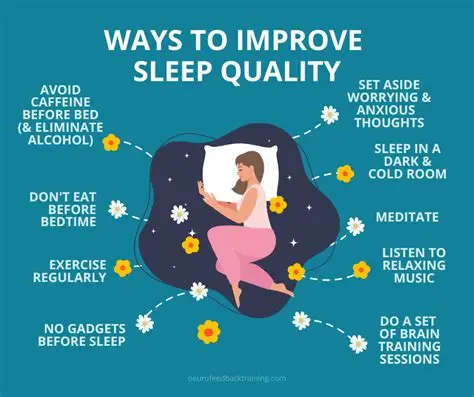
To improve the quality of sleep, start with the schedule:
- Wake up at roughly the same time each day.
- Get daylight early.
- Keep caffeine earlier in the day.
- Avoid alcohol as a sleep aid.
- Keep the final hour quieter and darker.
- Use the bed mainly for sleep and intimacy.
- Leave bed briefly if you are wide awake for a long time.
A person chasing more hours without fixing fragmentation may still wake exhausted. The goal is not only to be in bed longer. The goal is to sleep better while you are there.
7. Appreciate the Modern Bed, But Do Not Expect It to Do Everything
Modern mattresses, pillows, duvets, sleep trackers and temperature tools offer advantages previous generations did not have. A supportive bed can reduce pain, limit movement and create a more stable sleep environment. For people sleeping on sagging mattresses or unsuitable pillows, an upgrade can genuinely improve sleep quality.
But the modern bed also creates a false expectation: if the product is expensive enough, sleep should happen automatically. That is not how the body works. A good mattress cannot cancel out late caffeine, irregular schedules, untreated anxiety or sleep apnoea. A sleep tracker cannot fix bedtime revenge scrolling. A cooling pillow cannot undo chronic stress.
Technology can help when it solves a real problem. A blackout blind may help someone exposed to streetlights. A sunrise alarm may help someone who struggles with dark winter mornings. A white-noise machine may help in a loud apartment. A cooler mattress may help a hot sleeper.
The mistake is buying more sleep technology while ignoring behaviour. Improving sleep quality usually requires both: a supportive environment and a routine that tells the body it is safe to rest.
There is also a newer trend of edible bedtime products, including chocolates and bites marketed as relaxation aids. The News Ink recently examined whether sleep snacks can help people fall asleep. The answer is cautious: some ingredients may help some people, but no snack replaces consistent sleep hygiene.
The bed should be treated as part of a system. The room, routine, light, temperature, stress level and daily schedule all contribute to the result.
When Poor Sleep Needs Medical Attention
Self-help strategies can improve sleep quality for many people, but they are not enough for every case. Some sleep problems are symptoms of medical conditions that need assessment.
Consider professional help if poor sleep lasts for weeks, affects work or relationships, or comes with any of the following signs:
- Loud snoring, choking or gasping during sleep.
- Morning headaches.
- Severe daytime sleepiness.
- Falling asleep while driving or working.
- Restless legs or repeated limb movements.
- Panic, nightmares or trauma-related sleep disruption.
- Depression or anxiety symptoms.
- Chronic pain that prevents sleep.
- Dependence on alcohol or sedatives to sleep.
Sleep apnoea is especially important because many people do not know they have it. The person may spend enough time in bed but repeatedly stop breathing or breathe poorly through the night. That can damage sleep quality and increase health risks.
Medical care may include sleep studies, cognitive behavioural therapy for insomnia, treatment for breathing disorders, medication review or support for anxiety and depression. For chronic insomnia, behavioural treatment often works better long term than relying only on pills.
This article is for general information only. It is not a substitute for professional medical advice, diagnosis or treatment.
Better Sleep Quality Starts With Simple, Repeated Choices
The best science-backed ways to improve sleep quality are not always dramatic. They are often small, repeated choices that make the night easier for the body to manage.
Accepting occasional night waking reduces anxiety. Matching routines to seasonal light supports the body clock. Short naps can restore alertness without stealing from the night. Avoiding microsleeps protects safety. Warmth, comfort and darkness reduce fragmentation. Consistent timing improves rhythm. A good bed helps, but it works best when paired with healthy habits.
Sleep quality improves when sleep becomes less of a battle and more of a pattern. The body needs cues, not pressure. It needs regularity, not perfection. It needs recovery time before bedtime, not a sudden command to shut down after hours of stimulation.
For readers working on broader wellness habits, The News Ink’s guide to simple lifestyle changes is a useful next step because better sleep is closely connected with movement, nutrition, stress and brain health.
Good sleep does not require a perfect life. It requires enough consistent signals for the brain and body to understand that the day is over. That is where better sleep quality begins.
For more health and science explainers, readers can also join The News Ink on WhatsApp.