




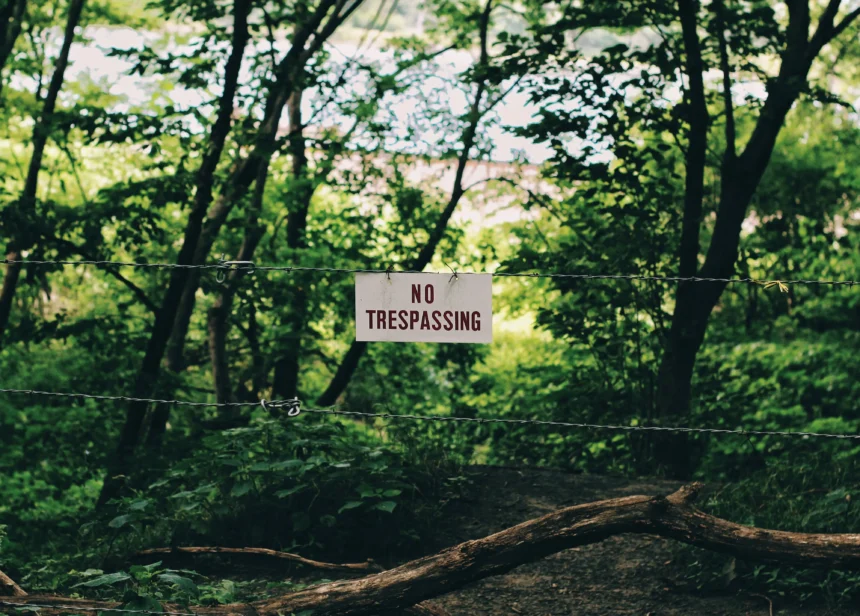
10 Places on Earth Most People Are Not Allowed to Visit
Travel has become extraordinarily accessible.
A person can fly across continents in hours, book a hotel from a phone and explore places that previous generations might only have seen in books.
Yet there are still locations where buying a plane ticket is not enough.
Some islands cannot legally be approached.
Some caves have been sealed away from tourism.
Certain scientific reserves admit only approved researchers.
Military facilities remain inaccessible to ordinary citizens.
And one of the most important collections of agricultural seeds on Earth sits behind doors that tourists are simply not permitted to enter.
These forbidden places on Earth are fascinating partly because we cannot experience them like ordinary destinations.
But “forbidden” needs careful definition.
Some places are absolutely closed to the public.
Others allow scientists or authorized personnel.
Some require difficult environmental permits.
A few are technically workplaces rather than tourist attractions and admit only people with official reasons to be there.
That distinction matters.
A protected island being closed to tourists is very different from a dangerous location that people merely choose not to visit.
For this list, every location has a genuine access restriction supported by an official authority or management organization.
The reasons reveal something important.
Sometimes the best way to protect an extraordinary place is to prevent most people from entering it at all.
Forbidden Places on Earth at a Glance
| Place | Location | Public Access | Main Reason |
|---|---|---|---|
| North Sentinel Island | India | Prohibited | Protect Sentinelese people |
| Surtsey | Iceland | Prohibited except approved science | Preserve natural ecological succession |
| Lascaux Cave | France | Closed to public | Protect prehistoric paintings |
| Chauvet Cave | France | Never opened to public | Conservation |
| Heard & McDonald Islands | Australian territory | Permit required | Environmental protection |
| Queimada Grande | Brazil | Closed to general public | Wildlife conservation and safety |
| Svalbard Global Seed Vault | Norway | Authorized personnel only | Biosecurity and conservation |
| Fort Knox Bullion Depository | United States | No public visitors | Security |
| Area 51 / Groom Lake | United States | Restricted military facility | National security |
| North Brother Island | New York City | Closed to public | Ecology and unsafe ruins |
The interesting part is that the restrictions are not all about danger.
Some exist to protect us.
Others exist to protect the place from us.
1. North Sentinel Island, India
Few forbidden places on Earth are as sensitive as North Sentinel Island.
The forest-covered island lies in India’s Andaman and Nicobar archipelago and is home to the Sentinelese, an Indigenous people who have maintained extraordinary isolation from the outside world.
India does not treat the island as an adventure-tourism destination.
The government has legally designated the entire island and the surrounding coastal waters extending 5 kilometers from the high-water mark as a tribal reserve.
Entry by outsiders—including foreigners and tourists—is prohibited under the Andaman and Nicobar Islands Protection of Aboriginal Tribes Regulation.
The Indian Ministry of Home Affairs explicitly confirmed this restriction after the widely reported 2018 death of an American who illegally attempted to reach the island. Indian Ministry of Home Affairs statement on North Sentinel Island restrictions
Why Is North Sentinel Island Off-Limits?
The biggest reason is not simply that approaching the island could be dangerous for visitors
Contact can be dangerous for the Sentinelese.
Highly isolated populations may have limited immunity to infectious diseases carried routinely by outsiders.
A seemingly ordinary infection could have devastating consequences in a small community with very limited outside contact.
The Sentinelese have also repeatedly demonstrated that they do not want uncontrolled interaction.
Respecting their isolation is therefore both a public-health policy and a matter of Indigenous autonomy.
North Sentinel Island deserves a place among forbidden places on Earth precisely because the restriction exists to stop outsiders from treating another community’s home as an exotic attraction.
This is also why The News Ink’s Smart Travel guide emphasizes that responsible travel includes recognizing when a place should not be visited at all.
2. Surtsey, Iceland
Surtsey is one of the rare places where scientists effectively watched new land appear.
A submarine volcanic eruption began off Iceland in 1963.
Lava and volcanic material eventually rose above the North Atlantic, creating a new island.
For ecologists, this produced an extraordinary experiment.
What happens when a completely new island begins with almost no established terrestrial life?
Which plants arrive first?
How do insects reach it?
When do birds begin nesting?
How does soil develop?
Scientists wanted those processes to unfold with as little human interference as possible.
So Surtsey became one of the world’s most tightly protected natural laboratories.
UNESCO says visits are strictly prohibited to protect the island’s natural colonization and geological development. Going ashore is prohibited, as is diving close to the island, except under the highly controlled scientific framework. UNESCO World Heritage Centre — Surtsey
Why Can’t Tourists Just Stay on a Trail?
Because the entire point of Surtsey is to observe what happens without ordinary human disturbance.
A visitor could accidentally transport:
seeds;
fungal spores;
microorganisms;
insects;
soil;
or other biological material.
One tiny introduction could alter an ecological experiment that has been running since the island was born.
Surtsey illustrates one of the strangest principles behind forbidden places on Earth:
sometimes even a respectful visitor changes the environment simply by arriving.
If you enjoy destinations shaped by geological extremes, The News Ink’s article on places where it almost never rains explores another side of how unusual environments develop.
3. The Original Lascaux Cave, France
Tourists can visit Lascaux.
But they cannot normally visit the real Lascaux Cave.
That distinction exists because tourism nearly destroyed the thing people came to see.
The cave in southwestern France contains some of the world’s most famous prehistoric paintings, created roughly 18,000–20,000 years ago.
After its discovery in 1940, Lascaux became enormously popular.
At its peak, large numbers of people entered daily.
The problem was that humans bring:
heat;
carbon dioxide;
humidity;
microorganisms.
Changes to the cave’s delicate environment contributed to biological and chemical problems threatening the prehistoric art.
French authorities closed the original cave to the public in April 1963.
France’s Ministry of Culture says excessive tourist numbers disturbed the cave’s climatic balance and contributed to damaging processes affecting the walls. French Ministry of Culture on why Lascaux was closed
Today, conservation of the original cave is treated as more important than allowing millions of people to walk through it.
Visitors instead experience sophisticated replicas.
The Replica Is the Reason the Original Can Survive
This is an elegant compromise.
Human beings still get to experience the artwork and understand its scale.
The original environment does not have to absorb mass tourism.
Lascaux is therefore one of the most important examples of why forbidden places on Earth can actually become more accessible intellectually once physical access is restricted.
The News Ink’s Historical Travel guide explores the same principle: visiting history responsibly means protecting the original site rather than treating access as an unlimited right.
4. Chauvet Cave, France
France learned from Lascaux.
When the Chauvet-Pont-d’Arc Cave was discovered in 1994, authorities did not repeat the same experiment with mass tourism.
The cave contains spectacular Paleolithic art, including images of:
lions;
rhinos;
bears;
horses;
and other animals.
Some of the artwork is around 36,000 years old.
Unlike Lascaux, the original Chauvet Cave was never opened to the general public.
France’s archaeology service says the decision was made immediately because conservation came first. Access is tightly controlled for scientific research and preservation. French Ministry of Culture — Chauvet Cave
Researchers entering the cave follow controlled routes and strict procedures to minimize changes to its internal environment.
Visitors can instead explore a full-scale replica nearby.
Why Chauvet Matters
Chauvet represents a major shift in heritage management.
Lascaux demonstrated what uncontrolled tourism could do.
Chauvet showed what authorities could do differently.
The lesson was simple:
some historical treasures survive best when the original becomes one of the forbidden places on Earth.
That principle may feel frustrating to travelers, but it protects something far older than modern tourism.
The News Ink’s guide to ancient wonders you can still visit today offers the opposite side of the story—places where access remains possible when visitors and authorities manage it carefully.
5. Heard Island and McDonald Islands
Some forbidden places on Earth are not secret.
They are simply astonishingly remote and heavily protected.
Heard Island and the McDonald Islands sit in the southern Indian Ocean, roughly 4,000 kilometers southwest of mainland Australia.
They are an Australian external territory surrounded by some of the most isolated ocean on Earth.
Heard Island contains glaciers and an active volcano called Big Ben.
The islands remain remarkably untouched compared with much of the planet.
Australia protects that condition aggressively.
The Australian Antarctic Program states that a person may enter the territory only under an approved permit, except for limited official or emergency circumstances. Australian Antarctic Program — Heard Island permits
Applications can require environmental review months before a proposed expedition.
Why Is Access So Strict?
Isolation created exceptional ecological value.
Human visitors can introduce:
foreign organisms;
disease;
seeds;
contaminated equipment;
waste.
Even scientific expeditions need controls.
Australia describes the region as one of the world’s most biologically pristine environments. Australian Antarctic Program — Heard Island protection and management
This is not an island where tourists simply purchase an entrance ticket and arrive by cruise ship.
The legal presumption is essentially reversed:
you need a valid reason and approval to enter.
6. Ilha da Queimada Grande — “Snake Island,” Brazil
Brazil’s Ilha da Queimada Grande is better known internationally as Snake Island.
It sits off the coast of São Paulo and supports the golden lancehead, Bothrops insularis, a venomous snake found naturally nowhere else on Earth.
Internet stories often exaggerate the island into a horror-film landscape filled with impossible numbers of snakes.
The reality is fascinating enough without mythology.
Brazil’s Instituto Butantan clarified in 2025 that the island is not open to the general public. Research teams may visit under controlled conditions. Instituto Butantan on Queimada Grande and public access
The island is also an officially protected ecological area managed within Brazil’s conservation framework. ICMBio — Queimada Pequena and Queimada Grande protected area
The Restriction Protects Both People and Snakes
The golden lancehead is endangered.
Its entire natural world is concentrated on a tiny island.
Uncontrolled tourism could damage habitat or disturb wildlife.
At the same time, an island populated by venomous snakes is obviously not an ideal environment for casual visitors.
So Snake Island represents the rare case where restricting tourism protects both sides of the encounter.
This is one reason sensational travel content should always be checked against official rules. The News Ink’s coverage of Hanoi Train Street similarly shows how viral fascination can clash with real safety restrictions.
7. Svalbard Global Seed Vault, Norway
From the outside, the Svalbard Global Seed Vault looks like one of the world’s most unusual tourist attractions.
A concrete entrance disappears into a mountain on the Norwegian Arctic archipelago of Svalbard.
Inside lies something far more valuable than gold.
Seeds.
The vault serves as a backup for seed collections maintained by gene banks around the world.
If a crop collection is lost through:
war;
natural disaster;
equipment failure;
political instability;
or another catastrophe,
backup material stored at Svalbard can help restore it.
But tourists cannot simply book a tour of the storage chambers.
The Seed Vault’s official website states clearly that only authorized personnel have access. The organization provides a virtual tour instead. Svalbard Global Seed Vault — information for the general public
Why Restrict Access to Seeds?
Because the facility is not a museum.https://www.seedvault.no/for-the-general-public/?utm_source=chatgpt.com
It is critical conservation infrastructure.
Temperature stability, security and careful handling matter.
Millions of individual visitors would add no meaningful benefit while creating additional operational risk.
Among all forbidden places on Earth, Svalbard may have one of the most interesting purposes.
It is closed not because something dangerous is hidden inside. forbidden places on Earth
It is closed because what is inside may become incredibly important if agriculture somewhere else suffers disaster.
8. Fort Knox Bullion Depository, United States
Fort Knox has become synonymous with extreme security.
The U.S. Bullion Depository in Kentucky stores a huge portion of America’s government gold reserves.
As of the U.S. Mint’s current figures, it holds roughly 147.3 million fine troy ounces of gold.
And ordinary visitors cannot tour it.
The U.S. Mint could hardly be clearer:
“No visitors are permitted at the bullion depository.” U.S. Mint — Fort Knox Bullion Depository
There have been extraordinarily rare exceptions.
A congressional delegation and journalists entered in 1974.
Another official visit occurred in 2017.
Those exceptional events only emphasize how unusual access is.
Why Is Fort Knox So Restricted?
The answer here is straightforward.
Security.
The site exists to safeguard national assets, not entertain tourists.
Other Mint facilities, including Philadelphia and Denver, offer public tours.
Fort Knox deliberately does not. forbidden places on Earth
This makes it one of the clearest man-made forbidden places on Earth.
There is no ecological fragility.
No isolated tribe.
No prehistoric cave atmosphere.
Just an institution whose purpose depends on controlling exactly who can enter.
9. Area 51 / Groom Lake, Nevada
No article about restricted locations would feel complete without Area 51.
The site at Groom Lake in Nevada became globally famous through decades of:
UFO mythology;
alien conspiracies;
secret-aircraft rumors;
popular culture.
The real documented history is already remarkable.
The CIA confirms that Groom Lake served as a highly secret testing and training site for aircraft including the U-2 and A-12 OXCART reconnaissance programs. CIA history of Area 51 and Groom Lake
The area sits within the much larger Nevada military testing environment.
It is not a tourist attraction.
Public fascination does not create a right of access to an active restricted military installation.
What Was Actually Happening There?
Secret aircraft development.
During the Cold War, unusual high-altitude aircraft seen around the test range likely contributed to some UFO reports. forbidden places on Earth
The CIA says many of the wilder extraterrestrial stories are fiction.
The military history, however, explains why access restrictions became so severe.
Among forbidden places on Earth, Area 51 is unusual because secrecy itself produced much of the fascination.
People became obsessed partly because they were told almost nothing.
10. North Brother Island, New York City
You do not have to travel to an isolated ocean to find somewhere closed to ordinary visitors.
North Brother Island sits in New York City’s East River between the Bronx and Queens.
For decades, it hosted institutions including a quarantine hospital.
One of its most famous residents was Mary Mallon, better known as Typhoid Mary.
The facilities eventually closed, and the island was abandoned in 1963.
Nature moved back in.
Today, ruined buildings sit among dense vegetation and important bird habitat.
New York City Parks manages North Brother as part of a protected natural landscape.
City records describe it as off-limits to the public, while current NYC Parks water-trail guidance identifies North and South Brother Islands as protected sanctuaries rather than normal landing destinations. New York City Council
Why Is It Closed?
Several reasons overlap.
The abandoned structures are deteriorated.
The landscape contains ecological value.
Uncontrolled tourism could create both safety and conservation problems.
North Brother Island demonstrates that forbidden places on Earth do not always need armed guards or extreme geography. forbidden places on Earth
One can sit within sight of millions of people.
Why Are Places Closed to the Public?
Looking across these examples, restrictions generally fall into several categories.
Protecting Vulnerable People
North Sentinel Island is the clearest example.
Outsiders pose health and cultural risks to an isolated community.
Protecting Fragile Ecosystems
Surtsey, Heard Island and Queimada Grande exist partly as conservation laboratories.
Too many visitors could change precisely what scientists want to preserve.
Protecting Irreplaceable History
Lascaux and Chauvet contain prehistoric artwork that cannot be restored if tourism permanently damages it.
Protecting National Assets
Fort Knox exists to secure government gold.
Its value depends on controlled access.
Protecting Sensitive Government Activity
Military sites such as Groom Lake restrict entry because the activities conducted there involve national security.
These categories reveal why “forbidden” should not automatically mean “mysterious.”
Often the reason is extremely practical.
Are These Places Completely Impossible to Enter?
Not all of them.
This is where many online lists become inaccurate.
There is a major difference between:
nobody can ever enter
and
ordinary tourists cannot enter.
Scientists may legally visit Surtsey.
Approved expeditions can reach Heard Island.
Researchers can access Chauvet under strict conditions.
Authorized personnel enter Svalbard’s Seed Vault.
Government employees work inside secure facilities.
The meaningful restriction is on general public access.
That is why the title of this article says places most people are not allowed to visit.
It is much more accurate than claiming nobody has ever entered them.
Why Not Turn Every Restricted Place Into Tourism?
Because tourism changes locations.
People need:
roads;
toilets;
paths;
lighting;
security;
food;
transport;
waste removal.
Thousands of footsteps alter soil.
Breathing changes cave atmospheres.
Boats can disturb wildlife.
Visitors accidentally transport organisms.
Social-media attention can suddenly send huge crowds to places never designed for them.
The News Ink’s Historical Travel guide emphasizes that access to heritage sites should not come at the expense of preserving the history travelers came to experience.
Lascaux is perhaps the clearest warning.
Authorities opened a spectacular ancient site because people wanted to see it.
They then discovered that seeing it was helping destroy it.
Restricted Does Not Mean “Try Harder”
Social media sometimes turns prohibition into a challenge.
A locked gate becomes a dare.
A closed island becomes an adventure.
A security warning becomes an opportunity for a dramatic video.
That is precisely the wrong way to interpret forbidden places on Earth.
Trespassing into a protected habitat can cause ecological damage.
Approaching an isolated people can risk human lives.
Entering active railway, military or industrial areas can create serious danger.
And violating restrictions can result in arrest, fines or other legal consequences.
The goal of responsible travel is not collecting places other people could not reach.
It is understanding why access exists where it does—and why sometimes it should stop.
Travelers looking for extraordinary experiences have countless legal options. The News Ink’s guide to cheap countries for tourists shows how much of the world remains accessible without turning prohibited territory into a personal challenge. forbidden places on Earth
Why Do Forbidden Places Fascinate Us So Much?
Restriction creates curiosity.
Tell someone:
“You can visit this building.”
They may not care.
Tell them:
“Nobody is allowed inside.”
Suddenly the building becomes fascinating.
Psychologists sometimes describe value increasing when something becomes scarce or inaccessible.
A restricted destination also leaves room for imagination.
What is behind the door?
What would the island look like in person?
What is inside the cave?
Why are those fences there?
That uncertainty can create stories far more dramatic than reality.
Area 51 is probably the perfect example.
The real history of experimental aircraft is remarkable.
But decades of secrecy allowed aliens, crashed spacecraft and underground laboratories to dominate popular imagination.
The less the public could see, the more people imagined.
Some Places Are More Valuable Because We Cannot Visit Them
Tourism culture encourages an understandable idea:
Beautiful things should be experienced in person.
Usually that is wonderful.
Walking through an ancient city is different from seeing a photograph.
Standing beneath a mountain changes your perception of its scale.
Visiting another culture can teach things a screen cannot.
But access is not always the highest value.
What if opening a site means destroying it?
What if visiting exposes another community to disease?
What if one tourist introduces a seed that permanently changes a scientific reserve?
What if the location exists specifically to protect something rather than display it?
Then staying away becomes part of preservation.
That is the deeper story behind forbidden places on Earth.
Frequently Asked Questions
What places on Earth are people not allowed to visit?
Examples include North Sentinel Island, Surtsey, the original Lascaux and Chauvet caves, Fort Knox, the Svalbard Global Seed Vault and other locations where public access is prohibited or strictly controlled.
Is North Sentinel Island illegal to visit?
Yes. India designates North Sentinel Island and the surrounding five-kilometer coastal sea as a tribal reserve where outsider entry is prohibited.
Can tourists visit Surtsey?
No. Ordinary tourism is prohibited. Access is strictly controlled to protect the island’s natural ecological development. forbidden places on Earth
Can you visit the real Lascaux Cave?
The original Lascaux Cave has been closed to the public since 1963. Visitors experience replicas rather than the fragile original.
Can the public enter Chauvet Cave?
No. Chauvet was never opened to general tourism. Access is tightly limited for conservation and scientific purposes.
Is Snake Island really forbidden?
Brazil’s Queimada Grande is not open to ordinary public visitation. Authorized scientific access occurs under controlled conditions.
Can tourists enter the Svalbard Global Seed Vault?
No. The official Seed Vault states that only authorized personnel have access to the interior, although a virtual tour is available. forbidden places on Earth
Can you tour Fort Knox?
No. The U.S. Mint states that visitors are not permitted at the bullion depository.
Can you visit Area 51?
The military facility itself is restricted. Public roads and communities exist elsewhere in the wider Nevada region, but entering controlled military property without authorization is prohibited.
Why is North Brother Island closed?
New York City protects the island as an ecological area, while abandoned and deteriorated buildings also create safety issues.
Are forbidden places always dangerous?
No. Some are closed primarily for conservation, cultural protection or security rather than because visitors would necessarily be in immediate physical danger. forbidden places on Earth
The Most Interesting Places Are Not Always Tourist Attractions
We often think of travel as a map divided into two categories:
places we have visited
and
places we still want to visit.
But there is a third category.
Places we should never expect to enter.
North Sentinel Island belongs to its people.
Surtsey belongs to an ecological experiment unfolding without ordinary human interference.
The paintings inside Lascaux and Chauvet belong to future generations as much as ours.
Heard Island remains valuable because humans have altered it so little.
Queimada Grande protects an animal found nowhere else.
The Svalbard Global Seed Vault protects genetic resources that could matter to future food security.
Fort Knox and Groom Lake exist for purposes incompatible with tourism.
North Brother Island has become both a historical ruin and a protected ecological refuge in the middle of one of the world’s largest cities.
Together, these forbidden places on Earth challenge a modern assumption:
that if something is interesting enough, we should be able to buy access to it.
Sometimes we cannot.
More importantly, sometimes we should not.
The world does not need every island converted into a resort.
Every archaeological site does not need millions of footsteps.
Every wilderness does not need a selfie point.
Every government facility does not need a visitor center.
And every isolated community does not exist for outsiders’ curiosity.
There is something valuable about knowing that a few places remain beyond normal tourism.
Not because they are waiting for someone clever enough to break the rules.
But because the restriction itself is protecting something more important than our ability to say:
“I was there.”
That may be the most interesting thing about the world’s forbidden places.
Their stories can still teach us something even when the responsible way to experience them is from a distance.
Follow The News Ink
Follow The News Ink for research-driven travel, history, science and world explainers on X, Instagram, Threads, Medium, Substack, Pinterest, TikTok, Quora, Bluesky and Mastodon.