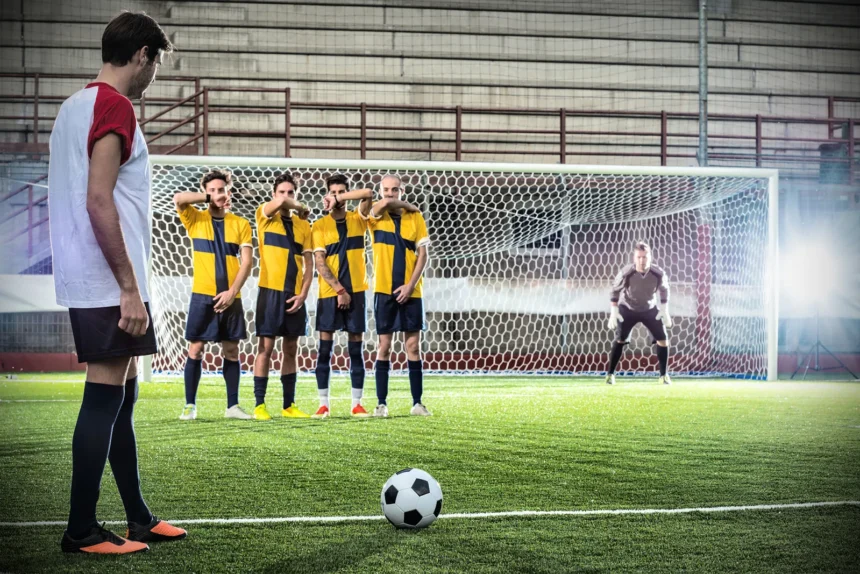
Football is simple enough to enjoy within minutes and complex enough to study for a lifetime. Two teams compete to score more goals than their opponents, but beneath that basic idea lies a game shaped by positioning, movement, rules, pressure, decision-making and tactical discipline.
A useful football guide should do more than explain that players kick a ball toward a goal. It should help readers understand why defenders hold a line, why midfielders move into space, why managers change formations, why referees stop play and why certain competitions feel different from ordinary league matches.
This football guide explains the sport from the ground up. It covers the basic rules, the structure of a match, player positions, common formations, tactical principles, major competitions, promotion and relegation, VAR and the language used by commentators.
Whether you are watching your first match or trying to understand the game more deeply, this football guide gives you a strong foundation.
Football Guide: What Is Football?
Football, also called association football and commonly known as soccer in countries such as the United States and Canada, is played between two teams. Each side tries to score by moving the ball into the opposing goal while defending its own.
The official Laws of the Game are maintained by The International Football Association Board, commonly known as The IFAB. These laws create a shared structure for the sport, although individual competitions may apply additional regulations involving substitutions, squad registration, disciplinary procedures and technology.
A standard match is played on a rectangular field with a goal at each end. Each team normally begins with 11 players, including one goalkeeper. Players generally use their feet, head and body to control the ball. Outfield players cannot deliberately handle the ball with their hands or arms during normal play. The goalkeeper has special handling privileges inside the team’s own penalty area.
The objective is clear: score more goals than the opposition.
The simplicity of that objective is one reason football has become the world’s most widely followed sport. Children can play a basic version with a ball and a small open space. Professional teams, however, may spend years refining small tactical details.
This football guide begins with the rules before moving into the deeper ideas that make matches interesting.
Football Guide: The Basic Structure of a Match
A football match consists of two halves. Under the IFAB law on match duration, each half normally lasts 45 minutes.
The referee adds time at the end of each half to compensate for delays caused by substitutions, injuries, disciplinary actions, goal celebrations, video reviews and other interruptions. This is often called stoppage time, injury time or added time.
A standard match therefore includes:
| Match period | Normal duration |
|---|---|
| First half | 45 minutes plus added time |
| Half-time interval | Usually up to 15 minutes |
| Second half | 45 minutes plus added time |
| Extra time in selected knockout matches | Two periods of 15 minutes |
| Penalty shoot-out if required | Continues until a winner is decided |
Not every competition uses extra time in the same circumstances. A domestic cup, international knockout match or European tie may have specific regulations. Some competitions move directly to a penalty shoot-out after a draw. Others use extra time first.
How a Goal Is Scored
A goal is scored when the whole ball crosses the goal line between the posts and under the crossbar, provided that the attacking team has not committed an offence.
The entire ball must cross the line. If even a small part remains above the line, no goal is awarded.
When the Ball Is Out of Play
The ball is out of play when:
- The entire ball crosses the touchline
- The entire ball crosses the goal line
- The referee stops play
If part of the ball remains above the line, it is still in play.
How Play Restarts
This football guide uses a simple restart table:
| Situation | Restart |
|---|---|
| A team scores | Kick-off for the opposition |
| Ball crosses the touchline | Throw-in |
| Attacking team touches the ball last before it crosses the defending goal line without a goal | Goal kick |
| Defending team touches the ball last before it crosses its own goal line without a goal | Corner kick |
| A foul occurs | Direct or indirect free kick |
| A foul occurs inside the defending team’s penalty area | Penalty kick in qualifying situations |
| Referee stops play for certain reasons without a foul | Dropped ball |
The IFAB restart rules provide the full official procedures.
Football Guide: Players and Positions Explained
Each team normally starts with 11 players. Those players have different responsibilities, but modern football is fluid. A full-back may attack like a winger. A striker may drop into midfield. A goalkeeper may become heavily involved in passing moves.
A beginner-friendly football guide should explain the traditional positions first.
Goalkeeper
The goalkeeper protects the goal and is the only player allowed to deliberately handle the ball inside the team’s own penalty area.
Modern goalkeepers often do much more than make saves. They may:
- Start passing moves
- Sweep behind a high defensive line
- Claim crosses
- Communicate with defenders
- Distribute the ball accurately
- Help the team resist pressure
A goalkeeper comfortable with the ball can change how a team plays.
Centre-Back
Centre-backs operate near the middle of the defense.
Their responsibilities usually include:
- Marking attackers
- Winning headers
- Blocking shots
- Intercepting passes
- Organizing the defensive line
- Starting moves from the back
Some centre-backs are aggressive duel-winners. Others specialize in reading the game and progressing the ball through passing.
Full-Back and Wing-Back
Full-backs usually play on the left or right side of a back four. Wing-backs perform a similar role in formations using three central defenders, but they may have more attacking responsibility.
They may:
- Defend wide areas
- Stop opposing wingers
- Support attacks
- Deliver crosses
- Move into midfield
- Overlap or underlap teammates
The modern full-back can be one of the most tactically demanding roles.
Defensive Midfielder
A defensive midfielder protects the space in front of the defense.
This player may:
- Break up attacks
- Receive passes from defenders
- Control the tempo
- Cover for attacking teammates
- Block passing lanes
- Win second balls
A strong defensive midfielder can make the entire team feel more balanced.
Central Midfielder
Central midfielders connect defense and attack.
They may be asked to:
- Carry the ball forward
- Pass between the lines
- Press opponents
- Track runners
- Create chances
- Support the defense
- Arrive late in the penalty area
Some midfielders are creative. Others are energetic box-to-box players. The best can perform several roles.
Attacking Midfielder
An attacking midfielder usually operates behind the forwards.
This role often involves:
- Finding pockets of space
- Creating chances
- Combining with attackers
- Shooting from distance
- Delivering through balls
- Linking midfield with the forward line
An attacking midfielder may also be called a number 10.
Winger
Wingers usually attack from wide positions.
They can:
- Dribble past defenders
- Cross the ball
- Cut inside to shoot
- Stretch the opposition
- Create one-on-one situations
- Press opposing full-backs
A right-footed player on the left wing may cut inward to shoot. A winger playing on the same side as the stronger foot may prefer crossing.
Striker
The striker is usually the most advanced attacker.
Strikers may:
- Score goals
- Hold up the ball
- Make runs behind defenders
- Link play
- Press centre-backs
- Attack crosses
- Create space for teammates
Not every striker plays the same way. A target forward may use strength and aerial ability. A false nine may drop deeper to create confusion. A poacher may focus on movement inside the penalty area.
This football guide will return to these differences when explaining tactics.
Football Guide: The Offside Rule Explained Simply
The offside rule causes confusion for many new viewers. The basic idea is easier to understand when separated into two parts.
First, a player can be in an offside position.
Second, being in that position does not automatically mean an offence has occurred.
Under the IFAB offside law, an attacking player is generally in an offside position when the player is nearer to the opponent’s goal line than both the ball and the second-last opponent at the moment a teammate plays or touches the ball, subject to the full conditions in the law.
However, the player is penalized only after becoming involved in active play.
A player may commit an offside offence by:
- Playing or touching the ball
- Interfering with an opponent
- Gaining an advantage from the position in circumstances covered by the law
Simple Example
Imagine that a striker stands behind the defensive line.
If a teammate passes the ball while the striker is beyond the second-last opponent, and the striker then receives the pass, the assistant referee may signal offside.
If the same striker stands in an offside position but does not influence the play, the referee may allow the match to continue.
When Offside Does Not Apply
A player cannot be penalized for receiving the ball directly from:
- A goal kick
- A throw-in
- A corner kick
This football guide keeps the explanation simple, but the official law includes additional details involving deliberate play, deflections, rebounds and interference with opponents.
Why the Offside Rule Exists
Without offside, attackers could remain next to the opposing goal for long periods waiting for passes. The rule encourages movement, timing and tactical organization.
Defenders use an offside line to control space. Attackers try to time their runs so that they remain level with the defenders until the pass is played.
This creates one of football’s most important tactical battles.
Football Guide: Fouls, Yellow Cards and Red Cards
Football is physical, but players cannot challenge opponents without limits.
The IFAB law on fouls and misconduct explains the actions that can result in free kicks, penalties and disciplinary sanctions.
A referee may award a free kick for offences such as:
- Kicking or attempting to kick an opponent
- Tripping or attempting to trip an opponent
- Charging an opponent unfairly
- Pushing an opponent
- Striking or attempting to strike an opponent
- Tackling carelessly, recklessly or with excessive force
- Deliberate handball in qualifying situations
- Holding an opponent
The precise decision depends on the circumstances.
Direct Free Kick
A direct free kick allows the attacking team to score directly from the restart.
Indirect Free Kick
An indirect free kick requires the ball to touch another player before a goal can be scored.
Penalty Kick
A penalty kick may be awarded when a defending player commits a qualifying direct-free-kick offence inside the team’s own penalty area.
The ball is placed on the penalty mark, and the goalkeeper attempts to stop the shot.
Yellow Card
A yellow card is a caution.
Examples may include:
- Reckless challenges
- Delaying the restart
- Dissent
- Unsporting behavior
- Repeated offences
- Entering or leaving the field improperly
Red Card
A red card sends a player off.
Examples may include:
- Serious foul play
- Violent conduct
- Denying an obvious goalscoring opportunity in qualifying circumstances
- Offensive, insulting or abusive actions
- Receiving a second yellow card in the same match
A player sent off cannot be replaced. The team continues with fewer players.
A football guide should emphasize that referees must interpret incidents in real time. Slow-motion replays can make contact appear different from the way it looked at match speed.
Football Guide: Common Formations Explained
A formation describes how a team arranges its outfield players.
The goalkeeper is usually not included in the written formation. A 4-3-3 formation means four defenders, three midfielders and three forwards.
A formation is only a starting shape. Players constantly move. Two teams using the same formation can play very differently.
| Formation | Basic structure | Common strengths | Possible weaknesses |
|---|---|---|---|
| 4-3-3 | Four defenders, three midfielders, three forwards | Width, pressing, midfield control | Space can open behind attacking full-backs |
| 4-2-3-1 | Four defenders, two deeper midfielders, three attacking midfielders, one striker | Balance and flexibility | Lone striker may become isolated |
| 4-4-2 | Four defenders, four midfielders, two strikers | Clear defensive shape and attacking partnership | Midfield can be outnumbered |
| 3-5-2 | Three centre-backs, wing-backs, three midfielders, two strikers | Central strength and wing-back width | Space may appear behind wing-backs |
| 3-4-3 | Three centre-backs, wing-backs, two central midfielders, three attackers | Aggressive width and attacking pressure | Demands disciplined transitions |
| 4-1-4-1 | Four defenders, one holding midfielder, four midfielders, one striker | Compact midfield protection | Attacker may lack support |
Why Formations Change During a Match
A team may defend in one shape and attack in another.
For example:
- A 4-3-3 may become a 3-2-5 in possession.
- A 4-2-3-1 may defend as a compact 4-4-2.
- A full-back may move into central midfield.
- A winger may stay wide to stretch the defense.
- A midfielder may drop between centre-backs to help build attacks.
The formation graphic shown before kick-off is useful, but it does not explain everything.
A deeper football guide must examine how players occupy space.
Football Guide: The Main Tactical Ideas
Tactics determine how a team tries to control a match.
The FIFA Training Centre explores principles such as regaining possession, counter-pressing, switching play and counter-attacking. These concepts appear repeatedly in modern football.
Possession
A possession-based team tries to control the ball for extended periods.
The aim is not simply to collect passes. Good possession should help the team:
- Move opponents out of position
- Create passing angles
- Progress through defensive lines
- Control the rhythm
- Reduce the opposition’s attacking time
- Find openings near the penalty area
Possession can be slow or aggressive. Some teams circulate the ball patiently. Others pass quickly to create an immediate opening.
Building From the Back
Building from the back means starting attacks through defenders and the goalkeeper rather than kicking the ball forward immediately.
A team may try to draw opponents forward before passing into the space they leave behind.
The FIFA Training Centre has published sessions on building from the back, showing how teams use movement and passing patterns to progress.
The risks are obvious. Losing the ball near your own goal can create a major chance for the opposition.
Width
Width stretches a defensive shape.
Wingers and full-backs may stay near the touchline to force defenders away from central areas. Once the opposition spreads out, space may appear between players.
Width is especially useful against compact teams defending close together.
Overloads
An overload occurs when one team creates a numerical advantage in a particular area.
For example:
- Two attackers face one full-back.
- Three midfielders combine against two opponents.
- A full-back joins an attack to create an extra passing option.
- A striker drops deeper to give the midfield another player.
The FIFA Training Centre explains how teams use overloads and intelligent movement to exploit a spare player.
Switching Play
If one side of the field becomes crowded, a team may move the ball quickly to the opposite side.
This is called switching play.
A switch can create space for a winger or full-back before the defense has time to reorganize.
Through Balls
A through ball is a pass played into space behind the defensive line.
The passer tries to match the timing of the runner. The attacker must remain onside when the ball is played.
Counter-Attacking
A counter-attack begins when a team wins possession and attacks quickly before the opposition can recover its defensive shape.
A successful counter-attack often requires:
- Fast decision-making
- Accurate forward passing
- Intelligent runs
- Space behind defenders
- Players willing to sprint
Teams with less possession can still create dangerous chances through counters.
Pressing
Pressing means applying pressure to the opposition in an organized way.
The FIFA Training Centre high-press guide explains that a high press requires coordinated team organization and strong fitness levels. If players press as individuals rather than as a unit, opponents may exploit the spaces that appear.
A team may press:
- High near the opposition goal
- In midfield
- Only after specific triggers
- After a backward pass
- When the ball reaches a certain defender
- When an opponent receives a difficult pass
Counter-Pressing
Counter-pressing means applying immediate pressure after losing possession.
The aim is to win the ball back quickly or prevent the opposition from launching a counter-attack.
The FIFA Training Centre’s counter-pressing session emphasizes fast reactions, compact positioning and communication.
Low Block
A low block is a compact defensive shape positioned closer to a team’s own goal.
The aim is to reduce space near the penalty area and make it difficult for the opposition to create clear chances.
A low block is not automatically negative. It can be an intelligent strategy, especially against stronger opponents. However, the defending team may struggle to attack if it remains too deep.
Set Pieces
Set pieces include corners, free kicks and throw-ins.
They can decide close matches.
Teams prepare:
- Corner routines
- Free-kick deliveries
- Direct free-kick shots
- Short-corner combinations
- Defensive marking systems
- Long throw-ins
- Rebound positions
The FIFA Training Centre has analyzed corner-defense strategies, including zonal marking, player marking and hybrid systems.
Our article on sports training explores the preparation behind elite performance.
Football Guide: Domestic Leagues Explained
Most professional clubs compete in domestic leagues.
A league season usually involves teams playing one another over a set schedule. A victory earns points, a draw earns fewer points and a defeat earns none.
The exact regulations vary between countries.
Premier League Example
The Premier League guide explains how England’s top division works.
Clubs receive:
| Match result | Points |
|---|---|
| Win | 3 |
| Draw | 1 |
| Defeat | 0 |
The team with the most points at the end of the season finishes first.
When clubs finish level on points, the Premier League uses tie-breaking criteria. These include goal difference and goals scored, followed by additional criteria where required.
What Is Goal Difference?
Goal difference is calculated by subtracting goals conceded from goals scored.
Example:
| Team | Goals scored | Goals conceded | Goal difference |
|---|---|---|---|
| Team A | 70 | 35 | +35 |
| Team B | 62 | 40 | +22 |
Team A has the stronger goal difference.
Promotion and Relegation
Many football leagues use promotion and relegation.
At the end of a season:
- Strong teams may move into a higher division.
- Poorly performing teams may move into a lower division.
- Play-offs may decide additional promotion places.
Promotion and relegation create meaningful pressure across the table. A match involving lower-ranked teams can matter as much as a title-deciding fixture.
Our article on the relegation battle explores the mindset required when teams fight to survive.
Football Guide: Domestic Cups Explained
Domestic cup competitions usually use knockout formats.
Examples include:
- The FA Cup in England
- The Copa del Rey in Spain
- The DFB-Pokal in Germany
- The Coppa Italia in Italy
- The Coupe de France in France
A cup match may be decided in one game or across multiple legs, depending on the competition and stage.
Cup football creates uncertainty. A lower-division club may face a major team and produce an upset. A single mistake can end a tournament run.
Domestic cups also provide opportunities for squad rotation and emerging players.
Our guide to sports tournaments highlights the wider appeal of major competitions.
Football Guide: The UEFA Champions League Format
The UEFA Champions League is Europe’s leading club competition.
It brings together clubs that qualify through domestic competitions and UEFA pathways.
UEFA introduced a league-phase format beginning with the 2024–25 season. Its official Champions League format guide explains the structure.
Champions League League Phase
The competition includes 36 teams in one league-phase table.
Each club plays eight matches against eight different opponents:
- Four matches at home
- Four matches away
Teams receive three points for a win and one point for a draw.
How Teams Reach the Knockout Rounds
| League-phase position | Outcome |
|---|---|
| 1st to 8th | Direct qualification for the round of 16 |
| 9th to 24th | Knockout-phase play-offs |
| 25th to 36th | Eliminated |
The play-off winners join the top eight clubs in the round of 16.
From there, clubs move through knockout rounds toward the final.
The Champions League combines tactical complexity with emotional pressure. A team must manage different opponents, travel, squad depth and high-stakes matches.
Our article on Champions League comebacks explores why the competition can produce unforgettable nights.
Football Guide: The FIFA World Cup Format
The FIFA World Cup is the leading men’s international football tournament.
National teams qualify through regional competitions before competing in the final tournament.
The 2026 edition introduces an expanded format. FIFA’s official World Cup format guide explains the structure.
FIFA World Cup 2026 Structure
| Feature | Format |
|---|---|
| Total teams | 48 |
| Groups | 12 |
| Teams per group | 4 |
| Group matches per team | 3 |
| Teams progressing automatically from each group | Top 2 |
| Additional qualifiers | 8 best third-placed teams |
| First knockout round | Round of 32 |
A team reaching the final may play eight matches.
The World Cup attracts viewers beyond regular football audiences because it combines national identity, global attention and knockout pressure.
Our article on World Cup kits explores another part of the tournament’s appeal.
Football Guide: Club Football vs International Football
Club football and international football use the same basic rules but create different challenges.
| Club football | International football |
|---|---|
| Teams train together regularly | Players have limited preparation time |
| Transfers allow clubs to build squads | National teams select eligible players |
| Long league seasons reward consistency | Short tournaments create greater unpredictability |
| Managers can refine systems over months | Managers may need simpler tactical plans |
| Clubs compete domestically and internationally | National teams focus on qualifiers and tournaments |
Club managers can develop detailed patterns through regular training.
International managers often work with players for shorter periods. They may prefer clear structures that can be learned quickly.
Neither format is automatically better. They create different types of drama.
Football Guide: How Transfers Work
Professional clubs sign, sell and loan players through transfer systems.
A transfer usually involves:
- Agreement between clubs
- Contract negotiations with the player
- Medical checks
- Registration requirements
- Compliance with league and competition rules
- Transfer-window deadlines
A transfer fee is the amount one club pays another to release a player from an existing contract.
A free transfer may occur when a player’s contract expires.
A loan allows a player to join another club temporarily.
Transfer decisions influence tactics. A manager may need:
- A faster winger
- A creative midfielder
- A left-footed defender
- A striker who presses aggressively
- A goalkeeper comfortable with passing
- A full-back who can move into midfield
Our article ranking football transfers explores how the most expensive move is not always the most successful.
Football Guide: What VAR Does
VAR stands for video assistant referee.
The official IFAB VAR protocol explains that VAR may assist the referee in situations involving clear and obvious errors or serious missed incidents.
VAR is used for key categories:
| Review category | Example |
|---|---|
| Goal or no goal | Possible offside or foul before a goal |
| Penalty or no penalty | Possible foul inside the penalty area |
| Direct red card | Serious foul play or violent conduct |
| Mistaken identity | Wrong player receives a card |
The referee remains responsible for the final decision.
VAR can improve accuracy, but it remains controversial. Fans debate delays, communication, interpretation and extremely close offside decisions.
Our VAR guide examines the concerns and possible improvements in more detail.
Technology continues to influence the sport in other ways. Read our article on sports technology and our analysis of AI in professional sports for wider context.
Football Guide: How to Read a Match More Carefully
Watching football becomes more rewarding when you look beyond the ball.
Try focusing on one question at a time.
Watch the Defensive Shape
Ask:
- Is the team defending high or deep?
- Are the lines close together?
- Is there space between midfield and defense?
- Are wingers tracking back?
- Does the team press immediately after losing the ball?
Watch the Full-Backs
Full-backs often reveal the tactical plan.
Notice whether they:
- Stay deep
- Overlap the winger
- Move inside
- Join midfield
- Create width
- Leave space behind them
Watch the Midfield
Midfield usually determines control.
Look for:
- The player receiving from defenders
- Passing angles
- Press resistance
- Movement between lines
- Defensive coverage
- Forward runs
Watch the Striker
A striker contributes even without scoring.
Notice whether the striker:
- Drops into midfield
- Runs behind defenders
- Occupies centre-backs
- Presses the goalkeeper
- Creates room for wingers
- Attacks crosses
Watch the Transitions
Some of the biggest chances appear immediately after possession changes.
When a team loses the ball, ask:
- Who reacts first?
- Does the team counter-press?
- Can the opposition escape quickly?
- Are defenders exposed?
- Is there space behind the full-backs?
This football guide encourages readers to watch the spaces between players, not only the player holding the ball.
Football Guide: Why Youth Development Matters
A club’s future depends on more than expensive transfers.
Youth academies help develop:
- Technical ability
- Tactical understanding
- Decision-making
- Physical preparation
- Confidence
- Professional habits
- Pathways into senior football
A strong academy can produce players who understand the club’s identity.
However, youth development should not focus only on finding the next superstar. Young players need education, patience and protection from unrealistic expectations.
Our article on football academies examines why development systems must evolve.
The rise of young players is also explored in our guide to breakthrough athletes.
Football Guide: Women’s Football and the Global Game
A complete football guide should recognize the continued growth of women’s football.
Women’s competitions attract expanding audiences, stronger investment and more attention across club and international football.
The tactical quality is not separate from the wider sport. The same principles matter:
- Positioning
- Width
- Pressing
- Build-up play
- Finishing
- Set pieces
- Squad depth
- Coaching
However, women’s football still faces challenges involving resources, facilities, media attention, pathways and equality.
Our article about women in football examines some of those continuing issues.
Football is global because the game belongs to many communities. A thoughtful football guide should reflect that breadth.
Football Guide: Common Terms Every Fan Should Know
| Term | Simple meaning |
|---|---|
| Assist | The final pass or action leading to a goal |
| Clean sheet | A match in which a team concedes no goals |
| Counter-attack | A quick attack after winning possession |
| Derby | A rivalry match, often involving local clubs |
| Extra time | Additional periods used in selected drawn knockout matches |
| False nine | A forward who drops deeper rather than remaining as a traditional striker |
| Goal difference | Goals scored minus goals conceded |
| High press | Pressure applied near the opposition goal |
| Low block | Compact defending close to a team’s own goal |
| Nutmeg | Playing the ball through an opponent’s legs |
| Overlap | A run outside a teammate, often by a full-back |
| Overload | A numerical advantage in one area |
| Penalty shoot-out | A method of deciding a drawn knockout match |
| Set piece | A restart such as a corner or free kick |
| Through ball | A pass into space behind defenders |
| Transition | The moment a team changes between attacking and defending |
| Wing-back | A wide player combining defensive and attacking duties |
These terms appear frequently during broadcasts and analysis.
Football Guide: Beginner Checklist
Use this football guide checklist when watching your next match.
Before Kick-Off
- Check the formations.
- Identify the main attackers.
- Look at the league table or tournament stage.
- Notice whether the match is part of a league, cup or international competition.
- Check whether extra time or penalties can occur.
During the Match
- Watch how each team builds from the back.
- Notice where pressure begins.
- Follow the defensive line.
- Look for wide players creating space.
- Watch transitions after possession changes.
- Pay attention to set pieces.
- Check whether substitutions change the formation.
After the Match
- Look beyond the score.
- Ask which team created better chances.
- Consider whether tactics changed during the game.
- Notice which players influenced space and tempo.
- Review major decisions carefully rather than reacting only to short clips.
Football becomes more enjoyable when each match tells a tactical story.
Frequently Asked Questions About This Football Guide
How many players are on a football team?
A team normally starts with 11 players, including one goalkeeper.
How long is a football match?
A standard football match consists of two 45-minute halves plus added time. Selected knockout matches may also include extra time and a penalty shoot-out.
What is the offside rule?
A player may be in an offside position when closer to the opponent’s goal line than both the ball and the second-last opponent at the relevant moment. The player is penalized only after becoming involved in active play under the law.
What is the difference between a yellow card and a red card?
A yellow card is a caution. A red card sends a player off. A player receiving two yellow cards in the same match is also sent off.
What is a football formation?
A formation describes how outfield players are arranged. Examples include 4-3-3, 4-2-3-1 and 3-5-2.
What is pressing?
Pressing means applying organized pressure to opponents in an attempt to win the ball or force mistakes.
What is counter-pressing?
Counter-pressing means applying pressure immediately after losing possession.
What is a low block?
A low block is a compact defensive shape positioned closer to a team’s own goal.
How does the Premier League table work?
Teams earn three points for a win, one for a draw and none for a defeat. The team with the most points finishes highest. Tie-breaking criteria apply when teams have the same number of points.
How does the Champions League work?
The Champions League uses a 36-team league phase. Clubs play eight matches against different opponents. The top eight qualify directly for the round of 16, while teams placed ninth to 24th enter play-offs.
How does the 2026 FIFA World Cup work?
The tournament features 48 teams divided into 12 groups of four. The top two teams from each group and the eight best third-placed teams advance to the round of 32.
What decisions can VAR review?
VAR may assist with goal decisions, penalty incidents, direct red cards and mistaken identity under the official protocol.
Why Football Remains the World’s Game
Football succeeds because it can be understood at several levels.
At its simplest, it is a contest between two teams trying to score goals.
At a deeper level, it is a game of timing, space, structure and pressure. A run can move a defender. A pass can break a line. A substitution can change the shape. A full-back can transform the midfield. A pressing trigger can decide whether a team wins the ball near the goal or leaves space exposed.
This football guide gives readers the foundation required to follow those details.
Start with the rules. Learn the positions. Watch how formations change. Notice the spaces between players. Follow the major competitions. Pay attention to the decisions made without the ball.
The more carefully you watch football, the more the game reveals.
Follow The News Ink for More Sports Guides
Explore more analysis, explainers and major sporting stories in our Sports section. Follow The News Ink on Instagram for new articles, visual posts and important updates.