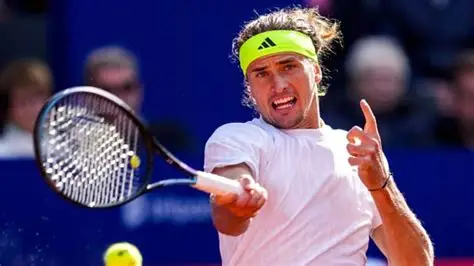
Zverev French Open final 2026 is confirmed — Alexander Zverev powered through his Roland Garros semi-final against Jakub Mensik 7-5, 6-2, 2-6, 6-3 to book his place in his fourth Grand Slam final and second at the French Open. The German second seed closed out the match in style, sealing a match-point with a 216km/h ace that captured the authority and power he brought to the court when it mattered most. Mensik fought bravely and won a third set that kept the contest alive, but Zverev’s superior experience and groundstroke power ultimately proved decisive on the Philippe-Chatrier clay.
The victory sets up a Roland Garros final that will be one of the most anticipated clay-court showpieces in recent memory — and adds another chapter to the story of Zverev’s pursuit of the Grand Slam title that his talent has always suggested he should win.
Zverev French Open Final 2026: How the Match Unfolded
The Zverev French Open final 2026 qualification came through a match that told three distinct stories across four sets — early German dominance, a Mensik revival that raised genuine questions about the outcome, and then a decisive closing statement from Zverev that removed all doubt.
The opening two sets belonged almost entirely to Zverev. He took the first 7-5 in a contest that required him to work for the set but never genuinely threatened to slip away. The second set was more emphatic — a 6-2 dismantling that showcased the full range of Zverev’s clay-court game. His serve functioned as a weapon throughout, his groundstrokes from both wings hit with the depth and penetration that makes him one of the most difficult players in the world to sustain baseline rallies against, and his footwork across the red dirt of Philippe-Chatrier was precise and controlled.
The third set saw Mensik respond. The Czech teenager — one of the most exciting young players on the ATP Tour — found a level in the third set that disrupted Zverev’s rhythm and reminded the watching crowd why he had earned a place in the semi-finals. Mensik took the set 6-2 — a scoreline that reversed the second set’s one-sided nature and suggested the match might be heading toward a genuine five-set examination of both players’ reserves.
The set-by-set account:
- First set 7-5 Zverev: A competitive opening set that Zverev ultimately controlled without ever quite dominating
- Second set 6-2 Zverev: Near-total dominance — Zverev’s serve, groundstrokes, and movement all functioning at a high level
- Third set 2-6 Mensik: The Czech teenager fought back impressively — disrupting Zverev’s rhythm and keeping himself in the contest
- Fourth set 6-3 Zverev: One-way traffic — Zverev reasserted his dominance with the power of his serve and groundstrokes
- Match point: A 216km/h ace that captured the authority Zverev brought to the deciding set
The fourth set was the most emphatic of all. From the moment Zverev regrouped after Mensik’s third-set recovery, the German was in complete control. The phrase used to describe the fourth set was telling — “one-way traffic” — with Mensik defending doggedly but unable to handle the pace and power behind Zverev’s serve and groundstrokes. The match-point ace at 216km/h was not a lucky winner but a statement — the product of a serve that had functioned as a primary weapon throughout the match.
Zverev French Open Final 2026: The Controversy on Court
The Zverev French Open final 2026 semi-final was not without its moments of controversy — a reflection of both the competitive intensity of the occasion and Zverev’s habit of pushing the boundaries of what the match referee will tolerate when he believes he has a case to make.
In the fourth set, with the match well in hand, Zverev received a time violation warning for taking his time at the changeover — specifically for retaping his racquet while Mensik waited to resume play. The crowd, already vocal in their support for the younger Czech player, responded to the warning with jeers that captured the atmosphere of a Roland Garros audience that was not fully behind the second seed.
More controversy followed when Zverev demanded that the chair umpire check a ball mark — a request that generated visible scepticism from the official and a shrug that commentators noted conveyed an almost audible “are you being serious?” The moment was not a turning point in the match — Zverev was already in complete control — but it illustrated the competitive edge he brings to the court and the occasionally combative relationship with officials that characterises his matches when the stakes are high.
The on-court controversies:
- Zverev received a time violation warning for taking excessive time at the changeover
- He was retaping his racquet while Mensik waited — drawing jeers from the crowd
- He demanded the chair umpire check a ball mark — generating visible scepticism from the official
- Umpire James Keothavong’s reaction was described as a shrug suggesting disbelief at the request
- The crowd was vocal in response to both incidents — their sympathy clearly with Mensik throughout
- Neither incident affected the outcome — Zverev was already dominant by the time both occurred
- The moments reflected the competitive intensity Zverev brings to high-stakes matches
The crowd dynamic throughout the match reflected the broader narrative surrounding Zverev at Roland Garros — a player of enormous talent and achievement who does not always generate the warmth of the Parisian public, particularly when facing a younger, less established opponent that the crowd has embraced.
Zverev French Open Final 2026: Mensik’s Performance in Context
Any fair account of the Zverev French Open final 2026 semi-final must acknowledge what Jakub Mensik brought to the occasion — and why his performance, despite the defeat, represents a significant moment in his development as a player.
Mensik is one of the most discussed young players on the ATP Tour — a Czech teenager whose combination of serve power, groundstroke variety, and competitive intelligence has marked him as a potential future Grand Slam champion. Reaching the semi-final of Roland Garros represents a significant achievement for a player still building his major tournament experience, and his third-set recovery against one of the world’s best clay-court players demonstrated genuine quality.
Throughout the match, Mensik defended doggedly — described repeatedly by those watching as fighting hard even when the tide was running against him. His serving at critical moments kept him in games that his groundstroke exchanges were threatening to concede. And his third-set performance — winning 6-2 after losing the second 6-2 — showed the mental resilience that will serve him well in future major tournaments.
Mensik’s semi-final performance — context and assessment:
- Reached the Roland Garros semi-final — a significant achievement for a young player still developing major tournament experience
- Fought back from two sets down to win the third convincingly — showing genuine mental resilience
- His serving at key moments kept him in games when groundstroke exchanges were going against him
- The third-set reversal — 6-2 after losing the second 6-2 — demonstrated quality and competitive spirit
- He defended doggedly throughout the fourth set despite the power behind Zverev’s serve and groundstrokes
- The defeat does not diminish what reaching this stage at Roland Garros represents for his career
- His frustration at the ball-mark controversy and the umpire’s handling reflected his investment in the contest
- Future Roland Garros campaigns will benefit from the experience of competing at this level
Mensik’s argument with the umpire over a called ace let — frustrated enough to have a chat about the decision — reflected a player fully engaged in the contest and unwilling to concede any advantage. That competitive engagement is precisely the quality that makes him an exciting prospect for future Grand Slam campaigns.
Zverev French Open Final 2026: His Road to a Fourth Grand Slam Final
The Zverev French Open final 2026 represents Alexander Zverev’s fourth appearance in a Grand Slam final — a record that captures both his consistent presence at the very highest level of the sport and the ongoing question of when he will convert that presence into a first major title.
Zverev has been in the conversation as a potential Grand Slam champion for several years — his combination of serve, groundstroke power, athletic movement, and tactical intelligence making him one of the most complete players of his generation. His previous Grand Slam final appearances have each come with their own specific circumstances and storylines, and each has deepened the narrative of a player whose major achievement has been close but not yet grasped.
This is his second Roland Garros final — a return to the clay Grand Slam surface where his game has always been considered well-suited. Clay rewards the baseline power, movement, and serve quality that define Zverev’s strongest attributes. A Roland Garros title would represent a validation of everything his clay-court career has shown him capable of.
Zverev’s Grand Slam final record:
- Fourth Grand Slam final overall — placing him in the elite bracket of major tournament performers
- Second Roland Garros final — he has been here before on the Philippe-Chatrier clay
- His previous finals have each carried their own narratives of near-miss and competitive examination
- Clay has always been considered his best Grand Slam surface given his game’s strengths
- His 2026 season — including the Rome win over Altmaier and this Roland Garros run — shows strong form
- The match-point ace at 216km/h captured the serve quality that will be a primary weapon in the final
- His experience of Grand Slam finals — four appearances — gives him a reference point most opponents cannot match
- The question of when Zverev wins his first major title has followed him for years — the final is his latest answer
Zverev French Open Final 2026: What the Final Means
The Zverev French Open final 2026 positions Zverev for what could be the defining match of his career — a Roland Garros showpiece against an opponent who will be confirmed in the coming days through the other semi-final. The build-up to the final will centre on Zverev’s fitness — he noted after his Rome first-round win that he was not feeling well physically — and on whether his serve and groundstroke power can be sustained across five sets of a Grand Slam final against the highest level of opposition.
His preparation for this final has been built across a French Open campaign that has seen him navigate the draw’s challenges with the combination of power and experience that characterises his best clay-court tennis. The fourth set against Mensik — described as one-way traffic — suggested a player who can turn his best tennis on when the decisive moments arrive.
What the French Open final represents for Zverev:
- The opportunity to win his first Grand Slam title — the career achievement that has so far eluded him
- A second Roland Garros final — on the surface and at the tournament best suited to his game
- Validation of a 2026 clay-court season that has produced consistently strong results
- The chance to answer the central narrative question that has followed his career — when does the Grand Slam title come?
- An opportunity to perform in front of the Roland Garros crowd on the biggest clay-court stage in tennis
- The match-point ace against Mensik served as a reminder of the weapon his serve represents in final conditions
Final Word on Zverev French Open Final 2026
The Zverev French Open final 2026 is the moment that Alexander Zverev’s talent has always been pointing toward. Four Grand Slam finals. Two Roland Garros finals. A 216km/h ace to seal a place in the showpiece. The power, the serve, the experience — all pointing toward a player who has done everything required to put himself in position to win the title that would define his legacy.
The final awaits. The clay is ready. And Alexander Zverev — time violation warnings, ball-mark controversies, and all — is exactly where he should be.