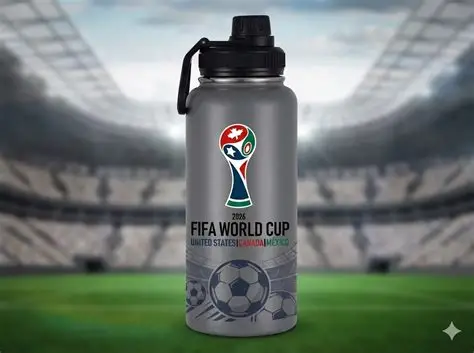
The FIFA World Cup 2026 water bottle stadium rule has been clarified after widespread criticism of a late policy reversal that initially appeared to ban all water bottles from tournament venues just seven days before the competition began. FIFA has confirmed that fans will be permitted to bring one factory-sealed disposable soft plastic bottle of up to 560ml — 20 ounces — into World Cup stadiums, while the ban applies specifically to hard-sided reusable containers that the governing body considers a safety and security risk.
World Cup 2026 chief operating officer Heimo Schirgi delivered the clarification directly. “Each spectator can bring with them one 20 ounce (560ml) soft, plastic disposable factory-sealed water bottle into the stadium,” he said. “What is not allowed are hard-sided resealable water containers, which could pose a safety and security risk.”
The clarification brings some relief to fans, heat experts, and public health advocates who had raised urgent concerns about the impact of a broad water bottle ban on spectator health during a summer tournament played in extreme heat conditions across multiple US host cities.
FIFA World Cup 2026 Water Bottle Stadium Rule: What Changed and When
The FIFA World Cup 2026 water bottle stadium rule controversy began with a late and unexpected policy reversal that caught fans and health experts by surprise just days before the tournament’s June 11 opening.
The original stadium code of conduct — in place until just before the tournament — explicitly permitted empty transparent reusable plastic bottles of up to one litre capacity inside World Cup venues. The policy was clear, established, and gave fans who had planned their tournament attendance around reusable bottles reasonable confidence about what they could carry into stadiums.
Seven days before the tournament kicked off, FIFA reversed that policy. The governing body announced that bottles — along with cups, jars, and cans — would be banned from stadiums, citing safety concerns about the risk of injury caused by fans throwing objects as missiles. The late timing of the reversal — just one week before matches began — gave fans minimal time to adjust their plans and left many unclear about what they could and could not bring.
The timeline of the FIFA water bottle policy:
- Original policy: Empty, transparent, reusable plastic bottles up to one litre permitted in stadiums
- Seven days before June 11 opening: FIFA reversed the policy — banning bottles, cups, jars, and cans
- Stated reason for reversal: Safety concerns about objects being thrown as missiles by fans
- Criticism received: Heat experts warned the ban would heighten risk of heat-related health incidents
- FIFA clarification: Sealed disposable soft plastic bottles up to 560ml permitted — hard-sided reusable containers banned
- Current position: Factory-sealed disposable bottles allowed — reusable hard-sided containers prohibited
The clarification does not fully reinstate the original policy — the one-litre empty reusable bottle that was previously permitted remains banned. But it does provide fans with a meaningful option for staying hydrated that the initial reversal appeared to remove entirely.
FIFA World Cup 2026 Water Bottle Stadium Rule: The Health Concerns That Forced Clarification
The FIFA World Cup 2026 water bottle stadium rule reversal drew immediate and pointed criticism from heat experts and public health professionals who warned that restricting fan access to water in a summer tournament carried serious health risks.
The 2026 World Cup is played across multiple US host cities in June and July — months characterised by extreme heat across many of the tournament’s locations. Fans attending matches face extended periods of exposure to high temperatures both outside stadiums before entry and inside venues during matches. Maintaining adequate hydration in those conditions is not merely a comfort issue — it is a genuine public health consideration with the potential for serious consequences if not managed appropriately.
One heat expert quoted in coverage of the initial ban described it as likely to “clearly heighten the risk of heat-related health incidents” among spectators — a warning that captured the medical community’s concern about the combination of summer heat and restricted water access across large crowds of fans.
The heat and health concerns driving criticism:
- The World Cup is played in June and July — summer months with extreme heat across many US host cities
- Fans face extended heat exposure both outside and inside stadiums
- Maintaining hydration in high temperatures is a genuine public health necessity
- Heat-related illness — including heat exhaustion and heat stroke — is a real risk for inadequately hydrated fans
- One heat expert described the broad ban as clearly heightening the risk of heat-related health incidents
- Scientists had separately warned FIFA about player safety and heat risks at the tournament
- The combination of a broad bottle ban and summer heat conditions created a foreseeable public health risk
- Qatar 2022 also banned bottles from stadiums — but Qatar’s indoor air-conditioned stadiums mitigated the comparison
The Qatar comparison — noted in coverage of the controversy — is imperfect. Qatar’s 2022 World Cup stadiums were air-conditioned indoor venues where the heat management challenge was fundamentally different from the open-air stadium environment of multiple US host cities in midsummer. Transplanting a bottle policy from Qatar to the United States without accounting for those climatic differences was a point health experts and commentators raised consistently.
FIFA World Cup 2026 Water Bottle Stadium Rule: What Fans Can and Cannot Bring
The FIFA World Cup 2026 water bottle stadium rule as clarified creates a clear distinction between what is permitted and what remains prohibited — a distinction that FIFA has framed around the specific safety risk that hard-sided containers present compared to soft disposable bottles.
The permitted category is specific: one factory-sealed soft plastic disposable water bottle per spectator, up to 560ml (20 ounces) in volume. The bottle must be factory-sealed — not refilled or home-prepared — and must be made of soft plastic rather than hard material. The single bottle per person limit applies regardless of match duration or temperature.
The prohibited category is also specific: hard-sided resealable water containers — the kind of durable, reusable water bottles that have become standard equipment for environmentally conscious fans and outdoor event attendees. These remain banned on the grounds that they could pose a safety and security risk — the same missile-throwing concern that drove the initial policy reversal.
The current FIFA water bottle rules for World Cup 2026 stadiums:
| Item | Status | Details |
|---|---|---|
| Factory-sealed soft plastic disposable bottle | ✅ Permitted | One per spectator, maximum 560ml/20oz |
| Hard-sided reusable container | ❌ Banned | Safety and security risk — potential missile |
| Empty reusable plastic bottle (original policy) | ❌ Banned | Previously permitted — now no longer allowed |
| Cups, jars, and cans | ❌ Banned | Included in the broad object ban |
| Water purchased inside stadium | ✅ Available | FIFA has committed to not charging above usual venue prices |
The commitment that in-stadium water will not be sold above usual venue prices is an important accompanying measure — acknowledging that if fans are limited to a single 560ml bottle from outside the venue, access to affordable water inside the stadium becomes essential rather than optional.
FIFA World Cup 2026 Water Bottle Stadium Rule: The Safety Rationale
The FIFA World Cup 2026 water bottle stadium rule ban on hard-sided reusable containers rests on a safety rationale that FIFA has articulated consistently — the risk of injury caused by fans throwing objects as missiles inside stadium environments.
Hard-sided water bottles — made from metal, hard plastic, or similar rigid materials — can cause significant injury if thrown with force into a crowd or onto a playing surface. The concern is not hypothetical — incidents of objects being thrown at football matches have occurred across international and domestic competitions, and governing bodies responsible for spectator safety have a legitimate interest in limiting the potential weaponisation of items that fans bring into venues.
The distinction FIFA draws between hard-sided reusable containers — banned — and soft-sided disposable bottles — permitted — reflects a genuine difference in the potential harm those objects can cause if thrown. A factory-sealed soft plastic bottle, while capable of causing annoyance if thrown, presents a substantially lower injury risk than a hard metal or rigid plastic container.
The safety rationale — why hard-sided containers remain banned:
- Hard-sided containers made from metal or rigid plastic can cause significant injury if thrown with force
- Incidents of objects thrown at football matches have occurred across international competitions
- FIFA’s responsibility for spectator safety includes limiting objects that could be used as missiles
- The distinction between hard-sided and soft-sided containers reflects genuinely different injury potential
- Soft plastic disposable bottles present lower missile risk than rigid containers
- The factory-sealed requirement prevents bottles from being partially emptied and used differently
- The single bottle per person limit further reduces the potential for organised missile-throwing
- In-stadium water purchase availability means fans are not dependent solely on what they bring in
FIFA World Cup 2026 Water Bottle Stadium Rule: The Environmental Dimension
The FIFA World Cup 2026 water bottle stadium rule clarification — permitting disposable bottles while banning reusable ones — has attracted criticism on environmental grounds that sit alongside the health and safety debate.
The global shift toward reusable water bottles has been driven by environmental concerns about single-use plastic — the very type of bottle that FIFA’s clarification now specifically permits, while banning the reusable alternative. Fans who have adopted reusable bottles as part of a deliberate effort to reduce their plastic consumption will find themselves in the position of either abandoning that practice for World Cup matches or attending without their own water supply.
The environmental irony — a major global sporting event actively discouraging reusable bottles in favour of single-use plastic — has not gone unnoticed among environmental advocates and fans committed to sustainable event attendance.
The environmental concern:
- FIFA’s policy permits single-use disposable plastic bottles while banning reusable alternatives
- The environmental case for reusable bottles rests on reducing single-use plastic consumption
- Fans committed to sustainable practices must choose between their values and their hydration at World Cup matches
- A tournament attracting hundreds of thousands of fans across multiple matches could generate significant single-use plastic waste
- FIFA’s sustainability commitments sit in tension with a policy that actively promotes disposable over reusable containers
- Environmental groups have not yet issued formal responses to the clarified policy at time of publication
Final Word on FIFA World Cup 2026 Water Bottle Stadium Rule
The FIFA World Cup 2026 water bottle stadium rule clarification resolves the most acute concern — fans will be able to bring water into stadiums rather than facing a complete prohibition — while leaving legitimate questions about the environmental implications, the adequacy of a single 560ml bottle in extreme summer heat, and whether the ban on reusable containers was the most proportionate available response to the missile-throwing safety concern.
FIFA arrived at this policy through a late reversal, public criticism from health experts, and a clarification that partially — but not fully — addresses the concerns raised. The factory-sealed soft plastic bottle will keep fans hydrated through a 90-minute match. Whether it will be sufficient for the full match-day experience in a US summer depends on conditions, individual needs, and how effectively the in-stadium water purchasing commitment is delivered in practice.
The tournament begins June 11. The bottles are clarified. And somewhere in a US stadium on a hot summer afternoon, a fan will open their one permitted 560ml bottle and hope it lasts.