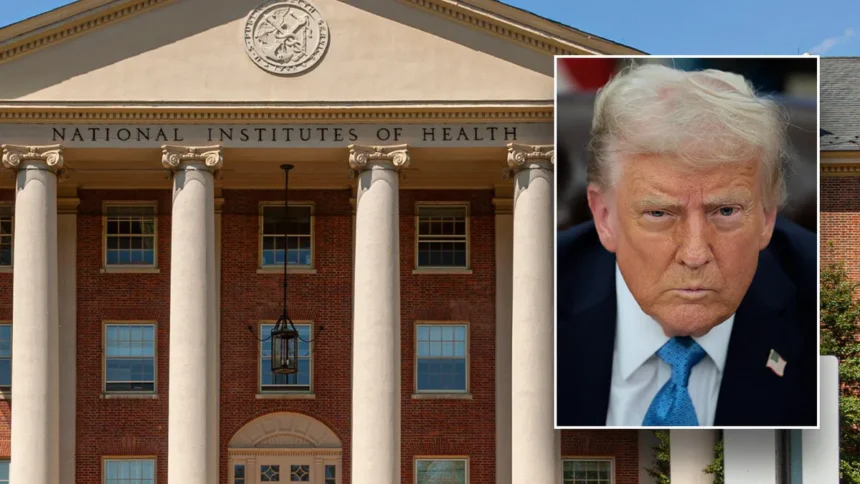
A new Federal Grants Politial Test proposal from the Trump administration is generating intense debate across the scientific and acadecmic communities. The proposal would significantly change how federal agencies distribute billions of dollars in research grants by introducing political reviews before funding decisions become final.
Supporters argue the plan would ensure taxpayer dollars align with national priorities and government objectives. Critics, however, warn that the Federal Grants Political Test could inject politics into scientific research and weaken the long-standing peer-review system that has guided federal funding decisions for decades.
The proposal, developed by the Office of Management and Budget (OMB), seeks to establish a government-wide framework for grant approvals across federal agencies, including major research institutions responsible for funding medical, scientific, and public health projects.
Key Highlights
- The proposal would create a government-wide framework for federal grant approvals.
- Political appointees would review discretionary grants before final approval.
- Scientific peer reviews would become advisory rather than decisive.
- Funding could be denied for projects involving certain DEI-related initiatives.
- Grants could be terminated if they no longer align with agency priorities.
- Critics fear increased political influence over scientific research.
- Supporters argue the proposal would improve accountability and oversight.
- Public comments on the proposal remain open until July 13.
What Is the Federal Grants Political Test Proposal?
The Federal Grants Political Test proposal would alter the traditional process used by federal agencies to evaluate and award research grants.
Currently, agencies such as the National Institutes of Health rely heavily on expert peer-review panels and scientific evaluations when deciding which projects receive funding. Researchers submit proposals, specialists assess their merit, and agencies allocate funding based on scientific quality, innovation, and potential impact.
Under the proposed framework, these scientific reviews would continue but would serve only as recommendations. Political appointees would gain authority to conduct a final review before grants are approved.
The administration says this additional layer of oversight would help ensure federal funding supports government priorities and complies with existing laws and policies.
How the New Review Process Would Work
One of the most significant changes under the Federal Grants Political Test would involve the role of political officials in grant approvals.
The proposal would require political appointees to perform a “pre-issuance review” of discretionary grants before agencies finalize funding decisions.
This review would determine whether a grant aligns with presidential priorities and broader federal objectives.
As a result, even projects that receive strong scientific evaluations could face additional scrutiny before receiving federal support.
Supporters view the approach as a way to improve accountability for taxpayer-funded programs. Critics argue it creates opportunities for political considerations to outweigh scientific expertise.
New Funding Restrictions Included in the Proposal
The Federal Grants Political Test framework outlines several categories of projects that could face funding restrictions.
According to the proposal, federal grants may not support activities that:
- Promote diversity, equity, and inclusion (DEI) policies that conflict with administration priorities.
- Advance theories or ideologies that reject the biological sex binary.
- Support medical procedures intended to transition individuals under the age of 19 from one gender to another.
These provisions reflect broader administration efforts to redirect federal spending toward programs it considers consistent with its policy agenda.
Supporters argue taxpayers should not fund initiatives they believe fall outside agency missions. Opponents contend such restrictions could limit valuable scientific and medical research.
Grant Terminations Could Become Easier
Another major component of the Federal Grants Political Test proposal involves grant termination authority.
Federal agencies would gain expanded powers to end funding for projects if officials determine that the work no longer advances:
- Program objectives.
- Agency priorities.
- National interests.
This provision would allow agencies to reassess grants throughout their lifecycle rather than solely during the application process.
Critics worry the language is broad and could create uncertainty for researchers working on long-term studies that depend on stable funding.
Researchers often spend years developing projects, hiring staff, collecting data, and building partnerships. Unexpected grant cancellations could disrupt those efforts and create financial instability for institutions.
Growing Debate Within the Scientific Community
The proposal has sparked strong reactions from researchers, former government officials, and science advocacy organizations.
Many critics argue the Federal Grants Political Test could fundamentally change how federal science funding operates.
Some former officials have described the proposal as an unprecedented expansion of political oversight in the research funding process.
Scientific organizations warn that political reviews could discourage innovative research, particularly in areas that become politically controversial.
Advocacy groups have also expressed concerns that decisions traditionally made by scientific experts could increasingly become subject to political interpretation.
Supporters Say Accountability Is Necessary
While criticism has been widespread, supporters of the proposal argue that greater oversight is appropriate given the scale of federal spending.
The federal government distributes billions of dollars annually through research grants, contracts, and cooperative agreements.
Supporters believe agencies should ensure that funded projects directly support public priorities and comply with federal law.
They also argue that elected administrations have a responsibility to guide how taxpayer funds are used and to ensure government programs reflect current policy goals.
From this perspective, the Federal Grants Political Test represents a mechanism for improving accountability rather than restricting scientific inquiry.
Previous Funding Battles Provide Context
The latest proposal follows earlier disputes over federal research funding.
In recent years, federal agencies have faced legal and political battles over grants tied to diversity, equity, and inclusion programs.
Several funding reductions and grant cancellations related to DEI-focused research have already occurred, creating ongoing tension between policymakers and scientific institutions.
The new proposal would formalize many of those priorities within a broader government-wide framework.
As a result, the impact could extend beyond medical research and affect a wide range of federally funded academic and scientific projects.
Potential Impact on Future Research
If implemented, the Federal Grants Political Test could influence how researchers design and submit grant proposals.
Universities, hospitals, nonprofit organizations, and research institutions may need to consider not only scientific merit but also political and policy alignment when seeking federal funding.
Some experts believe this could shift research priorities toward projects more likely to satisfy government objectives.
Others worry that politically sensitive areas of study may receive less support, potentially limiting scientific exploration and innovation.
The ultimate impact would depend on how agencies apply the new rules and how future administrations choose to use the expanded authority.
What Happens Next?
The administration has opened a public comment period that will remain active until July 13.
Researchers, universities, advocacy organizations, industry groups, and members of the public can submit feedback before final decisions are made.
Federal officials will review comments and may revise portions of the proposal before implementation.
Given the scale of the proposed changes, the Federal Grants Political Test is expected to remain a major topic of debate among policymakers, scientists, and academic leaders in the months ahead.
Conclusion
The Federal Grants Political Test proposal represents one of the most significant potential changes to federal research funding in recent years. By giving political appointees greater authority over grant approvals and funding decisions, the plan aims to align federal spending more closely with government priorities.
Supporters see the proposal as a necessary accountability measure, while critics fear it could increase political influence over scientific research and weaken independent peer review.
As public feedback continues and policymakers evaluate the proposal, the future structure of federal research funding remains a closely watched issue across the scientific community.