

Hundred Anti-Discrimination Responsibilities: Critical 2026 Test
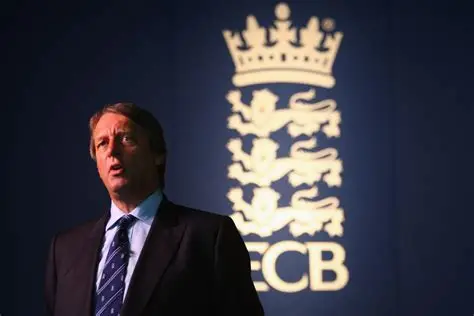
Hundred anti-discrimination responsibilities became one of the most important governance questions around the competition before the 2026 player auction. The England and Wales Cricket Board had to remind all eight franchises that selection must not exclude players on nationality grounds after reports suggested that Pakistani cricketers could be overlooked by the four teams linked to Indian Premier League owners.
The warning mattered because The Hundred had entered a new commercial era. Private investors had taken significant stakes in the teams, several franchises had been renamed, and the player draft had been replaced by an auction. That gave the competition more money, more global attention and more complicated politics. Hundred anti-discrimination responsibilities were therefore not just a legal box to tick. They became a test of whether the competition could stay open, credible and performance-based while operating in a franchise market shaped by India-Pakistan tensions.
The auction later produced a notable answer. Pakistan spinner Abrar Ahmed was signed by Indian-owned Sunrisers Leeds for £190,000, while Usman Tariq joined Birmingham Phoenix for £140,000. Those selections eased some concerns, but they did not make the issue disappear. Hundred anti-discrimination responsibilities still matter because a single auction result cannot prove that every selection process is free from pressure, perception or bias.
Why Hundred Anti-Discrimination Responsibilities Became a Major Issue
Hundred anti-discrimination responsibilities came under scrutiny after reports claimed that MI London, Manchester Super Giants, Southern Brave and Sunrisers Leeds would not consider signing Pakistan players. Those four teams had links to IPL ownership groups, and the concern was that political tension between India and Pakistan could influence recruitment decisions in an English and Welsh tournament.
The problem was not simply that some Pakistan players might go unsold. In any auction, players can miss out for many legitimate cricket reasons. Availability, salary demands, squad balance, role duplication and tactical plans all matter. The deeper concern was whether nationality itself could become a reason to exclude a group of players before bidding even began.
That is why Hundred anti-discrimination responsibilities had to be addressed publicly. The ECB and the eight teams issued a joint position that the competition should remain inclusive and open to all. Their statement said selection should be based on performance, availability and each team’s needs, and that players must not be excluded on nationality grounds.
This distinction is essential. Hundred anti-discrimination responsibilities draw the line between tactical choice and unlawful exclusion. A franchise may decide not to bid for a Pakistan fast bowler because it already has enough overseas seam options. It may avoid a batter because of schedule clashes. It may prefer a cheaper domestic player because of salary-cap pressure. Those are cricket decisions. Excluding a player pool because of nationality would raise a completely different issue.
The Auction Result Changed the Story
Hundred anti-discrimination responsibilities were still being debated when the men’s auction took place on 12 March 2026. The outcome was significant because it did not follow the most pessimistic expectation. Abrar Ahmed, a Pakistan leg-spinner, was bought by Sunrisers Leeds for £190,000. Sunrisers Leeds had Indian ownership links, so the signing directly challenged the idea that all IPL-linked teams would avoid Pakistan players.
Reuters reported that Sunrisers opened the bidding for Abrar at £130,000 and raised their bid to beat interest from Trent Rockets. The same report said Usman Tariq, another Pakistan spinner, was eventually bought by Birmingham Phoenix for £140,000, while Shadab Khan and Haris Rauf went unsold. The highest price in the first half of the auction went to James Coles, who joined London Spirit for £390,000.
That outcome gave the ECB some immediate relief. Hundred anti-discrimination responsibilities were not left as an unanswered warning. At least one Indian-owned franchise selected a Pakistan player, and the selection involved a meaningful auction price rather than a token late-round move.
However, the result should not be overstated. Two Pakistan players being signed does not prove that every team evaluated every Pakistan player equally. It does show that the auction produced evidence against a complete blanket exclusion. The fairest conclusion is that the warning, the public scrutiny and the auction outcome together reduced the force of the “shadow ban” concern, without removing the need for ongoing monitoring.
What the ECB Could and Could Not Control
Hundred anti-discrimination responsibilities sit in an awkward space because the ECB governs the competition but does not pick squads. The board can set rules, establish disciplinary processes and investigate credible allegations. It cannot force a franchise to sign a specific player.
That distinction protects sporting autonomy. A team must be free to choose players based on tactics, budget and availability. If the ECB directly ordered franchises to select certain nationalities, it would undermine the auction and create a different fairness problem. The ECB’s role is therefore to make sure decisions are not discriminatory, not to select players itself.
The challenge is evidence. Hundred anti-discrimination responsibilities are strongest when teams can show how decisions were made. If a franchise openly says it will not sign players from a particular country, the issue is clear. If the same result happens quietly through internal preferences, proving discrimination becomes much harder. Hundred anti-discrimination responsibilities therefore depend on more than written policies. They require transparent processes, documented decision-making and a willingness to act if evidence emerges.
The ECB’s reminder was important because it created a standard before the auction rather than waiting for a complaint afterward. It told franchises that nationality-based exclusion would not be acceptable. It also placed every team on notice that player selection would be watched closely.
Why Pakistan Players Were at the Centre of the Debate
Hundred anti-discrimination responsibilities became linked to Pakistan players because cricket already carries a long history of India-Pakistan political tension. Pakistan players have effectively been absent from the Indian Premier League since 2009. That absence has influenced wider perceptions around global franchise cricket, especially where IPL owners also operate teams in other leagues.
The concern around The Hundred grew after new investment brought IPL-linked ownership into English cricket. The four teams most discussed were MI London, Manchester Super Giants, Southern Brave and Sunrisers Leeds. Their presence made the competition more commercially powerful, but it also increased scrutiny over whether external political pressures could affect recruitment.
Pakistan players had strong representation in the auction process. The Guardian reported that 63 Pakistani men were on the 710-name longlist, more than any other foreign nation at that stage. A later auction explainer said the men’s shortlist included 14 Pakistan players, with attention focused on whether any would be selected.
The fact that some Pakistan players went unsold was not automatically suspicious. Some had availability complications. Pakistan were due to play two Tests in the West Indies during the Hundred window, and a three-Test series against England was scheduled to begin shortly after the final. Those clashes could reasonably reduce demand for high-profile players. But Hundred anti-discrimination responsibilities meant teams still had to judge players individually, not dismiss them as a national group.
A New Commercial Era Made the Issue More Sensitive
Hundred anti-discrimination responsibilities became more important because the competition was no longer operating under its original structure. The sale of stakes in the eight teams brought major outside investment and gave new partners a stronger voice in the competition’s future.
The Guardian reported that completed deals included 49% stakes in Birmingham Phoenix, Southern Brave and London Spirit, a 50% stake in Welsh Fire, 70% in Manchester Originals and a complete takeover of Northern Superchargers by India’s Sun TV network. The wider sales process valued the eight teams at a combined £975 million, with proceeds intended for professional counties and grassroots cricket.
Hundred anti-discrimination responsibilities also became part of the value proposition behind that investment. This investment was designed to strengthen the game, increase player salaries and raise the competition’s global profile. It also changed expectations. A tournament that presents itself as inclusive cannot allow commercial relationships to create the impression that some eligible players are unwelcome.
That is why Hundred anti-discrimination responsibilities were more than a public-relations issue. The Hundred is meant to attract new audiences and show that cricket in England and Wales can be modern, diverse and accessible. If nationality-based exclusion had been allowed to shape the auction, it would have damaged that identity.
How the 2026 Auction Worked
Hundred anti-discrimination responsibilities had to operate inside a new auction system. For the first five editions of The Hundred, recruitment used a draft. For 2026, the competition moved to a player auction, reflecting the influence of new investors and the desire for a more competitive recruitment market.
The auction process included pre-auction signings and retentions, salary caps and ranked player categories. The men’s salary pot rose to £2.05 million, while the women’s fund increased to £880,000. The women’s auction took place on 11 March, followed by the men’s auction on 12 March.
A larger auction can improve transparency because bidding is visible. It can also create new pressures because teams must make fast decisions in a public environment. Hundred anti-discrimination responsibilities are therefore not separate from the auction design. They influence how shortlists are formed, how players are valued and how teams justify their choices.
| Issue | Legitimate cricket factor | Discrimination risk |
|---|---|---|
| Player availability | International fixtures or workload limits | Using availability as a blanket excuse for one nationality |
| Squad balance | Team already has similar role covered | Avoiding all players from one country regardless of role |
| Salary cap | Player price does not fit budget | Refusing to bid before price is known |
| Performance data | Recent form does not match team needs | Ignoring comparable performance because of nationality |
| Overseas slots | Limited room for non-domestic players | Applying different standards to one national group |
This table shows why the issue is nuanced. Hundred anti-discrimination responsibilities are not a demand for quota-based squads. Hundred anti-discrimination responsibilities do not require teams to sign every available Pakistan player. They require teams to apply the same cricket logic to every eligible player.
What Abrar Ahmed’s Signing Proved — and What It Did Not
Hundred anti-discrimination responsibilities were tested most clearly by Abrar Ahmed’s signing. Sunrisers Leeds did not merely keep him on a list. The franchise bid for him, raised its offer and secured him at a substantial price. In practical terms, that weakened the argument that all Indian-owned teams were operating a strict ban.
The signing also had cricket logic. Abrar offered wrist-spin, wicket-taking ability and a different profile from many available bowlers. Reuters noted his T20 record for Pakistan: 52 wickets in 38 matches with an economy rate of 6.67. Those numbers made him a credible target for a team looking for a high-impact spinner.
Still, Hundred anti-discrimination responsibilities require broader thinking than one headline signing. If a single franchise signs one Pakistan player, that is positive evidence, but it cannot settle every question about recruitment culture. The ECB will still need to watch future auctions, replacement signings and wildcard opportunities.
Hundred anti-discrimination responsibilities should eventually become routine rather than reactive. A healthy league should not need a controversy before a Pakistan player is considered. The long-term test will be whether players from Pakistan are treated as normal auction options, selected or rejected for ordinary cricket reasons.
Why Unsold Players Were Not Automatic Evidence of Bias
Hundred anti-discrimination responsibilities also require fairness to franchises. Shadab Khan, Haris Rauf and other Pakistan players going unsold should not be treated as automatic proof of discrimination. Auctions are unpredictable, and many high-quality players miss out.
Teams often avoid players because they already have a similar option, because international commitments reduce availability or because the price does not fit their remaining budget. Some players are better suited to T20 than the 100-ball format. Others may be strong performers but not the exact fit for a team’s home conditions or tactical plan.
That is why evidence matters. A fair analysis cannot accuse a franchise of discrimination simply because it did not buy a particular player. At the same time, Hundred anti-discrimination responsibilities mean teams cannot hide behind vague cricket reasons if documents, messages or repeated patterns show nationality-based exclusion.
The ECB’s position should therefore be firm but careful. It should protect players from discrimination while respecting legitimate cricket judgment.
The Wider Lesson for English Cricket
Hundred anti-discrimination responsibilities sit within a larger conversation about equality in English and Welsh cricket. The sport has faced years of scrutiny over racism, representation and inclusion. The Hundred was created partly to reach new audiences, including families, women, young supporters and communities that traditional county cricket has often struggled to engage.
That broader purpose matters here. A competition cannot present itself as open and global if players believe their nationality can quietly remove them from consideration. The issue also affects fans. British Pakistani supporters are an important part of the cricket audience in England and Wales. A visible lack of opportunity for Pakistan players would have raised difficult questions about belonging.
The News Ink’s cricket guide explains the wider structure of cricket and why formats, leagues and international calendars often overlap. The Hundred sits inside that crowded global market, but it also operates under the public expectations attached to sport in the UK.
The News Ink’s feature on biggest sports controversies in 2026 also shows how governance issues can become as important as results. In modern sport, fairness, transparency and reputation are part of the competition itself.
What Should Happen Next
Hundred anti-discrimination responsibilities should not end with one reminder or one auction. The ECB and the franchises should treat the 2026 issue as a warning about governance in a more globalised tournament.
First, teams should be able to explain selection decisions in cricket terms. They do not need to publish every internal discussion, but they should maintain records that show how players were assessed. Second, the ECB should monitor patterns across multiple seasons rather than focusing only on one controversy. Third, players and agents should have a clear route to raise concerns if they believe nationality has affected selection.
Fourth, the competition should keep communicating its standards clearly. The joint statement before the auction was useful because it set expectations. Future seasons should not require a media storm before the same principle is repeated.
Finally, Hundred anti-discrimination responsibilities should apply consistently across the men’s and women’s competitions. Pakistan women such as Fatima Sana and Sadia Iqbal also entered the conversation around the auction. Inclusivity cannot be selective or limited to the most visible cases.
Readers following the wider sporting calendar can also explore The News Ink’s guide to major sports tournaments in 2026.
A Critical Test the Hundred Could Not Ignore
Hundred anti-discrimination responsibilities became a critical issue because The Hundred is trying to be both commercially ambitious and publicly inclusive. Those goals can support each other, but only if the competition is willing to protect fair access for players from every eligible nation.
The ECB’s reminder was necessary. The joint statement was necessary. The auction outcome was also important, especially after Sunrisers Leeds signed Abrar Ahmed and Birmingham Phoenix bought Usman Tariq. Those moves showed that Pakistan players were not completely shut out of the 2026 men’s auction.
The bigger test is what happens over time. Hundred anti-discrimination responsibilities must be embedded in ordinary recruitment, not treated as a temporary response to controversy. If selection is genuinely based on performance, availability and team needs, the competition can defend its credibility. If nationality becomes a quiet filter, the problem will return.
The 2026 auction did not answer every question, but it gave The Hundred a chance to move in the right direction. The ECB now has to make sure that chance is not wasted.
For more cricket and sports analysis, follow The News Ink on X.