US President Donald Trump says the country has a “virtually unlimited supply” of key weapons. Iran’s defence ministry claims it can resist longer than the US expected.
Weapons stocks alone will not determine the outcome. Ukraine, for example, remains outnumbered and outgunned by Russia. Yet, stockpiles are a critical factor.
The pace of operations has been intense from the start. Both sides are using weapons faster than production can replace them.
The Tel Aviv-based Institute for National Security Studies (INSS) estimates the US and Israel have conducted over 2,000 strikes, each using multiple munitions. Iran has launched 571 missiles and 1,391 drones, though many were intercepted.
Such high-tempo combat will be harder to sustain as the war continues.
Signs of Depletion
Western officials report a drop in Iranian missile launches, from hundreds on day one to dozens now.
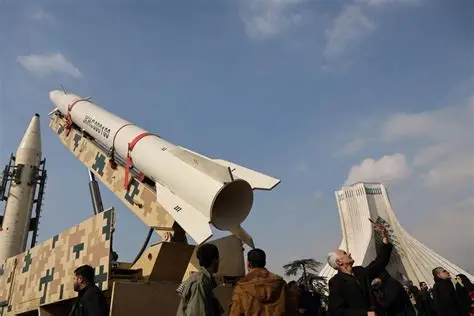
Before the conflict, Iran was believed to hold over 2,000 short-range ballistic missiles. Exact figures remain classified.
America’s top commander, Gen Dan Caine, said Iran’s ballistic missile launches have fallen 86% since the first day. US Central Command (Centcom) reported a 23% decrease in the last 24 hours.
Iran had also mass-produced tens of thousands of Shahed drones, which it exported to Russia. Russia has used them effectively in Ukraine, and the US has adopted the design.
Gen Caine said Iranian drone launches dropped 73% since day one. These figures suggest Iran is struggling to maintain high operational tempo.
Implications for the Conflict
The decline in missile and drone launches shows Iran’s resources may be depleting. This could affect the country’s ability to sustain attacks and maintain pressure on US and Israeli forces.
Both sides are aware that stockpile limits could influence strategies and outcomes as the conflict continues.