Real Madrid Squad: How Mbappé Returned, Bellingham Travelled and City Were Eliminated
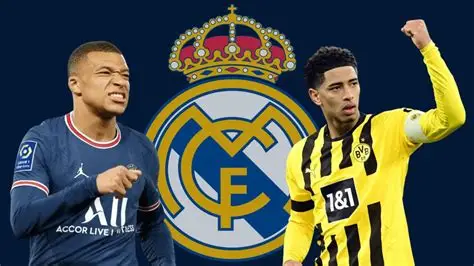
The Real Madrid squad announcement before the Champions League round-of-16 second leg against Manchester City created a major lift for a team carrying a 3-0 advantage to England. Kylian Mbappé and Jude Bellingham were both included in the travelling party on 16 March 2026, but their situations were not the same. Mbappé had recovered sufficiently from a left-knee sprain to play. Bellingham travelled as part of his rehabilitation but was not cleared to feature.
That distinction changes the way the original story should be read. The Real Madrid squad did contain both stars, yet only Mbappé was available on match night. He began on the bench at the Etihad Stadium and replaced Brahim Díaz in the 69th minute. Bellingham was absent from the matchday substitutes, then completed his playing comeback five days later against Atlético Madrid.
The second leg also settled the larger question that was still open when the squad was announced. Real Madrid beat Manchester City 2-1 on 17 March, completing a 5-1 aggregate victory and reaching the Champions League quarter-finals. Vinícius Júnior scored both Madrid goals, while Federico Valverde’s first-leg hat-trick remained the foundation of the tie.
Why the Real Madrid squad announcement mattered
In elite knockout football, a squad list can change the mood around a tie even before the teams reach the stadium. The Real Madrid squad for Manchester contained several returning senior players, but the two names that drew the most attention were Mbappé and Bellingham.
Mbappé had not played since Madrid’s 2-1 LaLiga defeat at Osasuna on 21 February. He later suffered a left-knee sprain and missed five games in all competitions before travelling to Manchester. At the time, he was also Madrid’s leading Champions League scorer with 13 goals.
Bellingham’s absence had been longer. He injured his hamstring less than 10 minutes into the 1 February league match against Rayo Vallecano. The midfielder left the pitch visibly distressed. Early expectations suggested roughly four weeks out, but later assessment showed the injury was more significant.
So the Real Madrid squad list created two different stories. Mbappé was returning to competitive availability. Bellingham was returning to the travelling group but not yet to competitive action.
Coach Álvaro Arbeloa made that clear before the match. Mbappé was considered ready to help if needed, whereas Bellingham would not play. The official starting-lineup release the following day confirmed the difference: Mbappé was among the substitutes and Bellingham was not. The Real Madrid squad announcement was therefore a staged return, not a declaration that both players were fully match-ready.
The full Real Madrid squad for the Manchester City trip
The official Real Madrid squad published on 16 March included the following players:
| Position | Players |
|---|---|
| Goalkeepers | Thibaut Courtois, Andriy Lunin, Fran González |
| Defenders | Dani Carvajal, David Alaba, Trent Alexander-Arnold, Álvaro Carreras, Fran García, Antonio Rüdiger, Dean Huijsen, Diego Aguado, Mario Rivas |
| Midfielders | Jude Bellingham, Eduardo Camavinga, Federico Valverde, Aurélien Tchouaméni, Arda Güler, Cestero, Manuel Ángel, Palacios, Thiago |
| Forwards | Vinícius Júnior, Kylian Mbappé, Gonzalo, Brahim Díaz, Franco Mastantuono |
The Real Madrid squad therefore looked stronger on paper than the group that had played the first leg. But a travelling squad is not the same thing as an available matchday list. This was particularly important in Bellingham’s case.
Madrid eventually started Courtois; Trent Alexander-Arnold, Rüdiger, Huijsen and Fran García; Valverde, Thiago, Tchouaméni and Arda Güler; Brahim and Vinícius. Mbappé was on the bench. Bellingham was not listed among the substitutes.
Mbappé’s knee injury and his return at the Etihad
Mbappé’s inclusion in the Real Madrid squad was the clearest immediate boost. The French forward had last appeared against Osasuna on 21 February and had been recovering from a sprain in his left knee.
Real Madrid’s own training updates in early March repeatedly listed Mbappé among the players continuing individual recovery work. He missed the first leg against City on 11 March, when Valverde produced one of the most remarkable European performances of his career.
By 16 March, however, Mbappé had progressed enough to travel and be considered for minutes. He did not start because Madrid had little reason to force the issue while protecting a three-goal aggregate lead.
The decision proved sensible. Mbappé entered in the 69th minute for Brahim Díaz, giving him roughly 20 minutes plus stoppage time to test the knee in a high-level match. He looked sharp enough to make runs in behind City’s defence and appealed for a penalty after contact with Rayan Aït-Nouri, although the referee allowed play to continue.
The Real Madrid squad had therefore gained its biggest scorer without needing him to carry the full physical load of a Champions League knockout match.
Four days later, Arbeloa said Mbappé was fully fit ahead of the Madrid derby. That sequence is important because it shows the City appearance was not merely ceremonial. It was the bridge between rehabilitation and a full competitive return.
Bellingham travelled, but he was not actually available to play
The original Real Madrid squad report risked creating the impression that Bellingham had recovered in time to face Manchester City. He had not.
His name appeared on the travelling list, which was encouraging after a long hamstring absence, but Arbeloa said before the game that Bellingham would not feature. The final matchday list backed that up.
Bellingham later described the rehabilitation as a seven-week process. His actual playing return came on 22 March against Atlético Madrid at the Bernabéu. He entered in the 74th minute and played the closing 16 minutes of Madrid’s 3-2 derby victory.
That timeline matters for accuracy. The Real Madrid squad announcement was evidence that Bellingham’s recovery had reached an advanced stage, not evidence that he had already been cleared for competitive minutes against City.
His return also mattered for England. Bellingham was included in the national team’s 35-man group for March friendlies against Uruguay and Japan, although his club had only just reintroduced him to match action.
Valverde had already transformed the tie at the Bernabéu
The reason Real Madrid could manage Mbappé cautiously and leave Bellingham out was the extraordinary work already done in the first leg.
On 11 March, Madrid beat Manchester City 3-0 at the Santiago Bernabéu. Federico Valverde scored all three goals in the first half, striking in the 20th, 27th and 42nd minutes.
UEFA’s official match data confirms that Valverde’s hat-trick came before half-time and that Madrid finished with seven shots on target to City’s four. Gianluigi Donnarumma prevented an even heavier defeat by saving Vinícius Júnior’s penalty in the 58th minute.
The Real Madrid squad entered the return leg with an unusual luxury against a Pep Guardiola side: Madrid did not need to chase the game.
Valverde later called it the best match of his career, particularly in terms of goals. His performance also placed him in rare club history. Real Madrid noted that he became only the second Madrid midfielder to score a European Cup hat-trick, matching Pirri’s achievement from 1968.
The News Ink separately covered Federico Valverde’s stunning Manchester City hat-trick and later examined how Valverde became a Real Madrid icon. Both pages are present in the verified sitemap.
Manchester City still had reasons to believe
A 3-0 first-leg deficit made City’s task enormous, but it did not eliminate the possibility of pressure at the Etihad.
Manchester City had Gianluigi Donnarumma in goal, Erling Haaland leading the line and Rodri, Bernardo Silva, Rayan Cherki and Jeremy Doku among the starters. Guardiola’s team knew an early goal could change the atmosphere.
The Real Madrid squad, meanwhile, still carried injury-related uncertainty. Mbappé was only just returning. Bellingham could not play. Several other players had dealt with physical issues during the season.
UEFA’s preview also underlined the recent history between the clubs. This was the fifth consecutive season in which Madrid and City had met in the Champions League knockout phase or an equivalent elimination route.
But Madrid’s three-goal cushion meant City required something close to a perfect night.
The second leg turned after Bernardo Silva’s red card
City’s comeback hopes suffered a decisive blow in the 20th minute.
Bernardo Silva was sent off after a handball incident that also resulted in a Real Madrid penalty. Vinícius Júnior converted from the spot two minutes later, increasing Madrid’s aggregate advantage to 4-0.
Haaland equalised in the 41st minute, giving the home crowd something to respond to before half-time. Yet the arithmetic remained brutal. City still required four more goals merely to force extra time.
The Real Madrid squad then had the freedom to manage the second half rather than attack recklessly. Mbappé’s introduction in the 69th minute was part of that controlled approach.
Vinícius eventually scored again in the third minute of stoppage time after an assist from Tchouaméni. The 2-1 victory completed a 5-1 aggregate win.
Reuters reported that it was the third successive season in which Real Madrid had eliminated Manchester City from the Champions League.
What Mbappé added after coming off the bench
Mbappé did not score at the Etihad, but his return was significant beyond the match statistics.
Before the injury, he had become Madrid’s most dangerous Champions League scorer. Bringing him back for the final 20 minutes allowed the coaching staff to judge his movement, acceleration and confidence without putting the entire tie on his shoulders.
The Real Madrid squad could also use him differently because Vinícius was already producing the decisive attacking moments. With City down to 10 men, Mbappé’s pace threatened the spaces that opened as Guardiola’s side pushed forward.
His comeback also arrived at an important point in the season. Madrid were still competing domestically and, after City, were preparing for a Champions League quarter-final against Bayern Munich.
Mbappé would later score in both legs of that Bayern tie, although Madrid were eliminated 6-4 on aggregate after losing 2-1 at home and 4-3 in Munich.
That later quarter-final outcome gives the Real Madrid squad story additional perspective. Mbappé’s return against City was successful from a fitness standpoint, but it did not ultimately carry Madrid beyond the last eight.
Bellingham’s return came five days later
Bellingham’s next step was more cautious.
Five days after travelling with the Real Madrid squad to Manchester, he finally returned to the pitch in the derby against Atlético. Real Madrid’s official report says he played 16 minutes after entering during the second half of a 3-2 victory.
Afterward, Bellingham described his recovery as “very long” and said he had been out for seven weeks.
The timing also explains why Arbeloa refused to use him at the Etihad even though he had travelled. The Manchester trip effectively placed Bellingham back around the first team, but the derby was the point at which his competitive comeback truly began.
For a player whose game depends on repeated high-intensity runs, pressing, ball carrying and late movement into the penalty area, protecting the hamstring was more important than forcing a symbolic appearance.
Thiago Pitarch benefited from the injury crisis
One of the less obvious consequences of the injury situation was opportunity for younger players.
Thiago Pitarch started the second leg in Manchester and was part of the midfield alongside Valverde, Tchouaméni and Arda Güler. His involvement reflected the trust Madrid had begun placing in him during a period when established players were unavailable.
The Real Madrid squad had enough depth to protect Bellingham and use Mbappé from the bench partly because players such as Thiago were able to absorb difficult minutes.
The News Ink later looked at Thiago Pitarch’s Champions League breakthrough and why his performances were earning growing trust inside the club. The page is verified in the sitemap.
That youth contribution is worth remembering when judging the return of famous names. Injury crises are disruptive, but they can also accelerate opportunities for academy players who might otherwise have remained on the edge of the first team.
Real Madrid’s 5-1 aggregate win in context
The final score across two legs was emphatic:
| Match | Result | Key Madrid story |
|---|---|---|
| First leg, 11 March | Real Madrid 3-0 Man City | Valverde hat-trick |
| Second leg, 17 March | Man City 1-2 Real Madrid | Vinícius brace; Mbappé returns |
| Aggregate | Real Madrid 5-1 Man City | Madrid reach quarter-finals |
The Real Madrid squad story therefore became less about whether two injured stars could rescue the team and more about how a team already in control reintroduced them responsibly.
Madrid had won the first leg without either Mbappé or Bellingham. They then won in Manchester without starting Mbappé and without using Bellingham at all.
That says something important about the depth of the performance. Valverde, Vinícius, Tchouaméni, Arda Güler, Brahim and younger players had already given Madrid enough control of the tie that the returning stars did not need to be rushed.
The News Ink also examined how that week of European results raised broader questions about Premier League dominance in the Champions League. The article is verified in the site inventory.
Why the original “both are back” headline needed qualification
Sports headlines often use “back” to mean included in a squad. Medically and competitively, however, that word can cover very different stages.
For the Real Madrid squad on 16 March:
- Mbappé was back in the squad and back in competitive availability.
- Bellingham was back in the travelling squad but not back in competitive availability.
- Mbappé played on 17 March.
- Bellingham returned to match action on 22 March.
Those four points provide the clearest correction to the original account.
The difference also shows why team sheets and coach comments matter when reporting injury news. A player can train partially, travel, appear on a squad list and still be unavailable for the match itself.
What happened after Manchester City
The victory sent Madrid into a quarter-final against Bayern Munich.
Bayern won 2-1 at the Bernabéu on 7 April despite a late Mbappé goal. In the second leg on 15 April, Madrid produced a chaotic attacking performance in Munich. Arda Güler scored twice and Mbappé added another, but late goals from Luis Díaz and Michael Olise gave Bayern a 4-3 win on the night and a 6-4 aggregate victory.
Bellingham was back in the team by then, starting the second leg in Munich.
The Real Madrid squad had therefore recovered two of its biggest stars after the City tie, but the Champions League campaign still ended in the quarter-finals.
That later result does not reduce the significance of the Manchester performance. Eliminating City 5-1 on aggregate was one of Madrid’s strongest European knockout statements of the season. It simply places the injury-return story inside the complete campaign rather than freezing it at the moment the squad list was published.
What the episode showed about managing elite-player injuries
The most useful lesson from the Real Madrid squad announcement is not just that famous players returned. It is how differently two recoveries were handled.
Mbappé reached the stage where a controlled substitute appearance made sense. Bellingham had not.
Madrid could afford to respect that difference because the first leg had created a large margin for error. Had the aggregate score been level, the pressure to accelerate either comeback would have been much greater.
The episode also demonstrates why estimated recovery timelines should be treated as estimates. Bellingham was initially expected to miss around four weeks. He later said the process lasted seven.
For supporters, “included in the squad” can sound like the end of an injury story. For medical and coaching staff, it may simply be one step in a progression that still includes controlled training, bench minutes, reduced match loads and monitoring after games.
A squad boost that became a controlled return
The Real Madrid squad announcement before the Etihad trip was genuinely positive news, but the final story is more precise than the early headline suggested.
Mbappé returned from his knee injury, made the bench and played from the 69th minute. Bellingham travelled but did not play because his hamstring recovery was not yet complete. Five days later, he returned for 16 minutes against Atlético Madrid.
Meanwhile, Madrid’s 3-0 first-leg lead held firm. Vinícius Júnior scored twice in Manchester, Madrid won 2-1 on the night and 5-1 on aggregate, and City were eliminated for a third consecutive season by the Spanish club.
The Real Madrid squad did not need a dramatic rescue from Mbappé or Bellingham. Valverde had already transformed the tie in Madrid, and Vinícius finished the job in Manchester.
That is what makes the episode more interesting in retrospect. The Real Madrid squad was stronger because two global stars were moving back toward full availability, but Madrid’s real strength was that they could afford to bring one back carefully and wait another five days for the other.
For continued football, Champions League and international sports coverage, follow The News Ink on X.