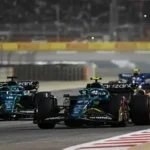
Aston Martin Vibration Issue: Alarming 2026 F1 Crisis Raises Driver Safety Fears
Aston Martin vibration issue has turned one of Formula One’s most ambitious 2026 projects into a warning about what happens when a new engine era, a new works partnership and a new car concept all collide at once.
The problem first became public before the Australian Grand Prix, when Adrian Newey said severe vibration from Aston Martin’s Honda power unit was travelling through the AMR26 chassis and into the steering wheel. The risk was not only lap time or reliability. Newey said Fernando Alonso and Lance Stroll could face possible nerve damage in their hands if they drove too many consecutive laps. Reuters reported that Alonso felt he could manage about 25 laps before reaching that danger point, while Stroll believed his limit was closer to 15.
That made the Aston Martin vibration issue one of the strangest and most worrying stories of the new Formula One season. It was not a normal complaint about balance, tyre wear or straight-line speed. It was a driver-safety problem inside a team that had invested heavily in Honda, Newey, new facilities and a long-term plan to fight at the front.
The bigger lesson is clear. Formula One’s 2026 regulations made power units more electric, more complex and harder to integrate. Aston Martin wanted the benefit of becoming Honda’s works team. Instead, the opening months showed how quickly a factory partnership can become painful when the engine, battery, chassis and cockpit are not working together.
For readers who need the broader sport background, The News Ink’s Formula 1 guide explains how F1 performance depends on thousands of technical compromises that fans often do not see from the outside.
Why the Aston Martin vibration issue became serious
Aston Martin vibration issue became serious because it crossed the line from performance loss into physical risk for the drivers. Formula One drivers are used to discomfort. They endure heat, high g-forces, heavy braking, cockpit vibration and long physical strain. But numb hands and possible nerve damage are not normal racing complaints.
Newey said the vibration was being transmitted through the chassis and into the drivers’ fingers. The same vibration was also causing reliability problems, including parts such as mirrors and tail lights falling off the car. Aston Martin had made progress in protecting the battery pack, but Newey admitted the transmission of vibration into the chassis had not been solved.
That distinction matters. A battery protection fix can keep the car alive for longer, but it does not automatically protect the driver. If the steering wheel still carries damaging vibration into the hands, the health problem remains.
The Aston Martin vibration issue therefore created a difficult race-management question. Should the team run limited laps and preserve drivers and parts? Should it retire cars early if points are unlikely? Should the FIA intervene if a car creates avoidable driver risk? Those questions moved the story beyond team embarrassment.
What happened in testing and Melbourne
The Aston Martin vibration issue did not appear from nowhere in Australia. The team had a difficult pre-season, with reliability problems limiting mileage during testing. Reuters reported a Honda battery issue during the final Bahrain test, adding to a late start in Barcelona and a shortage of power unit parts. By the time the season reached Melbourne, the AMR26 had not completed the kind of clean running that teams need before a major regulation reset.
At Albert Park, the Aston Martin vibration issue became public. Aston Martin admitted it might have to limit laps because the vibrations were severe enough to affect Alonso and Stroll physically. The team started the Australian Grand Prix, but both drivers retired after power-unit problems and severe vibration made a normal race impossible.
Alonso later said it was optimistic to think Aston Martin could finish the Chinese Grand Prix, although he also said the car felt better than it had during pre-season testing. That was a small positive, but not enough to change the story. The Aston Martin vibration issue had already damaged the team’s start and raised questions about whether the Honda project had been rushed into competition without enough real-world correlation.
The key facts at a glance
| Area | What happened | Why it matters |
|---|---|---|
| Main fault | Honda power-unit vibration transmitted through the AMR26 chassis | It affected reliability and driver comfort |
| Driver risk | Alonso said about 25 laps, Stroll about 15 laps before nerve-damage concern | It made the issue a safety matter, not only a performance matter |
| Mechanical impact | Mirrors, tail lights and components were affected | The vibration harmed the car as well as the drivers |
| Battery impact | Honda and Aston Martin focused first on protecting the battery pack | The hybrid system was a critical reliability risk |
| Early race result | Both cars retired in Australia | The problem translated directly into competition failure |
| Current picture | Aston Martin has only one point after nine grands prix | The early technical crisis has become a season-defining weakness |
Why Honda’s new power unit is central
The Aston Martin vibration issue sits inside the new Honda works partnership. Honda returned with Aston Martin as its works partner for the 2026 season, supplying the RA626H power unit. Honda’s official launch release said the AMR26 was powered by the Honda F1 power unit and was the first F1 machine designed for the team by Newey as managing technical partner and team principal.
That context makes the Aston Martin vibration issue more damaging. Aston Martin did not simply buy a customer engine and hope for the best. It built a long-term factory alliance around Honda, while also bringing in Newey and reshaping its technical structure. The plan was to stop behaving like an ambitious midfield team and start acting like a future champion.
The 2026 power-unit rules made that plan harder. Formula 1’s official explainer says the electrical share of power rose from around 20% under the old hybrid rules to roughly 50% in 2026, with the new MGU-K delivering 350kW to the rear wheels, up from 120kW. That means energy deployment, battery reliability, harvesting, cooling and integration became much more important.
The Aston Martin vibration issue shows why a modern F1 engine cannot be judged only by peak horsepower. A power unit must be fast, reliable, smooth, coolable and integrated into the car without creating dangerous resonance. If one of those pieces fails, the entire package suffers.
Why the problem is not only “Honda’s fault”
The Aston Martin vibration issue makes it tempting to blame Honda alone, but that is too simple. The engine may be the source of the vibration, yet the damage depends on how the power unit is mounted, how the chassis carries vibration, how the gearbox and battery interact, and how the steering system transmits forces to the driver.
Honda HRC president Koji Watanabe said the company was working to solve the problem but could not give a clear timeline early in the season. Later reporting suggested the vibrations were worse once the engine was fitted into the Aston Martin chassis than they had appeared on the dyno. That is a classic integration problem. A component can look manageable in isolation and become much worse when installed in a complete car.
This is why the Aston Martin vibration issue should be written as a team-and-supplier failure, not a one-line engine attack. Honda, Aston Martin, Aramco, Valvoline and the Silverstone technical group all have roles in making the package work.
The News Ink’s sports training technology guide is relevant because modern racing performance depends on sensor data, simulation, fatigue monitoring and engineering feedback. When track data does not match laboratory expectation, the whole development process has to respond.
Adrian Newey’s role increases the pressure
Adrian Newey’s presence makes the Aston Martin vibration issue more dramatic. Formula 1 officially reported that Newey became Aston Martin team principal in 2026 while keeping his focus on design and development. Newey said he did not want to dilute that design focus, but the leadership restructure put him closer to the whole operation.
That means the Aston Martin vibration issue lands partly on his desk. Newey is not just a famous designer watching from the outside. He is the public technical leader and team principal of a project built around huge expectations.
Newey has also been open about the challenge of the 2026 power-unit relationship. Formula 1 reported that Andy Cowell moved into a chief strategy role focused on the technical partnership between Aston Martin, Honda, Aramco and Valvoline. That detail matters because it shows the team knew the power-unit integration was a major project before the season began.
The Aston Martin vibration issue now tests whether that structure can solve a live racing problem quickly enough. A strong organisation can absorb a bad launch if it learns fast. A weak one spends the season chasing symptoms.
Alonso and Stroll are paying the physical price
Fernando Alonso’s comments carried weight because he has lived through painful Honda problems before, especially during his second McLaren spell from 2015 to 2018. He knows what an underdeveloped power unit can do to a season.
This time, the Aston Martin vibration issue made the discomfort more direct. Alonso said the frequency of the vibration could make his hands, feet and body feel numb after 20 or 25 minutes. Stroll described the car as if it were falling apart. Those are not comments drivers make lightly before a season opener.
The Aston Martin vibration issue is also awkward because Stroll has a history of wrist injuries. Even if the team does not link that history directly to the 2026 problem, any vibration passing through the steering system will naturally raise extra concern for a driver whose hands and wrists are critical to performance.
Drivers can tolerate pain when a win is possible. Alonso even suggested discomfort might be easier to accept if the car were fighting for victory. But enduring numbness in a slow, unreliable car is different. There is little sporting reward for physical risk when points are unlikely.
The results show how deep the damage is
The early crisis did not disappear after one race. Formula 1’s team profile listed Aston Martin 10th in the constructors’ championship after nine grands prix, with only one point, zero podiums and nine DNFs. That is a brutal return for a team with Newey, Alonso, Stroll, Honda power and major investment.
Those figures make the Aston Martin vibration issue more than a technical anecdote, and the Aston Martin vibration issue became a marker of the team’s wider 2026 collapse. Reliability hurt mileage. Low mileage hurt development. Poor development hurt performance. Poor performance made every race a test session rather than a chance to score.
That cycle is dangerous in a cost-cap era. Teams cannot simply spend unlimited money to catch up. Wind-tunnel time, simulation hours, parts allocation and staff energy all have to be used carefully. A team that starts far behind can improve, but it must choose fixes in the right order.
Power, battery use and race strategy
The Aston Martin vibration issue is linked to a wider 2026 problem: the balance between combustion power and electrical deployment. Under the new rules, drivers have to manage energy more carefully than before. If a combustion engine cannot run at its ideal level because of reliability, the driver may need to lean more on electrical deployment to maintain speed. That can drain battery energy earlier on long straights and leave the car exposed later in the lap.
This is why reports about Honda being below its electrical target matter, even when the exact figure is not officially confirmed. A 2026 power unit that is unreliable, underpowered or hard to deploy cleanly creates a chain reaction. It affects qualifying, overtaking, defending, tyre life and fuel strategy.
Formula One has already moved to adjust the new rules. Reuters reported that the FIA agreed changes for 2027 and 2028 to reduce the electric-power share, shifting from a current 53-47 combustion-electric split toward 58-42 in 2027 and 60-40 in 2028. The move followed driver complaints that racing had become too artificial and more dangerous.
That wider rule change does not solve Aston Martin’s immediate problem, but it shows the whole sport has been learning how difficult the 2026 concept is.
Safety should be the priority
Formula One has spent decades making cars safer after tragic lessons. That history should shape how the Aston Martin vibration issue is handled. If a car creates a credible risk of nerve damage, the issue cannot be treated only as bad luck or a punchline.
The FIA, Aston Martin and Honda all have an interest in clarity. The team needs to know whether vibration exposure can be measured, limited and reduced. The drivers need medical guidance. Rivals need confidence that unsafe cars are not being kept on track in the hope of collecting data. Fans need to know the sport is not asking drivers to risk permanent damage for a midfield result.
The Aston Martin vibration issue does not require panic. Formula One is full of vibration, and drivers often manage pain. The right solution is measurement. How strong is the vibration? At what frequency? Through which components? How does it vary by engine mode, gear, speed, kerb use and steering load? What exposure time is acceptable? What cockpit or steering changes can reduce it?
Until those answers are clear, conservative mileage limits make sense.
Why this is a warning for all F1 teams
The Aston Martin vibration issue is extreme, but the lesson applies to every team. The 2026 rules created simultaneous chassis and power-unit challenges. Cars became lighter and more active aerodynamically, while power units became more dependent on electrical energy and sustainable fuels. Any mismatch between simulation and reality can become expensive.
The Aston Martin vibration issue is a reminder that dyno testing, simulation and track testing are different worlds. A vibration that looks tolerable in controlled conditions can become severe when it travels through a real car over kerbs, under load and into a driver’s hands.
That matters for F1’s future because the sport wants road-relevant technology, sustainable fuels and electrified performance. Those goals are useful, but they add complexity. More complexity means more ways for problems to appear.
The News Ink’s AI trends in 2026 coverage is relevant because modern F1 teams depend heavily on simulation, modelling and data-driven prediction. But the Aston Martin case shows that even the best models still have to survive the physical truth of a race car.
What Aston Martin must fix first
Aston Martin’s priority list should be clear.
First, protect the drivers. That means reducing cockpit and steering vibration to a medically safe level, not merely making the car finish races.
Second, protect the hybrid system. Battery failures or vibration-related damage can destroy race weekends and limit development mileage.
Third, recover performance. A car that finishes but lacks power and deploys energy poorly will still struggle to score.
Fourth, restore trust. Alonso and Stroll need to believe the team understands the problem. Honda needs to show progress. Newey needs to show that Aston Martin’s technical structure can respond.
The Aston Martin vibration issue will not be fixed by one headline upgrade if it involves multiple systems. It may require engine calibration, mounting changes, chassis reinforcement, steering-column solutions, gearbox adjustments, battery protection and software refinement.
The development hope
There is still a reason to believe the Aston Martin vibration issue can become the start of a recovery story rather than the whole season. New partnerships often start painfully. Honda has won in Formula One before. Newey has solved problems that looked impossible. Alonso remains one of the sharpest development drivers on the grid.
The question is timing. If Aston Martin finds a real fix before the summer break, the team can turn the second half of the season into a recovery project. If the problem drifts into autumn, 2026 may become a year of damage limitation and data gathering for 2027.
That is the uncomfortable truth behind the Aston Martin vibration issue. The team’s long-term project may still be alive, but the first year of the Honda-Newey era has already lost its clean launch.
For a team that wanted to announce itself as a future title contender, that is a painful start.
The final judgment
Aston Martin vibration issue is the defining technical crisis of the team’s 2026 season because it combines everything Formula One fears: driver safety risk, power-unit unreliability, poor testing mileage, limited race running, weak performance and public pressure on a high-profile leadership group.
Newey’s warning about possible nerve damage made the problem impossible to dismiss. Alonso and Stroll’s numbness showed it was being felt inside the cockpit. The Australian retirements showed it was already affecting race execution. Aston Martin’s one point after nine grands prix shows the consequences have lasted beyond the opening weekend.
The story should not be written as comedy or simple embarrassment. It is a serious engineering failure in a new regulatory era. It is also a test of whether Aston Martin, Honda and Newey can turn a troubled launch into a credible recovery.
Formula One rewards speed, but it begins with trust: trust that the car will finish, trust that the power unit will survive, and trust that the driver can race without risking lasting harm. Right now, Aston Martin must rebuild all three.
For more motorsport and performance analysis from The News Ink, follow The News Ink on X.