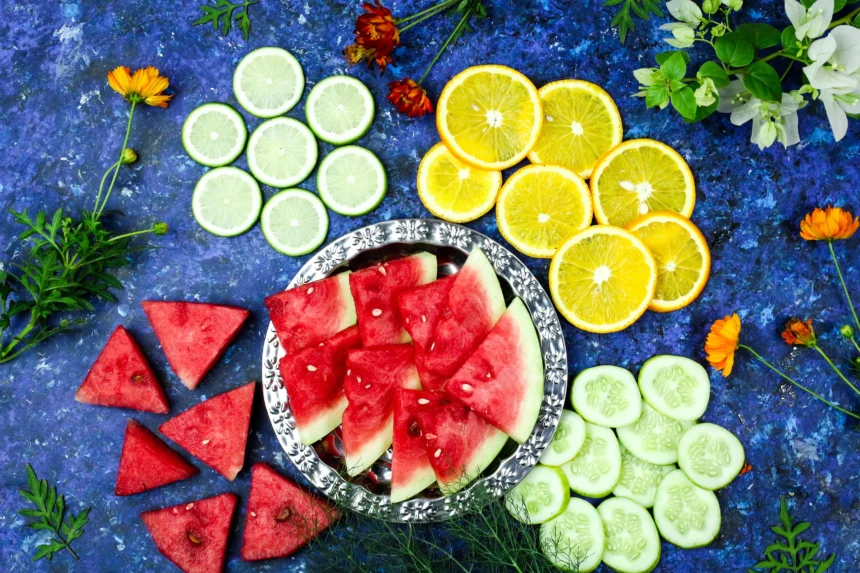
Why Are Some Fruits Becoming Seedless?
Walk through a supermarket and seeds seem to be disappearing.
Seedless grapes dominate many fresh-fruit displays.
Seedless watermelons are now ordinary rather than unusual.
Most bananas contain no hard seeds at all.
Navel oranges are famous partly because they can be eaten without constantly removing seeds.
Mandarin breeders increasingly aim for fruits with fewer seeds.
It can look as though plants themselves are gradually deciding to stop producing them.
But that is not really what is happening.
Seedless fruits are becoming more common primarily because humans prefer them—and because farmers and plant breeders have become increasingly good at preserving, multiplying and creating plants that produce fruit without fully developed seeds.
The fascinating part is that there is no single biological trick behind seedlessness.
A banana becomes seedless differently from a grape.
A grape becomes seedless differently from a watermelon.
Some fruits develop even though fertilization never happens.
In others, fertilization begins normally but the embryo later stops developing.
Some plants become effectively sterile because they carry an unusual number of chromosome sets.
Others originate from spontaneous mutations that farmers notice and preserve through grafting.
Modern breeders can even rescue microscopic embryos from seedless grapes to create new generations of seedless varieties.
So when we talk about seedless fruits, we are actually talking about several different biological pathways leading to the same consumer experience:
You bite into the fruit without encountering a hard seed.
Seedless Fruits at a Glance
| Fruit | Why It Can Be Seedless |
|---|---|
| Banana | Parthenocarpy plus sterility, often associated with triploidy |
| Seedless grape | Seeds begin developing but abort early |
| Seedless watermelon | Triploid plants have three chromosome sets and produce few mature seeds |
| Navel orange | Natural mutation caused reproductive sterility |
| Some mandarins | Natural or induced mutations and breeding reduce seed formation |
| Some persimmons | Fruit can develop without fertilization |
| Certain cucumbers | Parthenocarpic varieties develop fruit without normal seed formation |
The important point is that seedless fruits are not automatically genetically engineered.
Humans were growing seedless crops long before modern biotechnology existed.
Why Do Fruits Normally Have Seeds?
From the plant’s perspective, fruit is not primarily a snack for humans.
Its biological purpose is connected with reproduction.
A flower is pollinated.
Pollen delivers male reproductive cells.
Fertilization occurs.
Ovules develop into seeds.
The surrounding ovary develops into fruit.
Animals may then eat the fruit and carry or deposit the seeds elsewhere.
That helps the plant reproduce.
This creates an obvious puzzle.
If seeds are part of the normal reproductive process, how can seedless fruits exist at all?
Because plant development has several possible pathways.
The signals that tell a fruit to begin growing do not always require a normal mature seed to survive until harvest.
Plant hormones, mutations, chromosome abnormalities and selective breeding can separate fruit development from successful seed development.
That separation is what agriculture has learned to exploit.
1. Some Fruits Grow Without Fertilization
One major mechanism is called parthenocarpy.
Parthenocarpy occurs when fruit develops without normal fertilization.
If no fertilization occurs, there is no normally developing embryo.
The resulting fruit can therefore be seedless.
University of California agricultural material summarizes parthenocarpy simply as fruit formation without fertilization, contrasting it with another seedless process found in grapes. UC Agriculture and Natural Resources’ overview of seedlessness uses citrus as a classic example.
Plant hormones are deeply involved.
Normally, fertilized ovules and young seeds produce chemical signals that help tell surrounding fruit tissue to grow.
Those signals include hormones such as:
auxins,
gibberellins,
and cytokinins.
In a parthenocarpic variety, similar fruit-development pathways can become active even without successful fertilization.
The University of Georgia’s explanation of fruit set and plant hormones describes how hormones produced by developing seeds normally stimulate fruit growth and how parthenocarpic fruit can develop when fertilization is absent.
This makes parthenocarpy one of the most important biological explanations for seedless fruits.
Bananas Are One of the Best Examples
The banana in a supermarket looks nothing like many wild bananas.
Wild banana fruits can contain numerous large, hard seeds.
There may be surprisingly little edible pulp around them.
Commercial bananas are different.
Their fruit is fleshy.
The seeds do not mature normally.
Most familiar cultivated bananas are sterile or nearly sterile and reproduce through vegetative propagation rather than ordinary sexual reproduction.
Kew Gardens explains that cultivated bananas are generally parthenocarpic and seedless, while many familiar edible types are also triploid—meaning they carry three sets of chromosomes rather than the usual two. Kew’s Musa acuminata profile traces this to ancient hybridization and human selection.
So bananas did not recently become seedless because scientists removed their seeds.
People encountered naturally unusual plants thousands of years ago whose fruits were easier to eat.
They propagated them.
Then they propagated the best descendants again.
Over generations, humans transformed a reproductive abnormality into one of the world’s most important fruit crops.
That is one of the oldest lessons behind seedless fruits:
A trait that may be disadvantageous for a wild plant can be extremely useful in agriculture.
If Bananas Have No Seeds, How Do Farmers Grow More Banana Plants?
They clone them.
Not in the science-fiction sense.
Vegetative propagation is one of agriculture’s oldest technologies.
Instead of planting seeds, farmers reproduce a plant from living plant tissue.
Bananas naturally produce shoots known as suckers from underground structures.
Growers can separate these and establish new plants.
Commercial agriculture also uses tissue culture to multiply clean planting material rapidly.
The Food and Agriculture Organization notes that many cultivated bananas are highly sterile and therefore must be propagated clonally rather than from seed. FAO’s overview of banana improvement explains why this sterility makes breeding more difficult even though it produces the seedless fruit consumers prefer.
This creates an interesting contradiction.
Humans love seedless fruits because they are convenient.
But seeds are one of nature’s easiest methods for generating new plants.
Remove functional seeds and farmers need another way to reproduce the crop.
2. Seedless Grapes Actually Begin Making Seeds
Seedless grapes use a different mechanism.
Many common seedless grape varieties undergo pollination and fertilization.
A seed starts forming.
Then its development stops.
This process is called stenospermocarpy.
USDA Agricultural Research Service research describes stenospermocarpy as the production of incompletely developed seeds inside otherwise normally developed fruit. USDA research on grape seedlessness notes that the trait has been extensively used in breeding seedless grapes.
This explains something you may have noticed.
Some “seedless” grapes contain tiny soft structures in the center.
Those are seed traces.
They are remnants of seeds that began development but never became the large, hard structures found in seeded grapes.
So “seedless” does not always literally mean:
zero biological seed tissue exists.
It often means:
there is no hard mature seed noticeable while eating the fruit.
Why Are Seedless Grapes Getting Better?
Plant breeders strongly select for traits consumers want.
For table grapes, those traits can include:
crisp texture,
sweetness,
large berries,
good color,
disease resistance,
long storage life,
and seedlessness.
USDA ARS says seedlessness is one of the traits most desired by consumers and continues to operate research programs aimed at breeding better seedless table grapes. USDA’s grape breeding program has specifically targeted new seedless varieties with improved fruit quality.
Recent science is making the process increasingly precise.
In 2026, USDA-associated researchers published diagnostic DNA markers linked with stenospermocarpic seedlessness in grapes. Such tools allow breeders to identify seedlings carrying desirable genetic traits much earlier in the breeding process. USDA’s 2026 grape genetics research illustrates how modern genetics can accelerate conventional breeding.
So seedless fruits are becoming more common partly because breeders can identify and reproduce the right plants more efficiently than previous generations could.
How Can Breeders Cross Two Seedless Grapes?
This sounds impossible.
If both grapes cannot produce a normal mature seed, where does the next generation come from?
Plant scientists developed a technique called embryo rescue.
The tiny seed inside a seedless grape may begin developing an embryo before the seed aborts.
Researchers can remove that developing embryo while it is still alive and grow it under carefully controlled laboratory conditions.
USDA ARS describes embryo rescue as a technique that allows breeders to use two seedless grapes as parents to produce new seedless offspring. USDA’s explanation of grape embryo rescue notes that embryos that would normally die inside undeveloped seed traces can instead be grown into experimental vines.
This is an extraordinary example of humans turning a reproductive disadvantage into a breeding tool.
It also explains why modern seedless fruits are not simply copies of one old variety.
Scientists can continue creating new varieties even when the parents themselves barely produce functional seeds.
3. Seedless Watermelon Uses a Chromosome Trick
Watermelon is different again.
Normal watermelon plants are usually diploid.
That means their cells contain two sets of chromosomes.
Seedless commercial watermelons are typically triploid.
They contain three sets.
Three is biologically awkward.
During normal sexual reproduction, chromosomes need to divide evenly to produce reproductive cells.
An odd number of chromosome sets makes that process difficult.
Triploid watermelon plants therefore produce few viable reproductive cells and do not form normal mature black seeds.
USDA ARS explains that breeders produce seedless watermelon by first creating a tetraploid plant with four chromosome sets, then crossing it with an ordinary diploid plant. The resulting offspring receive three sets and become triploid. USDA’s watermelon genetics project describes this breeding system directly.
So:
Diploid parent = 2 chromosome sets
Tetraploid parent = 4 chromosome sets
Triploid offspring = 3 chromosome sets
The triploid offspring becomes the plant that produces the commercial seedless watermelon.
This is one of the most ingenious ways humans create seedless fruits.
A Seedless Watermelon Still Starts From a Seed
This sounds contradictory.
How do you buy seed for a plant whose fruit is seedless?
Because the commercial seed used to grow the triploid plant is created deliberately by crossing fertile parent lines.
Seed companies maintain the diploid and tetraploid parents.
They make the cross.
The resulting triploid seed is sold to growers.
Once that triploid plant produces fruit, however, the watermelon does not normally contain mature fertile seeds that a consumer could plant to recreate the same crop.
This makes commercial production more complicated.
Triploid seed can also be harder to germinate.
Penn State Extension notes that seedless triploid watermelons generally require careful transplant production and that the fruit may still contain small white immature seed coats. Penn State’s watermelon production guide explains the additional production challenges.
Those small white structures are why seedless watermelon is technically not always completely seed-free.
But unlike mature black seeds, they are soft enough that consumers generally eat them without noticing.
A Strange Twist: Seedless Watermelon Still Needs Pollination
This may be the most surprising fact about seedless fruits.
A seedless watermelon plant is sterile.
Yet growers still need pollination to trigger good fruit development.
Farmers therefore plant pollen-producing diploid watermelon plants alongside triploid seedless plants.
Bees carry pollen between flowers.
The triploid plant receives the developmental signal required for good fruit set, even though mature seeds do not ultimately form normally.
Penn State specifically recommends pollinizer plants and substantial bee activity in commercial seedless-watermelon production.
This creates an important connection between seedless agriculture and pollinators.
The News Ink’s article on what would happen if bees disappeared explains why bee loss could affect fruit production even when the fruit consumers eventually eat contains few or no mature seeds.
Seedless does not necessarily mean pollination is irrelevant.
4. Some Seedless Fruits Began as Accidents
Not every seedless variety was deliberately designed.
Sometimes nature produces a mutation.
A farmer notices it.
Then humans preserve it.
The Washington navel orange is a famous example.
The University of California Riverside Citrus Variety Collection describes it as probably originating from a spontaneous bud mutation in Brazil.
Its flowers lack functional pollen and viable ovules, causing the tree to produce seedless fruit. UCR’s Washington navel orange profile explains how budwood from the tree was eventually propagated and became enormously important to California citrus production.
This is important because a seedless mutant cannot necessarily reproduce itself through seed.
Instead, growers preserve the mutation through grafting.
A piece of a desirable tree is attached to a suitable rootstock.
The new growth remains genetically derived from the selected seedless plant.
In effect, one fortunate mutation can be copied millions of times.
Seedlessness Helped Make Navel Oranges Popular
The Washington navel orange had several characteristics growers and consumers liked:
sweet flavor,
easy peeling,
attractive appearance,
and seedlessness.
Once those characteristics were recognized, growers had a strong commercial reason to multiply the tree.
That same pattern appears throughout agriculture.
Humans notice a useful mutation.
They preserve it.
It becomes more common than it ever would have become in the wild.
That is one reason asking why fruits are “becoming” seedless can be misleading.
Nature is still producing seeded fruit.
What is changing is which varieties humans choose to grow and sell.
5. Breeders Can Also Deliberately Create Low-Seed Citrus
Modern citrus breeders have several ways to reduce seed numbers.
Some plants naturally produce fewer seeds.
Mutations can create sterility.
Breeders can cross varieties carrying useful reproductive traits.
Mutations can also be deliberately induced and then screened for useful characteristics.
University of California material describes several low-seeded mandarin cultivars developed from budwood that underwent induced mutation, including Tango and related varieties. UC’s overview of citrus breeding also explains the difference between traditional breeding, mutation breeding and genetic engineering.
USDA researchers noted in 2026 that consumer preference for seedless fruit and easy eating quality remains an important objective in modern California citrus breeding. USDA’s revived California citrus breeding program is explicitly responding to changing fresh-market preferences.
That commercial pressure is a major reason more seedless fruits reach grocery stores.
Why Do Consumers Prefer Seedless Fruits?
The simplest answer may be the strongest.
They are easier to eat.
Think about:
watermelon at a picnic,
grapes packed in a child’s lunch,
mandarins eaten at work,
raisins,
fruit salads,
smoothies.
Removing seeds adds inconvenience.
Hard seeds can also affect texture.
For food processors, seedless fruit may reduce preparation steps.
For retailers, convenience can make a variety easier to sell.
This creates strong market selection.
Suppose two grape varieties taste equally good.
One contains several hard seeds.
The other contains none that the customer notices.
Most fresh-fruit buyers will choose the seedless version.
Growers then plant more of it.
Breeders devote more resources to improving it.
Retailers dedicate more shelf space to it.
Over decades, seedless fruits can seem to replace traditional varieties even though the change is largely driven by consumer choice.
Seedless Fruits Are a Product of Domestication
Humans have been reshaping plants for thousands of years.
Agriculture began with people repeatedly selecting plants showing desirable traits.
Larger seeds.
Sweeter flesh.
Less bitterness.
Easier harvesting.
Bigger fruit.
More predictable ripening.
Over generations, domesticated crops became dramatically different from their wild ancestors.
Seedlessness is simply another trait within that enormous history.
Cultivated bananas offer one of the clearest examples.
Their ancient ancestors carried large seeds.
People preferred plants with more edible pulp and fewer hard seeds.
Those plants were propagated.
Eventually heavily seedless forms became major crops.
The same broad human tendency—to preserve useful discoveries and technologies across generations—is explored in The News Ink’s article on ancient inventions we still use today.
Agricultural domestication is another form of cumulative human innovation.
Are Seedless Fruits Genetically Modified?
Usually, no.
This is one of the biggest misconceptions about seedless fruits.
Seedless watermelon is generally produced through chromosome manipulation and conventional crossing, not by inserting foreign genes through genetic engineering.
Seedless grapes have been selected and bred from naturally occurring seedless traits.
Commercial bananas arose through ancient hybridization, parthenocarpy and sterility.
Navel oranges originated as mutations and are propagated through grafting.
Mutation breeding also predates modern genetic engineering.
These processes all alter or select genetics in the broad biological sense, because breeding always involves genes.
But that is not the same thing as a genetically engineered or transgenic crop.
People sometimes use “genetically modified” casually to mean any plant altered by humans.
Scientifically and legally, however, conventional breeding and genetic engineering are different methods.
Are Seedless Fruits Less Natural?
That depends on what “natural” means.
Seedlessness can arise spontaneously in nature.
Parthenocarpy occurs naturally.
Chromosome abnormalities occur naturally.
Mutations occur naturally.
Hybridization occurs naturally.
Humans then select and propagate the forms they find useful.
The resulting commercial system is obviously artificial in the sense that farmers intentionally reproduce certain plants.
But almost every major crop is already the product of human selection.
Modern corn does not look much like its wild ancestors.
Commercial bananas differ dramatically from wild bananas.
Many apples are grafted clones.
Grapevines are propagated vegetatively.
Agriculture itself is a giant experiment in directing which plant traits become common.
Seedless fruits are simply a particularly visible example.
Do Seedless Fruits Have Lower Nutrition?
Seedlessness does not automatically make fruit less nutritious.
The edible part of a fruit contains:
water,
carbohydrates,
fiber,
vitamins,
minerals,
pigments,
and numerous plant compounds.
Removing mature seeds does not automatically remove those nutrients from the flesh.
USDA watermelon research, for example, has compared triploid seedless and diploid seeded fruit and found that ploidy does not translate into a simple rule that seedless watermelon is nutritionally inferior. USDA research on watermelon ploidy and fruit quality demonstrates that nutritional characteristics vary among varieties rather than merely according to whether mature seeds are present.
The bigger nutritional issue is simply eating enough fruits and vegetables.
The News Ink’s Healthy Lifestyle guide covers the broader importance of diet quality and dietary diversity.
Choosing a seedless grape rather than a seeded grape does not somehow transform fruit into an unhealthy food.
Is There a Downside to Seedlessness?
Yes.
Convenience can come with biological costs.
Reproduction Becomes Harder
A sterile plant cannot easily produce the next generation sexually.
Farmers may need:
grafting,
cuttings,
suckers,
tissue culture,
or specialized crosses.
Breeding Can Become More Difficult
Breeders need seeds to recombine genes.
When a crop barely produces any, breeding becomes technically challenging.
That is exactly why embryo rescue is useful in grapes.
Genetic Diversity Can Decline
Clonal crops can become extremely genetically uniform.
That creates vulnerability.
If every plant is genetically similar, a pathogen capable of infecting one may potentially infect millions.
Bananas provide a famous example.
Kew warns that Cavendish bananas are clonally propagated and therefore lack much of the genetic diversity that would normally exist in a sexually reproducing crop population.
This makes disease threats particularly serious.
Seedless Bananas Reveal the Biggest Risk
Commercial bananas demonstrate how the convenience of seedless fruits can create an agricultural weakness.
The Cavendish banana is sterile.
Farmers cannot simply cross millions of Cavendish plants naturally and obtain a diverse generation from which disease-resistant individuals emerge.
Instead, plantations often contain genetically very similar clones.
That helped make commercial production uniform.
It also makes the crop vulnerable to diseases capable of attacking that genetic background.
Kew notes that the earlier Gros Michel export banana was devastated by Panama disease and that Cavendish bananas now face another form of the disease, Tropical Race 4. Kew’s Cavendish banana overview explains why clonal uniformity complicates long-term protection.
Seedlessness therefore solves one problem for the consumer while potentially creating another problem for breeders.
Climate Change Makes Fruit Breeding Even More Important
Fruit breeders are no longer selecting only for:
taste,
size,
color,
and seedlessness.
They increasingly need varieties capable of handling:
heat,
drought,
new diseases,
changing pest ranges,
water shortages,
and shifting growing seasons.
That can create difficult trade-offs.
Consumers still want convenient seedless fruits.
Farmers simultaneously need resilient plants.
Researchers therefore need access to broad genetic diversity—including wild relatives and seeded varieties that consumers themselves may never eat.
This is one reason preserving crop genetic resources matters.
The News Ink’s Climate Change guide explains how rising temperatures and changing rainfall patterns can put pressure on agricultural systems.
The perfect supermarket fruit of the future may therefore need to be seedless for the consumer while carrying disease- and climate-resistance genes borrowed through breeding from much less attractive wild relatives.
Technology Is Changing How Seedless Fruits Are Developed
Plant breeding used to depend heavily on patience.
Make a cross.
Plant the seeds.
Wait years for a fruit tree or vine to mature.
Examine the fruit.
Keep the promising plants.
Discard the others.
Repeat.
Modern genetics can shorten parts of this process.
Researchers can identify DNA markers associated with important traits.
Seedlings can then be screened before they reach full maturity.
Tissue culture can multiply promising plants.
Embryo rescue can recover offspring that otherwise would never survive.
Genomic tools help scientists understand traits such as seed abortion.
Meanwhile, agricultural automation is changing what happens after new varieties reach farms.
The News Ink’s Agricultural Robots Explained explores how machine vision, robotic harvesting and precision farming are making crop production increasingly technology-intensive.
The future of seedless fruits therefore combines very old human preferences with increasingly sophisticated biology.
Why Don’t Breeders Make Every Fruit Seedless?
Because seeds are not always undesirable.
Some crops are grown specifically for their seeds.
Think of:
sunflower seeds,
nuts,
beans,
peas,
coffee,
cocoa,
and grains.
In other fruits, seeds have little impact on eating quality.
Breeding seedlessness may also create difficulties with:
fruit set,
yield,
plant vigor,
breeding,
or propagation.
The trait is most valuable where consumers strongly dislike hard seeds.
That is why the market strongly favors seedlessness in:
table grapes,
watermelon,
bananas,
some citrus,
and certain other fresh fruits.
But there would be little purpose in producing a “seedless almond.”
The seed is the part we eat.
Could All Fruits Eventually Become Seedless?
No.
There is no biological trend pushing all fruit in that direction.
What will probably happen is more selective.
Where consumers strongly prefer seedlessness and breeders can produce it without sacrificing:
flavor,
yield,
disease resistance,
storage quality,
or affordability,
seedless varieties may become increasingly dominant.
In other crops, seeds will remain.
Some traditional seeded varieties may even develop premium markets because of their flavor, heritage or breeding value.
Agriculture rarely moves in one direction forever.
Consumer preferences change.
Diseases change.
Climate changes.
New varieties appear.
A trait valuable today may become less important tomorrow.
Frequently Asked Questions
Why are fruits becoming seedless?
Seedless fruits are becoming more common mainly because consumers prefer convenient fruit without hard seeds and because breeders can now preserve and develop seedless varieties more effectively.
How can fruit grow without seeds?
Fruit can develop through parthenocarpy without fertilization, through fertilization followed by seed abortion, or on sterile plants whose chromosome structure prevents normal seed formation.
How are seedless grapes made?
Many seedless grapes undergo fertilization, but developing embryos and seeds later abort. The process is called stenospermocarpy.
How are seedless watermelons made?
Commercial seedless watermelons are generally triploid plants with three chromosome sets. They are produced by crossing tetraploid and diploid parents.
Do seedless watermelons still need bees?
Yes. Commercial triploid watermelons generally need pollen from seeded pollinizer plants to stimulate good fruit set, and bees are important for moving that pollen.
Why don’t bananas have seeds?
Most commercial bananas are parthenocarpic and sterile. Many are triploid, which interferes with normal sexual reproduction and seed development.
How are seedless bananas planted?
Farmers propagate bananas vegetatively through suckers or tissue-culture plants rather than using seeds from the fruit.
Are the black dots inside bananas seeds?
They are associated with ovules and reproductive structures, but they are not the large mature viable seeds found in wild bananas.
Are seedless fruits genetically engineered?
Most familiar seedless fruits are not. They have been produced through natural mutations, conventional breeding, chromosome manipulation, selection and vegetative propagation.
Do seedless grapes contain any seeds at all?
Many contain tiny undeveloped seed traces. They are called seedless because no hard mature seeds are noticeable when the fruit is eaten.
Are seedless fruits less healthy?
There is no general evidence that seedlessness makes fruit nutritionally inferior. Nutritional composition depends on the particular crop and variety.
Can seedless fruit reproduce?
The fruit itself often cannot produce viable offspring through normal seed, but farmers can propagate plants through grafting, cuttings, suckers, tissue culture or specialized breeding crosses.
Seedless Fruits Are Really a Story About Human Choice
Seeds are one of the most successful inventions in the history of plant evolution.
They protect embryos.
They allow plants to reproduce.
They help species spread.
Without seeds, many wild plants would quickly disappear.
Yet humans looked at certain fruits and reached a different conclusion:
The fruit would be easier to eat without them.
That simple preference helped create some remarkable biological systems.
Ancient farmers found bananas that produced fleshy fruit with few usable seeds and propagated them vegetatively.
Grape growers preserved vines whose developing seeds aborted before becoming hard.
A spontaneous mutation produced the seedless Washington navel orange, and growers copied it through grafting.
Watermelon breeders learned to manipulate chromosome numbers to create sterile triploid plants whose fruit contains few mature seeds.
Modern grape breeders rescue embryos too small to survive naturally.
Geneticists can now identify DNA associated with seedlessness before a vine has produced its first commercial crop.
That is why seedless fruits seem to be appearing everywhere.
Fruit is not spontaneously abandoning reproduction.
Humans are repeatedly selecting reproductive oddities that make eating more convenient.
Then agriculture multiplies them.
The process reveals something fundamental about domestication.
The traits that make a plant successful in the wild are not always the traits humans value most on a supermarket shelf.
A wild plant wants fertile seeds.
A shopper often wants none.
Agriculture sits between those competing priorities.
Breeders must somehow produce the seedless fruit consumers want while still maintaining parent plants, genetic diversity and a reliable method of producing the next crop.
Sometimes that means cloning.
Sometimes grafting.
Sometimes specialized chromosome crosses.
Sometimes laboratory embryo rescue.
And sometimes simply preserving a lucky mutation discovered generations ago.
So the next time you bite into a seedless grape or slice a watermelon without encountering hard black seeds, the absence is worth noticing.
What looks like nothing is actually the result of plant genetics, evolution, domestication and centuries of human selection.
That missing seed tells a surprisingly complicated story.
Follow The News Ink
Follow The News Ink for research-driven explainers covering science, agriculture, food, health and technology on X, Instagram, Threads, Medium, Substack, Pinterest, TikTok, Quora, Bluesky and Mastodon.