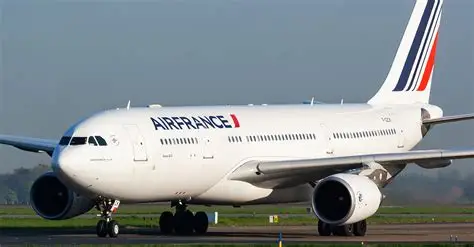
More than 15 years after one of the deadliest disasters in French aviation history, a Paris appeals court has found Air France and Airbus guilty of manslaughter over the 2009 crash of Flight AF447.
The ruling marks a dramatic reversal from an earlier court decision that cleared both companies of criminal responsibility in 2023. Families of the victims welcomed the judgment, saying it finally acknowledged the scale of the tragedy and the suffering endured by relatives for more than a decade.
The crash killed all 228 passengers and crew members on board the flight traveling from Rio de Janeiro to Paris. The aircraft plunged into the Atlantic Ocean during severe weather after losing critical speed data at high altitude.
Court Holds Air France and Airbus Responsible
The Paris Appeals Court ruled that Air France and Airbus were “solely and entirely responsible” for the fatal crash. Judges concluded that failures linked to pilot training, aircraft systems, and safety procedures contributed directly to the disaster.
Both companies were ordered to pay fines of €225,000 each, the maximum penalty under French law for manslaughter in this case.
Lawyers representing the airline and aircraft manufacturer rejected the verdict and confirmed they plan to appeal.
The latest decision followed an eight-week trial that revisited technical evidence, pilot actions, and warnings about aircraft equipment that emerged after the crash.
What Happened to Flight AF447?
Air France Flight AF447 departed Rio de Janeiro on 31 May 2009 and was scheduled to arrive in Paris the following morning.
The Airbus A330 encountered severe turbulence and storm conditions while flying over the Atlantic Ocean. During the flight, ice crystals blocked the aircraft’s pitot tubes, devices used to measure airspeed.
That failure caused conflicting speed readings inside the cockpit.
Investigators later found that the pilots became confused by the sudden loss of reliable data. The aircraft entered an aerodynamic stall at an altitude of around 38,000 feet and rapidly lost height before crashing into the ocean.
The plane disappeared from radar without sending a full distress signal, triggering a massive international search operation.
Long Search for Answers
The recovery mission became one of the most complex aviation investigations ever conducted.
Search teams combed thousands of square miles of the Atlantic Ocean before locating wreckage from the aircraft. However, investigators did not recover the flight data recorder and cockpit voice recorder until 2011.
The black boxes revealed critical details about the final moments of the flight.
Investigators discovered that the aircraft stalled for several minutes before impact. They also found that the pilots struggled to recognize the stall condition and failed to regain control of the aircraft.
The findings raised major concerns about cockpit training and aircraft system warnings.
Key Points From the Investigation
Major factors linked to the crash included:
- Iced-over pitot tubes causing faulty airspeed readings
- Pilot confusion during severe weather conditions
- Failure to properly identify and recover from an aerodynamic stall
- Concerns over training procedures for high-altitude emergencies
- Questions about Airbus safety systems and cockpit alerts
The investigation led aviation regulators around the world to introduce new pilot training requirements and improved aircraft safety measures.
Families Welcome the Verdict
Relatives of the victims gathered in court as the judgment was announced.
Many families said the ruling represented long-awaited recognition of corporate responsibility.
Daniele Lamy, president of the victims’ association and mother of one of the passengers who died in the crash, described the verdict as an important step toward justice.
Families have repeatedly argued that warning signs existed before the disaster and that stronger safety measures could have prevented the tragedy.
Some relatives criticized the financial penalties as too small compared with the scale of the loss. However, many said the guilty verdict itself carried symbolic importance.
Victims Came From Around the World
The crash affected families across multiple countries.
Passengers and crew included citizens from:
- France
- Brazil
- Germany
- United Kingdom
- Ireland
- United States
- Several other nations
Among those killed were business travelers, tourists, engineers, students, and entire families.
The disaster remains the deadliest crash in Air France history and one of the worst aviation accidents involving an Airbus aircraft.
Aviation Industry Faces Renewed Scrutiny
The manslaughter verdict has renewed debate about airline accountability and aircraft safety standards.
Aviation experts say the case highlights how technical failures combined with human error can create catastrophic consequences.
The trial also focused attention on how manufacturers and airlines respond to early warning signs involving aircraft systems.
Prosecutors argued during the hearings that both companies failed to take sufficient action after previous incidents involving pitot tube malfunctions had already been reported before the crash.
Defense lawyers insisted the pilots faced an extremely rare and difficult emergency situation in severe weather conditions.
Changes Introduced After the Disaster
The AF447 tragedy prompted major reforms across the aviation industry.
Safety changes introduced after the crash include:
- Replacement of older pitot tube models on aircraft
- Enhanced pilot training for stall recovery at high altitude
- Improved cockpit procedures during airspeed failures
- Updated international safety recommendations
- Expanded use of real-time flight tracking technologies
Experts believe those measures have improved commercial aviation safety standards worldwide.
Emotional Impact Still Felt Years Later
For many relatives, the pain of losing loved ones remains fresh even after more than 15 years.
Several families endured years of uncertainty before remains were recovered and identified.
The crash site’s remote location made recovery operations extremely difficult, delaying funeral services for many victims.
Memorials honoring the 228 people who died were later established in France and Brazil.
The case has continued to attract international attention because of the scale of the tragedy and the legal questions surrounding corporate responsibility in aviation disasters.
What Happens Next?
Air France and Airbus are expected to challenge the ruling through further appeals.
Legal experts say the appeals process could continue for several more years before a final outcome is reached.
Despite the expected appeals, the latest verdict marks a significant moment for victims’ families who have spent years seeking accountability.
The ruling also sends a strong message about the legal responsibilities of airlines and aircraft manufacturers in maintaining passenger safety.
As the aviation industry continues to evolve, the legacy of Flight AF447 remains a powerful reminder of the importance of training, technology, and rapid responses to safety risks.