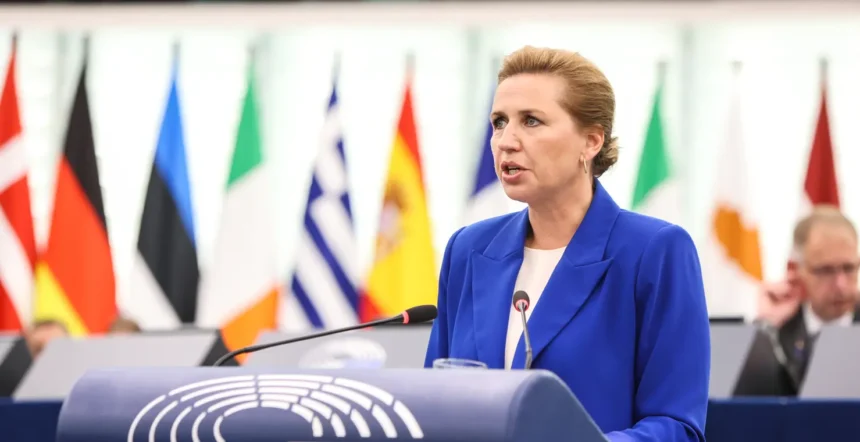
Mette Frederiksen Government Confirmed After Lengthy Negotiations
The Mette Frederiksen government is set to begin a new chapter in Danish politics after months of coalition negotiations following an inconclusive general election.
The agreement ends a prolonged period of political uncertainty and gives Frederiksen a third term as prime minister. Her new coalition government brings together several centre-left and centrist parties in an effort to provide stability at a time of significant domestic and international challenges.
The announcement comes after weeks of intense discussions between political leaders seeking to build a workable governing alliance in a highly fragmented parliament.
For Denmark, the deal represents a crucial step toward restoring political momentum and addressing major issues facing the country.
Key Highlights
- Mette Frederiksen will serve a third term as prime minister.
- Denmark spent more than two months without a new government.
- Four parties have agreed to form a coalition.
- The Social Democrats remain the largest political force.
- Economic and welfare issues remain top priorities.
- Greenland policy will attract international attention.
- The coalition faces a challenging political environment.
Why the Election Result Created Political Uncertainty
The March election produced one of the most fragmented political landscapes in recent Danish history.
Twelve different parties secured representation, making coalition-building significantly more difficult.
Although the Social Democrats emerged as the largest party, their performance marked one of their weakest electoral results in more than a century.
The outcome left no single party close to securing a parliamentary majority.
As a result, negotiations became essential to establish a stable governing arrangement.
The formation of the Mette Frederiksen government demonstrates how coalition politics remains central to Denmark’s democratic system.
Which Parties Are Joining the Coalition?
The new administration brings together a mix of centre-left and moderate political groups.
Coalition Partners
- Social Democrats
- Socialist People’s Party
- Radikale Venstre
- Moderates
The coalition reflects a broad political compromise designed to ensure parliamentary cooperation.
By combining forces, the participating parties aim to provide stable leadership while balancing different policy priorities.
Political observers believe the coalition’s success will depend heavily on its ability to maintain unity on key issues.
Mette Frederiksen Begins a Historic Third Term
The Mette Frederiksen government marks another milestone in the political career of one of Denmark’s most influential modern leaders.
Since first becoming prime minister, Frederiksen has overseen the country through several major challenges, including economic pressures, international security concerns and changing political dynamics.
Her ability to secure another term highlights her continued influence within Danish politics despite electoral setbacks.
Supporters view her as an experienced leader capable of navigating difficult circumstances, while critics argue the latest election showed growing voter dissatisfaction.
Regardless of political opinion, Frederiksen remains a central figure in shaping Denmark’s future.
Greenland Issue Remains a Major International Challenge
One of the most closely watched issues facing the Mette Frederiksen government involves Greenland.
The semi-autonomous territory holds significant geopolitical importance due to its strategic location and natural resources.
International interest in Greenland has increased in recent years, drawing attention from major global powers.
The Danish government continues to emphasize its commitment to maintaining strong ties with Greenland while respecting the territory’s self-governing status.
Future discussions involving Arctic security, resource development and international cooperation are expected to remain high on the political agenda.
Why Greenland Matters
- Strategic Arctic location
- Growing geopolitical significance
- Natural resource potential
- Security considerations
- International investment interest
Domestic Issues Will Dominate the Government Agenda
While international affairs attract headlines, domestic concerns remain the top priority for many Danish voters.
The Mette Frederiksen government faces pressure to deliver solutions on several key issues.
Top Domestic Priorities
Cost of Living
Rising household expenses continue to affect families across Denmark. Many voters expect measures that improve affordability and strengthen purchasing power.
Economic Growth
Business leaders and economists are closely monitoring government plans aimed at maintaining competitiveness and encouraging investment.
Welfare Services
Healthcare, education and social support systems remain central concerns for citizens.
Housing and Living Standards
Affordable housing continues to be a major discussion point in urban areas.
The government’s ability to address these concerns could significantly influence public support in the years ahead.
Environmental and Agricultural Policies Face Scrutiny
Environmental issues played an important role during the election campaign.
Many voters expressed concerns regarding:
Key Environmental Challenges
- Water quality
- Agricultural emissions
- Climate targets
- Sustainable farming
- Biodiversity protection
- Animal welfare standards
The Mette Frederiksen government will need to balance environmental ambitions with the interests of Denmark’s important agricultural sector.
Finding common ground between economic growth and environmental protection remains one of the coalition’s most difficult tasks.
What the Election Revealed About Danish Politics
The election highlighted major shifts within Denmark’s political landscape.
Traditional parties experienced mixed fortunes, while smaller parties gained greater influence.
Several trends emerged:
Political Trends
- Increased voter fragmentation
- Stronger support for smaller parties
- Growing interest in environmental issues
- Concerns about living costs
- Debate over immigration and integration
- Focus on welfare and healthcare
These developments suggest Danish politics is becoming increasingly diverse and competitive.
The Mette Frederiksen government will need to respond to a broader range of political voices than ever before.
Challenges Facing the New Coalition
Although the coalition agreement has been finalized, significant challenges remain.
Potential Obstacles
- Maintaining unity among coalition partners.
- Managing economic uncertainty.
- Addressing public expectations.
- Handling international security concerns.
- Balancing environmental and economic goals.
- Responding to changing voter priorities.
- Preserving long-term political stability.
Coalition governments often require compromise, making effective communication and cooperation essential.
Political analysts expect the government’s durability to depend on its ability to deliver practical results while maintaining support across different political groups.
What Happens Next?
The formal appointment of ministers will mark the beginning of the coalition’s governing period.
Attention will then shift toward policy implementation and legislative priorities.
Key areas to watch include:
- Economic reforms
- Welfare initiatives
- Climate policies
- Greenland relations
- International diplomacy
- Budget planning
The coming months will provide the first indication of how effectively the Mette Frederiksen government can translate political agreements into concrete action.
Final Thoughts
The formation of the Mette Frederiksen government ends months of uncertainty and provides Denmark with a new coalition administration at a crucial moment.
While the agreement delivers political stability, significant challenges lie ahead. Economic concerns, environmental debates, welfare expectations and international issues will all test the coalition’s ability to govern effectively.
For now, Frederiksen has secured another opportunity to shape Denmark’s future. Whether this coalition can maintain unity and deliver meaningful results will be one of the most important political stories in the country over the coming years.
MORE INFO ON THE NEWS INK BUSINESS.