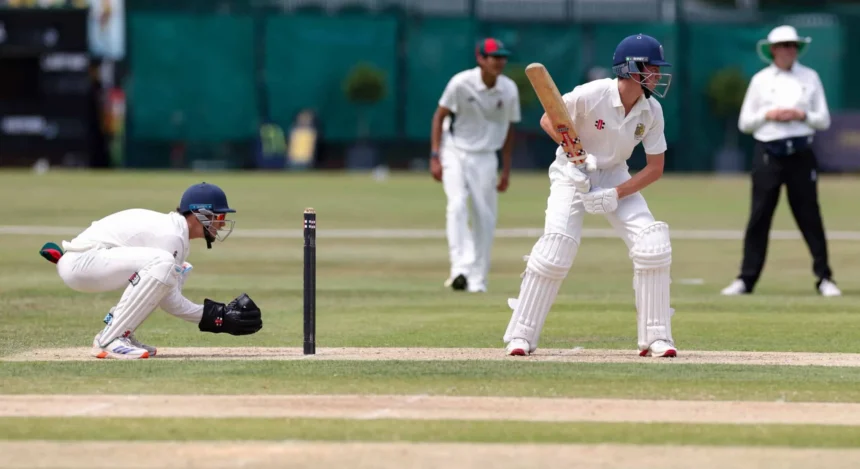
Cricket Explained: Rules, Formats, and Tournaments Every Fan Should Know
Cricket can feel confusing when you watch it for the first time. A match may last a few hours or continue across several days. Players score runs, protect wickets, bowl overs, appeal for dismissals and adjust tactics according to the conditions. Commentators mention powerplays, strike rates, field settings, reviews and run rates as though every viewer already understands them.
Once the basic structure becomes clear, cricket is far easier to enjoy.
At its heart, cricket is a contest between two teams. One team bats and tries to score runs. The other bowls and fields while attempting to dismiss the batters and limit the score. The teams then exchange roles. The side with the better result wins.
This cricket guide explains the rules, formats, terminology and major tournaments without assuming prior knowledge. It covers the cricket pitch, player roles, overs, innings, wickets, dismissals, extras, fielding positions, Test matches, One-Day Internationals, T20 cricket, DRS, the DLS method and the competitions that shape the international calendar.
Cricket is a sport of contrasts. A batter may attack fearlessly in one situation and defend patiently in another. A fast bowler may use speed, swing and intimidation. A spinner may slow the pace and create uncertainty through flight and turn. A captain may place fielders aggressively around the bat or spread them across the boundary.
The same sport can produce a five-day tactical battle and a dramatic T20 finish within a few weeks.
That variety is one reason cricket continues to attract passionate audiences across the world.
Cricket Guide: What Is Cricket?
Cricket is played between two teams, normally containing 11 players each.
The game takes place on a large field with a rectangular pitch at the center. At each end of the pitch stands a wicket. A wicket is made from three vertical stumps topped by two small horizontal bails.
The Marylebone Cricket Club is the custodian of the Laws of Cricket. MCC drafts and maintains the laws, while international matches also follow format-specific ICC playing conditions.
One team bats first. Two batters are on the field at the same time, one at each end of the pitch. The bowling team places its fielders around the ground and chooses a bowler to deliver the ball.
The batter facing the ball is called the striker. The batter at the opposite end is called the non-striker.
The striker attempts to score runs while protecting the wicket. The bowler attempts to dismiss the batter or make scoring difficult.
After the first team completes its innings, the other team bats and tries to produce a better result.
The precise structure changes according to the format, but the central battle remains the same.
Understanding the Cricket Field
A cricket field is usually oval-shaped, although its exact dimensions vary.
The central pitch is where most of the action occurs. It measures 22 yards in length. At either end stands a wicket.
| Part of the field | What it means |
|---|---|
| Pitch | Central strip where the bowler delivers the ball and batters run |
| Wicket | Three stumps and two bails at each end of the pitch |
| Crease | Marked line used for batting, bowling and run-out decisions |
| Boundary | Outer edge of the playing area |
| Outfield | Grass area between the pitch and boundary |
| Inner circle | Marked fielding-restriction area used in limited-overs cricket |
The bowler delivers the ball from one end of the pitch toward the striker at the other.
Batters run between the two ends to score. Fielders try to stop the ball, catch it or break the wicket before a batter reaches safety.
The pitch can influence the match significantly.
A dry surface may help spin bowlers. A green surface may assist seam movement. A flat pitch may favor batting. A worn pitch can become more difficult as a Test match progresses.
Weather also matters. Cloud cover, humidity, heat, wind and rain can affect the ball, the surface and tactical decisions.
Cricket is not played in identical conditions every time. Adaptability is part of the challenge.
Cricket Guide: The Main Player Roles
Every player contributes, but cricket roles differ sharply.
A balanced side needs batters, bowlers, fielders and usually one wicketkeeper. Some players contribute strongly with both bat and ball and are called all-rounders.
| Role | Main responsibility |
|---|---|
| Batter | Score runs and protect the wicket |
| Bowler | Deliver the ball and attempt to dismiss batters |
| Wicketkeeper | Stand behind the wicket, collect the ball and create dismissal opportunities |
| Fielder | Stop runs, catch the ball and attempt run-outs |
| All-rounder | Contribute significantly with both batting and bowling |
| Captain | Make tactical decisions and lead the team |
Batters
Batters need technique, judgment and patience.
They decide whether to defend, attack or leave each delivery. Their approach depends on the match situation.
A Test batter may defend for a long period while building an innings. A T20 batter may need to attack from the first over. A lower-order batter may try to support a teammate while protecting the wicket.
Batters are often described according to their place in the lineup.
| Batting position | Typical role |
|---|---|
| Openers | Face the new ball at the beginning of the innings |
| Top order | Build the innings and score consistently |
| Middle order | Adapt to pressure and changing match situations |
| Finisher | Accelerate late in limited-overs cricket |
| Lower order | Bowlers who may also contribute useful runs |
The best batters adjust.
Virat Kohli’s ability to control an innings remains one reason his performances attract attention, including his IPL half-century for RCB.
Bowlers
Bowlers attempt to dismiss batters and prevent easy scoring.
They fall into two broad categories:
| Bowling type | General approach |
|---|---|
| Pace bowling | Uses speed, seam movement, swing and bounce |
| Spin bowling | Uses turn, flight, dip and variation |
Fast bowlers may rely on raw pace or subtle movement. Swing bowlers attempt to move the ball through the air. Seam bowlers try to make it deviate after hitting the surface.
Spinners usually bowl more slowly but create problems through control and deception.
A spinner may turn the ball away from the batter or back toward the batter. The same bowler may change pace, flight and angle to create uncertainty.
Bowling is not simply about producing the fastest or most dramatic delivery. Accuracy matters. A disciplined line and length can build pressure across several overs.
The Wicketkeeper
The wicketkeeper stands behind the striker’s wicket.
This player collects deliveries missed by the batter, catches edges and attempts stumpings. Wicketkeepers also communicate constantly with bowlers and fielders.
A wicketkeeper needs sharp reflexes, concentration and strong technique.
Standing behind a fast bowler and standing close to a spinner require different skills.
Fielders
Fielding can change a match.
A fielder may save runs near the boundary, catch a difficult chance, complete a direct-hit run-out or apply pressure through energetic movement.
Modern cricket places greater emphasis on athletic fielding than ever before.
Our sports training guide explains how performance preparation, recovery and technology support athletes across different sports.
How Runs Are Scored in Cricket
The batting team tries to score runs.
The simplest way to score is by running between the wickets after hitting the ball.
If both batters safely reach the opposite ends, the team scores one run. They may continue running when time and space allow.
Runs can also be scored through boundaries.
| Outcome | Runs awarded |
|---|---|
| Ball reaches boundary after touching the ground | 4 |
| Ball clears boundary without touching the ground | 6 |
| Batters complete one run | 1 |
| Batters complete two runs | 2 |
| Batters complete three runs | 3 |
A six is one of cricket’s most exciting moments because the batter hits the ball beyond the boundary without it bouncing first.
However, strong batting is not only about powerful shots.
Batters use timing, placement and decision-making. A gentle shot into open space may produce useful runs. A defensive stroke may protect the wicket. Leaving a dangerous ball can be the correct choice.
What Is the Strike?
Only one batter faces each delivery.
That batter is on strike.
When the batters complete an odd number of runs, they exchange ends and the strike changes. After each over, the bowler changes ends, which also changes the striker under normal circumstances.
Strike rotation is important.
Batters attempt to avoid becoming stuck at one end while pressure builds. In limited-overs cricket, rotating the strike can prevent bowlers from settling into a comfortable rhythm.
Cricket Guide: Overs and Innings Explained
An over contains six legal deliveries from the same bowler.
After the over ends, a different bowler delivers the next over from the opposite end.
A bowler cannot bowl consecutive overs.
The MCC Law of the Over provides the formal framework.
What Is an Innings?
An innings is the period during which one team bats.
A limited-overs innings ends when:
- The maximum number of overs is completed
- Ten batters are dismissed
- The target is reached during a chase
- The match ends under the applicable rules
A Test innings can also end when the batting captain declares.
Why Only Ten Dismissals?
A team contains 11 players, but batting requires two players on the field.
Once ten batters are dismissed, only one remains. That player has no partner, so the innings ends.
What Is a Declaration?
In Test cricket, a captain may voluntarily end the team’s innings before all ten wickets fall.
This is called a declaration.
A captain may declare to create enough time to dismiss the opposition and win the match.
The decision requires judgment.
Batting longer may create a larger lead. Declaring earlier provides more time to bowl.
Test cricket rewards strategic planning over several days.
Extras: Runs Not Scored From the Bat
A batting team can receive runs even when the batter does not hit the ball.
These runs are called extras.
| Extra | Meaning |
|---|---|
| Wide | Delivery passes too far from the batter to play normally |
| No-ball | Illegal delivery under the rules |
| Bye | Ball passes the bat and body, allowing runs |
| Leg bye | Ball touches the batter’s body under qualifying conditions and runs are completed |
| Penalty runs | Runs awarded for specified infringements |
A no-ball and a wide usually add at least one run to the batting team’s total. They also create an additional delivery because they do not count as one of the six legal balls in the over.
The MCC no-ball law explains that the ball does not become dead merely because a no-ball is called. The wide-ball law explains how umpires judge whether a delivery is too wide for normal play.
In many limited-overs situations, a no-ball is followed by a free hit. The batter receives an opportunity to attack with reduced dismissal risk, subject to the playing conditions.
Extras may appear small, but careless bowling can change a close match.
Cricket Guide: The Main Ways a Batter Can Be Dismissed
A dismissal is commonly called a wicket.
The fielding side wants to take wickets because each dismissal brings the innings closer to an end.
The MCC Laws of Cricket define the recognized dismissals.
| Dismissal | Simple explanation |
|---|---|
| Bowled | Ball hits the wicket and breaks it |
| Caught | Fielder catches the ball before it touches the ground |
| LBW | Batter illegally prevents a ball from hitting the wicket with the body |
| Run out | Wicket is broken while a batter is outside the safe ground attempting a run |
| Stumped | Wicketkeeper breaks the wicket while the striker is outside the crease and not attempting a run |
| Hit wicket | Batter breaks the wicket while playing the ball or beginning a run |
| Obstructing the field | Batter deliberately obstructs the fielding side |
| Hit the ball twice | Batter strikes the ball twice outside the permitted exceptions |
| Timed out | Incoming batter does not become ready within the required period |
Bowled
Bowled is the clearest dismissal.
The bowler delivers the ball, it passes the bat and breaks the wicket.
The MCC bowled law explains the formal rule.
Caught
A batter is out caught when the ball touches the bat and a fielder catches it before it reaches the ground.
The catch can occur anywhere inside the permitted playing area.
Some catches look simple. Others require remarkable speed, balance and courage.
LBW
LBW means leg before wicket.
It is one of the most discussed rules in cricket.
The basic idea is that a batter cannot use the body unfairly to prevent a delivery from hitting the wicket.
The umpire considers several questions:
- Was the delivery legal?
- Where did the ball pitch?
- Did it hit the bat first?
- Where did it strike the batter?
- Would it have hit the wicket?
LBW decisions can become highly technical, particularly when ball-tracking technology is used during a review.
Run Out
A batter may be run out when outside the safe ground and the fielding side breaks the wicket.
A direct throw from a fielder can create a dramatic moment.
Running between the wickets requires communication. Both batters must understand whether the run is realistic.
Stumped
A stumping usually occurs against spin bowling.
The batter leaves the crease to play a shot, misses the ball and fails to return before the wicketkeeper removes the bails.
The decision can depend on tiny margins.
Test, ODI, and T20 Cricket Explained
The ICC formats guide recognizes three international formats:
- Test matches
- One-Day Internationals
- Twenty20 Internationals
Each format rewards different skills.
| Format | Maximum duration | Innings per team | Overs per innings | General character |
|---|---|---|---|---|
| Test cricket | Up to five days | 2 | No fixed maximum in a normal innings | Patience, endurance and long-term strategy |
| ODI cricket | Usually one day | 1 | 50 | Balance between control and aggression |
| T20 cricket | Usually around three hours | 1 | 20 | Fast-paced attacking cricket |
Test Cricket
Test cricket is the longest format.
Each side can bat twice. A match may continue for up to five days at the international level.
Winning often requires dismissing the opposition twice while scoring enough runs and managing time carefully.
A Test match can end in:
- A win
- A loss
- A draw
- A tie
A draw occurs when time expires before a result is achieved. A tie occurs when the scores finish level under qualifying conditions after both sides complete their innings.
Test cricket rewards concentration.
A batter may face hundreds of deliveries. A bowler may work across several spells. A captain must think about pitch deterioration, weather, player fatigue and the balance between attack and defense.
One-Day International Cricket
An ODI gives each side one innings of up to 50 overs.
The format usually fits into one day.
ODI cricket creates a balance between patience and urgency. Batters have time to build an innings, but they cannot wait indefinitely.
Teams often divide the innings mentally into phases:
- New-ball period
- Middle overs
- Final overs
The final part of the innings is sometimes called the death overs because batters frequently attack aggressively while bowlers attempt to restrict scoring.
T20 Cricket
A T20I gives each team one innings of up to 20 overs.
The format is shorter and often more explosive.
T20 cricket rewards:
- Fast scoring
- Boundary hitting
- Bowling variations
- Athletic fielding
- Tactical flexibility
- Calm decisions under pressure
A few deliveries can transform the result.
Finn Allen’s record century that sent New Zealand into a T20 World Cup final is a good example of how one innings can shape a major match.
T20 cricket is not merely a simplified version of the sport. It has developed its own tactical depth.
Understanding Run Rate and Strike Rate
Cricket uses statistics constantly.
Two of the most important are run rate and strike rate.
Run Rate
Run rate measures how quickly a team scores.
The basic calculation is:
Runs scored ÷ overs faced
If a team scores 180 runs from 20 overs, the run rate is 9.00 runs per over.
Required Run Rate
During a chase, the required run rate shows how quickly the batting side must score to reach the target.
If a team needs 60 runs from the final five overs, the required run rate is 12 runs per over.
Pressure rises when the required rate increases.
Batting Strike Rate
A batter’s strike rate measures runs scored per 100 deliveries faced.
If a batter scores 75 from 50 balls:
75 ÷ 50 × 100 = 150
The strike rate is 150.
A useful strike rate depends on context.
A strike rate that appears slow in T20 cricket may be valuable in a difficult Test match.
Bowling Economy Rate
Economy rate measures how many runs a bowler concedes per over.
A bowler who concedes 24 runs from four overs has an economy rate of 6.00.
Wickets matter, but controlling runs also creates pressure.
Fielding Positions Without the Confusion
Cricket uses many fielding-position names.
Beginners do not need to memorize everything immediately.
Start by understanding the basic directions.
| Term | General area |
|---|---|
| Off side | Side of the field in front of the batter’s bat position |
| Leg side | Side closer to the batter’s legs |
| Slip | Close catching position behind the batter on the off side |
| Point | Square area on the off side |
| Cover | Area between point and mid-off |
| Mid-off | Straighter position on the off side |
| Mid-on | Straighter position on the leg side |
| Square leg | Square area on the leg side |
| Fine leg | Area behind the batter on the leg side |
| Long-on | Deep straight leg-side boundary |
| Long-off | Deep straight off-side boundary |
Captains move fielders according to the bowler, batter, match situation and format.
In Test cricket, several close catchers may surround the bat when a bowler creates pressure.
In T20 cricket, more fielders often protect the boundary while bowlers use variations.
Field settings tell a tactical story.
A packed slip cordon signals attacking intent. A deep boundary field suggests run protection. A short leg fielder close to the batter may create pressure against spin or short bowling.
Powerplays and Fielding Restrictions
Limited-overs cricket uses fielding restrictions.
These rules limit how many fielders can stand outside a marked area during particular overs.
The restrictions encourage attacking cricket while creating tactical phases.
The precise regulations depend on the competition and current playing conditions. ICC maintains format-specific documents on its playing-conditions page.
A simple way to understand the powerplay is:
| Phase | Tactical effect |
|---|---|
| Early overs | Fewer boundary fielders, encouraging attacking shots |
| Middle overs | Greater tactical flexibility for the fielding side |
| Final overs | Batters often attack aggressively while bowlers protect boundaries |
Teams prepare carefully for each phase.
An opening batter may attack while the field is restricted. A spinner may try to slow the scoring in the middle. A specialist death bowler may use yorkers, slower balls and wide angles late in the innings.
Cricket Guide: DRS and Technology
DRS stands for Decision Review System.
The ICC DRS guide describes it as a technology-based process that assists match officials with decision-making.
An on-field umpire may refer certain matters to the third umpire. Players may also request reviews in qualifying situations under the relevant playing conditions.
DRS may involve tools such as:
- Television replays
- Ball-tracking technology
- Edge-detection systems
- Audio analysis
- Slow-motion footage
The system does not remove every debate.
Some decisions still depend on rules, technical margins and the original on-field call.
Umpire’s Call
Umpire’s call may apply in certain LBW reviews when the ball-tracking result falls within a defined margin.
The idea recognizes that predictive technology is not infinitely precise.
DRS can improve accuracy, but cricket still requires human judgment.
Sports technology is changing many competitions. Our article on sports technology explores the wider trend.
Rain, Interrupted Matches, and the DLS Method
Rain can disrupt limited-overs cricket.
When time is lost, simply reducing the target by the same proportion may not create a fair contest. A team with wickets remaining has more attacking resources than a team that has already lost several batters.
The ICC Duckworth-Lewis-Stern guide explains that the DLS method recalculates targets fairly when weather interrupts a match.
The formula considers resources such as:
- Overs remaining
- Wickets lost
- Match situation
The method can appear complicated, but its purpose is straightforward: create a fair revised target.
Fans often debate a DLS outcome, especially during major tournaments. However, the alternative would be an even less accurate estimate.
The World Test Championship
Test cricket now has a global championship pathway.
The ICC World Test Championship standings rank teams according to the percentage of available points earned.
The current points structure is:
| Test-match result | Points |
|---|---|
| Win | 12 |
| Tie | 6 |
| Draw | 4 |
| Defeat | 0 |
Points percentage matters because teams do not necessarily play the same number of matches.
The leading teams qualify for the final.
The World Test Championship gives additional context to bilateral series. A Test match between two countries is still meaningful on its own, but it can also influence the race for the final.
The ICC Men’s Cricket World Cup
The ICC Men’s Cricket World Cup is the leading global ODI tournament.
Its history stretches back to 1975.
The competition format can evolve. The ICC announced an expanded format for the 2027 edition: 14 teams divided into two groups of seven. The top three sides from each group progress to a Super Six stage, followed by semi-finals and the final. The ICC global-events announcement explains the structure.
| Stage | 2027 Men’s Cricket World Cup format |
|---|---|
| Group stage | Two groups of seven |
| Advancement | Top three from each group |
| Next phase | Super Six |
| Knockout stage | Semi-finals and final |
The World Cup combines different styles.
Some teams rely on powerful batting. Others emphasize disciplined bowling or athletic fielding. Conditions can vary across venues.
The tournament rewards consistency because one poor match can affect qualification.
The ICC Men’s T20 World Cup
The Men’s T20 World Cup is the global championship for the shortest international format.
The ICC guide to the 2026 Men’s T20 World Cup explains the 20-team structure.
| Stage | Structure |
|---|---|
| First round | Four groups of five teams |
| Advancement | Top two teams from each group |
| Second phase | Super Eights |
| Knockouts | Semi-finals and final |
T20 tournaments create pressure because the margin for error is small.
A short spell of poor bowling or a few mistimed shots can change qualification.
The News Ink covered India’s T20 World Cup semi-final victory over England and invited readers to select a T20 World Cup team of the tournament.
Those stories show how global tournaments produce both tactical debate and memorable individual performances.
The ICC Champions Trophy
The ICC Champions Trophy is a shorter ODI tournament.
The official ICC Champions Trophy guide explains that the first round includes two groups of four. The top two sides from each group progress to the semi-finals, and the winners contest the final.
| Stage | Champions Trophy structure |
|---|---|
| Group stage | Two groups of four |
| Advancement | Top two from each group |
| Knockout stage | Semi-finals |
| Final | Determines champion |
The format creates immediate pressure.
Teams cannot recover easily from several poor performances.
Women’s Cricket and the Growing Global Calendar
A complete cricket guide should recognize the importance of women’s cricket.
Women’s international cricket includes Tests, ODIs and T20Is. Domestic competitions and global tournaments continue attracting greater attention.
The 2026 Women’s T20 World Cup expanded to 12 teams. The ICC tournament explainer states that the teams are divided into two groups of six. Each side plays the others in its group once, and the top two teams progress to the semi-finals.
| Stage | Women’s T20 World Cup 2026 |
|---|---|
| Teams | 12 |
| Groups | Two groups of six |
| Group matches | Each team plays the other five sides in its group |
| Advancement | Top two from each group |
| Knockout stage | Semi-finals and final |
Women’s cricket should not be treated as a side note.
Its growth strengthens the entire sport.
The IPL, PSL, and Franchise T20 Cricket
International cricket is only one part of the game.
Franchise T20 leagues bring together players from different countries and create highly competitive short-format tournaments.
Indian Premier League
The IPL is one of the most prominent franchise competitions.
The official IPL website provides fixtures, results, teams, standings and match updates.
Teams compete through a league stage before the playoffs.
The IPL has become a major stage for established stars and emerging players. Your website covered Vaibhav Suryavanshi’s fast half-century against CSK and Sam Curran’s IPL withdrawal.
Pakistan Super League
The PSL is Pakistan’s leading franchise T20 tournament.
The official PSL website provides match reports, schedules, teams and standings.
The 2026 competition expanded to eight teams. Its official schedule announcement stated that each team would play 10 matches, with the top four reaching the knockout stage.
The News Ink has also covered Babar Azam’s return to form in the PSL and a ball-tampering penalty involving Lahore Qalandars.
Franchise cricket creates opportunity, but it also creates schedule pressure. Players may balance international commitments, domestic leagues, travel and recovery.
County Cricket and Domestic Competition
Cricket has deep domestic structures.
England’s county system, India’s domestic competitions, Pakistan’s domestic tournaments and other national structures help develop players.
Domestic cricket matters because it provides:
- Long-form experience
- Competitive pathways
- Opportunities for emerging players
- Preparation for international cricket
- Regional identity
- Professional careers
Different countries organize domestic seasons differently.
Some competitions focus on first-class cricket. Others use one-day or T20 formats.
Your website covered the discussion around whether England players should appear more often in county cricket.
The debate reflects a wider challenge: cricket has more formats and more tournaments than ever before.
Administrators need to protect quality while maintaining player welfare.
Cricket Returns to the Olympic Games
Cricket will return to the Olympic Games at Los Angeles 2028.
The ICC Olympic announcement confirms that six teams will compete in each of the men’s and women’s tournaments using the T20 format.
The competition will take place in Pomona, Southern California.
| Olympic cricket detail | LA28 plan |
|---|---|
| Format | T20 |
| Men’s teams | 6 |
| Women’s teams | 6 |
| Location | Pomona, Southern California |
| Significance | Cricket returns after 128 years |
The return matters because the Olympics may introduce cricket to new audiences.
T20 is the logical format. It fits more easily into a multi-sport event and offers a fast, accessible introduction.
The Spirit of Cricket
Rules are important, but cricket also emphasizes conduct.
The MCC Spirit of Cricket states that the sport should be played not only according to the laws but also within its spirit. Respect is central.
That principle applies to:
- Opponents
- Teammates
- Umpires
- Captains
- Coaches
- Spectators
- The traditions of the game
Cricket can be intense.
Players appeal loudly. Captains use tactical pressure. Bowlers challenge batters physically and mentally.
Competition remains meaningful only when fairness survives.
The spirit of cricket does not prevent disagreement. It encourages responsibility.
How to Watch Cricket More Carefully
Cricket becomes more interesting when you watch the situation rather than only the score.
Ask a few questions.
When a Team Is Batting
- How many wickets remain?
- What is the run rate?
- Is the pitch becoming harder to bat on?
- Are the batters rotating the strike?
- Is one batter attacking while the other provides stability?
- Which bowlers remain available?
When a Team Is Bowling
- Is the bowler attacking the wicket?
- Are fielders placed for catches or run protection?
- Is the captain using pace or spin?
- Is the ball swinging or turning?
- Is the batter struggling against a particular angle?
- Is pressure building through dot balls?
During a Chase
- What is the required run rate?
- How many overs remain?
- How many wickets remain?
- Are the batters taking unnecessary risks?
- Can the bowling team use its best bowlers late in the innings?
A scoreboard tells you what happened.
The match situation tells you why it matters.
Common Cricket Terms Every Fan Should Know
| Term | Simple meaning |
|---|---|
| Appeal | Fielding team asks the umpire for a dismissal |
| Boundary | Outer edge of the playing area |
| Crease | Marked line used for batting and dismissal decisions |
| Duck | Batter dismissed without scoring |
| Economy rate | Runs conceded by a bowler per over |
| Golden duck | Batter dismissed from the first delivery faced |
| Innings | Period when a team bats |
| Maiden over | Over in which the bowler concedes no runs |
| Net run rate | Tournament tie-break measurement based on scoring rates |
| New ball | Fresh ball used at the beginning or under specific rules |
| Over | Six legal deliveries |
| Powerplay | Period with fielding restrictions |
| Required run rate | Scoring speed needed to reach a target |
| Run rate | Average runs scored per over |
| Strike rate | Batting speed measured as runs per 100 balls |
| Yorker | Full delivery aimed near the batter’s feet or base of the wicket |
| Bouncer | Short delivery rising toward the batter |
| Googly | Spin-bowling variation turning unexpectedly |
| Hat-trick | Three wickets from three consecutive deliveries |
| All-rounder | Player contributing strongly with bat and ball |
| Follow-on | Test-match option requiring the trailing side to bat again |
| Declaration | Captain voluntarily ends a Test innings |
| Super Over | Tie-breaking procedure in qualifying limited-overs matches |
Learning the vocabulary makes commentary easier to follow.
Cricket Guide: A Beginner Checklist
Before watching a match, identify the format.
| Question | Why it matters |
|---|---|
| Is this Test, ODI or T20 cricket? | The pace and tactics change |
| How many overs are available? | Sets the structure of the innings |
| Is this a league match or knockout? | Pressure may differ |
| Which team bats first? | Conditions may change later |
| Is rain expected? | DLS may become important |
| Who are the specialist bowlers? | Helps you understand tactical options |
| Is the pitch expected to favor pace, spin or batting? | Shapes the likely approach |
During the match, watch the wickets, run rate and field placements.
After the match, look beyond the final score.
Ask which partnership changed the game. Consider whether a bowler created pressure even without taking wickets. Notice whether the captain used resources effectively.
Cricket rewards observation.
Frequently Asked Questions About Cricket
How many players are in a cricket team?
A cricket team normally contains 11 players.
How many balls are in an over?
An over contains six legal deliveries.
How many wickets does a team have?
A batting team can lose 10 wickets before the innings ends because one batter would remain without a partner.
What is the difference between Test, ODI, and T20 cricket?
Test cricket can last up to five days and allows two innings per team. ODI cricket gives each side one innings of up to 50 overs. T20 cricket gives each side one innings of up to 20 overs.
What is a boundary?
A boundary is the outer edge of the field. A ball reaching it after touching the ground scores four runs. A ball clearing it without bouncing scores six.
What is a no-ball?
A no-ball is an illegal delivery under the rules. The batting team receives an extra run, and the delivery usually does not count as one of the six legal balls in the over.
What is LBW?
LBW means leg before wicket. It applies when a batter illegally prevents a qualifying delivery from hitting the wicket with the body.
What is DRS?
DRS is the Decision Review System. It uses technology and third-umpire procedures to assist with selected decisions.
What is the DLS method?
The Duckworth-Lewis-Stern method recalculates targets fairly when rain or other interruptions reduce playing time in limited-overs cricket.
What is a powerplay?
A powerplay is a period in limited-overs cricket with specific fielding restrictions.
What is a Super Over?
A Super Over is a tie-breaking procedure used in qualifying limited-overs situations.
What is the World Test Championship?
The World Test Championship is an ICC competition that ranks Test teams through a points-percentage system before a final.
How does the Men’s T20 World Cup work?
The 2026 tournament used 20 teams divided into four groups of five. The top two teams from each group advanced to a Super Eights stage, followed by semi-finals and a final.
What is the IPL?
The Indian Premier League is a major franchise T20 competition.
What is the PSL?
The Pakistan Super League is Pakistan’s leading franchise T20 competition.
Is cricket part of the Olympics?
Cricket will return at Los Angeles 2028 in the T20 format, with six men’s teams and six women’s teams.
Why Cricket Continues to Matter
Cricket succeeds because it rewards several different qualities.
Power matters, but patience matters too.
Speed matters, but accuracy can be more important.
Technology helps, but human judgment remains essential.
A batter can dominate by hitting boundaries or by surviving a difficult spell. A bowler can change a match with pace, movement or subtle variation. A captain can transform a contest through a field change. A fielder can alter the result with one moment of athletic brilliance.
The sport also offers different rhythms.
Test cricket creates long tactical stories. ODI cricket balances patience and urgency. T20 cricket compresses pressure into a shorter contest. Franchise leagues create new rivalries. International tournaments bring national teams together. The Olympic return will introduce another global stage.
This cricket guide provides the foundation.
Start with the pitch. Understand runs, overs and wickets. Learn the differences between Test, ODI and T20 cricket. Follow the major tournaments. Watch how captains set fields and manage bowlers.
The more carefully you watch cricket, the more the sport reveals.
Follow The News Ink for More Sports Guides
Explore more explainers, tournament coverage and major stories in our Sports section. Follow us on X for new articles, sports updates and practical guides.