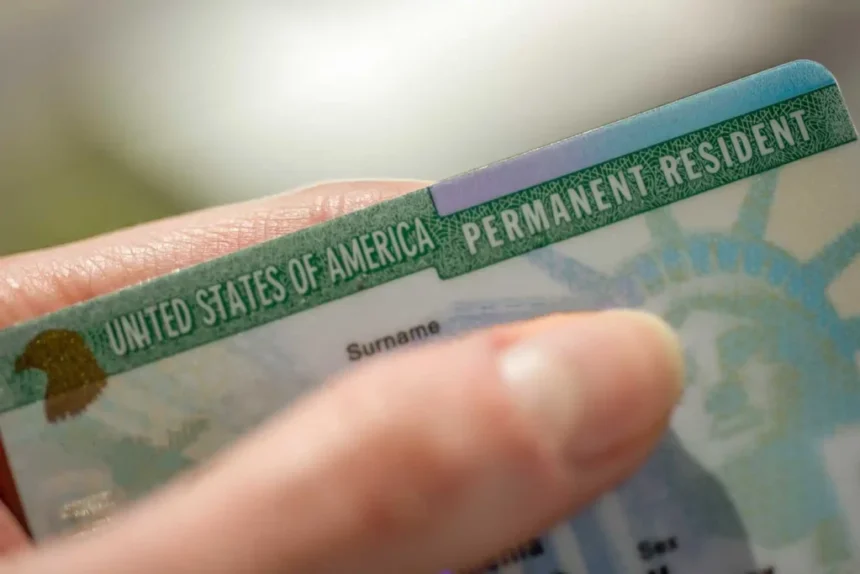
Green card apply outside US is no longer just an option — for most immigrants, it is now a requirement. The Trump administration announced a sweeping immigration policy change on May 22, 2026, forcing the majority of immigrants currently living in the United States to leave the country and apply for permanent residency through U.S. embassies or consulates abroad.
This major shift affects students, temporary workers, tourists, and hundreds of thousands of people who had been waiting to adjust their status from within the country. Here is everything you need to know.
1. What Is the New Green Card Apply Outside US Policy?
U.S. Citizenship and Immigration Services (USCIS) announced a new policy memo stating that, consistent with long-standing immigration law, immigrants seeking adjustment of status must now do so through consular processing via the Department of State outside the country. USCIS
Previously, many visa holders — including students on F-1 visas, workers on H-1B visas, and tourists on B-1/B-2 visas — could apply for a green card without ever leaving the United States. That pathway, known as “adjustment of status,” has now been sharply restricted.
Under the new USCIS guidance, adjustment of status is to be reserved for extraordinary circumstances and treated as a discretionary grant of administrative grace by the U.S. government — no longer the default route. Quarles
2. Who Is Affected by This Change?
Nonimmigrants such as students on F-1 visas, temporary workers on H-1B or L-1 visas, and tourists on B-1/B-2 visas are now expected to depart the U.S. and apply for their green cards through consular processing at U.S. embassies or consulates abroad. Visasupdate
The scale of impact is enormous. In a typical year, around 1 million people apply for green cards and roughly half of those apply from within the U.S. to change their status while living there, according to a former USCIS official. NBC News
This means approximately 500,000 people per year could now be required to leave the United States to pursue permanent residency — even if they are here legally, have U.S. citizen spouses, or have U.S.-born children.
3. Why Is the Trump Administration Making This Change?
The administration frames the policy as a return to the law’s original intent. USCIS stated: “We’re returning to the original intent of the law to ensure aliens navigate our nation’s immigration system properly. From now on, an alien who is in the U.S. temporarily and wants a green card must return to their home country to apply, except in extraordinary circumstances.” USCIS
USCIS also argued that processing cases abroad through the Department of State will reduce the burden on USCIS resources and allow the agency to focus on higher-priority applications, including those for victims of crime and human trafficking, as well as naturalization cases. NBC News
The Department of Homeland Security, which oversees USCIS, posted on X: “The era of abusing our nation’s immigration system is over.”
4. What Are the Risks for Immigrants Who Leave?
This is arguably the most dangerous aspect of the new green card apply outside US rule. Leaving the United States does not guarantee the right to return. Many immigrants — particularly those who entered without authorization at any point or overstayed visas — could trigger multi-year or permanent bars on re-entry once they depart.
Critics warn the policy will tear families apart. The longstanding adjustment of status system had allowed families to remain together in the U.S. during a process that can take months or even years to complete. That protection is now largely gone.
It is also still unclear whether the over one million pending green card applications already in the system will be affected. A USCIS spokesperson told the BBC that people whose applications provide an economic benefit or are in the national interest will likely be able to continue on their current path, while others may be asked to apply abroad depending on their individual circumstances.
5. What Happens Next?
This policy change is one of the most consequential adjustments to the U.S. green card process in recent years and is likely to generate significant debate among policymakers, businesses, and immigration stakeholders. Visasupdate
Legal challenges are widely expected. Immigration attorneys are already advising clients not to make any sudden decisions about leaving the U.S. until the policy is clarified through court rulings or additional USCIS guidance.
For the most up-to-date official information, visit USCIS.gov or consult a licensed U.S. immigration attorney before taking any action.
What Should Affected Immigrants Do Right Now?
If you or a family member are currently in the U.S. on a temporary visa and planning to apply for a green card, immigration experts recommend the following steps:
- Do not leave the U.S. immediately — wait for legal clarity
- Consult a licensed immigration attorney as soon as possible
- Monitor USCIS updates at uscis.gov/newsroom
- Check your visa status and understand any bars to re-entry that may apply to you
- Document all family ties, employment, and community connections in the U.S.
For more on U.S. immigration policy changes, read our related coverage on Trump’s immigration crackdown in 2026 and how H-1B visa holders are responding to new rules.
MORE INFO ON THE NEWS INK CURRENT AFFAIRS.