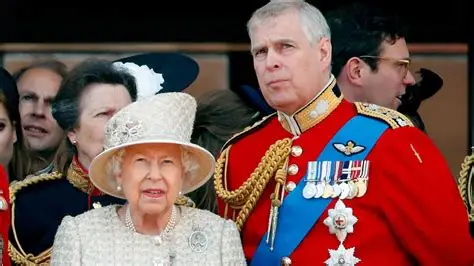
The Prince Andrew trade envoy Queen Elizabeth files 2026 have revealed that the late Queen Elizabeth II was personally and strongly supportive of her son Andrew Mountbatten-Windsor taking on a prominent role as a government trade envoy in 2000 — describing her as “very keen” for him to represent British national interests internationally. The files, released by the government in response to a parliamentary request, add new context to the creation of a role that Mountbatten-Windsor held for over a decade and that has come under renewed scrutiny following his recent arrest.
The documents were released by the Department for Business and Trade following a “humble address” made in Parliament on February 24 by Sir Ed Davey, leader of the Liberal Democrats, requesting the publication of all papers relating to the creation of the position. Sir Ed’s request came just days after Mountbatten-Windsor was arrested on suspicion of misconduct in public office in connection with the alleged sharing of confidential material with the late sex offender Jeffrey Epstein. He was subsequently released under investigation.
Mountbatten-Windsor has consistently denied any wrongdoing in his associations with Epstein and has denied any personal gain from his time as trade envoy.
Prince Andrew Trade Envoy Queen Elizabeth Files 2026: What the Documents Reveal
The Prince Andrew trade envoy Queen Elizabeth files 2026 centre on a memo dated February 2000 from Sir David Wright — then chief executive of British Trade International — to then-Foreign Secretary Robin Cook. The memo records the late Queen’s personal enthusiasm for her son taking on a significant public role in promoting British interests abroad.
“The Queen was very keen for her son to take on a ‘prominent role in the promotion of national interests’,” Sir David Wright wrote — a direct statement of royal support that helps explain the speed and prominence with which the trade envoy position was established for Mountbatten-Windsor.
The documents cover the period leading up to and following Mountbatten-Windsor’s appointment as the UK’s special representative for international trade and investment — a role he held from 2000 until 2011, representing Britain on trade missions across multiple countries and sectors.
Key revelations from the released documents:
- The late Queen Elizabeth II was described as “very keen” for Andrew to take a prominent national role
- Sir David Wright’s February 2000 memo to Foreign Secretary Robin Cook documented the Queen’s support
- The Queen wanted her son involved in “the promotion of national interests” specifically
- An internal telegram dated September 25, 2001 confirmed Andrew’s appointment as “special representative”
- The programme envisaged “two major regional visits per year” with additional visits subject to budget
- A letter from diplomat Kathryn Colvin dated January 25, 2000 detailed Andrew’s preferences and strengths
- The files were released by the Department for Business and Trade following Sir Ed Davey’s parliamentary request
The Queen’s personal involvement in advocating for her son’s appointment — documented in writing at the time — places the creation of the trade envoy role within the context of direct royal family influence on governmental appointments.
Prince Andrew Trade Envoy Queen Elizabeth Files 2026: The Colvin Letter and Andrew’s Preferences
Among the most revealing documents in the Prince Andrew trade envoy Queen Elizabeth files 2026 release is a letter dated January 25, 2000, written by British diplomat Kathryn Colvin. While it is not clear from available information who the letter was specifically addressed to, it records notes from a meeting between Colvin and Captain Neil Blair — Mountbatten-Windsor’s then-private secretary — and provides a detailed picture of the Duke of York’s preferences and areas of supposed expertise.
The letter described Mountbatten-Windsor as “particularly good on high-tech matters, trade, youth (including primary schools and outward bound projects), cultural events, with a preference for ballet rather than theatre, the Commonwealth and military and foreign affairs.”
That description — whether accurate or aspirational — was clearly intended to shape how the trade envoy role would be structured and what engagements Mountbatten-Windsor would be offered. It represents a detailed briefing document aimed at ensuring the role played to his perceived strengths while accommodating his personal preferences.
What the Colvin letter revealed about Andrew’s preferences:
- Described as particularly good on high-tech matters and trade — core to the envoy role
- Noted strengths in youth engagement including primary schools and outward bound projects
- Cultural preferences leaned toward ballet rather than theatre
- Strong interest in Commonwealth affairs and military and foreign policy matters
- Captain Blair specifically requested that Mountbatten-Windsor not be offered golfing functions abroad
- The golf request was explained as follows — it was described as “a private activity” and if he brought his clubs he “would not play in any public sense”
- The letter reflects careful advance management of the new envoy’s public profile and personal boundaries
The golf clause — Captain Blair’s specific request that Andrew not be offered golfing engagements abroad because it was a private activity — is a detail that illustrates the level of personal preference management involved in setting up the role. It also raises questions about the boundary between private activity and public duty that would later become more significant in the broader scrutiny of Mountbatten-Windsor’s conduct.
One line in the Colvin letter also noted a preference for visiting “the more sophisticated countries” — a detail that attracted attention when the documents were released and that raises questions about the priorities shaping a role ostensibly designed to promote British trade interests globally rather than selectively.
Prince Andrew Trade Envoy Queen Elizabeth Files 2026: The Appointment Confirmed
The Prince Andrew trade envoy Queen Elizabeth files 2026 also include an internal telegram to staff of British Trade International — the government organisation established to promote trade — confirming Mountbatten-Windsor’s appointment as a “special representative.”
Sent on September 25, 2001, the telegram confirmed the formal structure of the role. “We envisage a programme overseas based around two major regional visits per year,” it read. “Other visits overseas will be considered, depending on budget and other constraints.”
That programme — two major regional visits annually as the baseline, with additional trips subject to budget and circumstances — formed the framework for over a decade of trade envoy activity. Mountbatten-Windsor held the role from 2000 until 2011, when he resigned following the intense public controversy surrounding his associations with Jeffrey Epstein.
The trade envoy role — key structural details:
- Title: Special representative for international trade and investment
- Period of service: 2000 to 2011 — over a decade
- Programme structure: Two major regional overseas visits per year as the baseline
- Additional visits considered on the basis of budget and operational need
- Operated under British Trade International — a government trade promotion body
- The role ended with Mountbatten-Windsor’s resignation in 2011 amid Epstein controversy
- He has denied any personal gain from his time in the position
The eleven-year tenure of the role — and the international travel it facilitated — has attracted renewed scrutiny in the context of his recent arrest and the allegations surrounding the sharing of confidential material with Epstein.
Prince Andrew Trade Envoy Queen Elizabeth Files 2026: Why the Documents Were Released Now
The Prince Andrew trade envoy Queen Elizabeth files 2026 release was not a spontaneous act of governmental transparency — it was a direct response to political pressure applied through formal parliamentary mechanisms by Sir Ed Davey, leader of the Liberal Democrats.
Sir Ed made his “humble address” — a formal parliamentary procedure that requires the government to provide information to the House — on February 24, requesting the release of all papers relating to the creation of Mountbatten-Windsor’s trade envoy position. His request came just days after Mountbatten-Windsor’s arrest on suspicion of misconduct in public office.
The timing of both the request and the release is significant. The arrest brought renewed public and political attention to Mountbatten-Windsor’s conduct in public roles, and Sir Ed’s parliamentary request was clearly motivated by the desire to place the creation and management of those roles under greater public scrutiny.
Why the timing of the release matters:
- Sir Ed Davey made his parliamentary request days after Mountbatten-Windsor’s arrest
- The arrest was on suspicion of misconduct in public office — connected to the alleged sharing of confidential material with Epstein
- The humble address procedure compelled the government to release the documents
- The release places the creation of the trade envoy role in a new context of public accountability
- The documents reveal the extent of royal family involvement in creating the position
- The late Queen’s personal enthusiasm — documented in writing — adds a new dimension to the story
- Mountbatten-Windsor was released under investigation following his arrest and has not been charged
Sir Ed’s use of parliamentary procedure to force disclosure reflects a broader political appetite for accountability around Mountbatten-Windsor’s public roles — an appetite that his arrest has significantly intensified.
Prince Andrew Trade Envoy Queen Elizabeth Files 2026: The Epstein Context
The Prince Andrew trade envoy Queen Elizabeth files 2026 release cannot be fully understood without reference to the broader context of Mountbatten-Windsor’s associations with the late Jeffrey Epstein — the convicted sex offender whose connections to powerful figures around the world have generated years of legal, political, and journalistic scrutiny.
Mountbatten-Windsor has consistently denied any wrongdoing in his associations with Epstein. He has denied sharing confidential material with him and has denied any personal gain from his trade envoy activities. He resigned from his trade envoy role in 2011 following the public controversy surrounding his friendship with Epstein, and he stepped back from royal duties in 2019 following a widely criticised television interview in which he discussed the relationship.
His recent arrest — on suspicion of misconduct in public office relating to the alleged sharing of confidential material with Epstein — represents the most serious legal jeopardy he has faced in connection with the Epstein matter. He was released under investigation, meaning he has not been charged with any offence but remains the subject of an ongoing police investigation.
The Epstein connection — key context:
- Mountbatten-Windsor has consistently denied any wrongdoing in his Epstein associations
- He resigned as trade envoy in 2011 amid public controversy over the friendship
- He stepped back from royal duties in 2019 following a widely criticised television interview
- His recent arrest was on suspicion of misconduct in public office — alleged sharing of confidential material with Epstein
- He was released under investigation — not charged with any offence
- The trade envoy files were requested specifically in the context of this renewed scrutiny
- The late Queen’s documented support for his public role adds new complexity to the accountability questions being asked
Final Word on Prince Andrew Trade Envoy Queen Elizabeth Files 2026
The Prince Andrew trade envoy Queen Elizabeth files 2026 release tells two stories simultaneously — one about a mother’s love and faith in her son, the other about the mechanisms through which powerful families shape public appointments and the questions that arise when those appointments later attract serious scrutiny.
Queen Elizabeth II was very keen for her son to serve his country. She said so — in writing, through official channels, at the very beginning of what would become an eleven-year public role. That fact is now part of the public record.
What Andrew Mountbatten-Windsor did with that role — and whether his conduct within it met the standards his mother’s faith in him demanded — is a question that the ongoing police investigation, and potentially the courts, will ultimately need to answer.
The files are open. The questions remain.
Andrew Mountbatten-Windsor was arrested on suspicion of misconduct in public office and released under investigation. He has not been charged with any offence. He has denied all wrongdoing in his associations with Jeffrey Epstein and denied any personal gain from his trade envoy role. The documents were released by the Department for Business and Trade following a parliamentary humble address by Sir Ed Davey.