Google Smart Glasses Return More Than a Decade After Google Glass Failed


More than ten years after the original Google Glass project collapsed under criticism and privacy concerns, Google is officially returning to the smart eyewear market with a brand-new generation of AI-powered glasses.
The company revealed its latest Google smart glasses during its annual developer conference, showcasing a wearable device designed around its Gemini artificial intelligence system.
Unlike the original Google Glass, the new product focuses heavily on voice-based AI interaction, stylish design partnerships, and seamless smartphone connectivity.
The announcement immediately reignited debate about the future of wearable technology and whether smart glasses could eventually become the next major consumer device after smartphones.
What the New Google Smart Glasses Can Do
The latest Google smart glasses include several modern features aimed at making everyday tasks easier and more natural.
The glasses contain:
- A small built-in camera
- Tiny speakers inside the arms
- Voice-powered Gemini AI support
- Smartphone connectivity
- Hands-free digital assistance
According to Google executives, the glasses are designed to provide users with private spoken assistance without requiring them to constantly look at a phone screen.
Main Features of Google Smart Glasses
- Voice interaction with Gemini AI
- Audio responses delivered privately through speakers
- Android and iPhone compatibility
- Lightweight wearable design
- Future support for visual displays
The company says users will be able to stay “hands free and heads up” while interacting with AI throughout the day.
Google Wants to Avoid Another Google Glass Failure
The launch carries enormous importance for Google because the original Google Glass became one of the company’s most famous product failures.
Google Glass launched in 2013 with significant hype but quickly faced criticism over:
- Privacy concerns
- High pricing
- Limited usefulness
- Uncomfortable social reactions
Many people worried the device allowed secret recording in public spaces, creating major backlash against wearable cameras.
Google eventually ended consumer sales of Google Glass after a short and difficult market run.
This time, however, the company appears determined to position its smart glasses differently by emphasizing AI assistance rather than futuristic visual displays.
Fashion Partnerships Signal a Different Strategy
One major difference between the old and new Google smart glasses is the company’s focus on appearance and style.
Google partnered with:
- Warby Parker
- Gentle Monster
These partnerships suggest Google wants the glasses to feel more like fashionable accessories rather than experimental gadgets.
The original Google Glass often attracted criticism for its unusual appearance, but modern smart glasses companies increasingly recognize that design matters just as much as technology.
Fashion-friendly designs could help smart glasses gain wider public acceptance.
Gemini AI Plays a Central Role
Google’s Gemini AI system sits at the center of the new wearable experience.
Gemini allows users to interact naturally through spoken commands and questions.
Instead of displaying most information visually, the glasses primarily communicate through audio responses delivered directly into the wearer’s ears.
Potential Uses for Gemini Smart Glasses
- Navigation assistance
- Voice reminders
- Event recommendations
- Real-time information searches
- Hands-free communication
Google believes AI-powered wearables could make digital interaction faster and more seamless than constantly checking smartphones.
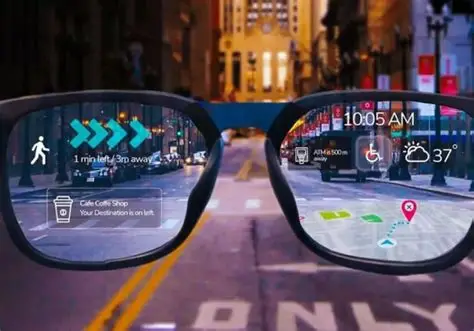
In-Lens Display Glasses Are Coming Later
Although the first version of the Google smart glasses focuses mainly on audio interaction, the company confirmed it is also developing a more advanced display-based version.
Future models may include:
- Text overlays
- Visual notifications
- Information displays inside lenses
- Augmented reality capabilities
Executives said additional details about those versions will arrive later this year.
Developers are reportedly already building applications designed specifically for display-enabled glasses.
That announcement signals Google’s long-term ambition to compete directly in the augmented reality market.
Competition in Smart Glasses Is Growing Rapidly
Google is entering an increasingly competitive wearable technology market.
Several major technology companies are now investing heavily in smart glasses.
Companies Developing Smart Glasses
- Meta
- Apple
- Snap
Meta’s Ray-Ban smart glasses have already sold millions of units worldwide, showing growing consumer interest in wearable AI devices.
The industry increasingly views smart glasses as a possible successor to smartphones in certain everyday tasks.
Privacy Concerns Are Returning Again
Despite excitement surrounding the new Google smart glasses, privacy concerns remain one of the biggest obstacles.
Critics continue warning that wearable cameras may allow:
- Secret recordings
- Unauthorized filming
- Public privacy violations
- Social discomfort
Similar concerns already surround Meta’s smart glasses, with reports of people unknowingly appearing in online videos recorded by users wearing AI eyewear.
Google will likely face intense scrutiny regarding how its devices handle:
- Camera activation
- Recording notifications
- Data collection
- AI processing
Public trust could become a major factor in determining whether smart glasses achieve mainstream success.
Developers See Huge Potential
Technology developers attending Google’s conference responded positively to the announcement.
Many believe AI-powered glasses could create entirely new opportunities for:
- Navigation apps
- Event discovery services
- Travel assistance
- Real-time translation
- Productivity tools
Developers are especially interested in creating voice-first experiences that reduce dependence on traditional smartphone screens.
Some startups already plan to build integrations for Google smart glasses shortly after launch.
Smart Glasses Could Become the Next Major Tech Platform
Industry analysts increasingly believe wearable AI devices may represent the next major shift in consumer technology.
After smartphones transformed communication and internet access, smart glasses could potentially reshape how people interact with:
- Artificial intelligence
- Navigation systems
- Social media
- Search tools
- Digital assistants
The success of these devices will likely depend on balancing convenience, privacy, comfort, and affordability.
Google’s return to the market signals that major technology companies remain convinced wearable AI has enormous long-term potential.
Final Thoughts on Google Smart Glasses
The return of Google smart glasses marks one of the company’s boldest hardware moves in years.
After the highly publicized failure of Google Glass, the company is now attempting a much more polished and AI-focused approach powered by Gemini.
This new generation emphasizes voice interaction, fashionable designs, and everyday convenience rather than experimental futuristic features alone.
However, privacy concerns, public trust, and real-world usefulness will ultimately determine whether Google succeeds this time.
For now, one thing is clear: the race to define the future of wearable AI technology is accelerating rapidly.