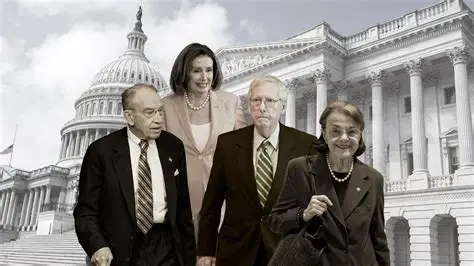
Congress Age Limits Gain Massive Bipartisan Support Across the United States
Congress age limits have become one of the few political issues receiving broad bipartisan support across the United States. A new national poll shows that a large majority of Americans support setting age caps and term limits for members of Congress as frustration grows over the age of political leaders in Washington.
The findings reveal increasing public concern about whether older lawmakers can effectively represent younger generations facing modern economic and social challenges. Voters from both major political parties, along with Americans across different age groups, now appear united in wanting significant political change.
The debate surrounding Congress age limits has intensified in recent years as several high-profile political leaders continue serving well into their late 70s, 80s, and even 90s.
Congress Age Limits Receive Bipartisan Support
The latest national survey found that nearly 8 in 10 Americans support Congress age limits and term limits for lawmakers.
Support crossed political party lines:
- Most Democrats supported Congress age limits
- Republicans also strongly favored maximum age restrictions
- Independent voters backed term limits and age caps
- Older voters supported the idea alongside younger generations
The results show rare agreement in a deeply divided political climate.
Americans often disagree sharply on taxes, immigration, healthcare, and social issues. However, Congress age limits appear to unite voters who normally stand on opposite sides of the political spectrum.
Many voters believe Washington needs a new generation of leadership capable of understanding the challenges facing younger Americans today.
Why Congress Age Limits Matter to Voters
Supporters of Congress age limits argue that political leadership should better reflect the country’s changing demographics and economic realities.
Younger generations currently face major issues including:
- Rising housing costs
- Student loan debt
- Inflation
- Job market uncertainty
- Healthcare affordability
- Technological transformation
Many voters believe older lawmakers struggle to fully understand these modern concerns because of generational differences.
Some Americans also worry that long-serving politicians become disconnected from everyday life outside Washington.
The issue has gained momentum as the average age of political leaders continues increasing despite the country’s younger and more diverse population.
Congress Age Limits Debate Grows After Recent Elections
The discussion surrounding Congress age limits expanded significantly during recent election cycles.
Questions about the physical and mental fitness of aging political leaders became a major topic in national politics after several senior officials faced public scrutiny regarding their health and performance.
Both Joe Biden and Donald Trump faced repeated questions about age during recent campaigns.
The debate also spread across Capitol Hill, where some of the country’s most powerful lawmakers remain well beyond traditional retirement age.
Several congressional leaders currently serving are in their late 70s, 80s, and 90s.
For many voters, Congress age limits now represent a broader conversation about political accountability and generational representation.
Congress Age Limits Highlight Generational Frustration
Young voters increasingly say they feel disconnected from national politics.
Many younger Americans believe Congress does not adequately represent their interests or understand the realities of modern life.
According to recent surveys, younger voters often express frustration about:
- Economic instability
- Political polarization
- Housing affordability
- Career opportunities
- Climate concerns
- Student debt
Some feel their voices are overlooked because political leadership remains dominated by older generations.
The growing support for Congress age limits reflects this frustration.
Younger voters argue that lawmakers closer to their age may better understand current social and economic challenges affecting modern families and workers.
Older Americans Also Support Congress Age Limits
Interestingly, support for Congress age limits is not limited to younger generations.
The poll found strong support among older Americans as well, including voters from Generation X and Baby Boomer age groups.
Many older voters agree that political systems benefit from generational turnover and fresh perspectives.
Some believe leaders should step aside after decades in office to allow newer voices to emerge.
Others argue that age itself is not necessarily the issue, but rather whether leaders remain connected to changing social realities and public priorities.
The bipartisan and cross-generational support suggests many Americans simply want more balance in political leadership.
Congress Age Limits and the Aging Workforce Debate
The conversation about Congress age limits also connects to broader societal trends.
Americans today often work longer than previous generations because life expectancy has increased and retirement patterns have changed.
Many professionals continue working into their 70s and beyond.
Supporters of older political leaders argue that experience and institutional knowledge remain valuable assets in government.
However, critics counter that Congress requires leaders who understand rapidly evolving technologies, economic conditions, and cultural shifts.
The debate ultimately centers on whether long experience outweighs the need for generational representation and fresh perspectives.
Congress Age Limits Could Reshape Washington
Although Congress age limits remain hypothetical for now, supporters believe such reforms could dramatically reshape American politics.
Potential effects could include:
- More opportunities for younger candidates
- Greater political diversity
- Faster leadership turnover
- Increased innovation in policymaking
- Reduced political careerism
- Stronger voter engagement
Supporters also argue that term limits combined with Congress age limits could reduce entrenched political power and encourage new ideas.
Critics, however, warn that forcing experienced lawmakers out of office could weaken legislative expertise and increase reliance on unelected staff or lobbyists.
Congress Age Limits Face Major Legal Challenges
Despite strong public support, implementing Congress age limits would likely face major legal and constitutional hurdles.
The US Constitution currently sets minimum age requirements for serving in Congress but does not establish maximum age restrictions.
Creating age caps would probably require:
- Constitutional amendments
- Major legislative reforms
- Broad bipartisan cooperation
- State-level ratification efforts
Because constitutional amendments are extremely difficult to pass, Congress age limits remain politically unlikely in the near future.
Still, the growing public conversation continues increasing pressure on political parties and lawmakers.
Congress Age Limits Reflect Desire for Political Change
The strong support for Congress age limits reflects a deeper frustration with the current political system.
Many Americans believe Washington has become disconnected from ordinary voters and resistant to change.
The public increasingly demands:
- Greater accountability
- Fresh leadership
- More responsive government
- Better generational representation
- Stronger political reform
Congress age limits have emerged as a symbol of that broader desire for political renewal.
Even voters who disagree on policy issues often agree that the political system needs new energy and perspectives.
Congress Age Limits Could Influence Future Elections
While Congress age limits are not currently under serious consideration, the issue may still influence future elections.
Candidates from both political parties may increasingly face questions about age, generational representation, and long-term leadership plans.
Political challengers could also use the issue to appeal to frustrated voters seeking change.
Younger candidates may gain momentum by presenting themselves as representatives of a new political generation focused on modern challenges.
The growing attention surrounding Congress age limits suggests age and generational balance will remain major topics in future campaigns.
Why Younger Voters Feel Disconnected
Many young Americans continue expressing disappointment with national politics.
Some feel political leaders fail to address the realities facing younger generations today, including:
- High living costs
- Limited homeownership opportunities
- Rising education expenses
- Mental health concerns
- Technological disruption
- Career uncertainty
This disconnect contributes to lower political engagement among some younger voters.
Supporters of Congress age limits believe younger lawmakers could improve trust and communication between government institutions and younger citizens.
Final Thoughts on Congress Age Limits
Congress age limits have become one of the rare issues attracting widespread bipartisan support across the United States.
Americans from different political parties and generations increasingly believe Washington needs younger leadership and stronger political turnover. Many voters feel the current system no longer reflects the realities facing modern Americans, especially younger generations navigating economic uncertainty and rapid social change.
Although Congress age limits remain unlikely in the immediate future because of constitutional barriers, the growing public support highlights a larger demand for political reform and generational representation.
As debates over leadership, accountability, and political renewal continue, Congress age limits will likely remain a powerful symbol of Americans’ desire for change in Washington.