


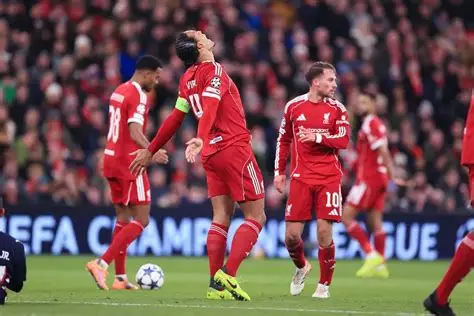
ARNE SLOT believes key VAR decisions have gone against Liverpool this season, following a controversial moment in their Champions League clash with Paris Saint-Germain.
Liverpool entered the second leg trailing 2-0 and were given hope in the 64th minute when the referee awarded a penalty. However, VAR quickly intervened and overturned the decision after a review.
Slot expressed frustration after the match, claiming similar incidents have resulted in penalties against his side without VAR interference. “Many decisions have gone against us this season,” he said, suggesting inconsistency in how VAR is applied.
⚽ What Happened During the Match?
The incident involved Alexis Mac Allister and PSG defender Willian Pacho. Mac Allister positioned himself to win the ball before going down inside the penalty area.
Referee Maurizio Mariani initially awarded a penalty. However, VAR official Marco Di Bello advised a review, leading to the decision being reversed.
Although there was slight contact between the players, officials ruled it was not enough to justify a penalty. This decision proved crucial, as Ousmane Dembélé scored shortly after, helping PSG secure a 2-0 win on the night and a 4-0 aggregate victory.
📊 Are VAR Decisions Inconsistent?
Slot argued that similar “soft” fouls have led to penalties in other matches. One example came against Brentford, where a minor foul by Virgil van Dijk was upgraded to a penalty after VAR review.
In that case, VAR intervened because the foul occurred inside the box, even though the contact was minimal. Slot believes such decisions highlight inconsistencies in how VAR is used.
He also referred to a penalty awarded to Leeds United, involving Ibrahima Konaté and Wilfried Gnonto, where VAR played a role in awarding the spot-kick.
🤔 Is Slot Right?
There is some merit to Slot’s concerns. VAR decisions often depend on how referees interpret incidents and whether they consider them “clear and obvious errors.”
In the PSG match, officials likely judged the contact as accidental rather than a deliberate foul. In contrast, other incidents involved clearer attempts to challenge for the ball, which influenced decisions differently.
While VAR aims to improve accuracy, debates about consistency remain common in modern football.