Global air travel continued to grow in 2025, with passenger traffic rising across most regions and major airports recording strong performance worldwide.
According to preliminary data from Airports Council International (ACI), global passenger numbers reached an estimated 9.8 billion in 2025. This represents a 3.6% increase compared to 2024 and a 7.3% rise above pre-pandemic levels.
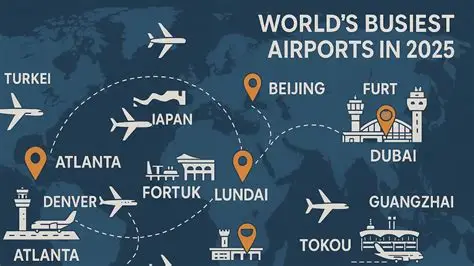
Despite global challenges, major hubs maintained strong traffic levels. Hartsfield-Jackson Atlanta International Airport once again ranked as the world’s busiest airport, handling 106.3 million passengers in 2025.
Although it retained the top position, the airport recorded a slight decline compared to previous years, reflecting changes in travel patterns and demand.
The airport has held the number one global ranking for most of the past three decades, except during the disruption caused by the COVID-19 pandemic.
Dubai International Airport maintained its position as the second-busiest airport in the world, while Tokyo Haneda Airport rose to third place in the global rankings.
Dallas Fort Worth International Airport and Shanghai Pudong International Airport completed the top five busiest airports worldwide.
Experts say international travel demand played a major role in driving growth across global aviation markets. However, they also note that regional differences are becoming more visible.
In the United States, passenger growth has begun to slow after several years of strong expansion. Meanwhile, regions such as Asia, Africa, and the Middle East continue to show stronger growth potential.
Industry leaders say geopolitical tensions and fuel price fluctuations remain key uncertainties for the aviation sector in 2026.
Rising fuel costs have already contributed to higher ticket prices in many regions, forcing airlines to adjust routes and operations to manage expenses more efficiently.
Some airports have also experienced operational disruptions due to global conflicts, which have affected passenger flows and travel patterns in certain regions.
Experts warn that prolonged instability could place additional pressure on fuel supply chains, potentially impacting airline schedules and route availability.
Despite these challenges, demand for air travel remains strong. Many passengers continue to prioritise travel for business, tourism, and family connections.
Aviation analysts expect continued growth in regions such as Asia-Pacific, Africa, and the Middle East, while North America and Europe are projected to maintain steady but slower expansion.
Overall, 2025 confirms that global air travel continues to recover and grow, even as the industry adapts to economic pressures and geopolitical uncertainty.