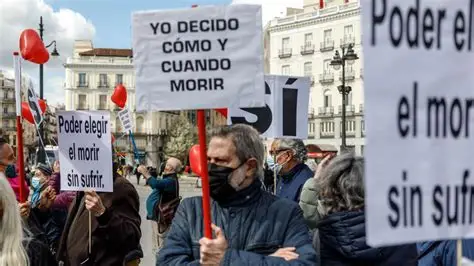
This article includes references to sexual assault and suicide.
The euthanasia case of 25-year-old Noelia Castillo has triggered a nationwide debate in Spain. Critics are questioning whether state institutions provided enough care and why legal challenges delayed her final decision for so long.
Noelia Castillo, who became paraplegic after a suicide attempt in 2022, died in a hospital in Barcelona. Authorities had approved her request for assisted dying in 2024, but legal objections postponed the process at the last moment.
Legal Battle Delayed Her Decision
Castillo’s father, supported by the group Christian Lawyers, challenged the decision in court. This legal fight continued for 18 months.
The case reached the European Court of Human Rights, which ultimately ruled in Castillo’s favor. Following the ruling, doctors carried out her request.
A Life Marked by Trauma
Castillo spoke openly about her difficult past. She spent much of her childhood in care homes and described the impact of her father’s alcohol issues. She also shared her experience of sexual assault, which deeply affected her mental health.
In a television interview, she said her family did not support her decision. She expressed her wish to end her suffering and find peace.
Her mother, although opposed to euthanasia, stayed by her side during her final moments.
Public Reaction and Emotional Appeals
The case drew widespread attention. A former friend tried to visit her in the hospital to change her mind but could not gain access.
Meanwhile, pianist James Rhodes publicly urged Castillo to reconsider. He offered financial support for her treatment, hoping she would delay the decision.
Criticism of the System
Some critics argue that the system failed her. Representatives from Christian Lawyers claimed that the healthcare system offered death instead of better care.
Political voices also joined the debate. Alberto Núñez Feijóo, leader of the People’s Party, stated that institutions should have provided more support.
The Catholic Church echoed similar concerns, pointing to both personal hardship and institutional shortcomings.
Opposing Views on Patient Rights
Others strongly disagreed with the delays. A report by El País argued that legal challenges extended her suffering unnecessarily.
Politician Alberto Ibáñez emphasized that multiple doctors had approved her request. He urged respect for her decision while acknowledging the complexity of the issue.
Spain’s Euthanasia Law Explained
Spain legalized euthanasia in 2021. The law allows adults to request assisted dying if they suffer from a serious and incurable condition or a chronic illness that severely affects their quality of life.
Applicants must submit their request twice in writing. Doctors must review and confirm the decision independently to ensure it is made freely and without pressure.
Spain joins countries like the Netherlands, Belgium, and Luxembourg in permitting euthanasia under strict conditions.
A Case That Raises Difficult Questions
This case has raised serious questions about patient rights, legal interference, and the role of the state in providing care. It highlights the tension between protecting life and respecting personal choice.