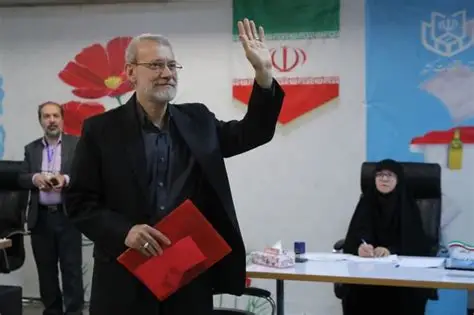
The death of Ali Larijani in an Israeli airstrike has intensified instability within Iran’s leadership. His loss removes one of the country’s most influential decision-makers at a time of deep crisis.
Although Larijani did not serve as a military commander, he played a central role in shaping Iran’s strategic direction. As secretary of the Supreme National Security Council, he influenced decisions on war, diplomacy, and national security. His role placed him at the core of Iran’s response to tensions with the United States and Israel.
Following the earlier death of Ali Khamenei, Larijani adopted a firm stance, signaling readiness for a prolonged conflict. His own death now adds to a growing list of senior officials and commanders lost in recent weeks. This pattern points to a sustained effort to weaken Iran’s leadership during an active conflict.
Inside Iran, many viewed Larijani as a pragmatic strategist. He balanced strong ideological beliefs with a calculated and methodical approach. While he remained cautious about engaging with Western nations, he still participated in key diplomatic initiatives, including cooperation agreements with China.
At the time of his death, Larijani managed three major challenges. The first involved the ongoing war. He supported a long-term strategy and considered expanding the conflict across the region, including potential disruption of the Strait of Hormuz.
The second challenge came from rising domestic unrest. Economic hardship triggered widespread protests, which later evolved into broader demands for political change. Authorities responded with strict measures, leading to significant casualties and increasing internal pressure.
The third issue centered on Iran’s nuclear program and stalled indirect negotiations with the United States. Military strikes had already disrupted these talks, leaving uncertainty around future diplomacy.
Larijani’s absence leaves these complex issues unresolved. His successor will inherit a highly unstable environment, where leadership positions carry immediate risk. Continued strikes and security threats make decision-making even more difficult.
This situation may shift greater authority toward the military. Statements from Masoud Pezeshkian suggest that armed forces could act independently if leadership gaps continue. While this may speed up decisions, it could reduce coordination at the highest levels.
At the same time, signs of uncertainty around leadership succession are becoming clearer. Some key figures, including Mojtaba Khamenei, have remained largely out of public view. This raises questions about internal stability and future leadership structure.
In the short term, Iran may adopt a more aggressive military stance while tightening control domestically. Amir Hatami has already warned of a strong response following Larijani’s death.
Over the longer term, continued losses among senior leaders could weaken the system’s ability to function effectively. In a country with over 90 million people, sustained instability at the top could have far-reaching consequences.
Larijani’s death therefore represents more than the loss of a single leader. It deepens an already fragile leadership crisis that could shape both the conflict and the future stability of Iran.