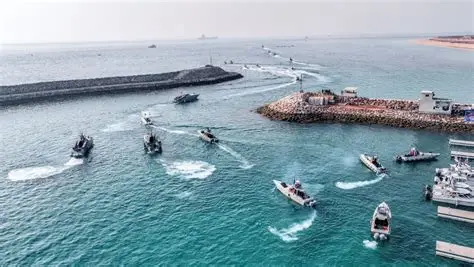
Thousands of sailors remain stranded on ships near the Strait of Hormuz as tensions rise in the Gulf region.
The situation worsened after Iran threatened to fire on vessels attempting to cross the strait. The warning came in response to military strikes by the United States and Israel.
Sailors now report seeing drones, cruise missiles and fighter jets flying over the busy shipping corridor.
Sailors Witness Missiles and Drones
Amir, a Pakistani sailor working on an oil tanker near the United Arab Emirates, described the tense atmosphere at sea.
He said drones and cruise missiles frequently fly at low altitude over the Gulf.
“I hear fighter jets as well, but we cannot tell which country they belong to,” he said.
His biggest fear is that a missile or drone shot down in the air could fall directly onto the ship.
No Safe Place on a Ship
Another sailor, Hein from Myanmar, said clashes in the sky happen almost every day.
He recalled seeing two fighter jets exchange fire while his crew was working on deck.
“There is no hiding place on a ship,” he said. “We had to run inside for safety.”
For security reasons, the sailors’ names have been changed.
Thousands of Sailors Trapped at Sea
Experts estimate that around 20,000 sailors are currently stranded in the Gulf region.
According to Capt Anam Chowdhury of the Bangladesh Merchant Marine Officers’ Association, many ships remain stuck either at sea or in port.
He said both locations carry risks.
“People may think ports are safer, but ships have also been attacked while anchored,” he explained.
Ships Damaged in Recent Attacks
The association reports that at least seven ships have been hit by projectiles since the conflict escalated.
One of the incidents occurred on 1 March when a tanker named Skylark was attacked.
The ship was registered to the Palau.
During the attack, a sailor was killed and the vessel’s engine room caught fire. The crew later evacuated the ship.
Chowdhury said the surviving sailors remain deeply traumatised by the incident.
Danger at Sea and in Port
Capt M Mansoor Saeed, an oil tanker captain, said ships remain vulnerable whether they stay in port or move into open waters.
“If someone wants to target a ship, they will target it anywhere,” he said.
However, he added that ships often prefer open waters because captains have more room to manoeuvre during emergencies.
In ports or narrow channels, vessels face greater risks from collisions or grounding.
Key Global Shipping Route at Risk
The Strait of Hormuz remains one of the most important shipping routes in the world. A large portion of global oil and cargo shipments pass through the narrow waterway.
As military tensions continue to rise in the region, sailors navigating the strait face growing uncertainty and danger.