Passive Euthanasia: How India’s Historic Harish Rana Ruling Changed End-of-Life Law
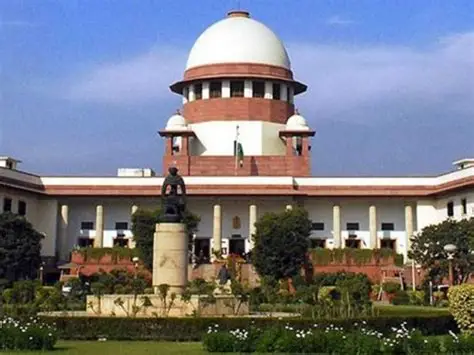
Passive euthanasia moved from legal principle to lived reality in India when the Supreme Court authorised doctors to withdraw clinically assisted nutrition and hydration from Harish Rana, a 32-year-old man who had remained in a permanent vegetative state for more than 12 years. Rana died at AIIMS New Delhi on 24 March 2026, nearly two weeks after the judgment and after being transferred to a specialist palliative-care unit.
The ruling was historic, but it was narrower and more medically precise than the phrase “removal of life support” may suggest. Rana could breathe spontaneously through a tracheostomy. The treatment at the centre of the case was clinically assisted nutrition and hydration, delivered through a percutaneous endoscopic gastrostomy tube. The court held that this medically supervised feeding could legally be treated as medical treatment and withdrawn when two independent medical boards agreed that continuation offered no therapeutic benefit and withdrawal served the patient’s best interests.
The passive euthanasia judgment did not legalise active euthanasia. It did not allow a doctor to administer a lethal substance. Instead, passive euthanasia allowed an irreversible medical condition to take its natural course while clinicians provided symptom control, nursing care and palliative support.
For Rana’s family, the case ended a 13-year struggle shaped by grief, physical caregiving, financial pressure and fear about what would happen after his parents could no longer care for him. For India’s legal and medical systems, it created the first case-specific use of the country’s passive euthanasia framework and clarified how hospitals should handle similar decisions in the future.
The Harish Rana Case in Brief
| Key event | Confirmed detail |
|---|---|
| Accident | Rana fell from the fourth floor of his paying-guest accommodation on 20 August 2013 |
| Injury | He suffered a diffuse axonal brain injury, quadriplegia and complete sensorimotor dysfunction |
| Medical condition | Two medical boards found an irreversible permanent vegetative state |
| Supreme Court ruling | Delivered on 11 March 2026 |
| Treatment considered | Clinically assisted nutrition and hydration through a PEG tube |
| Palliative transfer | Rana was moved from his Ghaziabad home to AIIMS on 14 March |
| Death | He died at 4:10pm on 24 March 2026 |
This sequence matters because passive euthanasia was not performed through a single dramatic act. It involved legal review, repeated medical assessment, family consent, transfer to an appropriate facility and a planned end-of-life protocol.
The Accident That Changed Harish Rana’s Life
Rana was 20 and studying for a BTech degree at Panjab University when he fell from the fourth floor of his accommodation on 20 August 2013. The fall caused a diffuse axonal injury, a severe form of traumatic brain injury involving widespread damage to connections within the brain.
He received treatment at several institutions, including the Postgraduate Institute of Medical Education and Research in Chandigarh and major hospitals in New Delhi. Despite extensive care, he did not regain meaningful awareness.
Medical records described Rana as bedbound, severely wasted and fully dependent on caregivers. He had a tracheostomy, a urinary catheter and a PEG feeding tube. He displayed sleep-and-wake cycles, but the boards found no evidence that he recognised himself, relatives or his surroundings. He could not communicate, follow commands or interact meaningfully.
The distinction between a permanent vegetative state and brain death is important. Rana was not brain-dead. His brainstem continued to support spontaneous breathing and other basic functions. However, specialists concluded that the catastrophic damage responsible for consciousness was irreversible and that there was no realistic prospect of recovery.
That medical finding became the foundation of the passive euthanasia decision.
Why the Delhi High Court Initially Rejected the Request
Rana’s parents first approached the Delhi High Court seeking the constitution of a medical board and permission to discontinue treatment. In 2024, the High Court rejected the request because Rana was not dependent on a mechanical ventilator and was not considered terminally ill in the narrow sense used by the court.
That reasoning treated his ability to breathe without a ventilator as evidence that life support could not be withdrawn. The Supreme Court later found that approach incomplete.
The higher court said India’s end-of-life framework was not restricted to patients expected to die within a short period. It also applied to people in a permanent vegetative state or a comparable incurable condition where there was no hope of recovery and medical treatment merely prolonged biological existence.
The Supreme Court also focused on a question the earlier proceedings had not fully resolved: whether nutrition and hydration delivered through a medical tube counted as treatment. If it was only ordinary care, withdrawal would be legally and ethically different. If it was a clinical intervention requiring prescription, installation, monitoring and specialist review, it could fall within the passive euthanasia framework.
Why Tube Feeding Mattered to Passive Euthanasia
The full Harish Rana judgment devoted extensive attention to clinically assisted nutrition and hydration, often shortened to CANH.
Ordinary eating and drinking are basic care. CANH is different. It may require surgical placement of a tube, calculation of nutritional needs, monitoring for infection, assessment of gastrointestinal tolerance and management of risks such as aspiration pneumonia, peritonitis or metabolic instability.
The court concluded that CANH was a technologically mediated medical intervention rather than simple feeding. Its administration at home did not remove its medical character.
That conclusion was decisive. Once CANH was recognised as treatment, the primary and secondary medical boards could consider whether continuing it benefited Rana. Both boards concluded that withdrawal was in his best interests because his condition was permanent, treatment could not restore awareness and continued intervention would only prolong the burdens of an irreversible state.
The decision therefore did not say food and water may casually be denied to a disabled person. It addressed artificial nutrition delivered through a medical device after specialist review under strict safeguards.
What Passive Euthanasia Means in India
Passive euthanasia involves withholding or withdrawing medical treatment that sustains life when the treatment no longer offers a meaningful clinical benefit. Death results from the underlying disease or injury rather than from a substance administered to cause death.
Active euthanasia is different. It generally refers to an intentional act intended to end life, such as administering a lethal injection. Active euthanasia remains illegal in India.
The Supreme Court recognised passive euthanasia in the 2018 Common Cause judgment, which held that the right to live with dignity under Article 21 of the Constitution includes the right to die with dignity in limited end-of-life circumstances. The ruling also recognised advance medical directives, commonly called living wills.
In 2023, the court simplified parts of the process after concerns that the original safeguards were too difficult to use. The Harish Rana judgment became the first time the Supreme Court applied that framework directly to authorise withdrawal for a named patient.
The case also clarified that a patient does not have to be mechanically ventilated or immediately terminal for passive euthanasia to be considered. Permanent vegetative state and comparable irreversible conditions can qualify when treatment has become futile.
The Medical Boards Behind Passive Euthanasia
The passive euthanasia decision was not based only on the family’s wishes. The Supreme Court ordered a primary medical board and a secondary medical board to assess Rana independently.
The boards reviewed his medical history, examined him physically and applied recognised diagnostic criteria for permanent vegetative state. Both concluded that his condition was irreversible and that continued CANH provided no therapeutic benefit.
The two-board system is designed to protect vulnerable patients. It reduces the risk that one doctor, one hospital or one distressed family can make a unilateral decision.
Under the streamlined procedure discussed by the court:
- A primary medical board reviews the patient and consults the next of kin.
- If it supports withdrawal and receives written family consent, a separate secondary board conducts another assessment.
- The secondary board must contain independent specialists and a doctor nominated through the district medical administration.
- If the boards agree, the hospital informs the appropriate judicial magistrate and proceeds under a documented care plan.
- If the boards disagree or the process stalls, the family, doctor or hospital may approach the High Court.
The passive euthanasia framework also directed chief medical officers to maintain panels of qualified doctors so that secondary boards can be formed without the delays that had frustrated earlier cases.
How the Best-Interests Test Shaped Passive Euthanasia
Rana had not prepared a living will before his accident. The court therefore could not rely on a written statement describing which treatments he would accept or refuse.
Instead, the judges applied the best-interests principle. This is broader than asking whether treatment keeps a heart beating or extends life. It considers medical benefit, pain, dignity, the person’s values, the burdens of treatment and the views of close relatives who knew the patient.
The court stressed that family preference alone cannot decide a case. Relatives may be exhausted, financially strained or divided. Medical opinion alone is also not enough because end-of-life care involves values as well as diagnosis.
In Rana’s case, the medical boards, parents and siblings reached the same conclusion. Continued CANH offered no possibility of restoring consciousness, while withdrawal under palliative supervision would allow a natural death without abandoning care.
Passive euthanasia in this context meant changing the goal of medicine from prolonging biological function to maintaining comfort and dignity.
What Happened After Passive Euthanasia Was Approved
The Supreme Court delivered its ruling on 11 March. Rana was transferred from his family home in Ghaziabad to the palliative-care unit at AIIMS Delhi’s Dr BR Ambedkar Institute Rotary Cancer Hospital on 14 March.
A specialist team prepared the treatment-withdrawal and symptom-management plan. Rana continued to receive palliative and nursing care. The purpose was to prevent distress, manage secretions, support the family and review his condition throughout the process.
He died at 4:10pm on 24 March 2026.
His death should not be described as execution or medically administered killing. Under the legal reasoning used by the court, the withdrawal allowed the consequences of his underlying catastrophic brain injury to proceed naturally after treatment had been judged futile.
His corneas and heart valves were later retrieved for transplantation.
Why Living Wills Matter in Passive Euthanasia
A living will allows a competent adult to record preferences for future medical care if illness or injury later removes the ability to communicate.
It can address circumstances such as irreversible coma, terminal illness or permanent vegetative state and may specify whether the person wants ventilation, artificial nutrition, resuscitation or comfort-focused treatment.
A living will does not allow active euthanasia. It guides doctors and families about treatment the person would refuse.
Rana’s case shows what happens when no directive exists. His family had to reconstruct what would serve him best, and the courts had to oversee a process that lasted years. A valid advance directive may reduce uncertainty, although medical boards and legal safeguards still apply.
People considering such documents should obtain advice based on current Indian law, discuss preferences with family and doctors, and ensure the directive meets formal requirements. A document that no one knows exists may offer little practical help during an emergency.
The Passive Euthanasia Debate Is Not Over
Supporters of the ruling describe passive euthanasia as recognition that medicine should not preserve biological existence at any cost when consciousness cannot return. They argue that dignity includes protection from treatment that is medically futile and burdensome.
Critics worry about disability discrimination, inaccurate diagnosis, family pressure and unequal healthcare. In a country where families may struggle to afford long-term care, financial hardship must never become a substitute for a genuine best-interests assessment.
Those concerns explain why safeguards matter. A permanent vegetative state must be diagnosed carefully and over an appropriate period. Independent specialists must agree. Families must receive clear information. Palliative care must continue. Courts must remain available when disagreement or uncertainty exists.
The ruling does not treat disability as a reason for death. Many people with profound disabilities live meaningful lives and can communicate preferences. Rana’s case concerned an irreversible absence of awareness, confirmed over more than a decade, and treatment that specialists found could not produce medical improvement.
Why Palliative Care Is Essential in Passive Euthanasia
Withdrawal of life-sustaining treatment does not mean withdrawal of all care.
The Supreme Court relied on end-of-life guidance requiring a detailed plan, daily medical review and explanation to caregivers about symptoms that may occur. Doctors remain responsible for relief of pain, breathlessness, agitation and other distress.
Good palliative care also supports relatives. Families may experience grief, guilt, doubt and relief at the same time. They need privacy, honest communication and opportunities to ask whether the patient remains comfortable.
India’s wider debate about healthy ageing and long-term wellbeing often focuses on extending life. The Rana case shows why healthcare must also be able to recognise when extension no longer benefits the patient.
The complexity resembles other devastating neurological conditions covered in The News Ink’s ALS explainer, although the diseases and levels of awareness are very different. Accurate diagnosis and respect for the individual remain essential in both.
What the Passive Euthanasia Ruling Changes for Hospitals
The decision gives hospitals clearer legal support when treating patients without living wills who are in irreversible vegetative states or comparable conditions.
It confirms that:
- CANH can be medical treatment;
- permanent vegetative state can qualify even without imminent terminal decline;
- medical boards may exercise clinical judgment when safeguards are met;
- family consultation must be documented;
- withdrawal must follow a palliative-care plan;
- administrative delays in forming secondary boards should be reduced.
The court also urged consideration of comprehensive legislation. India currently relies heavily on Supreme Court judgments and guidelines. A statute could provide more uniform rules for hospitals, families and doctors across states.
Legislation would need to protect patient autonomy while preventing abuse, clarify documentation, strengthen palliative services and establish reliable review mechanisms.
A Landmark Defined by Dignity, Not Death
The Harish Rana passive euthanasia ruling is historic because it transformed passive euthanasia from an abstract constitutional framework into a supervised medical decision for a real patient.
It corrected the assumption that only someone dependent on a ventilator can receive relief from futile treatment. It recognised medically delivered nutrition and hydration as treatment in the circumstances of the case. It also insisted that withdrawal be surrounded by independent assessment, family consultation and comfort care.
For Rana’s parents, the judgment came after years of caregiving and litigation. His father, Ashok Rana, described the outcome as humanitarian while acknowledging the pain of the decision.
The legal significance should not eclipse the family’s loss. Rana was a student with plans before one fall changed his life. His parents cared for him for more than a decade and then asked the courts to accept that continued intervention could no longer restore the son they knew.
Passive euthanasia remains exceptional in India. The ruling does not create a general right to request death, and active euthanasia remains prohibited. It creates a lawful path for withdrawing futile medical treatment when a patient cannot decide, recovery is impossible and rigorous safeguards establish that continuation is not in the patient’s best interests.
The enduring lesson is that dignity in medicine involves more than extending life. It also involves knowing when treatment has stopped helping and ensuring that, even as it ends, care does not.
This article is for general information only. It is not a substitute for professional medical or legal advice.
For more carefully researched health and public-policy reporting, join The News Ink on WhatsApp.