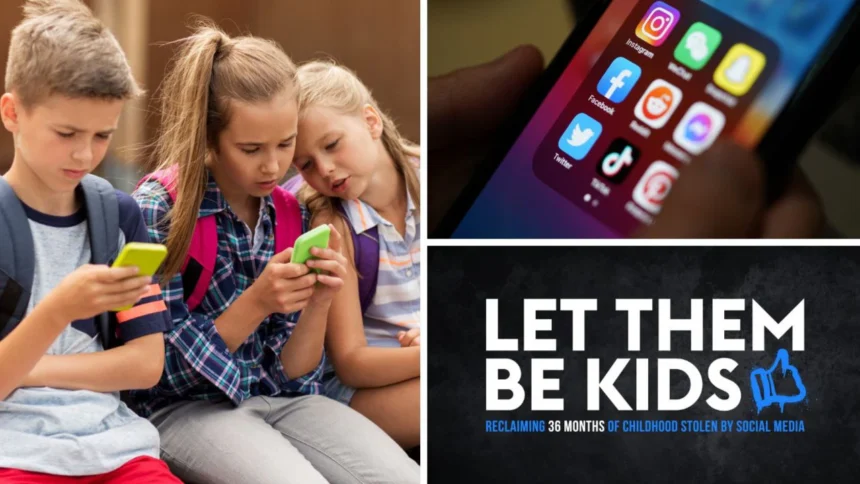
UK MPs Reject Social Media Ban for Under-16s and Support Flexible Powers
The social media ban debate in the UK has moved faster than Westminster expected. In March, MPs rejected an immediate Australia-style ban on under-16s using social media, voting 307 to 173 against a Lords amendment to the Children’s Wellbeing and Schools Bill. Ministers argued that a blanket ban could backfire and that the government needed flexible powers rather than a single blunt rule.
Four months later, the political direction has shifted. The UK government has now said it intends to bring forward a social media ban for under-16s, while also developing default curfews, limits on addictive design features and controls on AI chatbots. That means the March vote should no longer be read as the end of the idea. It was the point at which Parliament rejected an immediate ban, but kept the door open for a more controlled version.
This is the central tension in the UK’s online safety debate. Parents want help. Children need protection. Platforms have failed too often. But a social media ban also raises hard questions about enforcement, privacy, VPNs, age checks, digital exclusion and whether children will simply move to less regulated spaces.
The government’s current strategy is therefore a two-stage answer. First, it rejected a ready-made ban written into the schools bill. Second, it gave ministers powers to act after consultation and then moved toward tougher age rules. Supporters call that careful policymaking. Critics call it delay.
Either way, the social media ban argument has changed from “should the UK act?” to “what kind of action will actually work?”
The Vote That Started the New Fight
The Commons vote on 9 March 2026 was decisive. MPs rejected the Lords-backed amendment by 307 votes to 173. The proposal, tabled in the Lords by Conservative peer Lord Nash, would have stopped children under 16 from becoming or remaining users of regulated social media services.
The idea was modelled partly on Australia’s national age-restriction system. Supporters argued that children were being exposed to addictive algorithms, harmful content, bullying, sexual exploitation, eating disorder material, pornography and stranger contact at an age when parents could not realistically control everything.
Ministers did not deny the problem. Education minister Olivia Bailey told MPs that the government would act, but said the question was how. The government argued that a rigid social media ban could push teenagers into less visible parts of the internet, including services with weaker moderation, fewer safeguards and less parental awareness.
That argument mattered because it came from child-safety campaigners as well as ministers. Some groups warned that a ban might sound strong while doing little to reduce the underlying risk if children bypassed it or moved elsewhere.
So MPs rejected the immediate ban but backed a more flexible route. That route allowed ministers to restrict children’s access to certain services or features later, based on evidence gathered through consultation.
What the March Vote Did — And Did Not Do
| Question | Answer |
|---|---|
| Did MPs approve an immediate under-16 social media ban in March? | No |
| What was the vote? | 307 against, 173 in favour |
| Was the issue dropped? | No |
| What did MPs support instead? | Flexible powers for ministers to regulate access and features |
| Did the government later move toward a ban? | Yes, ministers later announced plans for under-16 restrictions |
| When could new protections begin? | Government statements point toward legislation before Christmas and implementation in 2027 |
This timeline matters because many headlines make the debate look contradictory. In March, MPs rejected a social media ban. By July, ministers were talking about introducing one. The difference is process. Parliament rejected one amendment but left space for the government to create its own framework.
That may sound technical, but it is important. A ban written quickly into a schools bill is different from a wider online safety regime built through consultation, secondary legislation and platform obligations.
Why Ministers Preferred Flexible Powers
The government’s preferred approach gave the science and technology secretary power to impose restrictions on children’s access to specified online services or specified features. In plain English, ministers wanted the ability to target the parts of digital life that cause the most harm, rather than banning every platform in the same way.
That matters because not all online services are identical. TikTok, Instagram, Snapchat, Reddit, Roblox, YouTube, WhatsApp, Google Classroom, gaming platforms and AI chatbots all raise different risks. A social media ban that catches everything could block educational, creative or social spaces. A narrow ban could miss places where children are actually being harmed.
The government consultation, Growing up in the online world, looked at potential age restrictions on social media, gaming sites and AI chatbots, limits on addictive design features and better support for parents. It also asked whether features such as autoplay, infinite scroll and algorithmic recommendation systems should be restricted for children.
That is the logic behind flexible powers. The government wants the option to age-gate platforms, switch off harmful features, restrict risky functions and respond to new technologies without passing a new Act every time.
The risk is that broad powers can become vague powers. If ministers can decide later which services are harmful, Parliament must still ask how much scrutiny those decisions will receive.
The July Shift: A Ban Comes Back
By July, the government’s position had hardened. Ministers announced plans to ban under-16s from high-risk social media services, with protections expected to come into force in spring 2027. The government also moved toward a default midnight-to-6am social media curfew for 16- and 17-year-olds, although that curfew would reportedly be adjustable rather than an absolute lockout.
This is why the March rejection should not be described as a permanent defeat for the social media ban campaign. It was more like a pause before a government-controlled version.
The new direction appears to include several layers:
- under-16 restrictions on high-risk social media platforms;
- default curfew settings for 16- and 17-year-olds;
- default limits on addictive features such as autoplay and infinite scrolling;
- possible restrictions on romantic or sexual AI chatbots for under-18s;
- stronger media literacy education in schools;
- tougher platform duties under the Online Safety Act framework.
This layered model is politically safer than a single blanket ban because ministers can say they are targeting risk, not simply removing the internet from teenagers. But it is also more complex. Complexity gives platforms more room to argue, lobby, delay or design around the rules.
The News Ink’s coverage of AI trends and AI risk research shows why this matters. Children’s online safety is no longer only about social feeds. It now includes chatbots, recommendation systems, synthetic media, deepfakes and private messaging.
Australia’s Example: Useful, But Not Simple
Australia is the country most often mentioned in the UK debate. Its social media minimum-age system requires age-restricted platforms to take reasonable steps to prevent under-16s from having accounts. Australia’s eSafety Commissioner is clear that the policy is not about punishing children or parents. The obligation sits on platforms.
That distinction is important. A serious social media ban should not criminalise a 14-year-old for creating an account. The practical burden should fall on companies that profit from children’s attention.
The UK is learning from Australia, but Australia’s experience also shows the limits of age bans. Children can try to bypass restrictions through fake ages, borrowed devices, VPNs, alternative apps or accounts created through older friends. Platforms may also disagree over which services should be restricted.
Australia’s official approach tries to combine age restrictions with digital literacy and platform accountability. That is likely the model the UK will need too. A social media ban without education and enforcement will be weak. Education without enforceable platform rules will also be weak.
The best lesson from Australia is not that a ban solves everything. It is that a ban creates a new regulatory battlefield: age assurance, privacy, platform compliance and young people’s workarounds.
The Enforcement Problem
Every social media ban eventually reaches the same question: how will platforms know a user is under 16?
Age assurance can include self-declaration, facial age estimation, digital ID checks, mobile network checks, payment-card checks, app-store verification, school-based credentials or third-party age-verification providers. Each option has trade-offs.
| Age-check method | Strength | Main concern |
|---|---|---|
| Self-declared age | Easy | Children can lie |
| Facial age estimation | More robust | Privacy and accuracy concerns |
| Photo ID | Stronger evidence | Excludes children without ID and raises data risk |
| App-store checks | Centralised and convenient | Gives Apple and Google more gatekeeper power |
| Mobile network checks | Useful for some users | Not universal |
| Third-party verification | Can reduce platform data collection | Requires trust in intermediaries |
| Parent approval | Practical for younger children | Does not solve all teen-risk issues |
The UK’s Online Safety Act already pushes platforms toward stronger protections for children, and Ofcom’s child-protection duties require services to assess risks and put safety measures in place. But a social media ban raises the stakes. If under-16s are not allowed on certain platforms at all, age assurance must be much stronger than a tick-box date of birth.
That creates a privacy challenge. The more reliable the check, the more sensitive the data may become. The News Ink’s article on why we have more privacy tools but less online privacy is relevant here because child safety rules can accidentally create new data risks.
A system designed to protect children should not create huge databases of children’s faces, IDs or browsing habits. That is why privacy-preserving age assurance will become one of the biggest tests of the UK’s policy.
Why Some Child-Safety Groups Warned Against a Simple Ban
The argument against an immediate blanket social media ban was not always pro-platform. Some critics of the March amendment also believe platforms are dangerous. Their concern was that a poorly designed ban could drive children into harder-to-monitor spaces.
A teenager locked out of Instagram might move to private forums, encrypted groups, adult platforms, gaming chats, livestreaming spaces or new apps outside the regulator’s first target list. If parents think the social media ban has solved the problem, they may pay less attention while children move elsewhere.
The NSPCC’s position has shifted with the debate. Earlier in the year, it warned that government must force platforms to keep children safe or a ban would become better than the status quo. After the government’s later move toward under-16 restrictions, the charity welcomed the direction but stressed that enforcement, robust age checks and platform safety duties still matter.
That is the key point. A social media ban is not enough if harmful design remains untouched. Children can be hurt by private messaging, recommender systems, AI-generated sexual content, bullying, scams, grooming, self-harm material and livestream abuse. Some of those risks exist on platforms people do not usually call “social media”.
The News Ink’s report on AI use in child-abuse investigations shows how online harm increasingly crosses between technology, policing and child protection.
Addictive Design Is Now the Real Target
The phrase “social media ban” grabs attention, but the deeper policy target is addictive design. MPs repeatedly raised concerns about platforms engineered to keep children scrolling for as long as possible.
That includes:
- autoplay videos;
- infinite scrolling;
- algorithmic feeds;
- streaks and reward loops;
- push notifications;
- appearance filters;
- friend suggestions from strangers;
- livestream gifts;
- personalised recommendations;
- content that escalates from mild to harmful.
Labour MP Sadik Al-Hassan captured the mood when he said parents were locked in a daily battle they could not win alone against platforms designed to keep children hooked. That line matters because it shifts responsibility away from individual families and toward product design.
A child can be told to “use self-control”, but an app built by behavioural scientists and optimised by machine learning is not a fair opponent. Parents can set rules, but they are not inside the recommendation engine. Teachers can warn pupils, but they cannot redesign TikTok or Instagram.
That is why some MPs prefer age-gating features rather than age-gating whole services. The question becomes: which design choices are unacceptable for children, even if the platform itself remains available?
The Role of Ofcom and the Online Safety Act
The UK already has the Online Safety Act, which gives Ofcom a central role in enforcing online safety duties. Ofcom’s child-protection regime requires regulated services to assess the risk of harm to children and use safety measures to reduce exposure to harmful content.
The problem is that many parents and campaigners feel existing enforcement is too slow or too narrow. They argue that children continue to see harmful content even when platforms claim to have rules. Regulators have pushed companies including Meta, TikTok, Snap and YouTube to strengthen protections, but the public mood has moved faster than enforcement.
This is where the social media ban debate becomes partly a vote of no confidence in platforms. If people trusted companies to protect children voluntarily, the appetite for bans would be smaller. The pressure for age limits reflects years of frustration with weak moderation, opaque algorithms and public apologies after harm has already occurred.
The News Ink’s cybersecurity guide makes a useful wider point: digital safety cannot depend only on user caution. System design matters. The same principle applies to children online.
VPNs and Workarounds
One of the most difficult issues is VPN use. A VPN can disguise a user’s location and help bypass restrictions. Some MPs wanted stronger powers to deal with children using VPNs to access blocked services. Ministers were cautious because limiting VPNs can also affect privacy, security and legitimate use.
This is not a small problem. If under-16s can easily bypass a social media ban through VPNs, the policy becomes symbolic. But if the government responds by restricting VPNs broadly, it may create privacy and security concerns for adults, journalists, activists, businesses and ordinary users.
The better approach may be to place more responsibility on platforms and app stores rather than chasing children’s workarounds one by one. If a platform knows it must prevent under-16s from holding accounts, it cannot simply blame VPNs and move on. It must show that it took reasonable steps.
Still, no system will be perfect. Policymakers should be honest about that. The goal is not to make under-16 access impossible in every case. The goal is to reduce routine exposure, make platforms accountable and stop companies from building child engagement into their business model.
What Parents Should Understand
For parents, the debate can feel exhausting. One month MPs reject a social media ban. Another month ministers announce plans for one. Platforms say they already protect young users. Campaigners say they do not. Teenagers say adults do not understand how they actually use the internet.
The practical message is this: nothing changed immediately after the March vote. The July announcements point toward future restrictions, but families still need household rules now.
Parents should focus on four areas.
First, talk about what children actually use, not only the big-name apps. Harm can appear in group chats, gaming platforms, livestreams, AI companions and anonymous forums.
Second, check privacy and contact settings. Stranger contact remains one of the most serious risks, especially when platforms allow adults to message young users.
Third, discuss algorithmic feeds. Children need to understand that the feed is not neutral. It is designed to hold attention.
Fourth, avoid making the phone the only issue. Sleep, school, friendships, self-esteem and mental health all matter. A child may need help, not only limits.
The government can regulate platforms, but family conversations still matter. The mistake is expecting parents to fight billion-dollar design systems alone.
What Platforms Should Expect
Platforms should expect tougher rules, not softer ones. The March vote did not protect them from regulation. It gave ministers time to create wider powers, and the later government announcements suggest more restrictions are coming.
Companies should prepare for:
- stronger age assurance;
- limits on under-16 accounts;
- default restrictions for older teenagers;
- pressure to disable addictive features;
- stricter treatment of AI chatbots;
- more Ofcom scrutiny;
- clearer evidence requirements around child-safety claims;
- possible penalties for weak enforcement.
The strongest platforms will not wait for final rules. They will redesign child accounts, reduce addictive features, improve recommender transparency, limit adult-child contact, strengthen reporting tools and publish evidence that safety measures work.
The weakest platforms will argue about definitions while keeping the engagement model intact.
That is why the social media ban debate is also a business-model debate. If profit depends on children scrolling longer, child safety will always be treated as a cost.
Why AI Chatbots Are Now Part of the Same Debate
The March vote focused on social media, but the government consultation also covered AI chatbots. That is important because children are increasingly using AI tools for homework, companionship, advice, entertainment and emotional support.
AI chatbots create different risks from social media. They can simulate friendship, encourage dependency, give unsafe advice, collect sensitive information or blur the line between support and manipulation. Romantic or sexual AI chatbots aimed at young people are especially concerning.
This is why the government’s flexible-powers approach may prove useful. A law written only for TikTok and Instagram could become outdated quickly. A broader framework can include chatbots, gaming platforms and future services.
The News Ink’s coverage of latest ChatGPT features and AI tools shows how quickly AI products are becoming part of everyday life. Children’s online safety policy must now cover both feeds and conversations.
The Political Divide
The Conservatives pushed for faster action through the Lords-backed amendment. Liberal Democrats criticised the government for failing to offer immediate certainty. Labour ministers argued that they were acting carefully and that the consultation would allow stronger, better-designed rules.
The divide is partly about urgency. Ban supporters say the evidence of harm is already overwhelming and that delay leaves children exposed. Government ministers say rushed legislation could create loopholes and unintended consequences.
The divide is also about trust. Critics do not trust platforms. Ministers do not fully trust a blanket ban. Parents do not trust either side to move quickly enough.
That is why this issue has unusual political force. It touches childhood, mental health, family life, education, technology and corporate power. It also cuts across normal party lines. Many parents who disagree on most political questions share the same concern when their child asks for a smartphone or a social media account.
What a Good UK Policy Would Need
A credible UK policy cannot rely on one tool. A social media ban may be part of the answer, but only if it sits inside a wider system.
That system should include:
| Policy area | Why it matters |
|---|---|
| Strong age assurance | Rules fail if platforms cannot identify underage users |
| Privacy protection | Children should not trade safety for intrusive data collection |
| Addictive-design limits | Harm often comes from product features, not only content |
| AI chatbot rules | Young users increasingly interact with conversational systems |
| Platform penalties | Companies must face consequences for weak compliance |
| Media literacy | Children need skills, not only restrictions |
| Parent support | Families need guidance that reflects real online behaviour |
| Independent evaluation | Government should measure whether rules actually reduce harm |
The social media ban debate should not become a choice between doing everything and doing nothing. The right question is which combination of rules reduces harm without pushing children into darker spaces or building a surveillance-heavy internet.
The Bottom Line
UK MPs rejected an immediate social media ban for under-16s by 307 votes to 173 in March, choosing instead to support flexible powers for ministers to regulate children’s access to online services and harmful features. At the time, the government argued that a blanket ban could backfire and that stronger evidence was needed.
Since then, the government has moved closer to a ban of its own. Ministers now plan under-16 restrictions on high-risk social media platforms, default curfew settings for older teenagers and limits on addictive features such as autoplay and infinite scrolling. That makes the March vote a turning point, not a final answer.
The UK is trying to solve a real problem: children are being exposed to harmful design, harmful content and commercial systems built to capture their attention. But the solution must be enforceable, privacy-conscious and broad enough to cover the places children actually go online.
A social media ban may help if it forces platforms to change. It will fail if it becomes a headline without serious age checks, Ofcom enforcement, privacy safeguards, AI rules and better support for parents.
The strongest lesson from this debate is simple. Children should not be left alone against systems designed to keep them scrolling. But protecting them requires more than one vote, one ban or one slogan. It requires a digital world built around children’s safety from the start.
For more technology and online-safety coverage, follow The News Ink on Medium or read our latest reports on online privacy and AI risks.