Luke Littler: Why His Stunning Cardiff Win Sparked a Premier League Title Charge
Luke Littler arrived in Cardiff needing more than a good night. He needed a reset. By the time he left the Utilita Arena, he had beaten two Welsh favourites, silenced one of the loudest crowds of the Premier League season and turned a slow start into the beginning of a title charge.
The headline result was simple: Luke Littler defeated Jonny Clayton 6-4 in the Night Five final. The story behind it was richer. Cardiff was supposed to be a Welsh celebration. Gerwyn Price was in the draw. Clayton was top of the table. The crowd was loud, partisan and ready to carry one of its own through the night.
Instead, Littler spoiled the party.
He beat Josh Rock 6-4 in the quarter-final, found a higher level against Price in the semi-final, then held his nerve against Clayton in a final full of heavy scoring, missed perfection and brutal finishing. He hit two 170 checkouts across the night, including one against Price and another against Clayton. He also came within one dart of a nine-darter in the final, missing double 15 after eight perfect darts.
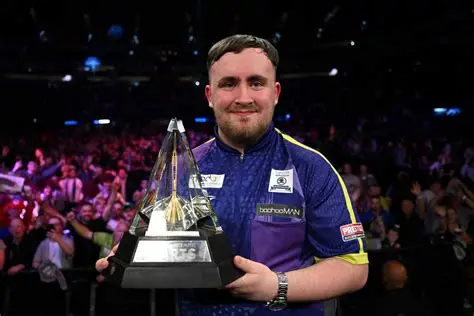
At the time, the victory moved Luke Littler back into the top-four race and gave his Premier League campaign badly needed momentum. Looking back now, it meant even more. Cardiff was the night his season properly started. He later went on to win the 2026 Premier League title, beating Gerwyn Price and Luke Humphries in final-leg thrillers at The O2.
That is why this article should no longer be read only as a report of a 6-4 win over Clayton. It should be read as the turning point in a campaign that ended with Littler lifting the trophy again.
For readers following The News Ink’s wider sports coverage, this was a reminder that elite players do not always dominate from week one. Sometimes they need one night, one checkout and one hostile crowd to bring the best version back.
Why Cardiff mattered for Luke Littler
Luke Littler had not started the 2026 Premier League the way many expected. He came into Night Five seventh in the eight-player table, with only one match win from the opening four rounds. He had picked up points when Michael van Gerwen withdrew through illness in Glasgow, but that was not the same as building rhythm through wins.
That made Cardiff dangerous. Another early exit would have turned a slow start into a real problem. The Premier League format punishes bad runs because every Thursday is short, sharp and public. Lose in the quarter-final, and the night is over before it has begun. Win the first game, and suddenly two points become possible. Win the night, and the whole table changes.
Luke Littler understood that. He has often said the first match of the night is the key. Against Josh Rock, he was not at his flowing best, but he found a way. That mattered more than style. The 6-4 win gave him points, gave him stage time and gave him a route into the part of the evening where his game could open up.
Once he survived the quarter-final, Cardiff became an opportunity rather than a threat.
The Welsh crowd gave the night its edge
Cardiff was never going to be neutral. Jonny Clayton and Gerwyn Price were the emotional centre of the night. The crowd wanted a Welsh winner, and Clayton’s run to the final made that dream feel realistic.
That atmosphere could have worked against Luke Littler. He is still only 19, despite already carrying the profile of a seasoned champion. Darts crowds can be unforgiving, especially when a visiting player is blocking the home favourite. Every missed double is cheered. Every Welsh maximum gets louder. Every momentum swing feels magnified.
Littler handled it well. He did not get dragged into the noise. He focused on the board, the rhythm and the match situation. That was one of the most impressive parts of the night. The scoring was spectacular, but the control was just as important.
Clayton had the crowd behind him and the table position to believe. Price had the Welsh firepower and the stage presence. Luke Littler beat both. That is why the Cardiff win became a statement.
The semi-final against Gerwyn Price unlocked his best darts
The night truly changed in the semi-final against Price. Littler averaged 111.05 and finished the match with a 170 checkout. That was the kind of performance that shifts a tournament evening.
Price had already survived a tight quarter-final against Stephen Bunting, coming back from 3-1 down to win 6-5 after Bunting missed a match dart. The Welshman looked ready to feed off the home energy. Instead, Littler produced one of his cleanest displays of the season.
The 170 checkout mattered because of what it represented. In darts, the “Big Fish” is more than a high finish. It is a psychological punch. It tells the opponent that no leg is safe. It tells the crowd that the player has found the middle of the board and the centre of the moment.
Luke Littler used it perfectly. The finish against Price did not only win a match. It changed the mood of the night. It took the Welsh crowd’s energy and turned it into something he could use.
By the time he reached Clayton, Littler had stopped looking like a player trying to rescue a campaign. He looked like a player ready to take over.
Jonny Clayton made him work for it
The final was not a collapse from Jonny Clayton. It was a high-quality match between a table leader and a world-class opponent finding form.
Clayton had earned his place. He beat Gian van Veen 6-4 in the quarter-final, then defeated Luke Humphries 6-4 in the semi-final. That was a strong route to the final, especially because Humphries had earlier crushed Michael van Gerwen 6-1 for his first Premier League win in Cardiff.
Clayton had already shown in the first four weeks that his Premier League return was serious. He was top of the table and playing with confidence. The final was his chance to turn a strong start into a home-night triumph.
He pushed Littler hard. He hit six 180s in the final, while Littler hit five. The crowd sensed every chance. When Clayton briefly moved ahead with a bullseye finish, the building erupted. It felt like the Welsh party might still happen.
Luke Littler did not allow it. He responded with another 170 checkout, kept scoring heavily and held his nerve when the match reached the final stretch.
That was the difference. Clayton had emotion. Littler had answers.
The second 170 checkout defined the final
The most memorable moment of the final was Littler’s second 170 checkout of the night. Producing one Big Fish in a Premier League evening is special. Producing two, against Price and Clayton, made it feel like a warning to the rest of the field.
The second 170 mattered because Clayton had just applied pressure. The Welshman was not merely hanging around. He was threatening to take control. Littler’s finish changed that instantly.
That is what elite finishing does. It compresses a match. It turns a small opening into a major swing. It forces an opponent to accept that even a strong leg may not be enough.
In a sport where momentum can change in minutes, the 170 was more than a highlight. It was a scoreboard weapon.
Luke Littler later said it was special to hit two in one night. He was right. You do not usually see two Big Fish checkouts from one player in one Premier League evening. To do it in Cardiff, against two Welsh opponents, added another layer.
The missed nine-darter showed how close he was to perfection
The final also produced one of those moments darts fans remember even when it does not quite land. Littler opened a leg with eight perfect darts and moved to double 15 for the nine-darter. He missed.
The crowd reaction captured the strange magic of darts. A missed double can still become a moment of theatre because everyone understands how close perfection was. Littler had already hit a televised nine-darter in Cardiff the previous year, so the chance felt even more dramatic. He was close to repeating history in the same city.
Missing double 15 did not derail him. That was important. Young players can sometimes carry a missed perfect leg into the next throw. Littler reset quickly and kept control of the match.
That is another reason Cardiff felt like a turning point. The night showed not only his ceiling but his composure. He could miss a nine-darter, hear the crowd respond, and still win the final.
Why the win changed the Premier League table
Before Cardiff, Luke Littler’s table position looked uncomfortable. After Cardiff, the picture looked different. The victory moved him onto nine points, level with Gerwyn Price and Gian van Veen, and within five points of Clayton at the top.
That shift mattered psychologically. The Premier League table can feel unforgiving early in the season, but one nightly win changes everything. Littler went from outside the top four to back in the main conversation.
More importantly, he had regained control of the narrative. The first four weeks had been about slow starts, missed chances and whether rivals had found ways to frustrate him. After Cardiff, the story became about his response.
Luke Littler did not just collect points. He reminded the field that a quiet month did not mean a weak season.
That proved true over the following weeks. Cardiff was followed by more nightly wins, more big finishes and eventually another Premier League crown.
Cardiff became the start of a run
The Cardiff win looks even better with hindsight. Littler won again in Dublin on Night Seven, then won in Berlin on Night Eight. By the end of that spell, he had claimed three nightly titles in four weeks and moved from pressure to control.
That is why Cardiff matters so much. It was the first domino. Without that win, the later surge might still have happened, but it would have come from a more difficult place. Cardiff gave him confidence, points and proof that he could win ugly, win brilliantly and win against hostile crowds.
Every champion has a night that changes the direction of a season. For Luke Littler in the 2026 Premier League, that night was Cardiff.
The title was not won there. But it became possible there.
Clayton still proved he belonged at the top
The result should not be used to dismiss Jonny Clayton’s night. Clayton lost the final, but he left Cardiff still top of the table and still one of the strongest players in the competition.
His Premier League return had already been impressive. He reached repeated semi-finals, won nights, and showed that he could still beat the best players in short-format pressure matches. Cardiff was painful because the home crowd wanted him to finish the job, but it was also evidence of his level.
Clayton’s style is different from Littler’s. He does not carry the same teenage-star explosion or media frenzy. He is calmer, more measured and often at his best when matches become tactical. Against Littler, he produced heavy scoring and forced the world number one to play near his best.
That matters. A player who loses a final 6-4 after hitting six 180s has not failed badly. He has run into a special performance.
Clayton’s season later continued strongly enough for him to reach Finals Night at The O2. Cardiff was not the end of his story. It was part of a wider campaign that proved he still belonged among the elite.
Why Littler’s mentality stood out
The most revealing part of Luke Littler’s Cardiff win was not only the scoring. It was the way he spoke afterwards. He talked about needing to pick himself up, putting practice hours in and using the win as a confidence boost.
That was important because Littler’s rise has sometimes made success look automatic. It is not. The Premier League is a demanding weekly circuit. Players travel constantly, face the same elite opponents repeatedly and must reset after every loss in front of television audiences.
A 19-year-old carrying that kind of attention could easily become distracted by headlines, boos, praise or social media noise. Littler’s Cardiff comments suggested something more grounded. He knew he had not started well. He knew he needed to work. He did the work and then delivered.
That mentality is why the win was more than form. It was a sign of maturity.
For a player already expected to dominate, learning how to respond to a bad spell may be more valuable than another easy win.
The Littler-Humphries rivalry stayed in the background
Even on a night when Clayton was the final opponent and Price was the emotional semi-final test, Luke Humphries still mattered to the wider story. Humphries beat Van Gerwen 6-1 in Cardiff and later lost to Clayton in the semi-final. He did not reach the final that night, but the season was always building toward another Littler-Humphries meeting.
That meeting eventually came at The O2. Littler beat Humphries 11-10 in a dramatic final to win the Premier League title for the second time. Sky Sports described the final as another chapter in a trilogy rivalry, and that is exactly what it has become.
Cardiff helped set that up because Littler needed to stay close enough in the table to reach the play-offs. The Night Five win was one of the results that made the later final possible.
This is how long competitions work. A March win can shape a May final. A 170 checkout in Cardiff can help create a title night in London.
Why the Premier League format rewards resilience
The Premier League Darts format is designed to create pressure. Each regular night is short. Quarter-finals, semi-finals and finals are played as best-of-11 legs. Points are awarded quickly. One missed double can end an entire week’s work.
That is why resilience matters. The best players do not only have the highest averages. They have the ability to survive a poor first match, improve across the night and peak when the title is on the line.
Luke Littler did that in Cardiff. His quarter-final win over Rock was not perfect. His semi-final against Price was brilliant. His final against Clayton combined scoring, finishing and nerve.
That pattern became a champion’s pattern. Start well enough. Grow into the night. Take the big finish when it appears. Do not panic when perfection is missed. Close the job.
The Cardiff win showed that Littler had all of those layers.
Key facts at a glance
| Detail | Figure |
|---|---|
| Event | Premier League Darts Night Five |
| Venue | Utilita Arena Cardiff |
| Final | Jonny Clayton 4-6 Luke Littler |
| Quarter-final | Luke Littler 6-4 Josh Rock |
| Semi-final | Gerwyn Price 3-6 Luke Littler |
| Littler’s semi-final average | 111.05 |
| Littler’s final average | 106.40 |
| 170 checkouts by Littler | 2 |
| Missed nine-darter dart | Double 15 |
| Final 180s | 11 total |
| Littler’s points after Cardiff | 9 |
| Later 2026 outcome | Littler won the Premier League title |
What the Cardiff win teaches
Luke Littler’s Cardiff victory teaches three things.
First, early-season form can be misleading. A slow start does not define an elite player if the response is strong enough.
Second, finishing changes matches. The two 170 checkouts were not decorative. They were decisive, emotional and tactical. They broke momentum at exactly the right moments.
Third, darts is increasingly a mental endurance sport. The throw is technical, but the schedule, travel, crowd reaction and repeated pressure make mentality just as important. Littler’s ability to handle a hostile Cardiff arena at 19 showed why he is already built differently.
The sports training and technology side of elite performance often focuses on measurable gains, recovery and preparation. Darts may look simpler than field sports, but the same principle applies: repetition, rhythm, focus and recovery under pressure separate champions from contenders.
Cardiff was a performance built on all of that.
The careful takeaway
Luke Littler spoiled the Welsh party in Cardiff, but the win became much more than one night of entertainment. He beat Josh Rock, then Gerwyn Price, then Jonny Clayton. He hit two 170 checkouts. He nearly completed a nine-darter. He moved back into the Premier League’s top-four race and changed the mood around his season.
Clayton remained a major contender, and the home crowd had plenty to admire. But Cardiff belonged to Littler because he produced the right darts at the right time against the wrong crowd.
The result also looks more important now because of what followed. Littler later won the 2026 Premier League title at The O2, beating Price and Humphries in final-leg deciders. That makes Cardiff the night that sparked the run.
Luke Littler’s season did not begin perfectly. Cardiff made sure it did not stay that way.
For more darts, sports analysis and major event coverage, follow The News Ink on Medium.