Iran Women’s Football Team: Brave 2026 Anthem Crisis Raises Safety Fears
Iran women’s football team became one of the most powerful stories of the 2026 AFC Women’s Asian Cup because a few seconds before kick-off carried more meaning than the match itself.
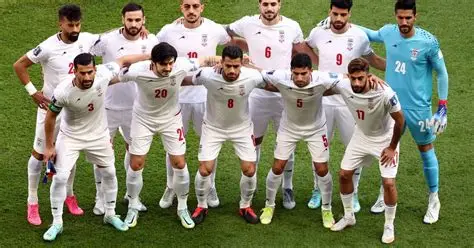
Before their opening group game against South Korea in Australia, Iran’s players stood in silence during the national anthem. Days later, before facing the Matildas on the Gold Coast, they sang and some players raised their hands in salute. The change was impossible to ignore. It came during a war at home, after U.S.-Israeli strikes on Iran, and after the team had already drawn attention for a silent gesture that many observers interpreted as protest, mourning or resistance.
No official explanation has fully settled why the players changed their approach. Team officials said they were focused on football. Some journalists and activists argued the players had been pressured by Iranian officials travelling with the delegation. What is clear is that the Iran women’s football team was carrying a burden no athlete should have to carry: representing a country at a major tournament while worrying about family, war, state pressure and possible punishment.
Australia beat Iran 4-0 in that match. Alanna Kennedy scored twice, while Amy Sayer and Mary Fowler also found the net. But the result was not the only story. The anthem moment turned the match into a wider debate about women’s sport, political pressure, player safety and the danger of returning home after public defiance.
For readers following the wider conflict behind the story, The News Ink’s explainer on why the US and Israel attacked Iran gives important background on the war that shaped the team’s Asian Cup experience.
Why the anthem moment mattered
Iran women’s football team did not need to release a statement for the first silence to be understood politically. Iranian athletes have repeatedly faced pressure over public symbols, especially the national anthem, hijab rules, protest gestures and messages of loyalty to the Islamic Republic.
The silence before the South Korea match echoed the Iran men’s national team at the 2022 World Cup in Qatar. Then, the men stood silent before facing England during the Women, Life, Freedom protests that followed the death of Mahsa Amini in police custody. They later sang the anthem before facing Wales, amid intense pressure and scrutiny.
That history made the women’s silence in Australia feel deliberate to many viewers. The players were not shouting slogans. They were not holding banners. They simply refused to sing. In a heavily politicised environment, silence can become a statement.
The later decision to sing and salute before facing Australia therefore raised immediate questions. Was it a change of heart? Was it a tactical decision to reduce danger? Was it imposed by officials? Was it an attempt to protect families back home? Without direct freedom for every player to speak openly, the public cannot know the full answer.
That uncertainty is exactly why the moment mattered.
The war made football impossible to separate from politics
The Iran women’s football team had arrived in Australia before the war escalated. Then, while they were preparing for matches, their country was hit by U.S.-Israeli strikes. Families, cities, internet access and daily life in Iran were suddenly caught in a crisis.
Forward Sara Didar spoke emotionally before the Australia match, fighting back tears as she discussed the difficulty of focusing on football while worrying about loved ones at home. Head coach Marziyeh Jafari said the team was saddened by the situation and that nobody wanted war, but insisted they had come to Australia to play football.
That line is understandable, but it also shows the impossible position of the players. They were athletes in a tournament, but they were also Iranian women abroad during a national emergency. Every gesture was being watched by Iranian state media, opposition activists, diaspora protesters, international journalists and sporting authorities.
The News Ink’s report on shock and relief in Iran after deadly strikes explains how divided and frightened Iranian society became after the attacks. The players were not outside that reality. They were separated from it physically, but emotionally trapped inside it.
What happened against South Korea
Iran opened Group A against South Korea on 2 March 2026 at Gold Coast Stadium. They lost 3-0, but the pre-match anthem silence drew more attention than the scoreline.
The silence was interpreted by some fans and rights campaigners as a brave act of solidarity with people suffering in Iran. Others saw it as mourning. Iranian state-aligned voices reportedly reacted angrily, and the players were later labelled “wartime traitors” by some hardline figures.
This is why the Iran women’s football team story moved quickly from sport to safety. A symbolic gesture abroad can create consequences at home. Athletes may face federation punishment, public denunciation, threats, surveillance, family pressure or travel restrictions.
The team’s situation became even more sensitive because they were women. Iranian women athletes already operate under strict rules over dress, behaviour, public speech and political symbolism. International tournaments give them visibility, but that visibility can become dangerous if it is viewed as defiance.
What changed before the Australia match
Before the match against Australia, Iran’s players sang the anthem and some saluted. ABC News reported that this stood in stark contrast to the opening match silence. Alireza Mohebbi, an Australia-based correspondent for Iran International TV, told ABC there was “no doubt” the players had been instructed to sing and salute.
That claim should be reported with attribution. It is serious, but it is not the same as an official admission. The safest wording is that journalists and activists alleged pressure from officials travelling with the team, while Iranian team officials did not publicly confirm such pressure.
Still, the visual change was striking. A team silent days earlier was now visibly performing loyalty during the anthem. In normal sport, a team singing an anthem is routine. In this context, it looked like a message.
The Iran women’s football team was therefore judged not only by what it did, but by what it may have been forced to do. That is why the story deserves careful language. The players should not be criticised for singing. They may have been protecting themselves or their families. They should not be reduced to symbols when they are human beings under pressure.
Australia’s 4-0 win was only part of the story
On the pitch, Australia were far stronger. The Matildas secured their quarter-final place with a 4-0 win over Iran. Alanna Kennedy scored a brace, while Amy Sayer and Mary Fowler also scored. The result reflected the gap between one of Asia’s strongest women’s teams and a side competing under extreme emotional pressure.
Iran defended for long spells and tried to stay compact, but Australia’s quality was clear. The match was played in difficult conditions on the Gold Coast, with rain adding to the challenge. Iran’s players were already carrying war worry and anthem scrutiny, and the football itself became secondary for many viewers.
That is important. The Iran women’s football team did not lose simply because of the political context. Australia were better. But the context helps explain why the match felt heavier than a normal group-stage defeat.
The News Ink’s football guide explains how tactics, team structure and preparation shape football results. In this case, preparation was not only tactical. It was psychological and political.
The Philippines defeat ended Iran’s tournament
Iran’s final Group A match came against the Philippines on 8 March. The Philippines won 2-0 at Robina Stadium, with the AFC confirming that the Filipinas kept alive their hopes of reaching the knockout stage while Iran finished bottom of the group.
That defeat ended Iran’s Asian Cup campaign. But the political story did not end with the final whistle. In fact, concern increased once elimination meant the team might soon have to leave Australia.
The Guardian reported “grave concerns” around the team’s return home after the Philippines match, with protesters gathering near the team bus and chanting for the players to be allowed to go. The players were seen taking photos of the protest from inside the bus.
That moment captured the entire crisis. Outside the bus, diaspora protesters feared the players could face punishment. Inside the bus, the athletes were no longer just national-team players. They had become people whose next destination could shape their safety.
Asylum concerns changed the ending
After the tournament, the story moved from anthem controversy to protection. AP reported that Australia granted asylum to five members of the Iranian women’s soccer team who sought protection while in the country for the Women’s Asian Cup. Home Affairs Minister Tony Burke confirmed the approvals and praised their courage.
Reuters later reported that two Iranian women’s players, Fatemeh Pasandideh and Atefeh Ramezanizadeh, began training with Brisbane Roar after seeking asylum. Reuters said they were among seven members of the Iranian delegation granted humanitarian visas, and that five of the group later returned to Iran while Pasandideh and Ramezanizadeh stayed in Australia.
That update changes the article. The story is not only that the Iran women’s football team sang the anthem before facing Australia. It is that the anthem moment became part of a wider safety crisis that continued after the tournament.
A responsible article should therefore avoid treating the issue as a one-day controversy. The real question became whether players could make free choices without fear of punishment.
Why player safety became the central issue
Player safety is not only about physical injuries on the pitch. It also includes protection from coercion, political punishment, threats, forced return or retaliation against families.
FIFPRO and other campaigners called for protection of the players after the anthem silence and backlash. Reuters reported that there were calls for the AFC and FIFA to engage with the Iranian Football Association, the Australian government and relevant authorities to ensure the players’ safety.
That is a major point for football governance. International federations often say sport should be separate from politics, but that separation collapses when athletes may face danger for symbolic actions. In such cases, governing bodies cannot simply say it is a national matter.
The Iran women’s football team case shows that women athletes from authoritarian or conflict-affected states may need stronger protection at international tournaments. That includes confidential reporting channels, emergency visa routes, legal advice, safe accommodation and clear rules against coercion by officials.
Why the salute raised extra concern
Singing an anthem is one thing. Saluting while doing it is another. Several reports noted that some Iranian players saluted during the anthem before the Australia match.
In many countries, a salute during an anthem could be read as patriotic ceremony. But in this case, it came days after silence and amid allegations of pressure. That made the gesture look less spontaneous to critics. It appeared, to some observers, like a forced display of loyalty.
Again, the article should avoid claiming certainty unless directly supported. The safest line is that the salute intensified concern because it marked a visible shift from the earlier silence and because rights activists alleged pressure from Iranian officials.
This distinction protects the players. The issue is not whether they sang or saluted. The issue is whether they were free to choose.
The protests outside the stadium
Before the Australia match, Iranian-Australian protesters gathered near the Gold Coast venue. Some waved the pre-revolution Iranian flag, along with Australian and Israeli flags, and voiced opposition to the Islamic Republic. The protest reflected the anger of a diaspora community watching events in Iran from abroad while trying to support the team.
These protests can be difficult for players. On one hand, they show public support and remind athletes that many people view them as brave. On the other hand, visible protests around team hotels, buses or stadiums can increase pressure on athletes who are already being monitored.
That is why the Iran women’s football team was caught between two forms of expectation. The diaspora wanted courage and defiance. The authorities wanted loyalty and control. The players wanted to survive the tournament, protect their families and play football.
The human centre of the story is that no athlete should have to carry all three at once.
The Women, Life, Freedom shadow
The anthem controversy cannot be separated from the Women, Life, Freedom movement that followed Mahsa Amini’s death in 2022. Iranian women athletes have become powerful symbols because their bodies, clothing, voices and public gestures are often politicised by the state and by opposition movements.
Football is especially visible because national teams represent the country on a global stage. When players sing, stay silent, wear certain symbols or give interviews, the meaning can travel quickly through social media and diaspora networks.
The Iran women’s football team did not create this pressure. They inherited it. Years of protest, repression, compulsory controls, online activism and diaspora politics turned a pre-match anthem into a test of loyalty and courage.
The News Ink’s cybersecurity guide is relevant because digital monitoring, internet control and social-media backlash now shape political risk for athletes. A gesture on live television can be clipped, shared, condemned and used as evidence within minutes.
AFC and FIFA face a difficult test
The AFC Women’s Asian Cup was meant to showcase Asian women’s football and serve as a pathway toward the 2027 Women’s World Cup. For Iran, it became something much more complicated.
AFC and FIFA must think seriously about what happens when teams from conflict zones or repressive environments travel abroad. The duty of care should not end at match organisation. It should include player welfare, freedom from intimidation and procedures for athletes who fear return.
This does not mean football bodies should decide every political dispute. It means they must recognise when player safety is at risk. If athletes fear punishment for staying silent during an anthem, that is not a normal football matter.
The Iran women’s football team case should become a policy lesson. International tournaments need emergency protection systems before crises happen, not after players are already surrounded by media, officials and protesters.
The tournament result in context
Iran’s results were poor: 3-0 defeat to South Korea, 4-0 defeat to Australia, and 2-0 defeat to the Philippines. They finished fourth in Group A and exited the tournament without a goal.
But judging the team only by results would be unfair. They were competing in one of the most emotionally difficult contexts imaginable. Many players were worrying about family members in Iran. They faced public scrutiny over anthem choices. Some were reportedly concerned about returning home.
The football still matters. Iran’s women’s programme needs investment, competitive matches, professional development and stronger domestic structures. But the Asian Cup showed that sporting progress cannot be separated from basic freedom and safety.
If players are not free to speak, choose, train and travel without fear, performance will always be limited.
What the story says about women’s football
The Iran women’s football team story shows why women’s football is never only about sport in countries where women’s rights are contested. Every international appearance can become a political act, even when players insist they only want to play.
The same tournament that gave Australia, Japan, South Korea, China, the Philippines and others a chance to chase football goals also exposed the different realities players face depending on their country. Some athletes can focus on tactics, recovery and selection. Others must think about state pressure, family safety and asylum.
That contrast should trouble football authorities. Women’s football cannot grow equally if some players are carrying political risks that others never face.
The News Ink’s sports training technology guide explains how elite sport increasingly depends on support systems. For players under political pressure, support must include legal, psychological and human-rights protection too.
The final judgment
Iran women’s football team entered the 2026 AFC Women’s Asian Cup to play football, but the tournament turned them into symbols of a much larger struggle.
Their silence before South Korea was read by many as protest or mourning. Their singing and saluting before Australia raised concern that pressure had been applied. Their emotional interviews showed the pain of competing while war unfolded at home. Their defeat to the Philippines ended the tournament, but not the fear surrounding their return. The later asylum decisions confirmed that the safety concerns were not imaginary.
The most important point is not whether the players sang or stayed silent. The point is whether they were free.
Athletes should not have to choose between national duty and personal safety. They should not have to calculate whether one anthem gesture could endanger their families. They should not have to seek asylum after a football tournament because silence became a political crime.
The Iran women’s football team gave the Asian Cup one of its most haunting stories. It should now give football authorities a harder lesson: women’s sport cannot be protected by slogans alone. It needs systems that protect the players when politics follows them onto the pitch.
For more sports and global conflict analysis from The News Ink, follow The News Ink on X.