Michael Carrick: Why His Powerful 2026 Manchester United Lesson Still Matters
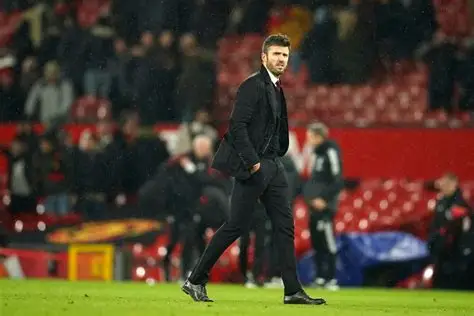
Michael Carrick suffered his first Manchester United defeat on a cold, frustrating night at St James’ Park. At the time, the 2-1 loss to Newcastle United looked like the moment when the early optimism around his Old Trafford return finally met Premier League reality. A few months later, it looks more like the defeat that tested whether his United revival had substance.
The original story focused on Carrick asking his players to learn after Newcastle’s late winner. That was the right immediate angle. United had lost to a team reduced to 10 men, conceded in the 90th minute to William Osula, and seen their unbeaten start under Carrick end abruptly. But the season has now moved on. The stronger updated story is not just that Michael Carrick lost once. It is that he responded, steadied the squad, secured Champions League football and earned the permanent Manchester United job until 2028.
That is why the Newcastle defeat still matters. It was the first clear setback of Carrick’s interim spell. Before that night, the mood had been almost impossibly positive. United had beaten big opponents, climbed the table and rediscovered confidence after the end of Ruben Amorim’s troubled reign. Carrick’s calm public tone, old United connection and practical coaching style had made the job look simpler than it was.
Newcastle reminded everyone that it was not simple. United’s form had already begun to wobble before the defeat. Performances against West Ham, Everton and Crystal Palace had raised questions, even when results were acceptable. Injuries had thinned the squad. Key attackers were not scoring freely. The midfield lacked full control. The late loss exposed those warning signs in a way no unbeaten run could hide.
For readers following The News Ink’s wider football coverage, the Michael Carrick story is a useful lesson in management. The best evidence of a coach is not only how quickly he improves a team. It is how he reacts when the improvement is challenged.
What happened at Newcastle
Michael Carrick took United to St James’ Park with an unbeaten record as interim head coach. Newcastle ended it. The home side won 2-1 despite being reduced to 10 men, with Osula scoring a dramatic late winner that turned a difficult United performance into a damaging result.
The loss hurt because of the context. United had been in a strong league position and had a chance to strengthen their top-four push. Carrick had created belief quickly after replacing Amorim. A defeat was always going to come, but losing to a 10-man opponent made the result harder to absorb.
Newcastle’s winner also exposed United’s lack of control. Good teams do not only chase goals; they manage danger. When an opponent is down to 10 men, the game should become easier to close down, not easier to lose. United allowed Newcastle space, energy and belief at the exact moment when they needed composure.
Michael Carrick did not hide from that. He admitted United had not played well enough and that Newcastle deserved credit. That mattered because his tone was different from the more confrontational approach United fans had seen from Amorim. Carrick did not protect the performance, but he also did not humiliate his players.
That became part of his wider appeal. He corrected without drama. He demanded better without turning every defeat into a public trial.
Why the defeat felt different
Michael Carrick’s first defeat felt different because United had been living inside a new-manager bounce. Early wins can create emotional momentum, but they can also hide deeper issues. Carrick’s opening run had lifted the club, but it did not instantly solve every structural problem.
United had injury issues. Matthijs de Ligt, Lisandro Martinez, Mason Mount, Noussair Mazraoui and Patrick Dorgu were among the absentees or players affected during that period. Casemiro and Luke Shaw had also been managing heavy workloads. When a team wins, those problems look like manageable obstacles. When it loses, they become explanations.
Form was another issue. Bryan Mbeumo and Matheus Cunha had not been scoring regularly enough. Kobbie Mainoo was still adapting to the demands of carrying influence in a pressured midfield. United’s attack had moments of quality, but the rhythm was not always convincing.
That is why Michael Carrick’s response mattered. A less secure coach might have turned on individuals or overreacted tactically. Carrick instead framed the defeat as something to learn from. He accepted the performance was below standard, but he kept the bigger picture intact.
That is often what separates a temporary lift from real management. A coach must protect confidence while confronting truth.
Carrick’s public style helped United
Michael Carrick has never built his public image on confrontation. As a player, he was calm, intelligent and understated. As a coach, he has carried much of the same personality. That style suited United after the turbulence that preceded him.
The article’s original comparison with Ruben Amorim was important. Amorim’s language during difficult moments could be blunt and sharp. Carrick’s approach has been softer in tone, but not necessarily weaker in substance. He does not need to attack players publicly to make demands privately.
That difference helped after Newcastle. United did not need a manager creating a crisis. They needed a manager explaining why the defeat mattered and what had to change before the next match.
Michael Carrick’s tone before Aston Villa was also revealing. He said the players were ready to respond and understood that a first defeat would feel different. That was simple, but it carried an important message: United had lost, but the project was not broken.
Football dressing rooms can respond badly to public panic. Carrick avoided it. He kept the focus on work.
The Aston Villa match became a test
The Aston Villa fixture became the immediate test of Michael Carrick’s authority. United had more than a week to sit with the Newcastle defeat. That can be useful, but it can also be dangerous. Too much time after a loss can create pressure, overthinking and media noise.
Villa were not a soft opponent. Under Unai Emery, they had become one of the most organised and tactically awkward teams in the Premier League. They had players capable of punishing mistakes and a manager skilled at exploiting uncertainty. Carrick also had personal interest in Morgan Rogers, a player he had worked with at Middlesbrough and praised before the game.
For United, the challenge was clear. They needed to show that Newcastle was a warning, not a turning point in the wrong direction. They needed to play with more control, more conviction and better decision-making. They also needed to prove that Carrick’s calm response could produce action, not only words.
That is why the Villa match carried weight. It was not only about three points. It was about whether United’s players trusted the new manager enough to recover quickly.
Why the bigger picture stayed positive
Even after Newcastle, the bigger picture around Michael Carrick remained positive. United were still in the top-four race. They had fewer distractions than several rivals because they were not carrying a heavy European or domestic cup schedule at that stage. The mood inside the club was far healthier than it had been before his arrival.
The defeat did not erase the earlier work. Carrick had lifted standards quickly. United had beaten major opponents. Players who had looked drained under the previous regime were moving with more confidence. Old Trafford felt lighter. Supporters were beginning to believe the season could still end with Champions League football.
That context matters because football analysis often becomes too reactive. One defeat should not wipe out seven good results. But one defeat should also not be ignored if it exposes problems. Carrick’s challenge was to keep both ideas alive.
Michael Carrick did that well. He acknowledged the performance issue without treating it as a collapse. That is why United did not spiral.
The Newcastle loss exposed tactical issues
The defeat also raised tactical questions. United under Michael Carrick looked more balanced than under Amorim, but they still had vulnerabilities. The back line could be exposed when full-backs pushed too high. Midfield control depended heavily on Mainoo’s composure and the availability of experienced players. The attack could become individual rather than coordinated when games became tense.
Newcastle punished those weaknesses. Osula’s winner came from a moment of directness and poor United control. The fact that Newcastle had 10 men made it worse because United should have been able to manage space more intelligently.
Carrick’s United were not yet a finished team. They were a recovering team. That distinction is important. A recovering team can win big matches through belief, energy and improved structure, but it may still lack the automatic habits of a title-level side.
The Newcastle match showed what still needed work: game management, chance creation against compact opponents, defensive concentration late in matches and better use of extra-man situations.
The injury list gave context but not an excuse
Michael Carrick had reasons for difficulty. The injury list was real. Losing players such as Martinez and De Ligt changes build-up play and defensive security. Missing Mount affects pressing and midfield rotation. Mazraoui and Dorgu’s absence reduced full-back options. When Shaw and Casemiro were not fully fresh, United lost experience and balance.
But Carrick did not lean too heavily on excuses. That was important. Injuries explain some problems, but Manchester United are still expected to beat 10-man opponents when they have control of a game. Carrick understood that.
This is where his public response was smart. He did not pretend the circumstances were perfect. He also did not use them to protect a poor performance. He said United needed to be better.
That standard helped him. Supporters can accept injuries. They are less willing to accept managers who use them to explain away every flaw. Michael Carrick struck the right balance.
Why Carrick’s connection to United matters
Michael Carrick’s history at Manchester United helped him during this period. He was not an outsider trying to learn the club’s emotional language. He had played there, won there and worked there as a coach. He understood the expectations attached to the badge.
That connection does not automatically make someone a good manager. United have learned many times that nostalgia is not a plan. But in Carrick’s case, the connection gave him credibility while his coaching work gave him authority.
Players responded to him because he was calm and clear. Supporters responded because he represented a familiar standard without sounding trapped in the past. The club responded because he brought order after a period of confusion.
Michael Carrick’s first defeat was therefore also a test of whether that connection had depth. Could he still lead when the emotional lift faded? The answer, over the rest of the season, was yes.
The permanent appointment changed the story
The biggest update is Carrick’s permanent appointment. Manchester United initially brought him back as head coach until the end of the 2025-26 season. By May, the club had seen enough. He was given the permanent job until 2028 after guiding United back into the Champions League.
Reuters reported that Carrick delivered 11 wins in 16 matches and took United to third, sealing a place in the next Champions League. The Guardian also reported that United were impressed by his interim spell and that he had earned strong support after reviving morale and performance.
That changes how the Newcastle defeat should be remembered. At the time, it was a possible warning that the revival might be fragile. By the end of the season, it looked like one of the setbacks Carrick used to sharpen the team.
Michael Carrick did not get the permanent job because United lost at Newcastle. He got it because the response to setbacks like Newcastle proved that his work could survive pressure.
What Carrick learned from Sir Alex Ferguson’s old lesson
The original article mentioned Sir Alex Ferguson’s idea that every team loses and that the reaction matters most. That remains the right theme. Ferguson’s greatest teams were not unbeaten machines. They were response machines. They could lose, absorb the lesson and turn the next match into a statement.
Michael Carrick played inside that culture. He understands that one defeat does not define a team unless the next performance confirms the problem. That mentality clearly shaped his reaction to Newcastle.
United under Carrick were not playing like Ferguson’s best sides, and the comparison should not be overstated. But the principle is timeless. In a Premier League season, defeat is inevitable. The important questions are whether players lose belief, whether the manager panics, and whether the team learns.
Carrick’s United answered those questions well enough to finish third.
Why this result matters for Carrick’s future
Michael Carrick’s first permanent season will be harder than his interim spell. Once a manager is permanent, the emotional honeymoon ends. Opponents study patterns. Players expect clarity over transfers and roles. Supporters expect progress. Champions League football brings tougher fixtures and less recovery time.
That is why the Newcastle defeat remains useful. It showed the areas Carrick must keep improving. United need more midfield depth, better late-game control and more consistent attacking output. They also need to handle congested schedules without losing structure.
Recent reporting has already pointed to midfield work before the 2026-27 season, with United linked to additions and internal solutions. That makes sense. Carrick’s own playing identity was built around control, positioning and passing rhythm. His United team will need more of those qualities if it wants to compete across league and Europe.
The first defeat was a lesson. The permanent job is the exam.
What players must take from it
For the players, the Newcastle game should remain a warning. United cannot depend only on momentum. They must learn how to manage awkward matches, especially away from home. They must stop opponents building belief late in games. They must punish 10-man teams, not give them hope.
The attackers also need greater reliability. Mbeumo and Cunha were brought to influence games, not drift through them. Mainoo must continue developing without being overburdened. Defenders must stay switched on when the match appears under control.
Michael Carrick can create the environment, but the players must turn lessons into habits. That is the next stage of United’s growth.
A team that wants to return to the top cannot treat defeat only as bad luck. It has to identify the repeatable causes: positioning, tempo, decision-making, substitutions, fitness and mentality.
Carrick’s calmness helps, but calmness works only if it leads to correction.
Why the defeat did not damage Carrick’s credibility
Managers often lose credibility when their response to defeat looks confused. Michael Carrick avoided that. He did not blame the referee. He did not attack individuals. He did not pretend United were unlucky. He said the performance was not good enough and moved the focus to improvement.
That honesty strengthened him. Supporters do not need managers to be theatrical. They need them to see what everyone else sees. Carrick saw it.
His credibility also came from the season’s wider direction. A coach who has already improved results earns more patience after a defeat. Carrick had earned that patience. He had made United harder to beat, more settled and more confident. Newcastle was disappointing, but it did not feel like a return to chaos.
That is why the article should frame the defeat as a lesson, not a collapse.
The careful takeaway
Michael Carrick’s first Manchester United defeat came in painful fashion. Newcastle United, reduced to 10 men, still found a late winner through William Osula and ended Carrick’s unbeaten start at St James’ Park. United were below the level required, and Carrick admitted as much.
But the bigger story is what followed. Carrick kept the message calm, demanded improvement and guided United through the top-four race. By May, he had done enough to earn the permanent job until 2028 after taking the club back into the Champions League.
That is why this defeat still matters. It was the first moment when Carrick’s United had to prove the revival was not only emotional. It forced questions about injuries, squad depth, attacking form and game management. It also gave Carrick a chance to show the most important quality of a Manchester United manager: the ability to respond.
Michael Carrick did not turn one defeat into a crisis. He turned it into a lesson. That may be why his interim spell became something more permanent.
For more football analysis, Premier League coverage and sports features, follow The News Ink on Medium.