Household Giving in India: How Ordinary Families Build a Remarkable ₹540 Billion Culture of Generosity
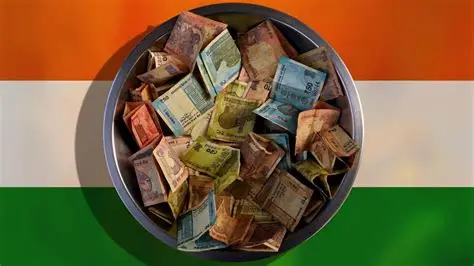
Household giving in India is far larger, more widespread and more personal than the country’s philanthropy headlines often suggest. Public attention usually turns to billionaire pledges, corporate social responsibility budgets and large foundations. Yet a study from the Centre for Social Impact and Philanthropy (CSIP) at Ashoka University shows that millions of ordinary people quietly sustain a giving economy worth an estimated ₹540 billion a year.
The third edition of How India Gives 2025–26 found that 68% of respondents reported giving in some form. That participation includes cash donations, in-kind support such as food or clothing and time spent volunteering. The findings reveal that household giving in India is not a small side story beside institutional philanthropy. It is a substantial social force rooted in daily life.
The report also challenges a narrow idea of what counts as charity. A person placing food in a communal kitchen, helping someone asking for support, donating clothes or volunteering at a local organisation may not appear in the annual report of a major foundation. However, those actions matter. Household giving in India is often informal, immediate and shaped by trust in people or institutions close to the donor.
Editor’s update — June 2026: This article has been expanded using the third edition of CSIP’s How India Gives study, released in February 2026. The updated version separates participation rates, recipient patterns and broader interpretations more carefully.
What the new report says about household giving in India
The most striking figure is the scale. CSIP estimates household giving in India at approximately ₹540 billion annually, equivalent to ₹54,000 crore. That estimate places everyday generosity within the national conversation about philanthropy and social impact.
The research is based on 7,225 nationally representative surveys across 20 states and is anchored to National Sample Survey consumption data. The study was designed to understand not only whether people give, but also how they give, who receives support and which channels influence giving decisions.
The headline findings are easy to understand:
| Finding | Reported figure | What it means |
|---|---|---|
| Respondents giving in some form | 68% | More than two-thirds reported cash donations, in-kind support, volunteering or a combination |
| Respondents giving in kind | 48% | Food, clothing and other practical support remain common |
| Respondents donating cash | 44% | Money is important, but it is not the only meaningful form of generosity |
| Respondents volunteering | 30% | Time-based support forms a significant part of everyday giving |
| Religious organisations receiving support | 46% | Faith-linked institutions remain the largest recipient category |
| Beggars or destitute individuals receiving support | 42% | Direct help to visible need remains highly significant |
| Non-religious organisations receiving support | 15% | Formal non-religious institutions receive a smaller share of everyday support |
These figures make one point clear: household giving in India cannot be understood through bank transfers alone. In-kind contributions and volunteering are central to the story. Any attempt to measure generosity only through formal donations would miss a large part of the activity taking place across the country. Household giving in India deserves to be measured on its own terms.
Why ordinary generosity is often overlooked
Household giving in India is easy to underestimate because much of it does not pass through highly visible institutions. Corporate giving is usually documented through company announcements, annual reports and regulatory disclosures. Large foundations publish programmes, grant totals and impact reports. Household generosity is more dispersed.
A donor may give a small amount at a place of worship, contribute food to a community kitchen, help a person directly or volunteer during a local appeal. Each act can appear minor when viewed alone. Together, those acts create a large giving ecosystem.
This difference matters because the language of philanthropy often favours formal structures. Words such as “strategy”, “grant-making”, “impact measurement” and “institutional funding” are important, but they do not describe every form of social support. Household giving in India operates through both organised channels and everyday relationships.
CSIP developed the How India Gives series partly because this area remained underexamined. The study’s underlying dataset is also available for researchers. Without better evidence, policymakers, social-sector organisations and funders can struggle to understand the preferences of ordinary donors or build pathways that connect local generosity with long-term social impact.
In-kind giving remains central to the story
One of the clearest findings is that practical support remains especially common. The report says 48% of respondents give in kind, slightly more than the 44% who donate cash. Household giving in India therefore includes food, clothing, household items and other forms of support that may respond to immediate needs.
In-kind donations can feel direct and understandable. A donor can see what is being given and may feel confident that it will be used quickly. In some settings, a bag of groceries, a meal or clothing can feel more useful than a cash transfer. The preference can also reflect local custom, religious practice and familiarity with the recipient. Household giving in India often follows these practical and cultural signals.
This does not mean in-kind giving is always the most efficient response to every need. Organisations may sometimes require flexible funding to pay staff, rent facilities, purchase specialist supplies or respond to emergencies. However, household giving in India is shaped by the choices donors actually make, not only by what institutions would prefer them to do.
The opportunity is to respect the culture of direct support while making organised giving easier to understand. Social-sector organisations can explain clearly how cash donations are used, show results and make the relationship between a small contribution and a real outcome more visible.
Religious organisations and visible need receive the most support
The distribution of household giving in India is as important as the total amount. CSIP’s findings show that religious organisations are the largest recipient category, receiving support from about 46% of donors. Beggars and destitute individuals follow closely at about 42%. Non-religious organisations receive support from about 15%.
These categories should be interpreted carefully. A religious organisation may use donations for worship-related activities, community meals, education, disaster support or help for families in need. A direct contribution to a person asking for assistance reflects a different type of giving: immediate support based on visible hardship.
The pattern shows the importance of proximity. People often give where they can see the recipient, understand the appeal or trust the institution. Household giving in India is therefore strongly relational. Donors may respond to an in-person request more readily than to a distant campaign with unfamiliar language.
The report also identifies differences between urban and rural areas. In urban settings, beggars and destitute individuals are the most common recipients of support. In rural areas, religious organisations take the lead. The underlying lesson is not that one form of giving is automatically superior. It is that generosity is shaped by the social environments people encounter. Household giving in India changes with those environments.
Face-to-face appeals still matter in a digital age
Digital fundraising has grown rapidly around the world, and social media is increasingly important for raising awareness. Yet household giving in India still depends heavily on personal contact.
The official CSIP summary says in-person canvassing is the most common way respondents learn about giving opportunities, followed by social media and television or radio. This helps explain why local relationships remain powerful. People may give after a request at home, a conversation in a neighbourhood, an announcement at a community gathering or an encounter with someone asking for help.
Digital channels still matter. They can introduce donors to new causes, simplify payments and allow organisations to communicate beyond their immediate area. But the strongest digital campaigns often borrow the qualities that make in-person appeals effective: trust, clarity and a recognisable human connection.
For organisations seeking to engage with household giving in India, technology should not replace credibility. A donation page, QR code or social-media video can make giving convenient. It cannot automatically create confidence. Donors still need to know who is asking, why the support is needed and how their contribution will be used.
Household giving in India crosses income groups
Another important finding is that generosity is not limited to wealthy families. The study says that even among households with monthly consumption expenditure of ₹4,000 to ₹5,000, about half report contributing. Participation rises to around 70%–80% among higher-consumption households.
This does not mean every household gives the same amount or faces the same financial choices. A small donation from a low-income family may represent a more significant sacrifice than a larger contribution from a wealthy household. Household giving in India should therefore be understood through both participation and context.
The report’s message is not that families under financial pressure should be expected to give more. Instead, it shows that generosity exists across economic levels. People support others even when their own resources are limited.
That pattern is important for social-sector organisations. Campaigns that speak only to affluent donors miss the breadth of the giving culture. At the same time, organisations must avoid pressuring people whose household budgets are already stretched. Respectful fundraising means creating options, explaining impact and allowing donors to decide what is realistic.
Education, geography and gender shape giving patterns
Household giving in India is widespread, but it is not uniform. The report says giving in all forms rises with education, increasing notably beyond grade 10 and peaking among graduates and people with higher degrees. Regional differences also appear in the balance between cash, in-kind support and volunteering.
The report notes that in-kind giving exceeds cash donations in the north, south and west. Volunteering is particularly high in the north. Urban respondents are slightly more likely to give cash, while rural respondents show a small preference for in-kind support.
Gender differences are also visible. Cash and in-kind giving are broadly similar across genders, while male-headed households report higher volunteering participation. Male-headed households are somewhat more likely to give to religious organisations, while female-headed households lean slightly more towards supporting beggars or destitute individuals.
These patterns do not reduce household giving in India to a simple demographic formula. They show why one fundraising strategy will not work equally well everywhere. Organisations need to understand the communities they serve rather than assuming every donor responds to the same message.
Four donor profiles reveal different motivations
The report divides household giving in India into four donor archetypes: grassroot givers, aspirational givers, practical givers and well-off givers. These groups are based on household consumption expenditure and education levels.
The categories are useful because they move beyond the question of whether a person donates. They help explain how donors learn about opportunities, which causes they prefer and what type of communication may feel credible.
| Donor profile | Broad interpretation | Engagement lesson |
|---|---|---|
| Grassroot givers | Often closely connected to local need and community networks | Personal contact and community credibility matter |
| Aspirational givers | May be influenced by social conditioning and intrinsic motivation | Clear explanations can connect generosity with wider outcomes |
| Practical givers | Often respond to direct requests and accessible opportunities | Convenience and transparent use of funds are important |
| Well-off givers | More likely to give across multiple forms | Digital and organised channels may have greater potential |
The four profiles should not be treated as rigid labels. People can give for several reasons at once. A donor may respond to faith, empathy, urgency, family tradition and a desire to improve the community. Household giving in India is complex precisely because it is personal.
The 68% figure needs context
The latest report is the third edition in the How India Gives series. Earlier editions recorded different participation figures. However, the studies should not be compared casually as though they measured the same thing in exactly the same way.
The 2025 study used 7,225 telephone surveys, a three-month recall period and a sample designed around a 35% urban and 65% rural distribution based on the 2011 Census. Earlier CSIP studies used much larger samples, combined telephone and in-person surveys, longer recall periods and a stronger urban focus. Some were also conducted during the COVID-19 period, when giving behaviour was shaped by unusual circumstances.
That means household giving in India cannot be described as having simply “fallen” from one edition to the next without careful methodological analysis. A lower headline percentage may reflect differences in survey design, recall periods and sample composition as well as changes in behaviour.
This is a useful reminder for readers and editors: statistics need context. The third edition is valuable because it improves understanding of current household giving in India, not because every number can be placed into a simple historical ranking.
Why formal organisations receive a smaller share
One of the report’s most important findings is that non-religious organisations receive support from around 15% of donors. That does not mean ordinary people lack generosity. The overall ₹540 billion estimate shows the opposite. The more useful question is why a relatively small share reaches organised non-religious institutions.
Trust is one possible explanation. A direct request feels concrete. A donor can see the person asking for help or recognise the institution collecting the donation. A formal organisation may appear more distant, even when its work is effective.
Visibility is another issue. Long-term social programmes can be difficult to explain. Preventive healthcare, education reform, community resilience and institution-building may create meaningful results over time, but their impact is less immediate than providing a meal or responding to a direct request.
Household giving in India creates an opportunity for organisations willing to communicate better. They can publish simple explanations, show where money goes, report outcomes honestly and make small donations convenient. The aim should not be to displace direct giving. It should be to give households more trusted choices.
What social-sector organisations can learn
The findings offer practical lessons for charities, community groups and social enterprises hoping to engage with household giving in India.
- Make impact visible. Explain what a modest donation can achieve without exaggerating.
- Build trust locally. Partnerships with respected community figures can make an organisation easier to understand.
- Respect existing habits. Donors already give through faith, personal relationships and direct appeals. New systems should not dismiss those traditions.
- Offer simple payment options. Digital tools can help when they reduce friction rather than complicate the experience.
- Report honestly. Clear updates can turn a first contribution into a longer relationship.
- Value time as well as money. Volunteering is a major part of household giving in India and deserves serious attention.
These lessons matter because household giving in India is not an untapped market waiting to be invented. It already exists. The challenge is to create bridges between everyday generosity and organised social impact without losing the trust that makes people willing to give.
A broader understanding of philanthropy
India’s philanthropy story is not a contest between ordinary families, companies and wealthy donors. Each group can play a different role. Corporate programmes may fund projects at scale. Foundations can support experimentation, research and long-term institution-building. High-net-worth donors can make large commitments. Households can respond quickly to visible needs and sustain community traditions.
The importance of household giving in India is that it expands the picture. It reminds readers that generosity is not measured only by the size of a cheque or the visibility of a donor. A meal, a small cash contribution, clothing for a family or a few hours of volunteer work can become meaningful when multiplied across millions of people.
The latest CSIP report gives this quieter giving economy greater visibility. Household giving in India can no longer be treated as a footnote. Household giving in India is widespread, culturally embedded and economically significant. It is also deeply human: shaped by faith, personal values, local relationships and the desire to respond when someone needs help.
Why the ₹540 billion figure matters
The strongest lesson is not simply that Indian households give large sums. It is that household giving in India operates through everyday decisions that often remain invisible in formal philanthropy debates.
The ₹540 billion estimate creates a reason to take those decisions seriously. It encourages researchers to measure them, organisations to understand them and policymakers to recognise their importance. It also challenges social-sector institutions to become more transparent and accessible.
Household giving in India should not be romanticised. Direct giving cannot replace effective public services or solve every structural problem. Informal support may not always reach the people or causes facing the greatest long-term need. Yet dismissing household generosity would be equally mistaken.
Ordinary families are already participating in social support at scale. The opportunity is to respect that generosity, learn from it and build better pathways for donors who want their contributions to create lasting impact.
For more carefully researched reporting and analysis, join The News Ink on its WhatsApp channel.