




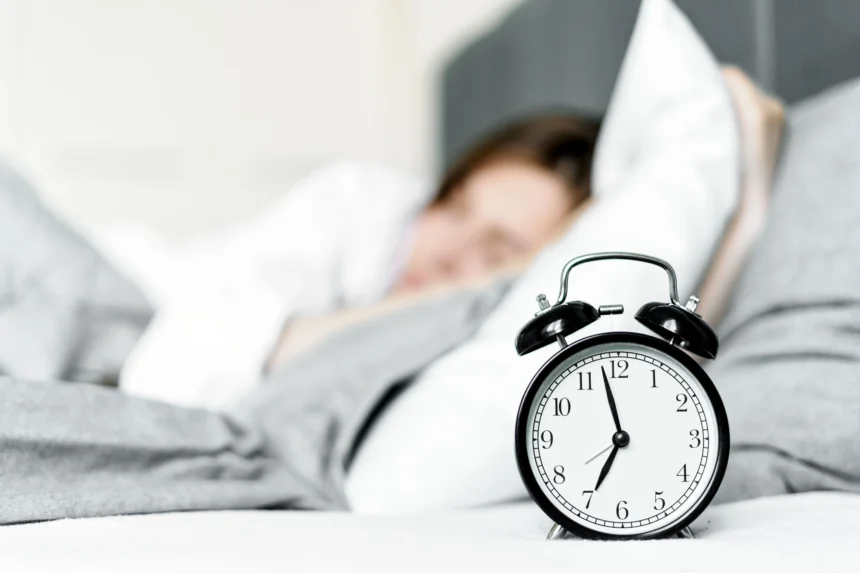
What Actually Happens Inside Your Body While You Sleep?
You close your eyes.
Your breathing becomes slower.
You stop responding to most things around you.
For the next several hours, it may appear that your body has simply switched off.
That impression could hardly be more wrong.
Understanding what happens while you sleep reveals one of the most active and carefully organized periods in human physiology.
Your brain repeatedly changes electrical state.
Heart rate and blood pressure shift.
Breathing changes.
Core body temperature falls.
Hormone release follows a nighttime schedule.
New memories are reorganized.
Immune activity changes.
Muscles relax.
During rapid eye movement sleep, most large skeletal muscles become temporarily inhibited while the brain can become remarkably active.
Even the movement of fluid through the brain appears to change during sleep, although researchers are still working out exactly how sleep influences the clearance of metabolic waste in humans.
Sleep is therefore not several hours of biological inactivity.
It is a repeating sequence of states that your brain and body need to function normally the following day.
The National Heart, Lung, and Blood Institute explains that healthy adults normally move through non-REM and REM sleep in cycles lasting roughly 80 to 100 minutes, usually completing four to six cycles during a night’s sleep. NHLBI — Sleep Phases and Stages
And each cycle does something slightly different.
What Happens While You Sleep at a Glance
| Body System | What Changes During Sleep |
|---|---|
| Brain | Moves repeatedly through NREM and REM states |
| Memory | Recently learned information is processed and consolidated |
| Heart | Heart rate generally slows during NREM sleep |
| Blood pressure | Usually decreases during normal NREM sleep |
| Breathing | Becomes slower during NREM and more irregular during REM |
| Body temperature | Core temperature decreases |
| Muscles | Relax deeply; major muscles are strongly inhibited during REM |
| Hormones | Growth hormone and other hormones follow sleep-related rhythms |
| Immune system | Immune signaling changes throughout the night |
| Metabolism | Sleep influences glucose control and appetite regulation |
| Brain fluid dynamics | CSF movement and brain-fluid exchange change during sleep |
| Dreams | Can occur throughout sleep but vivid dreaming is strongly associated with REM |
These events do not occur simultaneously at the same intensity.
To understand what happens while you sleep, you first have to understand sleep stages.
1. Your Brain Cycles Through Different Forms of Sleep
Sleep is not one continuous state.
Modern sleep classification divides normal sleep into:
NREM stage 1
NREM stage 2
NREM stage 3
and
REM sleep
You cycle through them repeatedly.
NREM Stage 1: The Transition
This is the light transition between wakefulness and sleep.
Your:
heartbeat begins slowing;
breathing slows;
muscles relax;
awareness of the environment fades.
You can still be awakened relatively easily.
You may also experience the strange sensation of falling followed by a sudden muscle jerk.
Stage 1 generally occupies only a small portion of the night.
NREM Stage 2: You Are Properly Asleep
Stage 2 is deeper.
Body temperature falls.
Muscle activity decreases further.
Eye movements stop.
The brain begins producing characteristic patterns that sleep researchers call sleep spindles and K-complexes.
You normally spend a substantial proportion of the night in stage 2.
NREM Stage 3: Deep Sleep
Stage 3 is usually called:
deep sleep
or
slow-wave sleep.
This is when large, slow electrical waves dominate parts of the brain.
Heart rate and breathing reach some of their lowest levels.
The body becomes more difficult to wake.
Deep sleep is especially concentrated in the earlier part of the night.
NICHD describes stage 3 as a period associated with tissue growth and repair, hormone release and physical restoration. NICHD — What Happens During Sleep?
REM Sleep: The Brain Becomes Active Again
REM stands for rapid eye movement.
Your eyes move behind closed eyelids.
Brain electrical activity becomes more similar to wakefulness.
Dreams are often vivid.
Breathing becomes less regular.
Heart rate becomes more variable.
Yet most of your major skeletal muscles are temporarily inhibited.
REM periods are relatively short early in the night but become increasingly long toward morning.
So what happens while you sleep depends strongly on when during the night we look.
2. Your Brain Is Not Switched Off
One of the biggest sleep myths is that the brain rests by becoming inactive.
It does not.
The pattern of activity changes dramatically, but the brain remains biologically busy.
Different neural networks:
communicate;
reduce or increase activity;
coordinate rhythms;
process information from the previous day.
During deep NREM sleep, large groups of neurons can become synchronized into slow oscillations.
During REM sleep, brain activity becomes far more wake-like.
This changing activity is one reason sleep researchers can identify sleep stages using electroencephalography, or EEG.
The brain is not simply consuming time until morning.
Sleep appears to be an important period for reorganizing information gathered while awake.
That is central to what happens while you sleep.
3. Your Heart Gets a Different Kind of Workload
Your heart does not stop working during sleep.
It simply works under a different autonomic balance.
During normal NREM sleep, the parasympathetic nervous system becomes more influential.
This generally causes:
heart rate to fall;
blood pressure to decrease;
cardiovascular workload to become lower.
NHLBI explains that both blood pressure and heart rate normally fall as a person enters non-REM sleep. During REM and awakening, sympathetic activity increases again and cardiovascular measurements become more variable. NHLBI — Why Sleep Is Important
This normal nighttime reduction in blood pressure is often called nocturnal dipping.
The pattern matters because sleep and cardiovascular health are closely connected.
Chronic poor-quality sleep and sleep disorders can interfere with this normal nighttime physiology.
The CDC also emphasizes that adequate sleep contributes to cardiovascular health and that chronic insufficient sleep is associated with increased risk of conditions including high blood pressure and heart disease. CDC — Sleep and Heart Health
So when considering what happens while you sleep, your cardiovascular system is not simply continuing daytime operation unchanged.
It moves into another regulatory state.
4. Your Breathing Changes
You obviously continue breathing while asleep.
But the control of breathing changes.
During wakefulness, respiration is influenced partly by conscious and behavioral factors.
During sleep, breathing becomes more dependent on automatic brainstem and chemical control.
In NREM sleep, breathing usually becomes:
slower;
more regular;
somewhat shallower.
REM sleep is different.
Breathing becomes more irregular.
There may be short changes in rhythm related to bursts of REM activity.
NHLBI notes that overall breathing is generally slower and less deep during sleep than during wakefulness. NHLBI — Sleep and Physical Health
For most healthy people, this is normal physiology.
But it helps explain why disorders affecting the airway—especially obstructive sleep apnea—become important during sleep.
Upper-airway muscle tone decreases during sleep, creating a greater challenge for people whose airways are already prone to collapse.
Persistent:
loud snoring;
gasping;
observed breathing pauses;
or severe daytime sleepiness
can warrant medical evaluation rather than simply being dismissed as “bad sleep.”
The News Ink’s guide to improving sleep quality discusses why sleep quality involves continuity and normal breathing as well as total hours spent in bed.
5. Your Core Body Temperature Falls
You may have noticed that becoming slightly cooler often accompanies sleepiness.
That is not coincidence.
Human body temperature follows a circadian rhythm.
Core temperature generally begins falling around the biological night.
During sleep, it remains lower than during much of the day.
Research on sleep thermoregulation shows that reduced metabolic heat production and changes in blood flow to the skin contribute to this decline. PubMed — Body Temperature and Sleep Review
Interestingly, heat can move outward toward the skin even while core temperature falls.
That is partly why warm hands and feet can occur around sleep onset.
During REM sleep, temperature regulation becomes particularly unusual.
The body becomes less effective at responding normally to environmental temperature extremes.
This is another example showing that what happens while you sleep is not simply a quieter version of being awake.
Your internal control systems actually operate differently.
6. Your Muscles Relax—and During REM, Most Are Actively Inhibited
During NREM sleep, skeletal muscles progressively relax.
Then REM begins.
Something dramatic happens.
Brainstem circuits strongly suppress motor signals reaching many skeletal muscles.
Scientists call this REM atonia.
Your diaphragm and other essential breathing muscles continue working, and small movements can still occur.
But large voluntary muscles become substantially inhibited.
A major 2026 review describes REM as a state combining intense brain activity with sustained skeletal-muscle atonia and brief bursts of smaller muscle activity. PubMed — Human Muscle Activity During REM Sleep
Why?
The most obvious benefit is that you usually do not physically perform everything happening in your dreams.
You can dream that you are:
running;
fighting;
jumping;
kicking a ball;
without actually performing those actions at full force in bed.
When REM atonia persists briefly after consciousness returns, people can experience sleep paralysis.
When the normal paralysis is impaired during REM, some people with REM sleep behavior disorder may physically act out dream movements.
The existence of these conditions shows how precisely coordinated what happens while you sleep normally is.
7. Your Body Releases Hormones on a Nighttime Schedule
Hormones do not operate at constant concentrations throughout the day.
Many follow circadian and sleep-dependent rhythms.
One important example is growth hormone.
A substantial growth-hormone pulse normally occurs soon after sleep begins and is strongly associated with early slow-wave sleep.
Growth hormone is important not only for children getting taller.
In adults it also participates in:
tissue metabolism;
muscle maintenance;
cellular repair;
protein metabolism.
NICHD includes hormone release and tissue repair among the major processes associated with deep sleep. NICHD — Sleep Physiology
Cortisol follows almost the opposite broad pattern.
Levels become lower during part of the night and begin rising toward morning, helping prepare the body for wakefulness.
Melatonin, meanwhile, is strongly associated with darkness and circadian timing and helps signal biological night.
This illustrates an important principle:
what happens while you sleep is coordinated with your internal clock.
Sleep timing and circadian timing normally work together.
That is why irregular schedules, overnight shift work and jet lag can feel so disruptive even when a person technically spends enough hours in bed.
8. Your Brain Processes and Stabilizes Memories
Imagine studying a new language in the evening.
You learn 40 new words.
Then you sleep.
The following morning, your brain is not simply retrieving an unchanged recording from the previous night.
Sleep appears to have participated in reorganizing that information.
Modern memory research strongly supports the idea that sleep contributes to memory consolidation—the process through which newly acquired information becomes more stable and integrated with existing memory networks.
A major 2026 Physiological Reviews analysis concluded that a large body of human and animal research supports active systems consolidation during sleep. PubMed — Sleep’s Contribution to Memory Formation
Different sleep stages appear to participate differently.
Slow-wave sleep has been strongly associated with consolidation of declarative memories such as facts and events.
REM sleep appears involved in other aspects of memory, emotion and learning.
The science is more complex than saying:
“Your brain saves files while you sleep.”
But the analogy is useful.
During wakefulness, information is collected.
During sleep, parts of that information are:
reactivated;
reorganized;
strengthened;
integrated.
This is one reason pulling an all-nighter before an examination can backfire.
The extra study time replaces part of the biological process helping learning become durable.
The News Ink’s article on why years feel shorter as we get older also discusses the importance of memory formation in how we later reconstruct our experiences.
9. Your Emotional Brain Continues Working
Dreams receive most of the attention.
But emotional processing during sleep extends beyond remembering bizarre dreams.
Brain regions involved in:
emotion;
memory;
reward;
threat processing
remain active in different ways across sleep stages.
REM sleep is especially interesting because emotional brain circuits can be highly active while normal sensory input and voluntary movement are greatly reduced.
Scientists are still debating exactly why humans dream.
There is no single proven explanation.
Dreaming may reflect multiple processes rather than one biological function.
What is better supported is that adequate sleep matters for emotional regulation.
Sleep deprivation can make people:
more irritable;
less emotionally stable;
less attentive;
worse at judging situations.
This means what happens while you sleep can affect how you respond to other people the next day.
The News Ink’s article on emotional attachment to objects explores how memory and emotion become linked during waking life; sleep is one of the biological states in which memory systems continue reorganizing those experiences.
10. Your Immune System Changes Its Activity
Sleep and immunity interact in both directions.
Infection can make you sleepy.
Sleep can influence immune function.
During normal sleep, the activity of multiple immune cells and signaling molecules changes according to both sleep stage and circadian timing.
A 2024–2025 review of sleep and immune-system interaction describes coordinated changes involving cytokines and T-cell activity and notes that chronic sleep disruption is associated with altered inflammation and poorer immune regulation. PubMed — Sleep and Immune System Crosstalk
This does not mean:
“sleep instantly boosts immunity.”
That phrase is too simplistic.
The immune system is extraordinarily complicated.
But adequate sleep clearly forms part of normal immune regulation.
That helps explain why repeatedly cutting sleep short can influence susceptibility to infection and inflammatory signaling.
Understanding what happens while you sleep therefore requires thinking beyond the brain.
Sleep is a whole-body state.
11. Sleep Influences Appetite and Glucose Regulation
Sleep affects metabolism too.
NHLBI notes that inadequate sleep can change hormones associated with hunger and fullness and can influence the body’s response to insulin.
This helps explain why chronic sleep restriction has been associated with:
greater hunger;
changes in food preference;
poorer glucose regulation;
increased risk of metabolic disease.
Again, one bad night does not suddenly cause diabetes or obesity.
The concern is persistent sleep deficiency.
When asking what happens while you sleep, part of the answer is that your body maintains systems governing how energy is used and how metabolic signals will behave the following day.
Sleep, diet and movement interact rather than functioning as isolated health behaviors.
The News Ink’s Healthy Lifestyle guide treats sleep as one component of a larger system involving nutrition, exercise and stress rather than as a standalone health trick.
12. Your Brain’s Fluid Movement Changes—But the “Brain Washing” Story Needs Nuance
One of the most fascinating sleep discoveries concerns the glymphatic system.
The basic idea is that cerebrospinal fluid and interstitial fluid participate in transporting molecules through and away from brain tissue.
Animal experiments produced striking evidence suggesting that certain clearance processes become more active during sleep.
More recent human imaging studies also show sleep-related changes in cerebrospinal-fluid movement.
A 2026 review concluded that available evidence increasingly supports sleep-dependent changes in brain metabolite clearance, particularly during NREM sleep. PubMed — Sleep-Dependent Brain Metabolite Clearance Review
That has produced popular headlines claiming:
“Sleep washes toxins out of your brain.”
The reality is more complicated.
Scientists are still debating:
how important bulk fluid flow is;
which pathways dominate;
how directly animal findings translate to humans;
whether all forms of sleep increase every type of clearance.
A 2024 Nature Neuroscience experiment in mice even found reduced clearance of certain tracers during sleep and anesthesia, directly challenging some simplified versions of the glymphatic hypothesis. Nature Neuroscience — Brain Clearance During Sleep and Anesthesia
So the scientifically responsible explanation is:
what happens while you sleep includes major changes in cerebrospinal-fluid dynamics and brain solute transport, but exactly how sleep controls metabolic waste clearance is still an active research area.
That is more accurate than saying your brain simply runs a nightly dishwasher cycle.
Why Deep Sleep Happens Earlier and REM Happens Later
Your night’s sleep is not symmetrical.
During the first few hours, you normally experience more deep slow-wave sleep.
As morning approaches, deep sleep becomes less common while REM periods lengthen.
That has important consequences.
Suppose you normally sleep eight hours but repeatedly reduce it to six.
You are not simply removing two identical hours.
Because REM is concentrated later in the night, consistently waking too early can disproportionately remove later REM periods.
Similarly, disruptions early in the night can interfere with periods containing more deep sleep.
This changing architecture is why what happens while you sleep depends on having enough total time to complete repeated cycles.
You cannot simply obtain every sleep function in the first three hours.
Why Do You Briefly Wake During the Night?
Many people imagine perfect sleep as eight uninterrupted hours of total unconsciousness.
Real sleep is usually more fragmented.
NHLBI notes that brief awakenings can occur between sleep cycles.
You may not remember them.
Your brain can transition toward wakefulness, reposition the body and then return to sleep.
Occasional brief awakenings are normal.
The concern is frequent or prolonged waking that reduces sleep quality or creates significant daytime symptoms.
That distinction matters.
You do not need to panic because you remember waking once at 3 a.m.
But persistent sleep disruption deserves attention.
The News Ink’s guide to cognitive shuffling and falling asleep examines one behavioral technique people sometimes use when an overactive mind makes sleep onset difficult.
Does Your Body Heal Faster While You Sleep?
The common statement that “your body repairs itself while you sleep” is broadly reasonable, but it should not be interpreted too literally.
Your body repairs tissue during the day too.
Cells do not wait until bedtime before performing maintenance.
What changes during sleep is the hormonal, metabolic and autonomic environment.
Deep sleep is associated with:
growth-hormone secretion;
reduced cardiovascular activity;
changes in protein metabolism;
physical recovery.
This makes sleep especially important for athletes and people recovering from demanding activity.
But sleep does not magically repair every injury overnight.
It creates conditions that support normal recovery. Understanding what happens while you sleep
The News Ink’s article on what happens when you walk 10,000 steps a day explains why physical activity and adequate recovery work together rather than competing with one another.
Is Your Brain Using Less Energy During Sleep?
Generally, whole-body energy expenditure is somewhat lower during sleep than wakefulness.
But the brain does not uniformly enter low-power mode.
During deep NREM sleep, activity patterns differ greatly from wakefulness.
During REM, some brain regions become highly active.
The better analogy is therefore not:
computer turned off
but:
computer running a different operating mode.
Some processes decrease.
Others become more coordinated.
Certain neural networks become highly active.
That is the recurring theme behind what happens while you sleep.
Sleep reorganizes biology rather than pausing it.
What Happens If You Keep Cutting Sleep Short?
The effects accumulate.
Sleep deficiency can impair:
attention;
reaction time;
learning;
memory;
mood;
judgment.
Over longer periods, insufficient sleep is associated with increased risks involving:
cardiovascular disease;
high blood pressure;
metabolic problems;
obesity;
infection.
That does not mean sleeping perfectly guarantees good health.
Nor does one short night permanently damage your body.
Health risks reflect patterns over time and are influenced by many factors.
But sleep is a biological requirement, not simply a lifestyle luxury.
How Much Sleep Do Adults Need?
For most adults, a useful general target is around 7 to 9 hours per night.
NHLBI currently recommends 7–9 hours for adults and notes that individual needs vary. NHLBI — How Much Sleep Is Enough?
The American Academy of Sleep Medicine and Sleep Research Society recommend that healthy adults regularly obtain at least 7 hours of sleep for optimal health. AASM/SRS Adult Sleep Duration Consensus
But duration is not everything.
Healthy sleep also involves:
appropriate timing;
reasonable regularity;
sufficient continuity;
good daytime function.
Eight hours of repeatedly interrupted sleep may not feel equivalent to eight hours of consolidated sleep.
Frequently Asked Questions
What actually happens while you sleep?
What happens while you sleep includes cycling through NREM and REM stages while brain activity, heart rate, blood pressure, breathing, body temperature, hormone release, memory processing, immune activity and muscle tone all change.
Does your brain shut down while you sleep?
No. Brain activity changes dramatically, but the brain remains active throughout sleep. REM sleep can produce brain activity patterns surprisingly similar to wakefulness.
Does your heart rest while you sleep?
The heart continues beating continuously. During normal NREM sleep, heart rate and blood pressure generally decrease, reducing cardiovascular workload compared with wakefulness.
What happens during deep sleep?
Deep or slow-wave sleep is associated with slow synchronized brain activity, very relaxed muscles, low heart rate and breathing, growth-hormone release and physical recovery processes.
What happens during REM sleep?
During REM sleep, brain activity increases, rapid eye movements occur, dreams are often vivid, breathing and heart rate become more variable and most major skeletal muscles are strongly inhibited.
Why don’t we act out most dreams?
Brainstem circuits suppress much of skeletal-muscle activity during REM sleep. This temporary REM atonia normally prevents full physical performance of dream movements.
Does your body repair itself while sleeping?
Tissue repair occurs continuously, but sleep creates hormonal and physiological conditions that support recovery. Deep sleep is particularly associated with growth-hormone secretion. Understanding what happens while you sleep
Does sleep strengthen memory?
Research strongly supports a role for sleep in stabilizing and reorganizing newly learned information, although different memory systems interact with different sleep stages in complex ways.
Does sleep clean waste from the brain?
Sleep changes cerebrospinal-fluid movement and appears related to brain solute clearance. However, the exact glymphatic mechanism in humans remains an active area of research, so claims that sleep simply “flushes toxins” are too simplistic.
Why does body temperature fall during sleep?
Circadian timing, reduced heat production and changes in skin blood flow contribute to a natural nighttime decline in core temperature. Understanding what happens while you sleep
Is dreaming only possible during REM sleep?
No. Dreams can occur during both NREM and REM sleep, although REM dreams are often more vivid and elaborate.
Is waking briefly during the night normal?
Yes. Brief awakenings can occur between sleep cycles and may not even be remembered. Frequent or prolonged waking accompanied by daytime problems can be more significant.
How many sleep cycles happen each night?
Most people complete roughly four to six NREM–REM cycles, each usually lasting about 80–100 minutes, although cycle length and stage distribution vary. Understanding what happens while you sleep
Sleep Is One of the Most Active “Inactive” Things Your Body Does
From the outside, sleeping looks remarkably uneventful.
You lie still.
Your eyes remain closed.
You stop talking.
Hours disappear from conscious experience.
Inside, almost everything tells a different story.
Your brain moves through changing electrical states.
Memories from the day are processed.
Deep sleep becomes concentrated in the first part of the night.
REM periods expand toward morning.
Your heart generally slows during NREM sleep.
Blood pressure falls.
Breathing changes.
Core temperature declines.
Hormones follow carefully timed rhythms.
Growth hormone rises around early deep sleep.
Immune activity changes.
Metabolic regulation continues.
Your muscles relax.
Then during REM sleep, large skeletal muscles become temporarily inhibited while the brain can be extraordinarily active.
Fluid movement around the brain changes as well, possibly contributing to metabolic clearance, although scientists are still defining exactly how important that process is in humans.
That is what happens while you sleep.
Not shutdown.
Not wasted time.
Not eight empty hours between one day and the next.
Sleep is an organized biological state.
And perhaps the most surprising feature is that you are usually unaware of almost all of it.
You do not feel your blood pressure dipping.
You do not notice memory networks reorganizing yesterday’s experiences.
You do not consciously command REM paralysis.
You do not decide when growth hormone should be released.
The brain coordinates these processes automatically.
By morning, consciousness returns and the system changes again.
Cortisol and other wake-promoting signals rise.
Body temperature begins climbing.
Heart rate and blood pressure move toward daytime levels.
Muscle control fully returns.
Attention turns outward.
And you experience only the final result:
either feeling reasonably restored—
or realizing very quickly that you did not sleep enough.
Understanding what happens while you sleep explains why good sleep cannot be completely replaced by caffeine, weekend catch-up or simply spending more time lying in bed.
Sleep is not one thing.
It is a sequence.
Different stages contribute different physiological conditions.
Cutting that sequence short means your body has less opportunity to complete them.
That is why sleep belongs beside nutrition and physical activity as one of the fundamental components of human health.
You may look completely still.
Inside, your body is anything but.
Follow The News Ink
For more research-driven explainers, science coverage and global stories, follow The News Ink on X, Instagram, Threads, Medium, Substack, Bluesky, Pinterest, TikTok, Quora and Mastodon.