

The United States is reportedly relocating parts of its Terminal High Altitude Area Defense (THAAD) system from South Korea to the Middle East.
Reports from The Washington Post and South Korean media say the move comes as the US and Israel continue military strikes against Iran.
Iran has responded with waves of drones and ballistic missiles targeting Israeli territory and US military bases in the region.
Why the US May Move the THAAD System
Officials say the redeployment could strengthen US missile defences in the Middle East. Iran has launched more than 500 ballistic missiles during the ongoing conflict, according to reports from The New York Times.
Although many missiles were intercepted, analysts warn that the high volume of attacks could strain US defence resources.
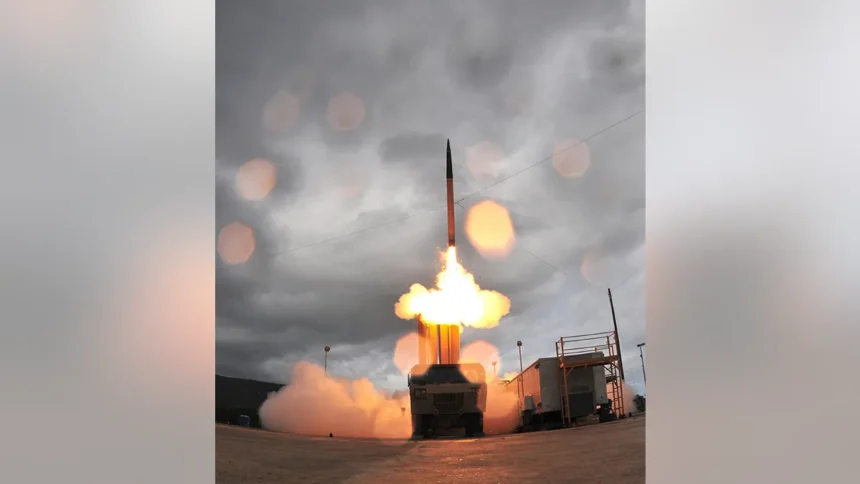
THAAD systems are designed to intercept high-altitude ballistic missiles. This makes them critical in defending against large missile barrages.
Earlier reports also claimed that an Iranian strike destroyed a key THAAD radar system in Jordan. The radar reportedly cost around $300 million.
How the THAAD System Works
The missile defence system is produced by Lockheed Martin.
A single THAAD battery includes six launchers, each carrying eight interceptor missiles. It also uses advanced radar to detect incoming threats.
The system destroys missiles using “hit-to-kill” technology. Instead of an explosive warhead, the interceptor destroys its target through direct impact using kinetic energy.
THAAD can intercept short- and medium-range ballistic missiles at extremely high altitudes. It can even intercept threats beyond the Earth’s atmosphere.
A single battery costs about $1 billion and requires around 100 personnel to operate.
The United States currently operates eight THAAD systems worldwide. Two are located in the Middle East in Jordan and Israel, while others are stationed in different regions.
Concerns in South Korea
The US first deployed the THAAD system in South Korea in 2017 to defend against missile threats from North Korea.
The possible relocation has sparked concern in Seoul. Some South Koreans fear the move could weaken the country’s defence capabilities.
South Korean President Lee Jae Myung confirmed that the government had expressed opposition to removing the system.
However, he admitted that Seoul may not be able to stop the relocation.
Despite concerns, Lee said the move would not weaken South Korea’s deterrence strategy.
China’s Reaction to the Possible Move
China also responded to reports about the system’s relocation.
Chinese officials reiterated their long-standing opposition to the THAAD deployment in South Korea.
When the system was installed in 2017, Beijing strongly criticised the move. Chinese leaders argued that THAAD’s powerful radar could monitor missile activity deep inside Chinese territory.
China also said the deployment increased US military influence in the region.
Growing Tensions in the Region
Experts say the potential relocation shows how stretched US missile defence systems have become amid the expanding conflict.
The Middle East continues to face rising military tensions as missile attacks and air strikes intensify.